The Constipation That Can Kill Your Lizard
A leopard gecko owner once brought her pet into an exotic vet clinic with a belly full of calcium sand. The gecko had been 'fine' three weeks earlier. By the time she noticed the lump, the animal hadn't passed stool in a month, had stopped eating entirely, and was digging at its own stomach. Surgery saved it, but barely, and it cost her eight hundred dollars. That's the thing about impaction — it doesn't announce itself. It creeps. And by the time the average owner notices something is wrong, the blockage has usually been building for weeks.
Impaction is, at its core, severe constipation caused by a mass of indigestible material stuck in the digestive tract. Think of it as a traffic jam in the intestines. Sometimes the mass is substrate the reptile swallowed. Sometimes it's chitin from oversized insects. Sometimes it's dehydration so chronic that the gut simply can't move anything along. Whatever the cause, the outcome is the same: food backs up, bacteria multiply, the animal stops eating, and without intervention the gut can rupture. I want to walk you through what causes it, the symptoms in the order they actually appear, and the husbandry fixes that prevent roughly ninety percent of cases before they start.

What Actually Causes Impaction
Substrate: the number one culprit
Let's start with the uncomfortable truth. Most impaction cases trace back to what's on the floor of the enclosure. Calcium sand is the worst offender, and I'll say this plainly: I don't care what the packaging says, loose calcium carbonate sand is a marketing product, not a safe substrate. The pitch is that if a lizard ingests a little, the calcium dissolves. In practice, reptiles lick sand for minerals, geckos snap at loose particles when they strike at prey, and the sand clumps into a cement-like mass inside the gut. This goes wrong too often to be diplomatic about it.
Play sand, walnut shells, and corn cob bedding carry similar risks. Walnut shells are sharp enough to lacerate intestinal walls on their way through. Corn cob swells and rots. These substrates were popular twenty years ago because they look natural, and they've survived on pet store shelves through inertia more than merit.
Oversized prey
The old rule about feeder insects is that the prey item should be no wider than the space between the reptile's eyes, and I'd add no longer than the width of its head. A juvenile bearded dragon fed full-grown dubia roaches or adult crickets is swallowing chitin armor its stomach acid can't break down. A few oversized meals won't usually cause a blockage alone. Stack it on top of poor hydration and cool temperatures, and you've built the full recipe.
Wrong temperatures
This is the factor nobody talks about enough. Reptiles are ectotherms — their digestion literally runs on heat. A bearded dragon with a basking spot of 90°F instead of the 100-110°F it needs has a gut moving at half speed. Food sits longer, moisture gets absorbed out of it, and what enters the intestines is drier and harder than it should be. According to the Association of Reptilian and Amphibian Veterinarians, inadequate thermal gradients are one of the most common husbandry deficiencies identified in exotic practice, and poor digestion is a direct downstream effect. If your animal is impacted and your basking spot is too cool, no amount of olive oil baths will fix the root problem.
Dehydration
Chronic low humidity does two bad things. First, it dries out the gut contents themselves. Second, it drives substrate licking — many reptiles eat sand or soil partly because they're seeking minerals or moisture. A dehydrated animal on loose substrate is an impaction waiting to happen. Species matter here: a crested gecko needs 60-80% humidity, a leopard gecko needs a humid hide at 70-80% even though its overall enclosure stays dry, and a bearded dragon's basking end should sit around 30-40% ambient humidity with a proper hydration routine.
Foreign objects and parasites
Occasionally impaction is caused by something dramatic — a swallowed decorative stone, a piece of fake plant, a label sticker that fell into the enclosure. Heavy parasite loads can also create functional blockages from dead worms sloughing into masses. This is one reason a fecal exam on every new reptile is non-negotiable; a twenty-dollar parasite check can prevent a five-hundred-dollar emergency.
Symptoms: The Order They Actually Appear
Here's what most guides get wrong. They list symptoms like a grocery list with no timeline. Impaction has a progression, and knowing the sequence tells you how urgent things are.
Stage one: subtle changes
The earliest sign is usually a change in defecation frequency, not in behavior. If a bearded dragon normally goes every two or three days and it's now been six, pay attention. Owners rarely track this, which is why a simple feeding and defecation log — a note on your phone is fine — is worth keeping. Appetite may dip slightly. The animal might bask more than usual, instinctively trying to cook a sluggish gut. This is the stage where a temperature correction and a hydration boost will often resolve everything on their own.
Stage two: visible trouble
Now the appetite drops hard or disappears. You may notice a visible lump or firm spot on the left side of the belly, especially in geckos and bearded dragons. The abdomen may look bloated or feel hard to the touch — though never squeeze; a compromised gut can rupture with rough palpation. Posture changes: the animal may stand oddly roached, drag its rear legs slightly, or dig at its stomach. Weight loss begins because the animal is eating little or nothing. Lethargy sets in.
Stage three: emergency
Trembling, rear leg weakness or paralysis, black beard or dark stress coloration, complete refusal of food for more than a week, and regurgitation of water or bile. Rear leg issues can indicate the impaction is pressing on nerves or that it has progressed toward a spinal problem — either way, this is a same-day exotics vet visit. According to the American Veterinary Medical Association, reptiles often mask illness until disease is advanced, so outwardly dramatic symptoms in a reptile warrant faster action than the same symptoms would in a dog or cat. A reptile showing stage-three signs has been sick for a while.
What to Do If You Suspect Impaction
First, the honest disclaimer: mild cases caught early can often be resolved at home. Anything past stage one warrants a phone call to an exotics vet, and I'd rather you call and be told to wait than sit on it for two more weeks.
Step 1: Fix the heat immediately
Check your basking surface temperature with a digital infrared thermometer — not a stick-on dial gauge, which measures the glass, not the animal. Get a bearded dragon's basking surface to 105-110°F, a leopard gecko's warm floor to 90-95°F. Digestion needs fuel, and this is the fuel. A quality thermostat with a probe is cheap insurance for any heat source, because unregulated heat mats and lamps drift. The Jumping thermostat I link here is a model built for that role, with probe accuracy that holds up under daily use.
Step 2: Hydrate
Offer a shallow warm-water soak — water no deeper than the animal's shoulders (for lizards; never soak a snake unattended) at roughly 85-90°F for 10-15 minutes, once or twice daily. Soaks hydrate through the vent and soften gut contents. Some keepers add a drop of natural laxative like pure pumpkin puree or a tiny bit of olive oil on the nose, and for mild cases these home remedies do work. Do not force-feed oil with a syringe unless a vet shows you how — aspiration in reptiles is a real risk.
Step 3: Stop feeding
This feels counterintuitive, but you cannot fix a traffic jam by adding cars. If the animal is still eating, stop solid food, keep offering water, and let the heat do its work for a few days. If nothing moves in 3-5 days of corrected temperatures and soaks, get to the vet.
Step 4: Veterinary options
A vet may administer fluids, prescribe a GI motility drug, take an x-ray (sand shows up brilliantly on film), or in severe cases perform surgery. Early veterinary intervention has a good prognosis. Ruptured guts do not. Don't wait for the rupture.
Prevention: The Boring Stuff That Actually Works
Pick substrate by species, not by looks
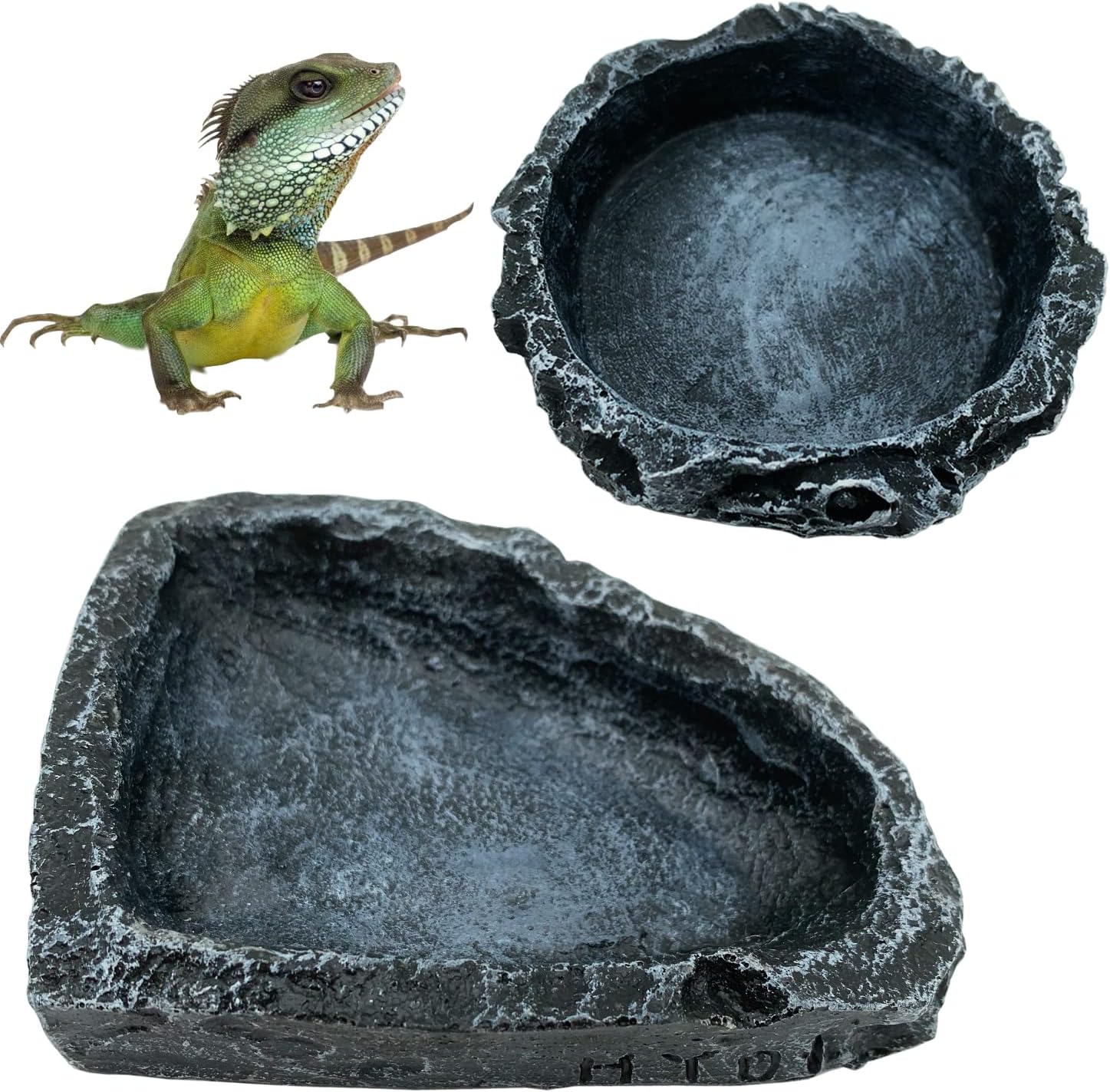
For leopard geckos, solid substrates are the safer choice: reptile carpet, paper towel, or slate tile. Tile looks great, holds heat, and carries essentially zero impaction risk. For bearded dragons, the debate never ends — a bioactive, packed earth-clay mix managed properly is lower risk than loose sand, but tile and non-adhesive shelf liner remain the zero-risk options, and that is where beginners should start. Hatchlings and juveniles should be on solid substrate, full stop. Their aim is bad, their guts are small, and their tolerance for error is close to zero. If you keep adults on a natural loose mix, feed in a separate dish or container so they never strike at substrate. Something like the rubberized feeding dish keeps insects contained so the animal isn't chasing crickets across loose bedding.
Size your feeders correctly
Smaller and more frequent beats large and occasional. A bearded dragon eating twenty appropriately-sized crickets digests them far more efficiently than one eating eight oversized ones. If you're unsure, go smaller. Gut-load your insects for 24 hours before feeding so the nutrients and moisture content benefit the predator, and dust with calcium — but note the connection: reptiles on poor calcium supplementation sometimes eat substrate seeking minerals, so proper dusting indirectly reduces sand-licking. A plain calcium with D3 supplement dusted on feeders two or three times a week covers most lizards; check species specifics before you settle on a schedule.
Provide water in the way your species drinks
Bearded dragons often won't drink from still bowls but will lap droplets after a misting or from dripping vegetation. Crested geckos drink from glass and foliage. Some snakes only drink from a large, fresh bowl. Learn how your animal actually takes water and accommodate it. And keep a humid hide available to every gecko species, every day, even the desert ones — especially the desert ones, since their hydration margin is thinner.
Verify your temps with real instruments
Stick-on analog dials are decoration. Get an infrared temperature gun for surface temps and a digital probe thermometer for air temps, and check them monthly. Heat sources fail slowly, dimming over months before they die, and a temperature that was right last summer may be wrong now. Nearly every impaction email I get includes the phrase 'I thought it was warm enough.'
Keep a simple log
Date, what was fed, when the animal defecated. Thirty seconds a week. It's the single highest-value habit in reptile keeping, because it converts 'I think he hasn't gone in a while' into 'last feces was nine days ago, basking spot is reading 104°F, calling the vet.' Reptiles hide problems; logs don't.
Frequently Asked Questions
My bearded dragon eats sand constantly. Is that normal? Occasional tasting can be exploratory, but repeated eating usually signals a deficiency or dehydration. Check your calcium schedule, check your humidity, and honestly — just remove the loose substrate.
Can an impacted reptile recover without a vet? Sometimes, if caught at stage one. Warm soaks, corrected heat, hydration, and time genuinely resolve early cases. But if you're two weeks in with no feces and no appetite, you need imaging and medical support, not more baths.
Is impaction painful? Almost certainly yes. Behavioral signs like restlessness, digging at the belly, and stress coloration suggest significant discomfort. Don't wait for suffering to become obvious before acting.
The Bottom Line
Impaction is nearly always a husbandry disease. In case after case, the pattern repeats: loose substrate, a basking spot a few degrees too cool, and hydration nobody was tracking. Fix those three things and you've eliminated most of the risk before it exists. And if you're reading this because your animal is showing symptoms right now — skip the forums, pick up the phone, and get an exotics vet on the line today. Early impaction is a plumbing problem. Late impaction is a surgery. The difference between the two is usually measured in the days you spent hoping it would pass on its own.
Related Reading
Want more on this topic? Check out our guides on best reptile feeding dishes water bowls, leopard gecko shedding problems prevention guide, best reptile enrichment toys cage decor.