Your Reptile Is Cooking and You Might Not Even Notice
A bearded dragon can sit pancaked flat under the basking bulb, mouth wide open, eyes half closed, on a hot July morning, and look like it is simply enjoying the heat. Two hours later the same animal can be lethargic, dark-bearded, and refusing food. Picture a 150-watt bulb on a 40-gallon breeder with a thermostat that has quietly drifted 12 degrees Fahrenheit above its set point: that is how fast it happens. Reptiles don't always flee heat. They sit in it until their body shuts down. Heat stress, or hyperthermia, is one of the most preventable causes of reptile death in captivity, and it almost always starts with a keeper who trusts a cheap thermometer too much.
This isn't about buying a bunch of gear. It's about understanding how reptiles thermoregulate, what temperatures are actually dangerous for the species you keep, and what to do in the first 30 minutes when something goes wrong. If you've ever wondered why your gecko is hiding on the cool side all day or why your snake suddenly stopped using its hot hide, this is the article you need.
How Reptiles Regulate Heat (And Why Captivity Breaks It)
Reptiles are ectotherms. They don't make their own body heat, so they move between warm and cool zones to hit a preferred body temperature range. In the wild, that range varies by species, time of day, and season. A desert lizard might bask at 110 degrees Fahrenheit on a rock at noon and retreat to a 75-degree burrow by 2 p.m. A tropical gecko might never see direct sun and instead rely on ambient warmth in the low 80s.
The problem with captivity is that we give them a box. A wild lizard has infinite escape routes. A captive lizard has whatever gradient you build. If the cool side isn't cool enough, or if the heat source is unregulated, the animal has nowhere to go. It will keep basking because instinct tells it to, even as its internal temperature climbs past the point of no return.
According to the American Veterinary Medical Association, reptiles are among the most commonly surrendered exotic pets, and improper husbandry, including temperature mismanagement, is a leading reason. That's not a knock on keepers. It's a warning that the stakes are higher than most pet store employees will tell you.
What Counts as 'Too Hot'? Species-by-Species Numbers
There's no single number. A temperature that makes a leopard gecko thrive will kill a crested gecko. Here's a rough guide based on widely cited species care sheets:
Bearded dragons: Basking surface 100-110 F, cool side 75-85 F. Ambient air above 95 F for more than a few hours is dangerous. Dragons can die at 105 F ambient when the cool side is only 90 F.
Leopard geckos: Basking surface 88-92 F, cool side 75-80 F. They are not desert animals despite the name. They come from arid grasslands and rocky areas in Afghanistan and Pakistan, where they spend hot days in burrows. Anything above 95 F sustained is a problem.
Ball pythons: Hot spot 88-92 F, cool side 78-80 F. They are tropical snakes and will die quickly above 95 F. A ball python can die in a car ride where the ambient hits 100 F for 45 minutes.
Crested geckos: Ambient 72-78 F, never above 82 F. These are the most heat-sensitive common pet reptile. A crested gecko at 85 F for 24 hours can go into organ failure. If you keep cresties, you need a cool room or a dedicated AC unit.
Corn snakes: Hot spot 85-88 F, cool side 70-75 F. Hardy, but still vulnerable if the heat mat fails on.
Blue-tongue skinks: Basking 95-100 F, cool side 75-80 F. They need a real gradient.
If you don't know your species' exact range, stop and look it up. The Reptile and Amphibian Veterinarians (ARAV) publish species-specific care guidelines, and they're worth the read. According to ARAV, thermal burns and heat stress are two of the most common preventable conditions seen in captive reptiles.
The Early Warning Signs Most Keepers Miss
Reptiles hide illness until they can't. Heat stress is no different. The first signs are subtle, and if you're not looking, you'll miss them. Here's what to watch for, in order of severity:
1. Open-mouth breathing (gaping) outside of basking. Gaping under a basking bulb for a few minutes is normal. Gaping on the cool side, or for hours at a time, means the animal is trying to dump heat. That's a red flag.
2. Constant hiding on the cool side. If your lizard or snake never uses the warm end, the warm end is too warm. Simple as that.
3. Restlessness and glass surfing. A reptile that paces the glass, digs frantically, or tries to climb out is often trying to escape heat. Ball pythons will push their noses raw against screen tops in overheated enclosures.
4. Loss of appetite. Heat stress shuts down digestion. A reptile that refuses food for more than a couple of days when it normally eats is telling you something.
5. Darkened coloration. Many reptiles darken when stressed, not just when cold. A bearded dragon that goes nearly black on its back and beard is in trouble.
6. Lethargy and unresponsiveness. This is late-stage. If your reptile doesn't react when you touch it or open the enclosure, you're in an emergency.
7. Muscle twitching, tremors, or loss of coordination. This means neurological damage is already happening. Get to a vet immediately.
8. Regurgitation. Vomiting undigested food is a sign the body is prioritizing survival over digestion. It can also be a sign of other issues, but combined with heat, it's serious.
How to Measure Temperature Correctly (Most People Don't)
Here's a hard truth: stick-on analog thermometers are garbage. They measure the glass, not the air. They're off by 10 degrees or more. If that's all you have, you're guessing.
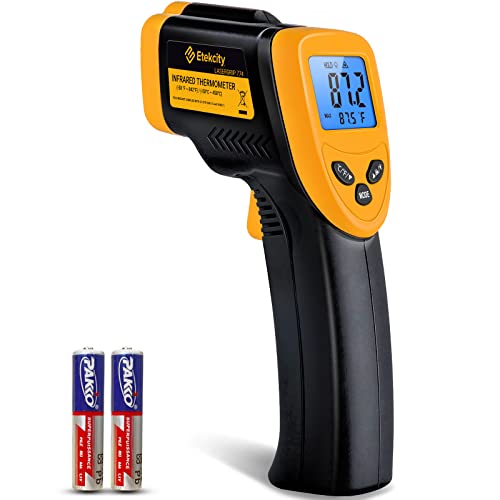
You need two things: a digital probe thermometer and an infrared temp gun. The probe goes on the basking surface or just above it to measure surface temp. The temp gun lets you spot-check any point in the enclosure in seconds. Both are standard tools in reptile care. A hygrometer for humidity is also useful, but that's a separate article.
Measure at the hottest part of the day, not in the morning. Measure the basking surface, the air on the warm side, and the air on the cool side. Write the numbers down. If the cool side is above your species' safe range, you have a problem even if the basking spot is perfect.
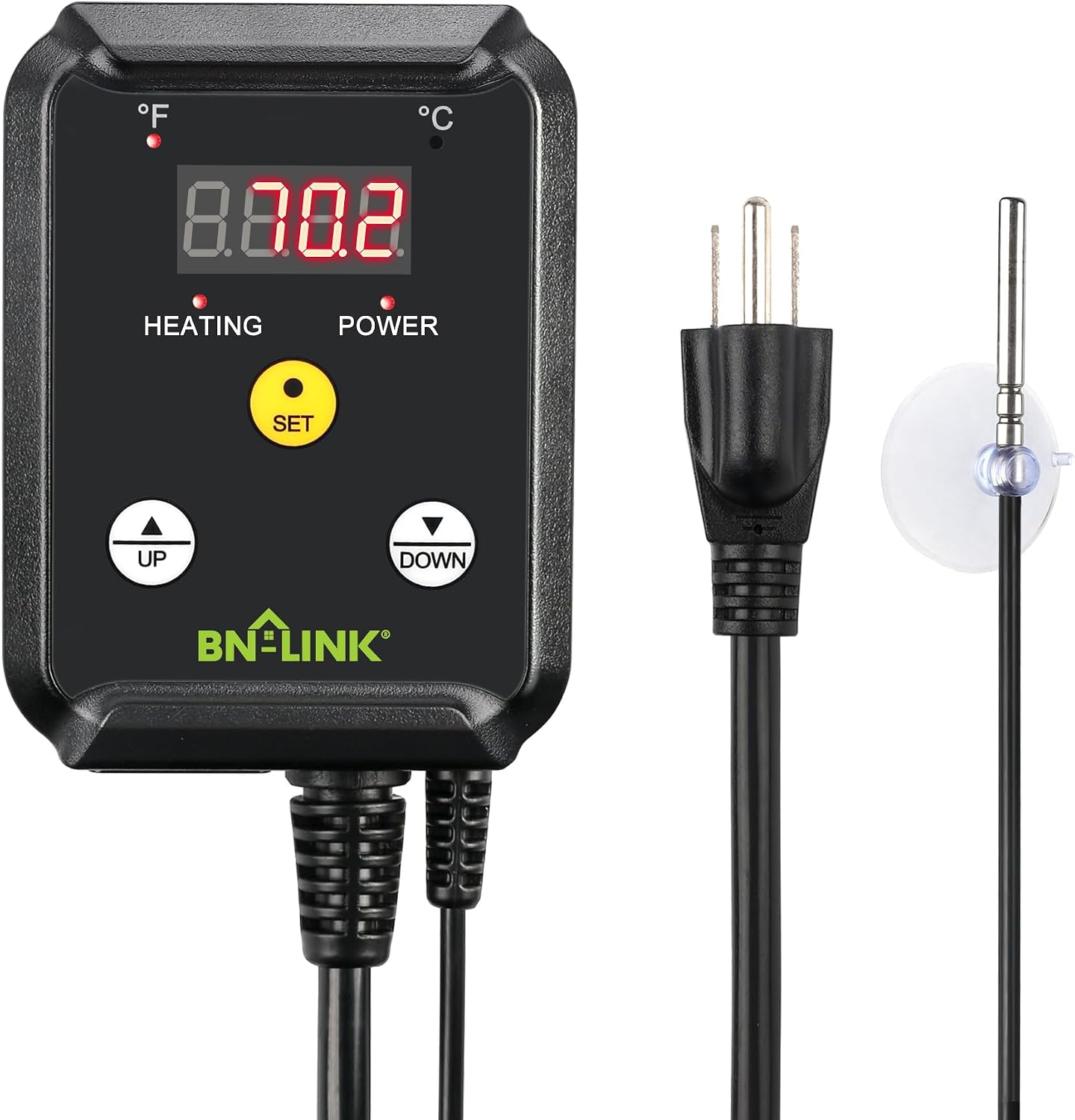
Thermostats are non-negotiable for any heat source that can fail on. A heat mat without a thermostat can hit 120 F and cook a snake from below. A ceramic heat emitter without a dimmer can spike a tank to 110 F in an hour. A proportional thermostat is the right control for radiant heat panels, while a simple on/off thermostat suits heat mats. If you can't afford a thermostat, you can't afford the animal.
Emergency Cooling: What to Do in the First 30 Minutes
If heat stress is suspected, act fast. Don't wait to see if it gets better. Here is the standard protocol:
Step 1: Remove the heat source. Unplug the basking bulb, heat mat, ceramic heat emitter, everything. Open the enclosure doors or lid to let heat escape. If the room is hot, turn on a fan to circulate air, but don't aim it directly at the animal.
Step 2: Move the animal to a cool, quiet container. A plastic tub with air holes and a towel on the bottom works. The towel should be room temperature, not cold. Do not put the animal in the fridge. Do not put it in ice water. Rapid cooling can cause shock and kill it faster than the heat.
Step 3: Offer shallow, room-temperature water. Not cold. Room temp. If the reptile drinks, great. If not, don't force it. You can also mist the animal lightly with room-temperature water, but don't soak it. Soaking a heat-stressed reptile can cause aspiration and doesn't cool the core temperature effectively.
Step 4: Monitor behavior. A reptile that was gaping and restless should start to calm down within 15-20 minutes. If it's still open-mouth breathing after 30 minutes in a cool environment, it needs a vet.
Step 5: Call an exotic vet. Even if the animal seems to recover, heat stress can cause internal damage that shows up days later. Kidney failure, neurological issues, and secondary infections are common. A vet can run bloodwork and give fluids. According to the Humane Society, reptiles often mask symptoms until they're critical, so a professional evaluation is always safer.
While you're stabilizing, you might want a digital infrared thermometer on hand to confirm temps quickly. This one from Amazon is inexpensive and accurate enough for spot checks: Infrared Thermometer. It's not a replacement for a probe, but it's fast.
The Equipment Failures That Cause Most Overheating
The same mistakes happen over and over. Here are the big ones:
Unregulated heat mats. A heat mat plugged straight into the wall can hit 110-120 F. If it's under a plastic tub or a glass tank with a thin substrate layer, it can crack glass or melt plastic. Always use a thermostat.
Ceramic heat emitters on dimmers that get bumped. A dimmer switch can be accidentally turned to full power. If you use a CHE, use a thermostat, not a manual dimmer.
Basking bulbs that are too strong for the enclosure size. A 150-watt bulb in a 20-gallon tank is a death sentence. Match wattage to enclosure volume and species needs. When in doubt, go lower and measure.
Power outages in summer. If the AC goes out and the room hits 95 F, your reptile has no escape. Have a plan: a cooler room, a battery-powered fan, or a friend who can take the animal.
Direct sunlight through a window. A glass tank in direct sun can hit 120 F in 20 minutes, even with the heat lamp off. Never put a reptile enclosure in direct sun.
Heat rocks. These are notorious for causing thermal burns and overheating. I don't recommend them. Use overhead heat and a thermostat instead.
If you're setting up a new enclosure, a good thermostat is the single most important purchase. This one from Amazon is a solid proportional model for radiant heat panels: Proportional Thermostat. It's not cheap, but it's cheaper than a necropsy.
Species That Are Most at Risk
Some reptiles handle heat better than others. Desert species like uromastyx and bearded dragons can tolerate higher basking temps, but they still need a cool retreat. Tropical species like crested geckos, chameleons, and most dart frogs are far more sensitive. If you keep multiple species, you need separate temperature zones. A single room at 85 F might be fine for a bearded dragon and lethal for a crested gecko.
Baby reptiles are also more vulnerable. Their surface-area-to-volume ratio is higher, so they heat up and cool down faster. A juvenile bearded dragon can overheat in half the time an adult can. Always use a thermostat and measure the basking spot for the smallest animal in the enclosure.
Obese reptiles are at higher risk too. Fat insulates, and an overweight lizard has a harder time dumping heat. If your bearded dragon looks like a football, talk to your vet about a diet.
Prevention: Build a Fail-Safe Setup
The best way to handle heat stress is to never have it. Here's what belongs in every enclosure:
1. Thermostat on every heat source. No exceptions. Even a heat mat that 'never gets hot' can fail on.
2. Two thermometers minimum. One probe on the basking surface, one on the cool side. Check them daily.
3. A temp gun for spot checks. Once a week, scan the entire enclosure. Look for hot spots you didn't know existed.
4. A cool side that's actually cool. For most species, the cool side should be 75-80 F. If your room is 85 F in summer, you need AC or a different room.
5. Backup power or a plan. If the power goes out, you have a window of a few hours before temps become dangerous. Know where you can take your reptile.
6. Never rely on the pet store's advice. Pet-store employees often tell people a 10-gallon tank is fine for a bearded dragon. It's not. Do your own research.
If you're looking for a reliable digital thermometer/hygrometer combo, this one from Amazon has been solid for me: Digital Thermometer Hygrometer. It's not fancy, but it's accurate and cheap enough to buy two.
What to Do After a Heat Stress Event
Even if your reptile recovers, don't assume it's fine. Heat stress can cause lasting damage. Watch for these signs in the days and weeks after:
Refusing food for more than a week. This could be a sign of organ damage or infection.
Lethargy that doesn't improve. A healthy reptile should return to normal activity within 48 hours. If it's still sluggish after three days, see a vet.
Abnormal stool. Diarrhea, undigested food, or blood in the stool can indicate gastrointestinal damage.
Respiratory symptoms. Open-mouth breathing that persists, wheezing, or mucus in the mouth can be a sign of aspiration pneumonia from misting or a secondary infection.
Skin burns. Check the belly and feet for redness, blisters, or dark patches. Thermal burns from heat mats or hot rocks are common and need veterinary care.
I always recommend a vet visit after any significant heat event. A good exotic vet can run bloodwork to check kidney and liver values, and they can prescribe fluids if needed. It's worth the money.
Frequently Asked Questions
Can I just put my reptile in the fridge to cool it down? No. Never. Rapid cooling causes shock. Use a room-temperature environment and let it cool gradually.
My reptile is gaping but it's not that hot in the tank. What's going on? Gaping can also be a sign of respiratory infection or mouth rot. If temps are normal and the animal is gaping, see a vet.
How hot is too hot for a ball python? Anything above 95 F ambient is dangerous. Hot spot should be 88-92 F. Cool side 78-80 F.
Do I need a thermostat for a heat mat? Yes. Always. A heat mat without a thermostat can hit 120 F and cause burns or death.
My power went out and it's 95 F in the house. What do I do? Move your reptile to the coolest room in the house, ideally a basement or bathroom with a fan. If you have a car with AC, you can use that as a temporary cool space. Don't feed them during a heat event; digestion generates heat.
Can reptiles recover from heat stress on their own? Mild cases, yes, if you cool them down quickly. Severe cases need veterinary intervention. Don't wait.
The Bottom Line
Heat stress is a silent killer. It doesn't look dramatic until it's too late. The fix is simple: measure your temperatures, use a thermostat, and know your species' limits. If you take one thing from this article, let it be this: a $30 thermostat is cheaper than a $300 vet bill and a lot cheaper than losing an animal you love. Go check your basking spot right now. I'll wait.
Related Reading
Want more on this topic? Check out our guides on best reptile basking platforms turtle docks climbing ramps, best reptile uvb lights, best reptile substrate bedding terrariums.