That First Bad Shed Is Almost Always a Husbandry Problem
The first time someone tries to pull a stuck eye cap off a corn snake, tweezers often seem like the obvious tool. It is a mistake that can blind the animal. In practice, the vast majority of stuck-shed cases trace back to the same three or four husbandry failures, and none of them are the animal's fault.
If your snake or lizard is walking around in a papery, flaking skin suit that won't come off, you're dealing with dysecdysis. That's the clinical term for abnormal or incomplete shedding. It ranges from a few stubborn patches on the toes to a full-body retained skin that can constrict circulation and kill tissue. The fix is rarely complicated, but it has to be done in the right order, or you'll make things worse.
What Normal Shedding Actually Looks Like
Healthy reptiles shed in one of two patterns, and knowing which one you're dealing with changes everything.
Snakes should produce a single, intact tube of skin. You find it in the enclosure like a rolled-up sock, usually with the head and eye caps still attached. That's the gold standard. If your snake is shedding in 17 little pieces over two weeks, something is off.
Lizards shed in patches, and that's normal. Leopard geckos, bearded dragons, and crested geckos flake off in sections. What is not normal is a patch that stays stuck for more than 48 hours, especially around toes, tail tips, eye rims, and the vent. Those are the places retained skin causes real damage.
According to the Association of Reptile and Amphibian Veterinarians (ARAV), retained shed on digits is one of the most common preventable causes of toe loss in captive geckos. It can happen in a single shed cycle if the humidity is wrong at the exact wrong moment.
The Four Real Causes of Stuck Shed
Forget the internet theories about vitamin deficiencies being the root of everything. In practice, stuck shed comes down to these, in order of frequency:
- Humidity too low during the shed cycle. This is the big one. A leopard gecko needs a humid hide at 80 to 90% relative humidity while shedding. Not 50%. Not 'a little misting.' A hide with damp sphagnum moss that stays damp for days.
- Dehydration. A dehydrated reptile cannot produce the fluid layer between old and new skin that lets the shed slide off. If your animal's urates are chalky and orange instead of white and soft, it's dehydrated, and that alone will cause bad sheds.
- Temperature gradients that are wrong. Digestion, immune function, and skin health all depend on proper basking temps. A bearded dragon basking at 95F instead of 105 to 110F will shed poorly. Correcting basking temperature resolves more stuck-shed cases than any other single change.
- Underlying health problems. Mites, fungal infections, nutritional secondary hyperparathyroidism, and skin infections all interfere with normal ecdysis. If your husbandry is dialed in and the animal still sheds badly every cycle, you need a vet, not more misting.
How to Fix a Stuck Shed: The Step-by-Step Protocol
Here's the routine that works for snakes and lizards, and it does not involve tweezers near an eyeball. Ever.
Step 1: Assess the Severity
Look at the animal under good light. Check the eyes, the toes, the tail tip, and the vent. If there's retained skin around the eyes or a full-body retained shed that's been on for over a week, skip to step 5 and call a vet. If it's patches on the body, feet, or tail, proceed.
Step 2: Warm Soak
Get a plastic tub with a lid that has air holes. Add lukewarm water, 85 to 88F, no deeper than the animal's belly for a lizard, or about a third of the body height for a snake. Let it soak for 20 to 30 minutes. Not hot. If it feels warm on your wrist, it's too warm. People can cook a gecko in water they think is fine.
Step 3: The Damp Towel Trick
After the soak, wrap the animal loosely in a warm, damp towel and let it crawl through. The friction does most of the work. For snakes, let them slither through your hands with the damp towel draped over them. For geckos, let them walk across the towel on their own. Do not pull.
Step 4: The Wet Q-Tip for Edges Only
For stubborn patches that are already lifted at the edge, a wet Q-tip can gently roll the skin back. Work from the edge inward. If the skin doesn't lift easily, stop. You're not ready, and forcing it will tear live tissue underneath.
Step 5: Vet Visit
Retained eye caps, retained tail tips that have gone dark or necrotic, or a full-body shed that's been stuck for more than 10 days need a vet. Retained eye caps can cause corneal ulcers. Retained tail skin can cut off circulation and cause necrosis. A gecko can lose half a tail because an owner waited three weeks.
The Humid Hide: Your Single Best Investment
If you own a leopard gecko, crested gecko, African fat-tailed gecko, or any tropical species prone to bad sheds, you need a humid hide. Not a water bowl. Not a mister. A dedicated hide with damp substrate that holds humidity for days.
A practical setup: a plastic hide with a bottom, filled with sphagnum moss that is wetted and wrung out so it's damp but not dripping. It should be checked every other day. For leopard geckos, place it on the warm side of the enclosure. For crested geckos, mid-enclosure works.
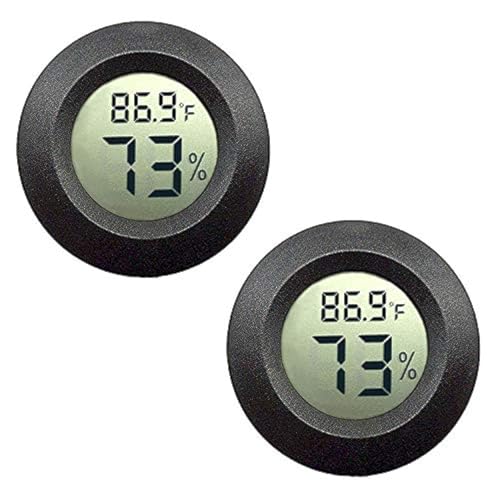
A digital hygrometer inside that hide is non-negotiable. You want to see 80 to 90% relative humidity. If you're guessing, you're losing. This digital hygrometer and thermometer combo is a suitable choice for humid hides because it reads fast and doesn't drift.
Species-by-Species Shedding Quirks
Not every reptile needs the same approach. Here is what to know about keeping and rehabbing these species:
Leopard Geckos
The number one stuck-shed spot is the toes. They have tiny, tight skin on those digits, and if it stays on for more than a couple days, it acts like a rubber band. Check the toes after every shed. A 20-minute soak in 85F water, then letting them walk on a damp paper towel, usually does it. If the tip of the toe is already dark, that's dead tissue, and a vet needs to see it.
Bearded Dragons
Beardies shed in weird patches, and they often look terrible for a week. That's normal. What's not normal is retained skin around the tail base, the vent, or the toes. They also shed the lining of their mouth and nostrils, which looks like stringy white stuff. Don't pull it. Bump the humidity in the enclosure to 60 to 70% during shed and offer a shallow warm bath every other day.
Ball Pythons
Ball pythons are the poster children for bad sheds. They need 60 to 70% humidity year-round, and 75 to 80% during shed. If your ball python is shedding in pieces, the fix is almost always humidity, not a bigger water bowl. A moisture-holding substrate, such as cypress mulch or a coconut coir blend, works well, and misting the enclosure once a day during the blue phase helps maintain those levels.
One trick that prevents a great many bad sheds: a humidity box made from a plastic food container with a hole cut in the lid, filled with damp sphagnum moss. Put it on the warm side. Your ball python will live in it during shed, and the skin will come off in one piece.
Crested Geckos
Cresties are arboreal and shed in pieces. They eat their shed, which is normal and kind of gross to watch. The problem areas are the toes and the tail tip. Keep humidity at 60 to 80% with a misting routine, and you'll rarely have issues. If you do, the same soak-and-walk protocol works.
The Mistakes That Make It Worse
All of these happen, and they all cause harm.
- Pulling shed off dry. You'll tear the new skin underneath and open the door to infection. Always soak first.
- Using oils or lotions. Mineral oil, coconut oil, and baby oil are not reptile-safe for shed removal. They can clog pores and cause skin infections. If you must use something, use plain warm water.
- Peeling eye caps. This is the one that sends animals to the vet with corneal ulcers. If eye caps are retained, soak, increase humidity, and let them come off on their own. If they don't within a few days, see a vet.
- Bumping humidity too high for too long. Respiratory infections in ball pythons and bearded dragons are often caused by keeping things swampy for weeks. Raise humidity during shed, then bring it back down.
- Ignoring repeated bad sheds. One bad shed is a fluke. Three in a row is a husbandry problem or a health problem. Get a vet involved.
Prevention: The Routine That Ends Bad Sheds
Here's what published care guidance supports for every shedding reptile, and it can cut stuck-shed incidents to almost zero.
- Track the shed cycle. When you see the eyes go blue or the skin go dull, start your humidity protocol immediately. Don't wait for flakes to appear.
- Raise humidity 10 to 15% above normal for the entire shed cycle. For a ball python, that means 75 to 80%. For a leopard gecko, that means a fresh humid hide. For a bearded dragon, mist the enclosure once a day and offer a shallow bath every other day.
- Check hydration. Fresh water daily. For geckos, a shallow dish they can actually drink from. For snakes, a water bowl big enough to soak in.
- Verify your temperatures with a temp gun, not a stick-on gauge. Stick-on gauges are garbage. They read air temperature at the glass, not basking surface temperature. A temp gun tells you what your animal actually feels.
- Feed a proper diet. Reptiles on poor diets shed poorly. Insects need to be gut-loaded and dusted with calcium and a multivitamin. Rodents need to be appropriate size. If you're guessing on supplements, you're guessing on shed quality too.
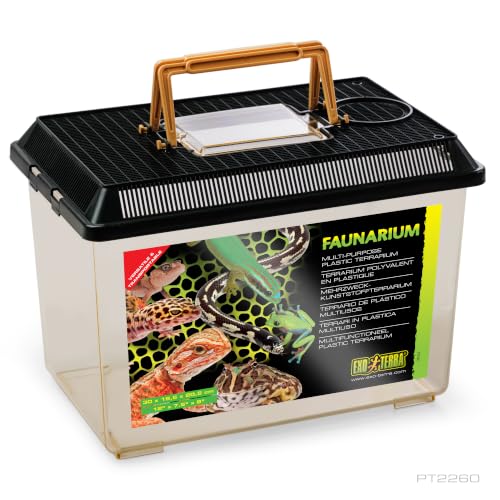
A reptile soaking tub with a secure lid works well for a shed protocol because it keeps the water warm and the animal contained. The same tub can be used for administering oral meds and for quarantine baths.
When Stuck Shed Becomes an Emergency
Most stuck shed is a nuisance. Some of it is a ticking clock. Get to a vet within 24 hours if you see:
- Retained eye caps that haven't come off after two shed cycles
- Tail tip or toe that has turned black, dark purple, or hard
- A full-body retained shed that has been stuck for more than 10 days
- Skin underneath that is red, raw, bleeding, or smells bad
- Any sign of lethargy, refusal to eat, or labored breathing alongside the shed problem
According to the ASPCA, reptiles with untreated skin infections can develop systemic bacterial infections that are difficult to treat and often fatal. The earlier you catch it, the cheaper and easier the fix.
Frequently Asked Questions
Can I use a shed aid spray?
Some commercial shed aids are basically water with a little aloe. They're not harmful, but they're not magic either. Warm water soaks and proper humidity do the same thing for less money. In side-by-side comparisons, the results are identical to plain water.
How long should I wait before helping?
If the shed is stuck for more than 48 hours on toes or tail tip, start the soak protocol. For the body, give it a week if humidity is correct. For eyes, never pull. If eye caps are retained after the next shed cycle, see a vet.
My snake shed in one piece but the eye caps are still on. What now?
This is common and dangerous. Increase humidity to 80% and wait for the next shed cycle. If the caps don't come off with that shed, see a vet. Retained eye caps can cause corneal ulcers, and snakes can go blind when owners try to pick them off with tape.
Is it normal for my gecko to eat its shed?
Yes. Crested geckos, leopard geckos, and many others eat their shed for protein and to hide evidence from predators. It's not a sign of a problem unless the animal is eating shed that isn't its own.
Can I prevent bad sheds with diet alone?
Diet matters, but humidity and hydration matter more. A well-fed reptile in a dry enclosure will still shed badly. Fix the environment first, then look at diet.
The Bottom Line
Stuck shed is not a mystery. It is a humidity and hydration problem 90% of the time, and it is fixable with warm water, patience, and a damp hide. The other 10% is a vet visit, and waiting on that is how animals lose toes, tails, and eyes.
Check your animal after every shed. Look at the toes. Look at the tail tip. Look at the eyes. If something is stuck, soak it, don't pull it. And if you're not sure, call a vet who sees reptiles. That's the whole game.
Related Reading
Want more on this topic? Check out our guides on leopard gecko shedding problems prevention guide, leopard gecko health problems prevention guide, best live vivarium plants for reptiles bioactive terrarium.