That First Bad Shed Is a Warning, Not a Nuisance
A leopard gecko can peel off a perfect shed in one piece. It is almost surgical, like a tiny reptile unzipping a wetsuit. A ball python, by contrast, can shed in shreds for three months straight when the humidity is wrong, and by the time anyone notices there is often a tight ring of dead skin around the tail tip that has cut off circulation. That tail can lose its last half-inch. It doesn't have to.
Stuck shed, also called dysecdysis, is one of the most common reasons people bring reptiles to an exotic vet. It's also one of the easiest problems to prevent if you understand what's actually happening during ecdysis. This isn't a product problem. It's a husbandry problem, and you can fix it at home in most cases. But there's a line where home treatment stops being safe, and I want you to know exactly where that line is.
What Shedding Actually Is (and Isn't)
Reptiles don't shed the way mammals shed hair continuously. They go through cycles. The outer layer of skin, the stratum corneum, separates from the new skin underneath, and the animal works it off through movement, friction, and moisture. Snakes do it in one piece when everything is right. Lizards do it in patches. Turtles shed scutes. Geckos eat their own shed, which is normal and not a sign of a nutrient deficiency no matter what a forum tells you.
The process depends on three things working together: humidity, temperature, and nutrition. Get any one of them wrong and the shed goes sideways. Get two wrong and you're looking at retained eye caps, constricted toes, or a tail tip that turns black and falls off.
According to the ASPCA, reptiles require species-specific humidity and temperature gradients to complete normal ecdysis, and chronic improper conditions are a leading cause of skin and eye problems in captive animals. That's not a soft warning. It's the whole ballgame.
Why Sheds Go Wrong: The Real Causes
When a keeper tells me their snake is having a bad shed, I ask four questions before I say anything else. What's your humidity? What's your basking temp? What's the water bowl situation? And what are you feeding?
Here's what those questions are actually screening for.
Low humidity
This is the big one. A ball python needs 60 to 80 percent humidity, and closer to 80 during a shed cycle. A leopard gecko needs a humid hide at 70 to 90 percent even though the rest of the enclosure sits lower. A crested gecko wants 60 to 80 percent with a spike after misting. If your hygrometer reads 40 percent and you're wondering why the shed is coming off in flakes, you just answered your own question.
This goes wrong with people who keep beautiful, expensive enclosures with screen tops and big heat lamps. The screen vents everything. The lamp bakes everything. The humidity sits at 35 percent and the animal sheds in confetti.
Dehydration
Humidity in the air isn't the same as hydration in the body. A reptile that isn't drinking, or that has no access to fresh water, will have dry skin from the inside out. Snakes that soak in their water bowl before a shed are doing exactly what they should. If your snake stops soaking, check the water temperature and whether the bowl is big enough to actually get into.
Temperature problems
Shedding is metabolically expensive. If the enclosure is too cool, the animal's systems slow down and the shed cycle stalls. If it's too hot, the skin dries out faster than it can separate. Either way, you get retained skin. A thermal gradient isn't optional equipment. It's the engine that drives ecdysis.
Nutritional gaps
Vitamin A and vitamin E deficiencies show up in the skin. So does a chronic lack of appropriate calcium and D3 in lizards. If a reptile is shedding badly and the humidity and temps are dialed in, the next place to look is diet and supplementation. According to peer-reviewed research on reptile dermatology, hypovitaminosis A is one of the most frequently diagnosed nutritional causes of abnormal shedding in captive lizards.
Injury, scars, and mites
Any place where the skin is damaged will hold the shed. Burns from unregulated heat mats. Bite wounds from a cage mate. Mite infestations that cause the animal to scratch and damage the new skin layer. If you see retained shed always in the same spot, look for an underlying injury.
How to Tell a Normal Shed from a Problem
Normal shedding looks like this: the animal gets dull, the eyes go blue or grey in snakes, appetite may drop for a few days, and then the skin comes off in one piece (snakes) or in clean patches (lizards). Afterward, the colors are bright and the animal eats.
Problem shedding looks like this:
Flakes everywhere instead of sheets. Retained skin on the tail tip that forms a tight band. A patch around the head or neck that won't release. Eye caps that stay on after the rest of the head has shed. Skin that stays on the toes of geckos and skinks until the toe swells. A shed that starts and then stops for more than a few days.
Any of those need intervention. The tail tip and toes are the emergencies because retained skin there acts like a tourniquet. A gecko can lose three toes to a shed that the owner thought would just come off on its own.
The Home Fix: Step by Step
If the shed is retained but the skin is still soft and there's no swelling or discoloration, this can typically be handled at home. The standard protocol is as follows.
Step 1: Fix the environment first
Don't start soaking until the enclosure is correct. Raise humidity to the upper end of the species range. Add a humid hide if there isn't one. Make sure the water bowl is clean and full. Check that the basking spot is actually hitting the right temperature with an infrared thermometer, not a guess.
Step 2: Warm water soak
Use a container with a lid and air holes, or a bathtub with a towel on the bottom for grip. Water should be 80 to 85 degrees Fahrenheit. Not hot. If it feels warm on your wrist, it's too warm. Soak for 15 to 20 minutes. For snakes, keep the water shallow enough that the head stays above the surface.
Step 3: Gentle assistance only
After the soak, let the animal move through a damp towel or your hands. The skin should slide off on its own. If it doesn't, do not pull. Pulling tears the new skin underneath and creates an open wound. Use a soft damp cloth and let the reptile push against it. Work from the head toward the tail, and never force the eye caps.
Step 4: Repeat if needed
One soak often isn't enough. I'll do one soak a day for up to three days for a stubborn shed, as long as the skin is coming off in small amounts and there's no swelling. If nothing is moving after three days, stop and call a vet.
Step 5: Address the root cause
Soaking fixes the symptom. The humidity, temperature, and diet fix the cause. If you don't fix the cause, you'll be doing this again in four to six weeks.
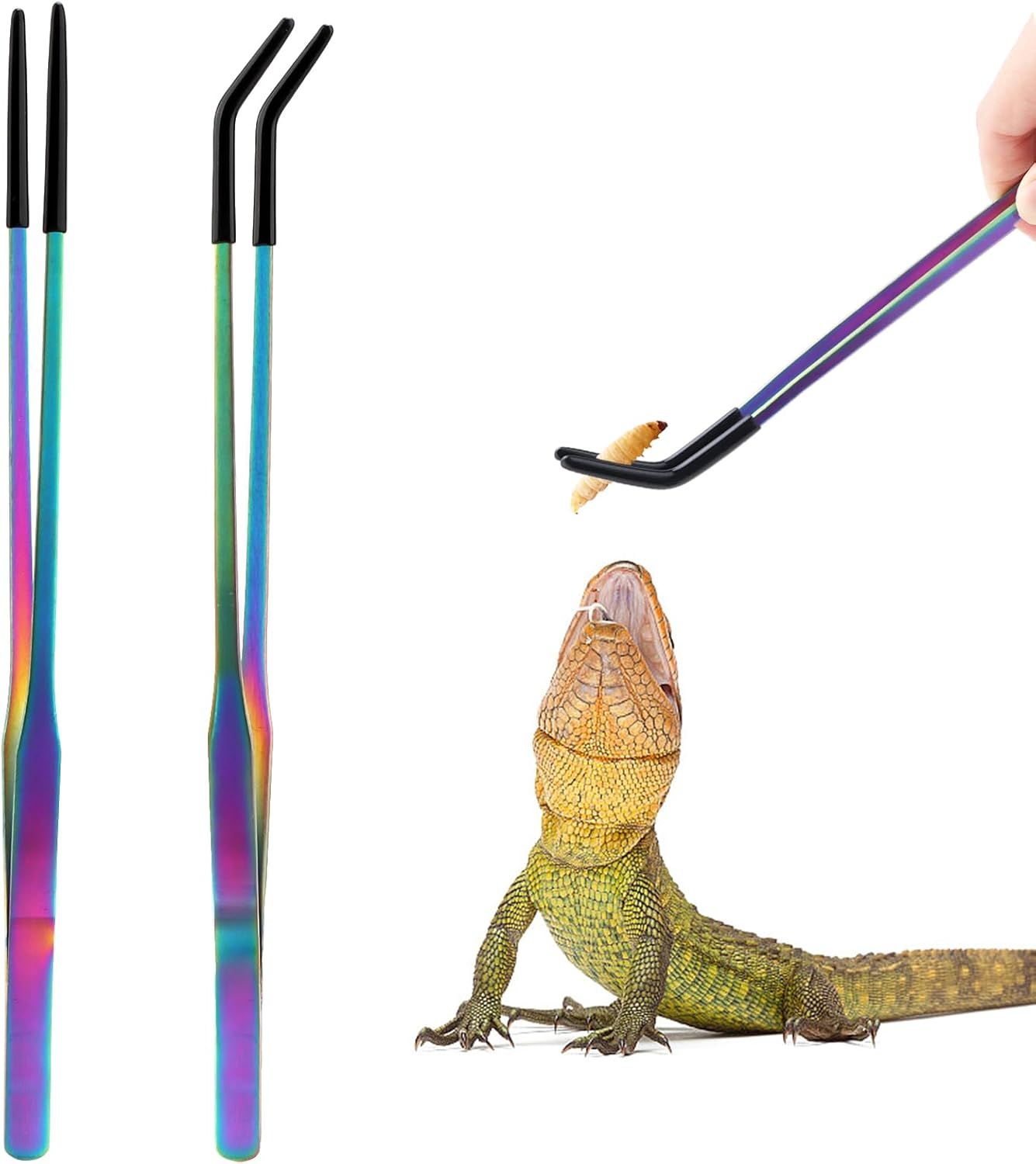
If you want a hand with the mechanical side of this, a soft-tipped pair of reptile-safe tweezers or a shed aid spray can help. A small bottle of shed aid is worth keeping on hand for stubborn tail tips. You can find a decent one here: view it on Amazon. It's not a substitute for humidity, but it softens the edge of a retained band so it releases without tearing.
What NOT to Do
Every one of these can go wrong.
Do not pick at eye caps. Ever. The spectacle over a snake's eye is thin and you will damage the cornea. If eye caps are retained after two shed cycles, that's a vet visit, not a home project.
Do not use petroleum jelly, mineral oil, or olive oil on the whole animal. It clogs pores and can cause skin infections. A tiny amount on a tail tip is fine. Slathering a snake in Vaseline is not.
Do not pull hard on retained skin. If it doesn't come with gentle movement, it isn't ready.
Do not raise humidity so high that the enclosure stays wet. Standing water and soaked substrate cause respiratory infections and scale rot. High humidity means damp air, not a swamp.
Do not assume a bad shed will resolve on its own. Sometimes it does. The times it doesn't are the times people lose toes.
When to Call an Exotic Vet
Get professional help if you see any of these:
Retained skin around a toe or tail tip with swelling, discoloration, or a black tip. Retained eye caps across two or more shed cycles. Skin that is cracked, bleeding, or smells bad. A reptile that hasn't shed in more than double its normal cycle length. A reptile that stops eating for more than two weeks during what should be a shed. Any sign of mites alongside a bad shed.
According to the AVMA, reptiles should be examined by a veterinarian with exotic species experience when husbandry corrections don't resolve a skin or shedding issue within a reasonable timeframe. The AVMA also notes that many reptile health problems are directly linked to improper captive environments, which is why a good vet will ask about your setup before prescribing anything.
Find the vet before you need them. The worst time to search for an exotic vet is at 9 PM on a Saturday with a snake whose tail tip is turning black. Call around now, ask if they see reptiles, and get on their books.
Species-Specific Shedding Notes
Not every reptile sheds the same way, and the fixes aren't identical either.
Ball pythons and other snakes: want one clean shed. Bump humidity to 70 to 80 percent the moment you see the eyes go blue, and keep it there until the shed is done. A humid hide with damp sphagnum moss helps. Don't handle during the blue phase unless you have to.
Leopard geckos: shed in patches and eat the evidence. Provide a humid hide with damp moss or coco fiber at all times. Check toes after every shed. Toe retainment is the number one issue I see.
Crested geckos: need a humidity spike to 80 percent after misting, then a dry-out period. If the enclosure never dries, you get respiratory problems. If it never gets humid, you get stuck shed. Balance matters.
Bearded dragons: shed in uneven patches and often look terrible for a week. Baths in shallow 85-degree water help. Don't peel. Check tail tips and toes.
Turtles and tortoises: shed scutes, not skin. Retained scutes can indicate too-low humidity for tropical species or shell rot. This is a different problem and needs a vet if the shell is soft or smelly.
The Products That Actually Help (and the Ones That Don't)
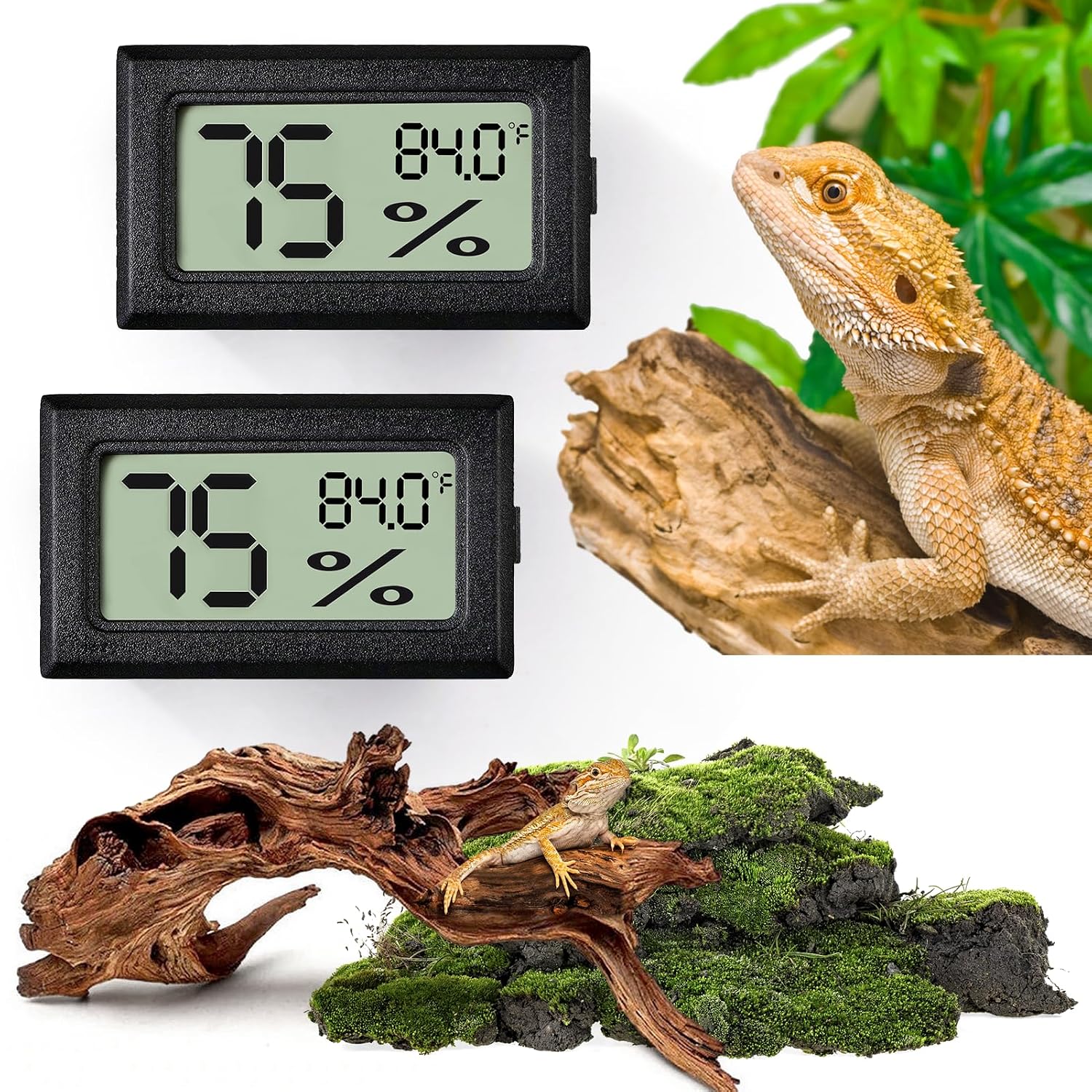
You don't need much. A digital hygrometer that actually works is the single most important tool. The analog dials that come with most starter kits are off by 20 percent or more, and testing them against a calibrated unit shows they can be wildly inaccurate.
A humid hide is next. You can make one from a plastic container with a hole cut in the lid and damp moss inside. Or buy one. Either works. A simple plastic hide with sphagnum moss works well, re-wetted every few days.
A good infrared thermometer lets you verify basking temps without guessing. And a shed aid spray is worth keeping around for stubborn spots. For a solid shed aid, this option is a common choice: view it on Amazon. Use it sparingly and only on retained skin, not as a routine.
What you don't need: oils, human lotions, petroleum jelly, or any product that claims to make shedding 'easy' by coating the animal. Shedding is a humidity and hydration problem. Fix the environment, and the shed fixes itself.
Preventing the Next Bad Shed
Once you've dealt with a stuck shed, the goal is to never deal with one again. Here's what that looks like in practice.
Know your species' humidity range and keep it there year-round, not just during shed. Use a digital hygrometer in at least two spots in the enclosure. Provide a humid hide for every reptile that needs one, and keep it damp. Check water bowls daily. Feed a species-appropriate diet with proper supplementation. And do a full physical check after every shed, especially toes, tail tips, and eyes.
This check is worth doing on every animal, every time. It takes two minutes, and it is the difference between catching a retained ring early and paying for an expensive toe amputation later.
If you want to make the humidity side easier, a quality hygrometer and a proper misting setup do most of the work for you. A digital hygrometer is the reliable choice: view it on Amazon. It reads fast, it's accurate, and it doesn't drift the way the cheap analog ones do.
One Last Thing About Shedding and Trust
Reptiles are stoic. They don't limp or whine when something is wrong. A stuck shed is often the first visible sign that something in the enclosure has been off for weeks. By the time you see it, the animal has been compensating.
That's why I treat every bad shed as a full husbandry audit, not a one-off. Check the temps. Check the humidity. Check the water. Check the diet. Fix what's broken. Then watch the next shed cycle like it's a final exam.
If the next one comes off clean, you've done your job. If it doesn't, you've got a vet call to make and a setup to rebuild. Either way, you'll know more than you did before, and your reptile will be better for it. That's the whole point.
Related Reading
Want more on this topic? Check out our guides on best reptile terrarium backgrounds 3d decor naturalistic vivarium, best reptile climbing branches tank decor, best reptile egg incubators.