Large cats break furniture. Not on purpose, and not through any failure of temperament, but through simple physics. A Maine Coon male can weigh 18 to 22 pounds, and a Savannah or a big domestic shorthair can land in the same range. When that mass arrives on a platform rated for a nine-pound cat, something gives: the platform sags, the post flexes, the whole tower lists to one side. Many owners describe the same sequence of events. The cat jumps up, feels the wobble, jumps down, and never uses the tree again.
That single experience explains why so many tall cat trees sit unused in corners. Vertical territory only works if the cat trusts it. Published guidance from the Cornell Feline Health Center and the Merck Veterinary Manual cat owner reference both emphasize that climbing, perching, and scratching are core behavioral needs, not luxuries. A cat denied a stable high perch does not simply shrug and nap on the floor. It often redirects that energy into scratching furniture, pacing, or conflict with other cats in the home.
This guide covers what actually matters when shopping for a cat tree built for a large cat: base geometry, post diameter, platform depth, materials, anchoring, and the honest limits of what a freestanding tower can do. It closes with one concrete example you can look at if you want a reference point while you compare options.
Why Standard Cat Trees Fail Large Cats
Most cat trees on the market are designed around an average adult cat of roughly eight to ten pounds. Every dimension scales to that assumption. Platforms are 10 to 12 inches across, which is fine for a cat that curls into a 10-inch circle and hopeless for a cat that measures 18 inches nose to tail base when stretched out. Posts are 2 to 3 inches in diameter, which a large cat can wrap its forelegs around and still not get a satisfying grip. Bases are narrow and light because shipping weight drives cost.
The failure mode is predictable. A narrow base plus a tall tower plus a heavy cat equals a high center of gravity. Add a running jump, which large cats are perfectly capable of, and the unit tips. Manufacturers know this, which is why nearly every manual includes a wall-anchoring strap. The strap is not a suggestion for large cats. It is a requirement.
There is a second failure mode that gets less attention: post wear. Sisal rope wrapped around a thin cardboard tube compresses under repeated scratching from a heavy cat. Once the rope flattens, the cat loses traction and stops using the post. The post then becomes a structural column that is also degrading. A 4-inch post wrapped in tight sisal holds up dramatically better than a 2.5-inch post, because the load spreads over more surface and the rope has more material beneath it.
What to Look For: The Specifications That Matter
The list below is the short version. Each item is expanded in the sections that follow, because the reasoning behind each number matters as much as the number itself.
- Base footprint and total weight: wider is better, and heavier is better. A freestanding unit under 30 pounds total is a tipping risk for a large cat.
- Platform depth: 16 inches minimum in both directions for a large breed. Twenty inches is better for a Maine Coon.
- Post diameter: 4 inches or more for scratching posts. Thinner posts do not satisfy the scratch and wear out faster.
- Overall height: 60 inches or taller gives a large cat the elevation it instinctively seeks.
- Frame material: solid wood or thick engineered wood beats particleboard. Ask what the internal post core is made of.
- Covering: tight sisal rope on posts, not carpet scraps. Removable, washable platform covers are a real advantage.
- Stated weight capacity: treat manufacturer ratings as optimistic until the unit is assembled and loaded.
- Anchoring hardware: a wall strap or bracket should be included, not sold separately.
Base Width, Total Weight, and the Tipping Problem
A cat tree stays upright because its center of gravity stays inside its base footprint. When a large cat launches onto the top perch, it applies a lateral force at the highest point of the structure. The wider and heavier the base, the more use is needed to tip it. A rule of thumb that holds up in practice: the base footprint should be at least half the total height of the unit. A 70-inch tower wants a base at least 35 inches across at its widest point, or a base that is smaller but weighted.
Total weight matters because mass resists motion. A 55-pound tree with a wide base is genuinely difficult for a cat to shift. A 25-pound tree with the same footprint will slide across a hard floor and tip on carpet. If the tree must sit on hardwood or tile, consider a rubber-backed mat underneath or furniture pads that add friction. Some owners place a heavy planter or weighted base plate on the bottom platform, which is a reasonable workaround as long as the weight cannot shift.
Wall anchoring changes the math entirely. A strap screwed into a stud converts a tipping risk into a non-issue. If the tree will sit against a wall, anchor it. If it cannot be anchored, choose a lower, wider design or a wall-mounted system instead.
Platform Size, Shape, and Placement
Platform dimensions are the most commonly underspecified number on a product page. A listing might say the top perch is 15 inches, but that measurement often refers to the outer rim of a curved basket, not the usable flat area. A large cat needs a flat sleeping surface of at least 16 by 16 inches, and a Maine Coon is more comfortable at 20 by 20. Curved basket perches should be measured across the interior, not the rim.
Shape matters too. Rectangular platforms give a cat room to stretch out full length, which large cats do far more often than small ones. Round perches suit curling. A good large-cat tree offers both. Placement matters as well: platforms spaced too closely together create a cramped column that a big cat cannot navigate without backing up. Vertical spacing of 14 to 18 inches between levels lets a large cat move up and down naturally.
Condos and enclosed houses deserve a warning. Many are sized for average cats, with openings around 8 inches. A large cat may physically fit but will avoid a tight, dark box it cannot turn around in. If a condo is part of the design, look for an interior width of at least 14 inches and an opening of 10 inches or more.
Scratching Posts: Diameter, Material, and Wear
Scratching is not destructive behavior. It is marking, stretching, and claw maintenance, and cats need a surface that resists their claws enough to provide feedback. Carpet does not. It snags, frays, and gives way. Sisal rope does, which is why it is the standard for quality posts. The critical variable is diameter. A post under 3 inches does not let a large cat get its front paws around the surface at a comfortable angle, and it compresses quickly.
Look for 4-inch posts wrapped in sisal with tight, even spacing. Loose wrapping unravels. Some trees combine sisal posts with carpeted ramps, which is fine, but the primary scratching surfaces should be sisal. Replaceable posts are a meaningful feature: a post that can be unscrewed and swapped extends the life of the entire tree. If the manufacturer does not sell replacement posts, plan on the tree having a finite lifespan.
Post height also matters. A cat scratching at full stretch reaches roughly twice its body length. For a large cat, that means a vertical scratching surface of at least 30 inches. Short posts force the cat to scratch in a crouch, which many cats find unsatisfying and will abandon in favor of your sofa.
Materials, Construction, and What Holds Up
The internal structure determines whether a tree lasts two years or ten. Particleboard is the most common core material because it is cheap and heavy, but it crumbles when screws strip and swells if it gets wet. Plywood and solid wood hold screws better and resist moisture. High-density foam wrapped in fabric is comfortable but adds little structural strength on its own.
Fabric covering is a trade-off between comfort and durability. Faux fur and plush fabrics appeal to cats and feel warm, but they mat and hold hair. Tight-weave carpet lasts longer but can be rough on paws. Removable, machine-washable covers are the practical middle ground, and they are worth prioritizing in a multi-cat home where hair and dander accumulate quickly.
Hardware quality is easy to overlook until it fails. Look for metal cam locks or bolts rather than plastic connectors. Check owner reports for complaints about hardware loosening over time, which usually indicates a mismatch between the fastener and the material it sits in. A tree that needs retightening every few weeks is telling you something about its core.
Height, Vertical Territory, and Multi-Cat Homes
Height is about more than exercise. Cats use elevation to manage social distance. In a multi-cat home, a tall tree with multiple perches at different heights lets cats occupy the same room without occupying the same space. That reduces tension and the low-level conflict that shows up as blocking, staring, and litter box avoidance.
For a single large cat, 60 to 70 inches is a good target. For two or three cats, look for 70 inches or more with at least three distinct perches and two condos or hideouts. The general guidance for multi-cat homes is one resting spot per cat plus one, which for three cats means four separate places to be. A tree with three perches and one condo technically meets that, but only if the condo is large enough to count.
Wall-mounted systems are worth considering when floor space is limited or when the cat is very large. A shelf rated for 40 pounds and bolted into studs has no tipping risk at all, and it can be arranged into a climbing path that uses vertical wall space rather than a footprint. The trade-off is installation effort and the absence of enclosed hiding spots.
Safety, Anchoring, and Common Mistakes
The most common mistake is skipping the wall anchor. The second is placing the tree where a cat can use furniture as a launch ramp to the top perch, which multiplies the lateral force. The third is assembling the tree loosely. Bolts that are not fully tightened allow the whole structure to flex, and flexing accelerates wear at every joint.
Check the tree periodically. Tighten hardware, inspect sisal for unraveling, and look for cracks in the platform supports. If a platform flexes noticeably under hand pressure, it will flex more under a cat. Remove loose strings and dangling toys if your cat chews, since swallowed string is a known intestinal hazard. For any concern about a specific material or plant-based decoration on a tree, the ASPCA Animal Poison Control database is the standard reference.
One more mistake worth naming: buying for the cat you have rather than the cat you will have. A kitten will grow. A tree sized for a kitten is a tree you will replace in a year. If a large breed is even a possibility, buy for the adult size.
A Concrete Example to Compare Against
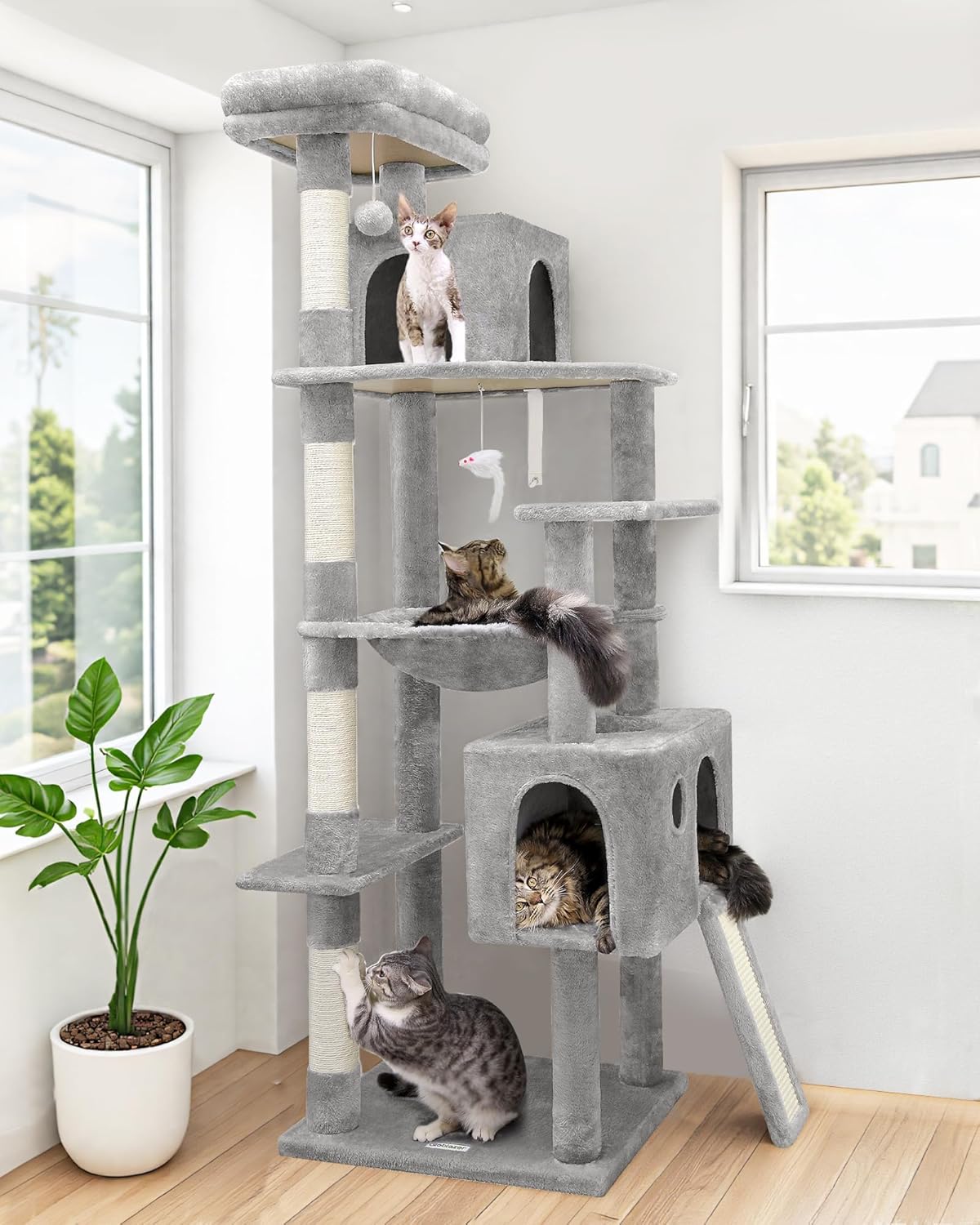
the 5 cat trees for large cats sturdy condos for maine coons ragdolls big boys in
When comparing listings, it helps to have one concrete reference point. The Go Pet Club 78-inch cat tree is a widely sold model that shows up repeatedly in owner discussions about large cats. It is a 78-inch tower with a wide base, multiple platforms, two condos, and sisal-wrapped posts, and it is typically listed around 55 pounds assembled. That weight and height combination is the reason it comes up so often: it sits in the range where a large cat can jump to the top perch without the unit walking across the floor.
The trade-offs are documented in owner reviews. Assembly instructions are minimal, some units arrive with cosmetic defects in the carpet covering, and the platform carpet is thinner than what you find on premium furniture. It is also a freestanding tower, which means the included wall strap should be used. For a household with one or two large cats and a budget under a hundred dollars, it is a reasonable starting point. For a home with three large cats or a cat over 20 pounds, a heavier solid-wood unit or a wall-mounted system is the better long-term answer.
If you want to see current specifications and pricing for that model, you can check the current price on Amazon and compare the listed dimensions against the numbers below.
How to Evaluate Any Listing Before You Buy
Start with the base. If the listing does not state the base dimensions, ask. A seller who cannot answer is telling you something. Next, find the platform dimensions and confirm they are usable flat area, not rim-to-rim on a curved basket. Then check post diameter. If it is under 3 inches, the tree is not built for a large cat regardless of what the marketing copy claims.
Look at the total shipping weight. Under 30 pounds is a warning sign for a tall unit. Between 30 and 50 pounds is workable with anchoring. Over 50 pounds is where freestanding stability starts to become real. Finally, read the negative reviews specifically. Owners who report tipping, sagging platforms, or stripped hardware are describing the failure modes that matter most for heavy cats.
Weight capacity claims deserve skepticism. A platform rated for 30 pounds may hold a 20-pound cat, but the rating often refers to static load, not the dynamic force of a jump. Treat any stated capacity as the ceiling, not the target, and leave margin.
Maintenance and Longevity
A well-built tree can last a decade with modest care. Vacuum platform covers weekly if they are not removable, and wash removable covers according to the manufacturer instructions. Inspect sisal monthly for loose strands and trim any that come free rather than pulling them. Tighten all bolts every few months, especially in the first year when joints settle.
If a post wears out and replacements are available, replace it. If they are not, a worn post can sometimes be rewrapped with sisal rope purchased separately, though the result depends on how the original was attached. A tree with a failing post but a sound frame is still worth saving. A tree with a cracked platform support is not.
Finally, position matters for longevity. Keep the tree out of direct sun, which degrades fabric and rope, and away from heating vents, which dry out materials and can make sisal brittle. A stable, well-maintained tree in a good location will be used daily for years. That is the outcome worth shopping for.
Where to Buy
the 5 cat trees for large cats sturdy condos for maine coons ragdolls big boys in
As an Amazon Associate, PawCritic earns from qualifying purchases. This does not affect our reviews or recommendations.
Affiliate Disclosure: PawCritic is reader-supported. We may earn a commission when you purchase through links on this page, at no extra cost to you. Our editorial selections are based on published specifications, manufacturer documentation, and verified owner reports, and are never influenced by commission rates.
Related reading: For more on scratching surfaces and enrichment, see the AAFCO standards reference for general pet product guidance, and consult your veterinarian about your cat's individual mobility needs before choosing a height.