The Bag of Mush Problem Nobody Warns You About
Every week, a fresh group of fishkeepers unwraps a shipping bag, finds their brand-new plants half-dissolved into transparent sludge, and concludes the seller sent garbage. Some of them throw the plants out that same evening. Others rip the whole tank apart and start over. Both reactions are almost always wrong, because the mush they are looking at is usually not dying — it is molting.
Aquarium plant melt is one of the most predictable events in the hobby, and it is also one of the least explained. Retailers rarely mention it. Care cards say things like 'easy, low light, beginner friendly' and stop there. So when a vallisneria or a crypt or a sword sends leaf after leaf into decay during week one, the keeper assumes they failed. Most of the time, they did not. The plant is simply switching skins.
We want this article to do three things: explain what melt actually is at the plant level, teach you to tell harmless melt from genuine rot, and give you a day-by-day recovery plan that we would follow ourselves. If you have a bag of sad leaves in front of you, read the next two sections before you touch anything.
What Melting Actually Is
Melting is a form of controlled self-pruning. When a plant is moved from one set of growing conditions into a dramatically different set, it abandons the leaves that were built for the old conditions and redirects stored energy into new growth suited to the new environment. The old leaves decay. The crown or rhizome stays alive. In two to four weeks, replacement leaves appear, and within a couple of months the plant is usually larger than it ever was in the nursery.
The reason this happens so reliably after purchase is a quirk of the aquarium plant trade that almost nobody explains to beginners: most of the plants you buy were never grown underwater.
Why Nurseries Grow Aquarium Plants in Air
Walk through a commercial aquatic plant nursery and you will see rows of lush, robust plants sitting in wet soil under open air or high humidity. This is called emersed culture, and it dominates the industry for sensible reasons. Plants grown in air grow far faster. They are sturdier to ship. Fungus and algae are much easier to control without a tank of water involved, and pests like snails never make it onto the product. According to research summarized in the journal Aquatic Botany, many obligately aquatic species grow several times faster in emersed culture than submerged, which is exactly why the trade is built this way.
The catch is that leaves grown in air and leaves grown underwater are structurally different organs. Emersed leaves are built to breathe: they carry thick cuticles, robust support tissue, and stomata for gas exchange. Submerged leaves are built to absorb: they are thin, soft, and designed to pull dissolved nutrients directly from the water column. When an emersed-grown plant goes into your tank, its existing leaves are effectively wearing winter coats in a swimming pool. They cannot function underwater, so the plant dissolves them and regrows.
That is melt. It is not disease. It is not a water chemistry failure. It is a species-appropriate response to a forced change of equipment, and the plants that do it loudest — crypts, swords, and many stem plants — are the same ones that rebound fastest once the transition completes.
Melt or Rot: The Difference Decides Everything
Here is the fork in the road. Normal melt leaves the growing point untouched. Rot kills it. Your entire response plan depends on telling these apart, so check the plant over before you do anything else.
With melt, the crown of a sword, the rhizome of an anubias or java fern, or the base of a stem plant is still firm and pale inside. If you gently scrape a fingernail across the crown, you see white or green tissue, not brown mush. The dying leaves detach with a light tug and come away cleanly from the base. New growth, even a pinhead-sized pale spike, may already be visible at the crown. Water stays clear, or at least as clear as it was before.
With rot, the crown itself softens and darkens. A squeeze releases cloudy fluid, and the smell is unmistakably foul, like a rotting potato rather than a pond. The decay climbs from the base upward instead of leaf tips downward. Rhizomes go from rock hard to squishy. If a rhizome squishes, the plant is in real trouble and the clock matters far more.
Run this check on every plant in the shipment. Make a mental or written note of which crowns are firm. That list is your baseline for the next two weeks.
The Four Things That Trigger Melt After the Move
Emersed-to-submerged transition is the headline cause, but it is not the only one, and the others matter because they hit plants that are already weakened by the move.
The first trigger is a jump in light. Nursery stock is often grown under shade cloth or bright indirect light, and hobbyist tanks routinely run stronger fixtures for longer photoperiods. A sudden tenfold increase in usable light on a plant that cannot yet use it drives oxidative stress and accelerates the shedding of the old leaves. This is the most common self-inflicted aggravation we see, and the fix is free: dim or raise the light, and shorten the photoperiod during the transition window.
The second trigger is a swing in dissolved carbon. If the plant came from a nursery that supplemented carbon dioxide and your tank runs none, the drop is severe. The reverse happens too: hobbyists with injected carbon who buy from a plain farm see melt from the sudden increase. Either direction, the plant has to rebuild its internal machinery, and the old leaves usually pay for it.
The third trigger is nutrient context. A bare-root plant going into inert gravel with no root tab and a barely stocked fish load is arriving at a nutritionally empty address. Emersed leaves fade fast, and new submerged leaves arrive thin and pale. This does not cause melt by itself, but it stretches the recovery window and invites algae to colonize the decaying leaves.
The fourth trigger is parameter shock: temperature outside the species' comfort band, pH swings from unstable tap water, or a tank that is not cycled. An uncycled tank is a special warning. Ammonia from an immature filter stresses every plant in the tank and can convert a routine melt into actual rot. If the tank is new, finish cycling first or accept that the melt will be uglier and slower.
According to the American Veterinary Medical Association, poor water quality is among the most common contributors to illness in ornamental fish, and everything that stresses fish stresses plants through the same water. A stable, cycled tank is the single best insurance policy for a shipment of transitioning plants.
A 14-Day Recovery Plan
We prefer a written plan over vibes, so here is the schedule we would follow, in plain steps.
Days 1 to 3: Plant, Then Leave It Alone
Plant the melting specimens as if nothing is wrong. Bury sword and crypt roots fully but keep the crown above the substrate. Tie or glue anubias and java fern rhizomes to wood or rock, never buried. Trim leaves that are more than half transparent — a leaf that is a translucent skeleton contributes nothing and feeds fuzz algae. Leave partially green leaves alone; they still photosynthesize.
Set the light to roughly half of what you would run long-term, for six hours a day. If your fixture is not dimmable, raise it or tape a layer over part of it; the SEAOURA LED aquarium light for plants runs in the 12 to 18 inch range common for nano and mid-size tanks and includes dimming, which makes this adjustment easy. Resist the urge to dose fertilizer heavily on day one. A light all-in-one dose at half strength is plenty.
Do not add algae eaters yet, do not scrub anything, and do not reposition plants to 'see if they do better somewhere else.' Every move resets part of the transition. The plant that gets moved three times in two weeks melts three separate times.
Days 4 to 7: Test, Watch, and Resist
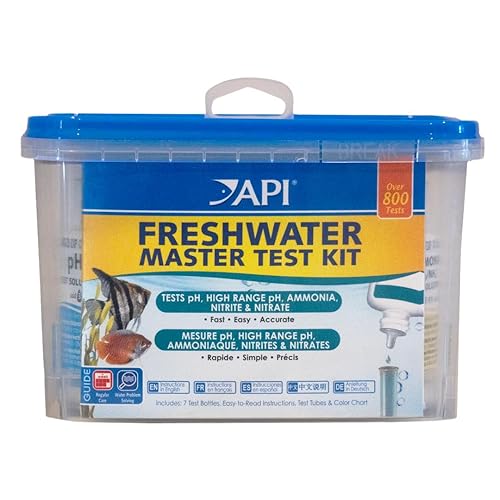
This is the week when melt looks worst, and it is also the week when a water test earns its keep. Run a full panel with an API Freshwater Master Test Kit and write the numbers down: ammonia, nitrite, nitrate, and pH. What you are checking is that the decaying leaves are not pushing an immature tank into an ammonia spike. Ammonia anywhere above zero in a tank under two months old means pull a little water, feed the fish less, and retest tomorrow. If the panel is clean, the melt is cosmetic and you simply wait.
Expect between one third and all of the original leaves to go, depending on species and how air-grown they were. This is normal. Crypts can look completely bare and still come back from a healthy crown. Photograph the crowns on day 7. Photos beat memory for spotting new growth, which at this stage is usually a pale, curled, fingernail-sized leaf that does not look like the plant's catalog picture.
Days 8 to 14: Feed the Regrowth, Manage the Algae
By the second week, firm crowns are pushing new submerged-form leaves. Bring the photoperiod up to seven or eight hours, resume normal half-to-full fertilizer dosing, and add a root tab under heavy root feeders like swords and crypts. This is also when the fallout of melt shows up as fuzzy or brown patches on slow-decaying old leaves and open substrate.
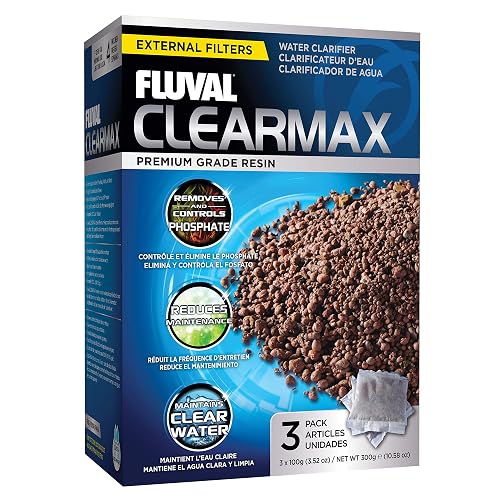
Handle algae by nutrient discipline rather than panic dosing. Decaying plant material dumps phosphate back into the water, and phosphate feeds fuzzy and hair algae. If your nitrate creeps up while the plants are still sparse, or phosphate-driven algae starts spreading across the substrate, a phosphate-binding media in the filter is the surgical fix; the Fluval ClearMax phosphate remover is a standard option that trims the excess without stripping the tank the way a big water change plus overdosed fertilizer can. Remove obviously dead leaves during your normal weekly siphon and the situation resolves on its own in most tanks.
By day 14, a healthy plant should show at least one clearly new, firm, submerged-form leaf. If it does, the transition is won and the rest is maintenance. If it does not, the next section tells you how to judge whether patience is still justified.
The Mistakes That Turn Recoverable Melt Into a Dead Tank
Most melt disasters we read about were not caused by the melt. They were caused by the response.
The first and worst mistake is uprooting to check the roots. Every unpotting breaks root hairs and re-triggers adaptation. Once a crown is planted and firm, the only legitimate reason to lift it is a squishy rhizome or a foul smell at the base. Otherwise, diagnosis happens with eyes and a photograph, not a trowel.
The second mistake is fertilizing like a rescue mission. Dumping triple doses of iron and macros into a tank with a nearly leafless plant does not speed the plant up, because the plant has almost no surface area to absorb with. It does, however, feed every algae spore in the water. Half doses until regrowth is visible is the correct pace.
The third mistake is declaring war on algae with a total blackout. A three or four day blackout can be a legitimate tool for stubborn outbreaks, but running it on a tank full of transitioning plants starves the very organisms you are trying to grow. During melt recovery, use shortened photoperiod, phosphate control, manual removal, and patience instead.
The fourth mistake is chemical bombing. Algaecides during the transition window frequently finish off weakened plants, and some harm shrimp and snails in the same water. If a tank is cycled and the light is controlled, time does more work than any bottle.
Species That Melt Hard, Species That Never Do
Knowing your species tells you what to expect, and it is worth 60 seconds before any order.
Cryptocorynes are the famous melters. A crypt can go completely leafless from nothing more than a change of water chemistry, and growers sell them precisely because they rebound dramatically from intact crowns. Amazon swords and their relatives melt most or all of their emersed foliage and rebuild in weeks. Many stem plants, including various ludwigia and rotala forms, shed their lower leaves and re-sprout from nodes. Anubias, java fern, and bolbitis ferns are rhizome plants and rarely melt hard, but their rhizomes are unforgiving if buried — most anubias losses blamed on melt are actually suffocated rhizomes.
On the low-drama side, mosses, floating plants, and most hardy stem plants like hornwort usually transition with little visible loss. Hornwort deserves its own warning label, but in the opposite direction: it can shed needle-like fragments when stressed, which looks alarming and cleans out with a siphon net.
When to Give Up on a Plant
Patience has a limit, and pretending otherwise helps nobody. Give up on a specimen when its growth point is gone: a crown that squishes, a rhizome that is brown and hollow, a stem base that disintegrates on contact. At that point the plant cannot regenerate, no schedule will save it, and leaving it to rot in the tank only feeds algae and ammonia. Remove it, note which species struggled, and adjust for next time.
Do the arithmetic honestly too. If a plant showed no new growth after a full month in a stable, cycled, correctly lit tank, the problem is probably chronic: too little light for the species, a genuine nutrient gap, or a species mismatched to your water. Those are fixable problems, but they are setup problems, not melt, and they deserve their own diagnosis.
The Takeaway
Melting is the hobby's most misleading normal. The plant that arrives looking like soup is, in most cases, doing exactly what its species does when its world changes: cutting losses and rebuilding. Your job during the transition is narrower than it feels. Keep the water cycled and tested, keep the light modest, feed lightly, remove what is truly dead, and touch nothing with roots. Judge the plant on its crown and its new leaves, never on the leaves it shipped with.
Two weeks of restraint buys you the plant you actually paid for. Three days of fiddling buys you a bare tank and a lesson. We would rather you learn it here, for free, while your crypts are quietly growing their first real leaves under the substrate line.
Related Reading
Want more on this topic? Check out our guides on aquarium myths debunked fish keeping beliefs, how often change aquarium water schedule guide, best betta fish tanks bowls solo habitat setups.