That Dusting of Salt on Your Fish Is Not Salt: Ich Moves Faster Than Most Treatment Plans
Here is the scene that plays out in fishkeeping forums every single day: someone posts a photo of a guppy or a betta flecked with tiny white dots, and half the replies say the same thing. Add some salt, wait a week, it will sort itself out. Three days later that same fish is gasping at the surface, because Ichthyophthirius multifiliis does not live on the outside of your fish. It burrows under the skin and, when the spots show up on the gills, it suffocates fish from the inside. The visible specks are the middle of the parasite's life story, not the beginning and not the end.
Ich is probably the most common disease in freshwater aquariums, and it is also one of the most curable. The problem is that the standard advice floating around is too short, too vague, or flat-out wrong about what the parasite is doing while you watch and wait. We want to give you the plan that actually clears it: one built around the lifecycle, the temperature clock, and the handful of mistakes that cause reinfection weeks later. Follow it start to finish and the odds are heavily in your favor. Cut it short, as most people do, and you will be writing the same forum post again next month.
First, Understand What the Spots Actually Are
The white dots you can see are trophonts, the feeding stage of a ciliated protozoan. Each one is a single parasite that has burrowed beneath the fish's outer skin layer, formed a protective cyst, and is feeding on tissue and fluids. That cyst is why spot treatments fail. Whatever medication you dose, most of it cannot reach the parasite while it sits under the skin. Pulling one fish out and dipping it in something harsh stresses the animal and does nothing to the hundreds of parasite stages already loose in your tank.
When a mature trophont finishes feeding, it drops off the fish, sinks to the substrate, and encysts again as a tomont. Inside that tomont, the parasite divides rapidly, producing hundreds of free-swimming theronts. Those theronts have a window of roughly two to three days to find a host, and if they do not, they die. This is the entire reason treatment works at all: for a short stretch of the cycle, the parasite is exposed in open water. Your job is to keep medication in the water through every one of those windows until no tomonts remain in the gravel. That takes longer than three days, which is the single biggest reason so many treatments fail.
The Temperature Clock Changes Everything
The lifecycle speed depends almost entirely on water temperature. According to the University of Florida IFAS Extension, the Ich lifecycle can complete in as little as four days at around 25 degrees Celsius, but it stretches to weeks in cooler water. At 21 degrees you are looking at roughly a week or more per cycle. Below about 10 degrees the parasite can effectively pause and sit in the substrate, waiting. This is why an outbreak that rips through a heated tropical tank in days can smolder for a month in an unheated goldfish bowl.
It also explains the classic horror story: the fish looked clean for a week, the owner stopped treatment, and then the tank exploded with spots again. The treatment covered one cycle while tomonts in the gravel were still dividing. Every plan below is written against that clock.
Step 1: Confirm It Is Actually Ich
Before you dose anything, spend five minutes with a flashlight. True ich looks like someone sprinkled fine white salt grains across the body and fins, and the grains are remarkably uniform in size, like pinheads. The fish will usually flash, meaning it scrapes itself against gravel, driftwood, or filter intakes trying to relieve the irritation. Gill covers may pump faster than normal.
The two most common lookalikes behave differently. Epistylis, which is often mistaken for ich in warm water tanks, grows in fuzzy, irregular patches and tends to stick out from the body rather than sit under the skin. Fungal growths look like cotton tufts and usually appear on a wound or dead tissue rather than spreading as uniform grains. If you see ragged patches instead of salt grains, stop and re-diagnose before treating. Dosing a fungal or bacterial problem with an ich medication just adds stress on top of illness.
Step 2: Turn Up the Heat, If Your Fish Can Tolerate It
For a standard community tank of tetras, barbs, guppies, corydoras, and most cichlids, raising the temperature to 26 to 28 degrees accelerates the lifecycle so the parasite spends less time protected and more time exposed. Increase it gradually, no more than one degree every few hours, because a fast swing stresses sick fish further. Warm water holds less dissolved oxygen, so run an air stone or point your filter output to agitate the surface while the tank is heated.
Not every fish gets the heat treatment. Goldfish and white cloud mountain minnows are cold-water species, and some loaches and wild-caught fish dislike temperatures that high. For those tanks, treat at the normal temperature and simply extend the full course of medication to cover the slower lifecycle. A cooler tank with a complete three-week treatment beats a hot tank with a rushed one, every time.
Step 3: Pull the Carbon Out of Your Filter
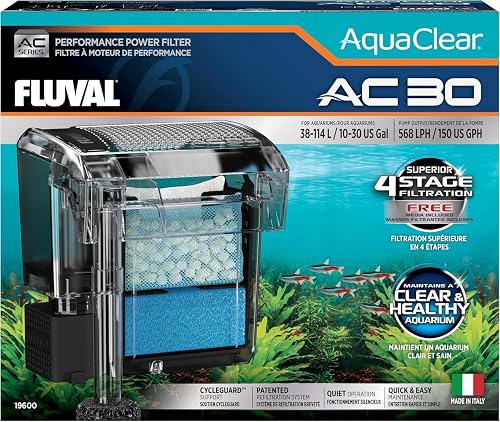
Activated carbon strips medication from aquarium water with impressive efficiency. Leave it in and you are dosing an empty tank while the filter quietly removes your treatment. Lift the carbon out and set it aside in a sealed bag; do not throw it away if it is still clean, because you will want it back once treatment ends to polish the water. On hang-on-back filters this takes seconds. A design like the AquaClear 30 Power Filter uses an open media basket where the carbon insert lifts straight out while the sponge and bio-media stay undisturbed, which is exactly what you want during treatment since the beneficial bacteria need to keep working. Leave the biological media alone for the entire treatment. Scrubbing it now would knock your biofilter at the worst possible moment.
Step 4: Dose Correctly, Then Repeat on Schedule
Pick a medication labeled for ich, typically one built around copper, malachite green, or formalin combinations, and follow the label. Two adjustments matter in practice. First, calculate your real water volume, not the nominal tank size. A 20 gallon tank with two inches of gravel, rockwork, and driftwood holds closer to 16 gallons. Overdosing copper in a small tank can wipe out fish that were already struggling. Second, halve the dose for scaleless or sensitive fish: loaches, eleotrids, some catfish, and any tank with shrimp or snails, which copper kills outright. If invertebrates are present, move them to a temporary container for the full treatment period rather than gambling with a low dose.
Then hold the schedule. Most products are dosed daily or every other day for a set number of days, sometimes with partial water changes between doses. Set phone reminders. The people who lose fish to ich are almost never the ones who under-dosed on day one; they are the ones who drifted off schedule by day five.
Step 5: Vacuum the Gravel and Test the Water
Remember the tomonts in the substrate. Siphoning the gravel every two to three days during treatment physically removes cysts before they burst into a new wave of theronts. Clean the deepest sections where debris collects, because that is where tomonts settle. This one habit, more than any product, is what separates a clean cure from a lingering infection.
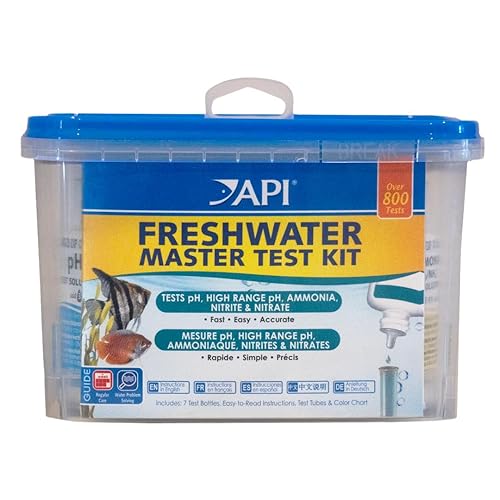
While you are at it, keep close watch on water quality. Treatment periods involve medication, partial water changes, stressed fish, and disrupted feeding, and the biofilter can wobble under all that. This is where a liquid test kit earns its place on the shelf. The API Freshwater Master Test Kit measures ammonia, nitrite, and nitrate with reagents rather than paper strips, and during an ich outbreak we recommend testing every other day. If ammonia or nitrite registers at all, do a partial water change immediately, re-dose any medication removed by the change, and hold off feeding for a day. According to the AVMA, poor water quality and stress sit behind most disease outbreaks in aquarium fish, which means clean water is not optional during recovery. It is the treatment.
Step 6: Keep Going After the Spots Disappear
This is the step everyone skips. The spots vanish, the fish perk up, and the bottle goes back under the sink on day five. Two days later the tank is worse than it started, because tomonts that were still dividing in the gravel just released a fresh generation. The rule we follow: continue full treatment for at least three days, and preferably a full cycle, after the last visible spot. On a heated tank that usually lands you at ten to fourteen days total. On an unheated or cold-water tank, plan on three weeks. Write the end date on the calendar the day you start, so the finish line is a decision you made on day one, not a mood on day six.
When the course is complete, reinstall the carbon or drop in a fresh carbon insert, run it for 24 hours to clear residual medication, then do a substantial partial water change, around 40 to 50 percent. Keep the temperature elevated for another week if your fish tolerate it, as a cheap insurance policy against any late theronts.
What Does Not Work, No Matter What the Bottle Says
Save your money on a few things. Garlic additives have no solid evidence behind them as an ich cure; feeding quality food supports the fish, but garlic is not a treatment. Spot dips and baths, where a fish is briefly dunked in medicated water, fail because the tank itself remains full of infectious stages; the fish goes back into the outbreak. Feeding fasting for a day or two is fine, since theronts do not care about food, but starvation beyond that just weakens the fish you are trying to save. And doing nothing is not a strategy either: in warm water, heavy ich on the gills can kill within days.
Aquarium salt sits in the middle ground. At one to three teaspoons per gallon, sodium chloride disrupts the free-swimming stages and is a legitimate adjuvant for tolerant species like most livebearers, and it is the traditional backbone of treatment for goldfish. But it is dosed in pre-dissolved partial amounts across water changes, not dumped in the tank, and it is wrong for sensitive plants, scaleless fish at high concentrations, and many catfish. If you use it, treat it as part of a plan, not the whole plan.
Why Ich Came Back After You Treated It
If you cleared an outbreak three weeks ago and the spots are back, the parasite did not mutate overnight. One of four things happened. The first course was cut short, leaving surviving tomonts in the substrate. The gravel was never vacuumed, so cysts rode out treatment untouched. Carbon stayed in the filter, silently neutralizing every dose. Or new fish carried a fresh strain straight into the tank. Each of these is fixable, and all four are prevented by the same discipline: full course length, gravel siphoning, carbon out, and a quarantine period of four weeks for every new arrival before it touches the display tank.
There is also a nastier possibility worth knowing about: heat-resistant ich strains exist, documented in warm-water aquaculture, where the parasite completes its cycle even at temperatures that should suppress it. If you ran a full, correct course at high temperature and the infection persisted, drop back to a copper-based medication at label dose for the full extended period rather than leaning on heat alone.
When Ich Becomes an Emergency
Spots on the body are treatable. Spots on the gills are the emergency, because gill tissue is where the parasite does lethal damage. Rapid gill movement, gasping at the surface, fish hanging under the filter output, or a fish sitting motionless near the bottom all point to gill involvement. In that case, prioritize oxygen: maximum surface agitation or an air stone immediately, stop feeding, do a partial water change, and get the medication dosed the same hour. A fish that is already mouth-breathing may not have days to wait for a lifecycle-based plan, and there is no shame in adding an extra emergency step on top of the schedule.
If several fish are deteriorating despite correct treatment, water quality is the first suspect and the second is a secondary bacterial infection taking advantage of damaged skin. Ragged fins, red streaking, or ulcers alongside healing spots call for a different medication and, ideally, a conversation with a fish-experienced veterinarian.
The Practical Takeaway
Ich rewards patience and punishes shortcuts, which is a rare trait in fish diseases. The full plan: confirm the salt-grain pattern, heat to 26 to 28 degrees if your fish allow it, pull the carbon, dose a real ich medication on schedule at true tank volume, vacuum the gravel every two to three days, test for ammonia and nitrite throughout, and keep treating for three days past the last spot. Ten to fourteen days of consistency clears an infection that three days of hoping never will. And the cheapest ich treatment of all remains the one you never need: a four-week quarantine tank for every new fish. The parasite is excellent at hiding in a bag. Your tank does not have to give it a home.
Related Reading
Want more on this topic? Check out our guides on aquarium myths debunked fish keeping beliefs, best fish food for bottom feeders sinking pellets and wafers, best aquarium uv sterilizers.