The countdown starts the second the lights die
Most fishkeepers assume the heater is the emergency during a power cut. It is not. The heater failing is a slow, survivable problem for almost every community tank. The thing that actually kills fish in an outage is dissolved oxygen, and it fails without any visible warning. Your filter stopped agitating the surface the moment the impeller stopped spinning, and in a well-stocked tropical tank the oxygen reserve can slide into the danger zone within four to eight hours. You will not see an ammonia reading rise, you will not hear an alarm, and by the time fish are gasping at the surface you are already behind schedule.
That is why our advice is to stop treating an outage like a heating problem and start treating it like a breathing problem. The order of threats in a typical freshwater community tank is oxygen first, temperature second, ammonia third. Nearly every mistake owners make during an outage comes from attacking these in the wrong sequence, such as dumping in hot water for warmth while ignoring the fact that warm water holds even less oxygen than cool water.
This guide walks through the first 24 hours hour by hour: what to do in the first sixty minutes, how to keep oxygen moving with no electricity, how to slow heat loss without cooking your fish, why the filter needs to be left alone, and exactly what to check before you plug everything back in. None of it requires a generator. All of it works in a dark living room with a flashlight and a kitchen towel.
Oxygen is the emergency. Temperature is the slow problem.
Warm freshwater at 78 degrees holds roughly 8 milligrams of dissolved oxygen per liter at full saturation, and that number falls as temperature rises. Meanwhile your fish, bacteria, and any snails are consuming it around the clock. In a heavily stocked tank with limited surface area, consumption can outrun what little passive exchange happens at a still surface. Surface agitation is everything. A tank whose surface is rippling and splashing exchanges gas many times faster than one sitting flat and motionless, which is why the filter outage matters more than the light outage.
Temperature, by contrast, moves at a pace you can manage. A typical glass tank in a 70 degree room loses roughly one to two degrees Fahrenheit per hour depending on size, water volume, and how much air is moving past the glass. A 55 gallon tank with a full hood will coast through a two-hour outage with barely a degree of change. The real risk arrives with outages that stretch past six hours, or with small tanks under 10 gallons, which lose heat far faster because there is simply less thermal mass.
Know your species margins before winter storm season. Most community fish, tetras, rasboras, corydoras, and livebearers tolerate a slow drift down to about 68 degrees without lasting harm. Bettas and discus are less forgiving and start stressing in the mid 70s. Goldfish and white cloud mountain minnows barely notice an outage, since they are comfortable into the low 50s. According to the AVMA, household pets should be part of every family emergency plan, and for fishkeepers that plan starts with knowing each species lower temperature limit in advance, not at 2 a.m. with a flashlight in your teeth.
The first hour: four things, in this order
When the power cuts, resist the urge to start doing everything at once. Do these four things in sequence.
First, stop feeding immediately. Any food you add will rot uneaten, consume oxygen while it decays, and push ammonia upward exactly when your filter has stopped processing waste. Your fish are not hungry and they will not be harmed by skipping several days of meals. More on that below.
Second, get the surface moving. If you own a battery-powered air pump with an air stone, drop it in now. If you do not, see the next section for ways to agitate the surface by hand. Every minute of stilled surface is a minute of falling oxygen.
Third, keep the lid on and insulate the tank. Wrap the sides and back with blankets, sleeping bags, or thick towels, and leave the hood closed to trap both heat and humidity. Do not wrap the top surface where gas exchange happens, and do not smother the tank so tightly that nothing can breathe.
Fourth, leave the filter switch alone and leave the canister closed. This is the step most people get wrong, and it is covered in detail below, because an unopened filter during an outage is safe while an opened one after a long outage can poison the tank on restart.
Then do nothing else for a while. Half of outage damage is caused by frantic intervention: boiling water poured straight onto glass, water changes with untreated tap water, filters rinsed under the faucet. A calm tank left mostly alone is a tank that survives.
Keeping oxygen moving without a pump
If the outage outlasts your battery stock, aeration becomes a manual job, and it is an easy one. Fill a clean cup or small pitcher from the aquarium, raise it well above the water line, and pour it back in from a height of six inches or more. The splash pulls air into the water each time. Repeat this every twenty to thirty minutes. It is tedious, but it works, and it is the single most effective no-electricity intervention available. One person can keep a 40 gallon community tank oxygenated this way for hours.
A few cautions on improvised aeration. Pour from a container that has never touched soap, detergent, or cleaning chemicals, since residues that are harmless to humans can be lethal at fish-scale concentrations. Pour onto the water surface or against the glass rather than directly onto fish or delicate plants. And keep the room itself ventilated but not cold; a wide-open window in January works against every other step in this plan.
Learn to read the warning signs of low oxygen so you know whether your schedule is working. Fish hanging near the surface with mouths working at the waterline, rapid gill movement, lethargy in species that are normally busy, and a loss of interest in everything around them are the escalation sequence. Gills that look pale or very dark red instead of healthy pink point to oxygen trouble or gill damage. If you see surface gasping, you are not aerating often enough, so tighten the interval and add a second pour point on the opposite end of the tank.
Heat retention: wrap it, seal it, and stop opening the lid
Your tank holds heat far better than most people expect if you simply stop letting it escape. Blankets or towels wrapped around the sides and back can cut heat loss dramatically, and a full hood traps a warm, humid air layer above the waterline. Keep the lid closed for the duration. Every lift of the lid vents that warm layer and releases heat, so peek as rarely as possible, and use a flashlight rather than the room light anyway since there is no power to waste.
When the drop gets serious, warm water bottles become the tool of choice, with rules. Fill sturdy bottles or sealed jars with warm, not boiling, tap water, and float them in the tank. Never pour hot water directly into the aquarium: thermal shock can crack glass, and the hot plume can scald fish that drift into it. Swap bottles as they cool. A slow, steady drift of a degree an hour is exactly what you want; a fast spike is its own emergency.
If you must add water to replace evaporation, dechlorinate it first and match it to the tank temperature as closely as you can judge by touch. And manage expectations with numbers: in a 68 degree room, a wrapped 29 gallon tank can hold above 70 degrees for six to eight hours starting from 78. Unwrapped and lidless, the same tank will not. The wrapping is not optional for long outages, it is the difference between a cold fish and a dead one.
Leave the filter alone, especially if it is a canister
Here is the counterintuitive part. During the outage, your filter media is not your enemy, and neither is the filter itself. Do not disassemble it, do not rinse the media, and above all do not open a canister filter that has been sitting dead for many hours. Inside that sealed canister is a volume of stagnant water full of trapped waste, and once the oxygen in that water is consumed, anaerobic bacteria take over and begin producing hydrogen sulfide, the gas that smells like rotten eggs. A large canister such as the Penn-Plax Cascade 1200 holds over a gallon of water in its chambers, which is excellent for biological filtration on an ordinary day and a genuine liability on day two of an outage.
Hang-on-back filters behave differently and restart more gracefully, because their media sits in an open chamber exposed to air. A model like the AquaClear 30 power filter keeps its foam and carbon in a lift-out basket, so when power returns you can swish the media in a bucket of removed tank water and drop it straight back in. 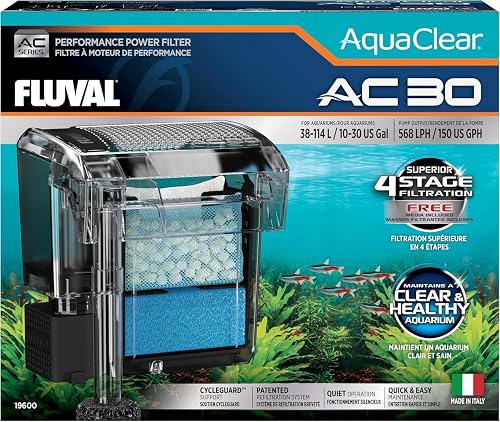 The bacteria colony on that foam survives short outages well as long as it stays damp and you never rinse it under chlorinated tap water, which kills nitrifying bacteria on contact.
The rotten egg test belongs in every restart routine. When power returns, crack the canister outdoors or over a utility sink and smell the water that drains out. If it stinks of sulfur, do not let that water reach the aquarium. Drain it away, rinse the coarse media briefly in dechlorinated water, and expect to run a few extra water changes over the following week while the colony recovers. Media that smells merely earthy or faintly pond-like is normal and safe.
Feeding: the hardest instruction in this article
Stop feeding from the moment the power fails until well after the filter is running again. Healthy adult fish can go three to seven days without food with no harm whatsoever, and the instinct to keep them fed during a crisis does more damage than the fast does. Every flake that sinks uneaten decays into ammonia, and ammonia is the one water parameter your offline filter cannot process. During an outage you are fighting to keep oxygen up and toxins down, and feeding works against both.
Once power is restored, wait a full day before the first small meal, then resume normal portions. If the outage ran long, treat the first week after like a partial cycling event: test water daily, feed lightly, and change water more often than usual.
That testing is where a reliable liquid test kit earns its place in the emergency plan. Paper strips will not reliably distinguish a rising ammonia problem from a stable one, and during recovery you need real numbers. We keep the API Freshwater Master Test Kit 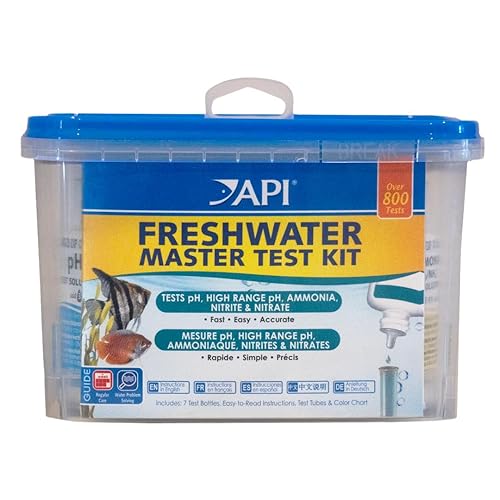 in the same drawer as the flashlights for exactly this reason, since the moment power returns you want to know your ammonia and nitrite readings, not guess at them. Any ammonia above zero after a long outage calls for a partial water change of 25 to 50 percent, dechlorinated and temperature-matched, repeated daily until readings stay clean.
The restart checklist: what to check before you plug in
Power returning is not the end of the emergency, it is the beginning of the most dangerous hour. Run this checklist in order.
Inspect the heater before it gets electricity. A heater that ran dry because the water level dropped, or one that sat in rapidly cooling water, can have a hairline crack in the glass. Look along the full length of the tube for cracks, fogging inside the glass, or scorch marks. A damaged heater plugged into a full tank can shatter, electrify the water, or cook the tank if the thermostat sticks. When in doubt, do not trust it, and let the tank warm slowly on its own or with floated bottles while you arrange a replacement.
Prime and restart the filter. Hang-on-back filters usually need their chamber refilled before the impeller will catch. Canisters need proper repriming per their design. Confirm outflow is strong and the surface is agitating before you walk away.
Smell the canister water before it reenters the tank, as described above, and discard anything with a sulfur odor.
Raise the temperature gradually, no faster than about two degrees per hour. Fish handle a slow cold drift far better than a rapid rewarming, and sudden heat spikes stress respiration exactly when oxygen reserves are lowest.
Test ammonia and nitrite, then act on the numbers rather than on hope. A water change on day one is cheaper than a fish funeral on day three.
Hold off on feeding for 24 hours, then restart with one small meal.
According to the ASPCA, household emergency kits should cover the animals in the home as deliberately as they cover the people, and for an aquarium that means the fish-specific items below, which cost less than one replacement shoal of tetras.
The 30-minute outage kit: buy it before you need it
Everything in this guide is easier with a small kit assembled in advance. Our list, in priority order:
A battery-powered air pump with fresh batteries and an air stone. This single item replaces hours of manual cup-pouring and is the highest-value purchase in fishkeeping emergency gear. Check the batteries twice a year when clocks change.
A liquid test kit for ammonia, nitrite, nitrate, and pH, stored where you can reach it in the dark.
A spare thermometer, since your primary one may be battery-driven and screen-based models die with the power. A simple glass stick-on or floating thermometer needs no electricity at all.
Bottled dechlorinator, since tap water used for emergency water changes still needs treating.
A printed copy of your plan, because a power outage is a bad time to discover your reference guide lives on a dead phone. Note each species lower temperature tolerance on it.
A clean, soap-free pitcher and bucket dedicated to the aquarium, labeled as such so nobody borrows them for the floor.
Total cost lands under the price of one mid-range filter. Total benefit is measured in fish that are alive on day three.
When moving fish is worth it, and when it is not
Relocation is the last resort, and it has its own body count, because capturing, bagging, and temperature-shocking fish is stressful enough to kill them even when the destination is perfect. Our line is this: move fish only if the outage will clearly exceed 24 hours, or if the tank has already broken your temperature floor, or if you have a heated, cycled, fish-safe destination within a short drive.
If you do move them, do it correctly. Use clean buckets or bags with one-third air, match the destination water temperature within a couple of degrees, and float before release. Do not dump tank water into someone else's established tank, both for disease reasons and out of courtesy. Take your test kit and some of your own dechlorinated water along.
If none of those conditions apply, the fish are better off staying in their own tank, wrapped, aerated by hand, and unfed. Fish are cold-blooded survivors of a strategy that predates us all; a slow cool-down with good oxygen is an inconvenience for them, not a catastrophe. The tank does not need a hero at 3 a.m. It needs someone who pours a cup of water every half hour, keeps the lid closed, and does not touch the canister. Do those three boring things, and the odds for the first 24 hours tilt sharply in your favor.
Related Reading
Want more on this topic? Check out our guides on best aquarium sponge filters fry shrimp nano tanks, best betta fish tanks bowls solo habitat setups, best aquarium wavemakers circulation pumps.