Dog Harnesses in 2026: A Practical Buying Guide for Comfort and Control
A harness is one of the few pieces of dog equipment that touches the animal during nearly every walk, so the stakes are higher than they look. A collar concentrates leash pressure on the trachea, thyroid area, and cervical spine; a harness redirects that force across the chest and shoulders. That difference matters most for dogs that lunge, dogs recovering from neck or airway issues, flat-faced breeds, and puppies whose growth plates are still open. Published guidance from the AVMA pet owner resources and veterinary behavior references consistently note that ill-fitting walking gear causes chafing, restricted shoulder movement, and learned resistance to walks, which is why fit and design matter more than color or branding.
This guide explains how harnesses are classified, what the specifications actually mean, how to measure a dog correctly, and where the common failure points show up. It is written from published guidance, manufacturer specifications, and patterns in verified owner reports rather than from hands-on bench work. Every recommendation below should be treated as a starting point for your own fit check with your specific dog.
Why a Harness Instead of a Collar
The mechanical argument for harnesses is straightforward. When a dog pulls against a neck collar, the resisting force is applied to a small, sensitive area containing the trachea, esophagus, jugular veins, and thyroid gland. Repeated pressure there is associated with tracheal collapse in small breeds, coughing, and ocular pressure increases in brachycephalic dogs. A harness spreads the same load across the sternum and ribcage, which are built to absorb it.
That does not make every harness safe. A poorly fitted harness can rub the armpits raw, restrict the scapula, or allow a determined dog to back out entirely. Veterinary and behavior sources, including the Merck Veterinary Manual dog owner reference, emphasize that equipment should never interfere with breathing, gait, or range of motion, and that any gear causing hair loss or skin irritation should be adjusted or replaced rather than tolerated.
The Main Harness Categories
Back-Attachment Harnesses
The leash clips to a ring on the dog's back. These are the most common design for casual walking, hiking, and small breeds, because the geometry is simple and the load path is comfortable. The trade-off is that a back clip gives a strong puller use to lean forward; the harder the dog pulls, the more efficient the pull becomes. Back-clip harnesses suit dogs that already walk politely, seniors, and toy breeds that will never generate serious force.
Front-Attachment and No-Pull Harnesses
The leash clips to a ring on the chest. When the dog surges forward, the leash rotates the dog's body toward the handler instead of allowing forward drive. This is a steering mechanism, not a punishment, and it is the design most often recommended by trainers for adolescent and adult dogs that have not yet learned loose-leash walking. Many no-pull harnesses include a martingale loop across the chest, which tightens slightly under load to prevent the dog from slipping out. The limitation is that front-clip designs can interfere with a natural gait if the straps cross the shoulder joint too low, and they are generally not recommended for running or jogging because the constant lateral correction is awkward at speed.
Dual-Attachment Harnesses
Two rings, one on the chest and one on the back, allow the handler to switch attachment points or use a double-ended leash. This is the most flexible configuration and the one most trainers recommend for dogs in transition, because the back ring can be used for relaxed sniffing walks and the front ring for training sessions. Dual-attachment harnesses cost more and carry slightly more hardware weight, but they rarely need to be replaced as a dog's behavior improves.
Step-In and Vest Harnesses
Step-in designs have the dog place both front paws through openings, then the handler closes the harness over the back. Vest harnesses are similar but use a broader fabric panel. Both excel for small breeds, seniors, and dogs that dislike having straps pulled over the head. The weakness is adjustability: many step-in harnesses offer only one or two adjustment points, so a dog that falls between sizes may never get a precise fit. Fabric can also stretch over months of use, which is a common complaint in owner reviews.
Car Restraint and Crash-Tested Harnesses
These are engineered to keep a dog in place during sudden deceleration. They typically use wider webbing, metal nesting buckles, and five or more adjustment points, and they ship with a seatbelt tether. They are heavier and bulkier than walking harnesses, and most manufacturers specify that the harness must be used with the tether looped through a seatbelt, not clipped to a collar or a headrest. A crash-tested harness is a reasonable choice for dogs that travel weekly, but for a dog that rides twice a year, a well-fitted walking harness plus a secured crate may be more practical.
What Actually Matters in the Specifications
Webbing width and material. Nylon webbing in the 20 to 25 mm range is standard for medium dogs; large-breed harnesses often use 25 to 38 mm webbing, which spreads load but adds stiffness. Padded linings are usually closed-cell foam or neoprene; both cushion pressure points, but neoprene traps heat, which is worth noting for dogs walked in summer.
Hardware. Plastic side-release buckles are light and cheap but are the most common failure point reported by owners. Aluminum or stainless steel rings and load-bearing buckles cost more and add weight, but they are the right choice for dogs over roughly 25 kg or any dog with a history of breaking out of gear.
Adjustment points. Four to five independent adjustment points let a harness conform to unusual body shapes, including deep-chested sighthounds, barrel-chested bulldogs, and narrow-chested puppies. Two-point harnesses fit a narrow range of body types well and everything else poorly.
Reflective trim. Reflective piping or trim is a genuine safety feature for early-morning and evening walks. It does not replace a light or a high-visibility vest, but it materially improves how early a driver sees a dog at the curb.
Handles. A grab handle on the back is useful for lifting a dog into a car, steadying a senior on stairs, or controlling a reactive dog in a tight space. It adds a small amount of bulk and is not necessary for every household.
How to Measure a Dog Correctly
Three measurements drive sizing: neck circumference at the base of the neck, chest girth at the widest point just behind the front legs, and body length from the base of the neck to the base of the tail. Weight is a useful cross-check but should never be the primary sizing input, because two dogs of the same weight can differ by 15 cm in chest girth. Use a soft tape measure and keep it snug but not tight; if the dog is between sizes, size up and use the adjustment range rather than sizing down and hoping the straps reach.
After fitting, the standard check is that two fingers slide comfortably under every strap. Straps should sit behind the shoulder blade, not across it, and the chest strap should sit well above the sternum so it does not chafe the underside of the ribcage. A dog should be able to walk, trot, sit, lie down, and turn without the harness shifting or the shoulder moving differently than it does naked. If the dog freezes, ducks, or tries to bite the harness off, the fit or the style is wrong, not the dog.
Matching the Harness to the Dog
Small and Toy Breeds
Small dogs have delicate tracheas and proportionally larger heads, which makes step-in and vest designs attractive because they avoid pulling anything over the head. Look for lightweight hardware, narrow webbing, and a chest strap that sits high enough to avoid the armpits. Avoid heavy crash-tested harnesses in this size class unless the dog genuinely travels by car often, because the hardware weight can be a meaningful fraction of the dog's own body weight.
Medium and Large Breeds
Medium and large dogs benefit most from dual-attachment designs with metal hardware and four or more adjustment points. The most common owner complaint in this category is not durability but fit drift: straps that loosen over a walk, or a chest strap that migrates downward and restricts the shoulder. Checking strap tension before each walk takes a few seconds and prevents most of these problems.
Strong Pullers and Working Breeds
For dogs that pull hard, the priority is a front-attachment point, a martingale loop, and hardware rated well above the dog's weight. A back-clip harness on a strong puller is not a control device; it is a tow bar. Owners of large working breeds frequently report that a front-clip harness reduces pulling within a few sessions, but only when paired with reward-based training rather than used as a stand-alone fix.
Seniors and Dogs With Mobility Issues
Older dogs often need a harness with a support handle, wide padded straps, and a design that does not require lifting a leg high to put on. A rear handle also lets a handler assist a dog over a step or into a car without gripping the ribcage. Avoid any harness that crosses a arthritic shoulder joint; a low chest strap can change gait and increase discomfort.
Puppies
Puppies outgrow harnesses quickly, often within two to three months. A harness with a generous adjustment range is more economical than buying three sizes in a year. Fit matters more than price in this stage: a loose harness teaches a puppy to back out of gear, and a tight one teaches the puppy that the harness is unpleasant.
The Affiliate Example: A Concrete Option to Compare Against
Because harness specifications vary so widely, the most useful thing a buying guide can do is point to one concrete product so the reader has a reference point for hardware, webbing width, and adjustment count. The option linked below is a padded, adjustable harness with a front and back attachment point, which places it in the dual-attachment category described above. It is not a crash-tested car restraint, and it is not a heavy-duty working harness, so it suits everyday walking and light training rather than towing or vehicle safety.
Before purchasing, compare the manufacturer's sizing chart against your own three measurements, and read the most recent owner reviews specifically for comments about strap slippage, buckle durability, and fit on dogs with a similar chest shape. Those three themes account for most of the negative reports across this entire product category, regardless of brand.
If you want to see how the specs line up with your dog's measurements, you can check the current price on Amazon.
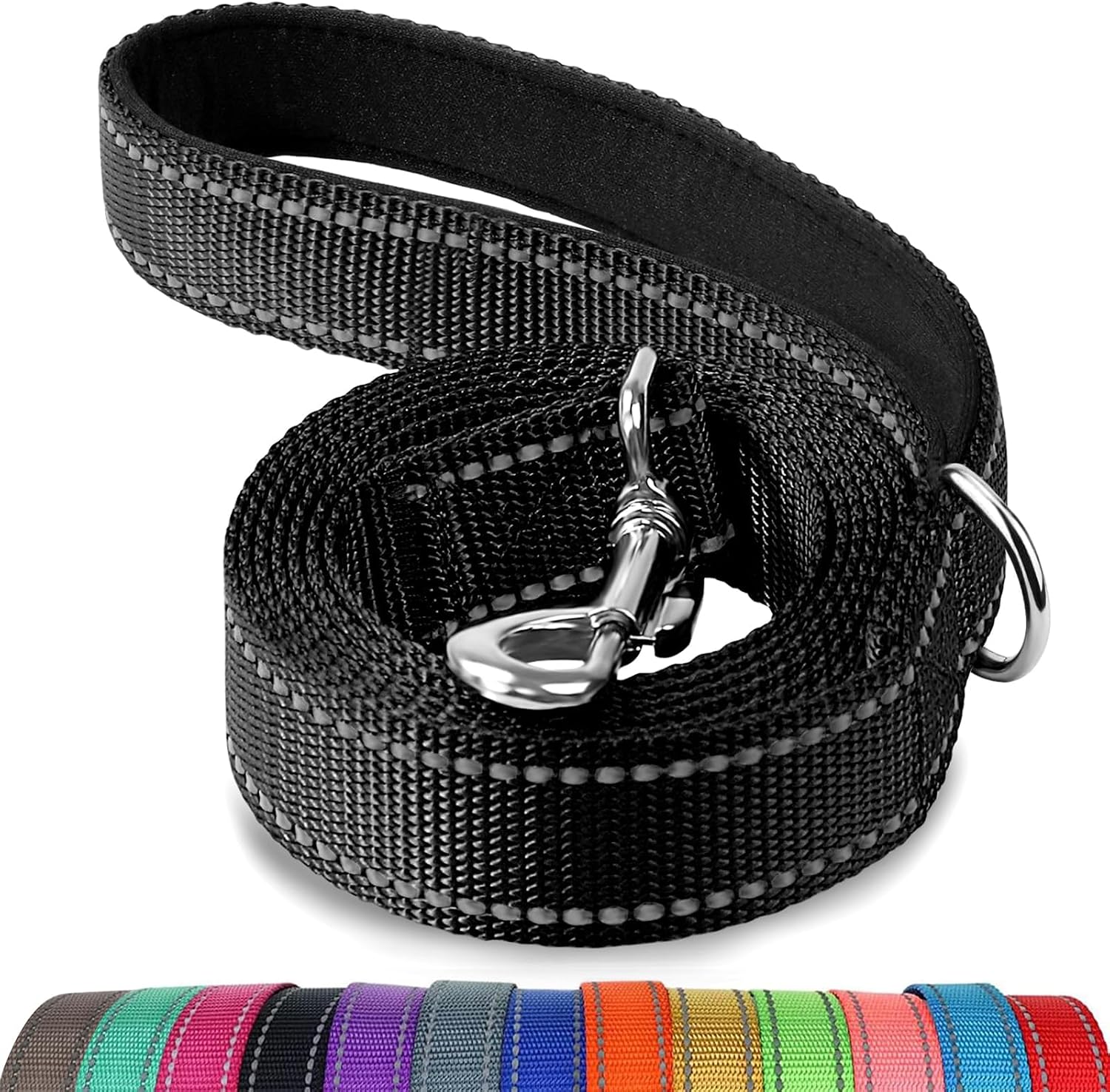
A reflective six-foot leash, the most common pairing with a dual-attachment walking harness.
Maintenance and Lifespan
Most nylon harnesses are machine washable in a mesh laundry bag on a cold, gentle cycle, then air-dried. Do not tumble dry, because heat degrades webbing coatings and can warp plastic buckles. Inspect the harness monthly for frayed stitching at the attachment rings, cracks in plastic buckles, and salt or mud buildup in the adjusters, which is a common cause of straps that will not stay tight.
A well-made harness used daily typically lasts two to four years. Replace it immediately if any load-bearing stitching is frayed, if a buckle has a visible crack, or if the webbing has been chewed. A harness that has been in a serious car accident should be retired even if it looks intact, because the webbing has already absorbed a load beyond its design point.
Common Mistakes
- Sizing by weight instead of chest girth, which is the single most common cause of returns.
- Leaving the harness on all day. Prolonged wear traps moisture and causes friction alopecia, especially in the armpits.
- Using a back-clip harness on a strong puller and concluding the dog cannot be trained.
- Attaching the leash to both rings at once without a double-ended leash, which creates an unpredictable load path.
- Ignoring a slight limp or shortened stride after fitting a new harness; gait changes usually mean the chest strap is too low.
- Buying a crash-tested harness and assuming it works without the seatbelt tether correctly routed.
Safety Notes
No harness is a substitute for supervision. Dogs left alone in a harness can become entangled, and dogs tethered by a harness in a yard can injure themselves if they run to the end of the line at speed. For any dog with a known neck, airway, or spinal condition, discuss equipment with a veterinarian before switching designs. If you suspect a dog has ingested part of a harness, buckle, or webbing, contact the ASPCA Animal Poison Control or your veterinarian immediately; swallowed hardware can cause obstruction.
Nutrition and body condition also affect harness fit. A dog carrying extra weight will have a larger chest girth and more friction at the armpits, and weight loss can change fit within weeks. The WSAVA Global Nutrition Guidelines recommend regular body condition scoring, which is a useful habit to pair with a monthly harness fit check.
What Has Changed for 2026: Sizing Charts, Test Protocols, and Escape-Resistant Details
Three developments in the harness category are worth knowing about before you buy. The first is a quiet shift in how sizing charts are written. Weight-first sizing caused so many fit failures that most established brands now lead with chest girth ranges and add weight only as a secondary reference, and several publish breed-specific fit notes for deep-chested and barrel-chested body types. When a listing still sizes purely by weight, that is a reasonable signal that the manufacturer has not invested much in fit engineering.
The second is clarity around crash testing. The phrase "crash-tested" appears on packaging across the price spectrum, but the testing behind it varies enormously, from informal static pull tests to full sled protocols modeled on child restraint standards. Independent certification work, most visibly from the Center for Pet Safety, has given owners a way to separate the two: certified products name the protocol and the dog-weight class they were tested at. If vehicle safety is the reason you are shopping, look for a named test protocol rather than the phrase itself, and route the tether exactly as the manufacturer specifies, because the harness and the tether are tested as a system.
The third is design attention on escape resistance. Dogs that back out of gear have driven a small wave of harnesses with a second belly strap, wider martingale-style chest panels, and adjustable waist loops behind the ribs, a construction that suits narrow-chested breeds such as sighthounds particularly well. Reflective trim has also improved from decorative piping to full 360-degree coverage on many models, which matters more than most owners expect for evening walks along roads.
One materials note: webbing made from recycled plastics is now common in this category. It performs comparably to virgin nylon in normal use, but quality still depends on weave density and stitching at the load-bearing rings, so inspect those points on arrival rather than assuming the label tells you anything about durability.
Frequently Asked Questions
Is a harness better than a collar for walking?
For most dogs, yes. A harness distributes force across the chest and shoulders rather than the neck, which reduces the risk of tracheal and cervical injury. Collars remain appropriate for identification tags and for dogs that already walk without pulling.
How do I know if the harness fits?
Two fingers should slide under every strap, the chest strap should sit above the sternum and behind the shoulder blade, and the dog should move normally in all gaits. Any rubbing, hair loss, or change in stride means the fit needs adjustment.
Can I leave a harness on my dog all day?
It is not recommended. Continuous wear traps moisture against the skin and creates friction points. Remove the harness after walks and allow the coat and skin to dry and breathe.
Why does my dog still pull in a no-pull harness?
Front-attachment harnesses reduce pulling by redirecting momentum, but they do not teach loose-leash walking on their own. They work best paired with reward-based training and consistent reinforcement of a slack leash.
Are front-clip harnesses safe for running?
Generally not ideal. The lateral steering that helps during a training walk becomes awkward at jogging speed and can alter gait. For running, a well-fitted back-clip or dedicated canicross harness with a bungee line is usually a better match.
How often should a harness be replaced?
Inspect monthly and replace at the first sign of frayed load-bearing stitching, cracked buckles, or chewed webbing. Daily use typically wears out a quality harness in two to four years.
Final Considerations
The right harness is the one that fits your specific dog's chest geometry, matches the dog's strength and behavior, and is comfortable enough that the dog walks normally while wearing it. Start with accurate measurements, choose a category that matches your dog's pulling behavior and travel habits, and treat the first two weeks as an adjustment period during which you check strap tension and skin condition after every walk.
If you would like a concrete starting point to compare against your measurements, you can view this option on Amazon. Compare its adjustment range and hardware against the sizing and materials criteria above, and read recent owner reports for your dog's approximate size and build before deciding.
Where to Buy
As an Amazon Associate, PawCritic earns from qualifying purchases. This does not affect our reviews or recommendations.
The harness referenced below is available through the link below. Confirm the sizing chart and return policy before ordering, since fit is the most common reason harnesses are returned.
You can check the current price on Amazon.
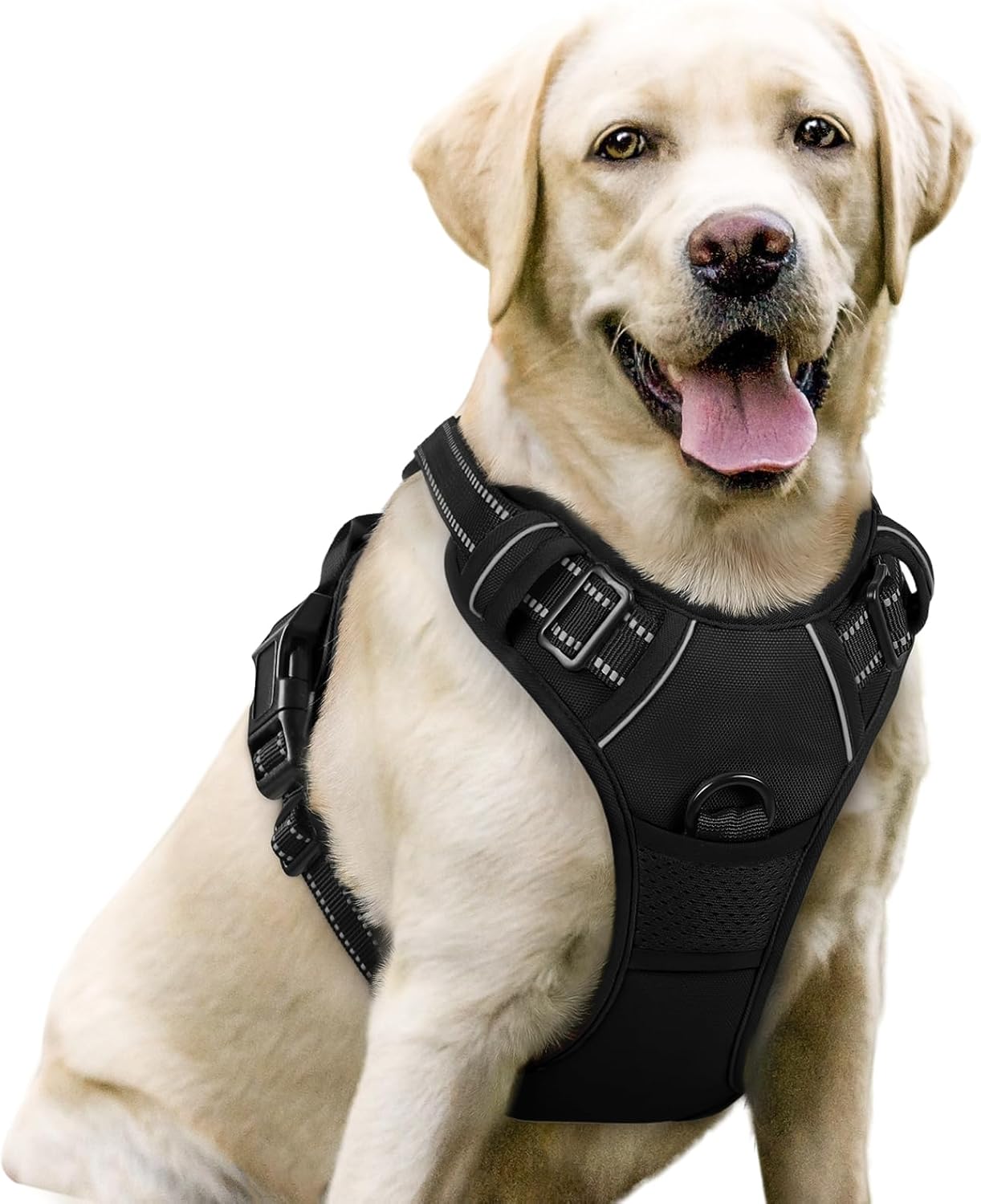
dog harnesses comfort and control on every walk
Summary Table
| Category | Best For | Attachment | Key Trade-Off |
|---|---|---|---|
| Back-clip padded harness | Everyday walking, calm dogs | Back | Little control over pulling |
| Front-clip no-pull harness | Training, adolescent pullers | Front | Steering feel, not for running |
| Dual-attachment harness | Dogs in training transition | Front and back | More hardware weight |
| Step-in or vest harness | Small breeds, seniors | Back | Limited adjustability |
| Crash-tested car harness | Frequent car travel | Back plus tether | Bulky and heavy |
| Heavy-duty working harness | Large strong pullers | Front and back | Can rub short coats |
If you want to look at one option that fits the dual-attachment, padded everyday category, you can view this option on Amazon and compare it against your dog's measurements.
Related Reading
dog leashes from standard to retractable, no-pull and crash-tested adventure harnesses, and how to stop leash pulling step by step.