Best Dog Treats 2026: A Buying Guide for Healthy Rewards
Dog treats do more than fill the gap between meals. They function as training currency, enrichment tools, dental hygiene aids, and a simple way to reinforce the bond between owner and dog. The market reflects that range: single-ingredient freeze-dried organ meats, calorie-controlled training bites, VOHC-accepted dental chews, long-lasting hard chews, and grain-free soft treats all compete for shelf space. Choosing well means matching the treat to the job, not chasing the loudest package claim.
This guide explains what published veterinary guidance and manufacturer specifications say about treat selection, then walks through the categories that matter most. One concrete example is linked where relevant so readers can see current pricing and labeling for themselves. The emphasis throughout is on checkable facts: calorie math, ingredient order, chew hardness, sizing, and species-specific safety.
Source: American Animal Hospital Association (AAHA) guidelines report that dental disease affects more than 50% of dogs over 3 years of age, making at-home dental care and annual professional cleanings critical to overall health.
Why Treats Matter Beyond Rewards
Treats occupy a strange position in canine nutrition. They are food, but they are not complete food, and most owners feed them without measuring. The WSAVA Global Nutrition Guidelines recommend that treats make up no more than about 10 percent of a dog's daily caloric intake, with the remainder coming from a complete and balanced diet. That single ratio reframes every treat decision: a 90-calorie dental chew is not a small snack for a 20-pound dog, it is nearly half the day's treat budget.
Treats also carry behavioral weight. High-value rewards, typically soft, smelly, and meat-based, accelerate training because they are consumed quickly and are worth working for. Low-value rewards, such as crunchy biscuits, work for casual reinforcement but slow down repetitive sessions. Understanding that hierarchy lets owners choose treats by function rather than by brand loyalty.
How to Read a Dog Treat Label
Ingredient lists are ordered by weight before processing, which means the first two or three ingredients tell most of the story. A treat listing chicken, chicken meal, or liver first is delivering animal protein as the primary component. A treat listing wheat flour, ground corn, or brewers rice first is delivering grain as the primary component. Neither is automatically wrong, but the distinction matters for dogs with sensitivities or for owners trying to keep carbohydrate load low.
Guaranteed analysis panels matter as well. Crude protein, crude fat, and crude fiber percentages are stated on a minimum or maximum basis, not as exact values. Moisture content is the most overlooked number: soft treats often contain 20 to 30 percent moisture, while freeze-dried and biscuit treats sit under 10 percent. That difference affects calorie density, shelf stability, and how quickly a treat spoils once the bag is opened.
Owners should also look for a calorie statement, usually expressed as kcal per treat or kcal per kilogram. Without it, portioning becomes guesswork. The AVMA pet owner resources note that obesity is one of the most common preventable conditions in dogs, and unmeasured treats are a frequent contributor.
The Main Treat Categories Explained
Soft Training Treats
Soft training treats are small, low-calorie, and designed to be swallowed in one bite. Manufacturer specifications for this category typically list 2 to 4 calories per piece, which allows dozens of repetitions in a session without blowing the daily calorie budget. The trade-off is texture: soft treats dry out once the bag is opened, and some formulas use glycerin or similar humectants to stay pliable, which owners with ingredient sensitivities may want to avoid.
Dental Chews
Dental chews earn their category through mechanical action. The Veterinary Oral Health Council grants acceptance to products that demonstrate measurable reduction in plaque or tartar in controlled studies, and the VOHC seal is the clearest third-party signal in this space. Chews in this category tend to run 60 to 120 calories each, which makes them a meal replacement rather than a garnish for small dogs. They also require size matching: a chew too large for the mouth does not contact the right tooth surfaces, and one too small can be swallowed whole.
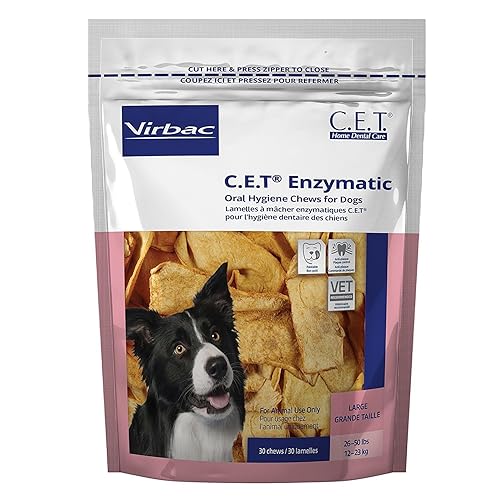
An enzymatic dental chew, representative of the third-party-evaluated dental category described above.
Freeze-Dried Single-Ingredient Treats
Freeze-dried liver, heart, and lung treats contain one ingredient, retain most of the raw nutrient profile, and carry a long shelf life because moisture has been removed. They are extremely palatable, which makes them useful for high-distraction training and for masking medication. The drawbacks are consistent across brands: high calorie density per gram, a strong odor, and a tendency to crumble into dust at the bottom of the bag.
Crunchy Biscuits
Crunchy biscuits are the oldest treat format and the most affordable per pound. They typically contain grains, added vitamins and minerals, and a moderate calorie load of 30 to 50 calories per biscuit. The abrasive texture provides some mechanical cleaning, though far less than a VOHC-accepted chew. Biscuits suit multi-dog households and casual rewarding, but they are a poor fit for dogs with grain sensitivities or for training sessions requiring rapid repetition.
Hard Chews
Hard cheese chews, antlers, and similar long-lasting items occupy dogs for extended periods and provide enrichment value. They are also the category with the clearest safety caveats. The Merck Veterinary Manual dog owner reference describes fracture of the carnassial teeth and other dental injuries associated with excessively hard chews. A useful rule of thumb reported by veterinarians is that a chew should indent slightly when pressed with a fingernail; if it does not, it may be harder than the dog's teeth.
Calorie Math Every Owner Should Know
The 10 percent rule is the starting point, not the finish line. A 50-pound dog eating roughly 1,000 calories per day has a treat budget of about 100 calories. That allows one dental chew, or roughly 25 to 30 soft training treats, or a small handful of freeze-dried liver. A 10-pound dog eating roughly 300 calories per day has a 30-calorie budget, which is one-third of a dental chew or about ten training treats.
Owners who train frequently often reduce the main meal by 10 to 15 percent to compensate, a strategy that appears in guidance from veterinary nutritionists. The alternative is gradual weight gain, which is easy to miss on a long-haired dog and harder to reverse than to prevent.
Ingredients to Look For and Ingredients to Question
Named animal proteins, whole vegetables, and natural preservatives such as mixed tocopherols are generally positive signals. Vague terms such as meat meal, animal digest, or poultry by-product meal are legal but less informative, since they can vary batch to batch. Artificial colors, propylene glycol, and BHA or BHT appear less often than they did a decade ago but still show up in budget lines.
Grain-free formulas deserve a specific note. The FDA has investigated a possible association between grain-free, legume-heavy diets and canine dilated cardiomyopathy, and while the investigation is ongoing, some veterinary cardiologists recommend caution with diets high in peas, lentils, and chickpeas. That concern applies mainly to complete diets rather than treats, but owners feeding large volumes of grain-free treats may want to discuss it with their veterinarian.
Safety: Choking, Toxicity, and Rawhide
Treat safety divides into three risks: size, hardness, and ingredient toxicity. Size risk is highest for small dogs and for chews that can be swallowed whole; a chew should be larger than the dog's windpipe until it is fully consumed. Hardness risk centers on dental fracture, described above. Ingredient risk is narrower but more serious: the ASPCA Animal Poison Control maintains a list of foods toxic to dogs that includes chocolate, xylitol, grapes and raisins, onions, garlic, and macadamia nuts. Treats containing any of these, or treats stored near them, should be kept out of reach.
Rawhide is a separate case. It is digestible in theory but often consumed in large pieces that can cause esophageal or intestinal obstruction, and some rawhide is processed with chemicals that raise additional questions. Many veterinarians now steer owners toward alternative long-lasting chews, and this guide follows that recommendation.
How to Choose by Dog Size
Small dogs under 20 pounds need treats under 5 calories for training and dental chews in the smallest available size. Standard biscuit treats are often too large and should be broken. Medium dogs from 20 to 50 pounds fit the standard sizes of most product lines. Large dogs from 50 to 90 pounds need larger chews to get adequate chewing time and appropriate dental contact. Giant breeds over 90 pounds often need extra-large or jumbo formats, and owners should verify that the chew is not so hard that a powerful jaw can shear off a fragment.
Puppies are a special category. Their teeth are softer and their jaws weaker, so hard chews are generally inappropriate until the adult teeth are fully set, usually around 10 to 12 months. Puppy-specific soft treats with DHA are commonly recommended during the first year, and training treats should be small enough to avoid filling the puppy before the session ends.
Special Diets and Medical Conditions
Dogs with food allergies typically do best on limited-ingredient or single-protein treats, ideally with a novel protein their immune system has not previously encountered. Dogs with diabetes need low-glycemic treats, and owners should discuss carbohydrate content with their veterinarian. Dogs with pancreatitis or hyperlipidemia need low-fat options, which rules out most cheese and many freeze-dried organ meats. Dogs with kidney disease may need restricted phosphorus, which affects the choice of meat-based treats. In every case, the treating veterinarian's guidance overrides general recommendations.
One Concrete Example to Compare Against
Rather than presenting a numbered rundown of named products, this guide uses a single example so readers can see how the criteria above apply in practice. The item linked below is a commonly available dog treat that appears on Amazon and can be evaluated against the checklist below: ingredient order, calorie statement, size options, and intended use.
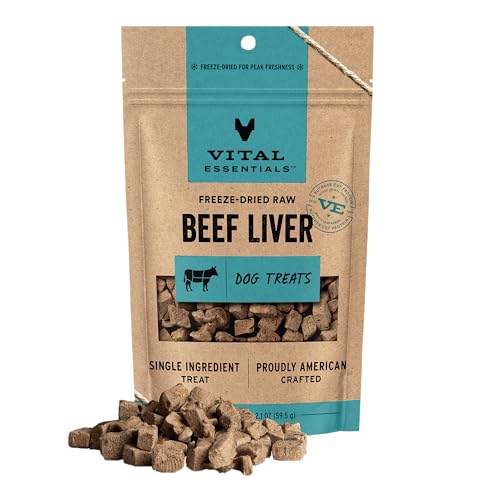
An example dog treat listing to compare against the criteria below.
When evaluating any specific listing, check the guaranteed analysis for moisture and calorie content, confirm the first ingredient is a named animal protein if that is the goal, verify available sizes match the dog, and read recent owner reviews for reports of crumbling, spoilage, or digestive upset. Those four checks catch most of the practical problems that specification sheets do not mention.
Readers who want to see current pricing and labeling for the example above can check the current price on Amazon.
Treat Type Comparison Table
| Treat Type | Typical Calories | Best For | Main Trade-off |
|---|---|---|---|
| Soft training treats | 2 to 4 each | Repetitive training | Dries out; some contain humectants |
| Dental chews | 60 to 120 each | Plaque and tartar control | High calorie; size matching required |
| Freeze-dried single ingredient | 30 to 60 per piece | High-value rewards, allergies | High calorie; strong odor; crumbles |
| Crunchy biscuits | 30 to 50 each | Budget rewarding, multi-dog homes | Grains and fillers; limited dental benefit |
| Hard cheese chews | 200 or more per chew | Long-lasting enrichment | Expensive; hardness risk for some dogs |
| Puppy soft treats | 3 to 6 each | Puppy training and teething | Only appropriate for puppies |
Choosing by Goal
For training, small soft treats under 5 calories are the practical choice because they allow rapid repetition. For dental health, VOHC-accepted chews have the strongest evidence base, though owners should account for their calorie load. For dogs with allergies or sensitive stomachs, single-ingredient freeze-dried treats minimize exposure. For long-lasting enrichment, hard cheese chews and similar items work well when sized appropriately and when the dog's teeth are healthy. For puppies, soft puppy-formula treats support training without stressing developing teeth.
Frequently Asked Questions
How many treats can a dog have per day? Veterinary guidance commonly cites the 10 percent rule: treats should not exceed 10 percent of daily caloric intake. For a 50-pound dog eating about 1,000 calories daily, that is roughly 100 calories from treats.
Is rawhide safe? Rawhide carries choking and obstruction risks and is processed in ways that vary by manufacturer. Many veterinarians recommend safer alternatives such as VOHC-accepted dental chews or appropriately sized hard cheese chews.
When can a puppy switch to adult treats? Most puppies transition around 10 to 12 months, once adult teeth are fully set. Until then, softer puppy-formula treats are the better fit.
What is the best treat for training? Small, soft, low-calorie treats that can be eaten in one bite. Calorie statements of 2 to 4 per piece are typical for products designed for this purpose.
Do expensive treats mean better treats? Not necessarily. Price correlates with ingredient quality and processing method, but a well-chosen budget biscuit can be perfectly appropriate for casual rewarding. For daily dental care or allergy management, ingredient quality matters more.
How should treats be stored? Soft treats should be kept in an airtight container and used within the period stated on the package, since moisture loss and mold are both concerns. Freeze-dried treats keep longer but should still be protected from humidity. Biscuits and hard chews store well at room temperature.
Common Mistakes Owners Make
The most frequent mistake is not counting treat calories at all, which erodes the 10 percent rule within a week. The second is feeding treats that are too large for the dog, which turns a training reward into a meal. The third is ignoring hardness, particularly with antlers and dense bones, and discovering the problem only after a dental fracture. The fourth is assuming grain-free equals healthier, when the evidence for that claim is mixed at best. The fifth is leaving treat bags within reach: many dogs will consume an entire bag if given the opportunity, and some ingredients, notably xylitol and chocolate, become emergencies at that volume.
2026 Update: Label Naming, Calorie Statements, and Dental Claims
A few label-level details have shifted enough since this category was last surveyed that they change how the checklist above should be applied. The first concerns xylitol naming. Some ingredient lists now call xylitol "birch sugar" or "birch sap," names that sound natural but describe the same sugar alcohol that is toxic to dogs. Poison control resources have flagged this naming pattern specifically because it hides a known hazard from careful owners. Check the full ingredient list of any flavored treat, especially peanut-butter-style products, and treat either name as an automatic disqualifier.
The second is calorie statements. Calorie content in kcal per treat is printed more consistently across the category than it used to be, and manufacturers that omit it usually provide it on request. A treat sold without any calorie information is harder to fit into the ten percent budget, so between two otherwise similar products, the one with a printed statement is the easier one to feed responsibly.
The third is dental claims. The Veterinary Oral Health Council adds and removes products from its accepted list over time, and its seal applies to specific formulations and sizes rather than to a brand in general. A chew that carried the seal in an older article may no longer be on the current list, so check the organization's current accepted products list before buying rather than relying on packaging text alone. The underlying evidence model has not changed: mechanical abrasion claims without third-party verification are a weaker signal than a current seal.
On the grain-free question, the state of the evidence has settled somewhat: the FDA's investigation into diet-associated dilated cardiomyopathy never established a causal link between grain-free formulation and the disease, and veterinary nutritionists continue to treat grain avoidance as a response to a diagnosed allergy rather than a general health strategy. For treats, which make up a small fraction of intake, the practical guidance is simpler still: judge the ingredient list, count the calories, and put any larger concern into a conversation with your veterinarian about the complete diet.
One handling note that has become standard advice for freeze-dried raw treats: until consumed, they should be treated with the same surface hygiene as raw meat. Wash hands after handling, keep the bag sealed, and do not leave pieces sitting in a bowl or pocket, particularly in households with young children, elderly family members, or immunocompromised people.
Where to Buy
As an Amazon Associate, PawCritic earns from qualifying purchases. This does not affect our reviews or recommendations.
The example treat discussed below is available through the link below. Check the current listing for size options, calorie statement, and recent owner feedback before purchasing.
For readers comparing multiple formats, the same listing page often shows related sizes and flavors, which is useful for matching the treat to the dog's weight and training needs.
check the current price on Amazon
Final Considerations
Treat selection comes down to three questions: what job is the treat doing, how many calories can the dog afford, and does the format suit the dog's size and dental health. Answering those questions narrows the field faster than any brand comparison. Published guidance from WSAVA, the AVMA, the Merck Veterinary Manual, and the ASPCA provides the framework; manufacturer labels and verified owner reports fill in the specifics for each product.
Owners who want a single concrete listing to evaluate can view this option on Amazon and apply the checklist above. Treats are tools for positive reinforcement, and used with attention to calories, hardness, and ingredients, they support both training and long-term health.
Related Reading
high-value treats for effective training, dog dental care products, and complete dog food for everyday feeding.