Finch Cages 2026: Perfect Homes for Small Songbirds
Source: The Association of Avian Veterinarians recommends annual wellness examinations for all companion birds, including fecal parasitology and blood work, because many avian diseases progress without obvious clinical signs until advanced stages.
Why Finch Housing Deserves More Thought Than Most Owners Give It
Finches are not parrots, and the cage that works for a budgie or a cockatiel often fails a finch in ways that are not obvious at first glance. Finches do not climb cage bars the way hookbills do. They fly horizontally, hop along perches, and prefer to keep moving rather than sit on a hand or a shoulder. That single behavioral fact reshapes every decision about cage shape, bar spacing, and interior layout. A tall cage with a small footprint looks impressive in a living room but gives a finch nowhere to build up flight speed. A long, low flight cage that looks modest on a shelf is often the better home.
Published guidance from avian veterinary sources, including the Association of Avian Veterinarians bird owner resources, consistently emphasizes that enclosure size, bar spacing, and perch variety affect respiratory health, foot health, and stress behavior. The Merck Veterinary Manual section on exotic and laboratory animals notes that many small passerines are prey species that mask illness, which means a cage that causes chronic stress or injury can quietly shorten a bird's life before any obvious symptom appears. Choosing housing carefully is preventive care, not decoration.
What Actually Matters in a Finch Cage
Bar spacing and wire gauge
Bar spacing is the single most important safety specification for finches. Most finch species, including zebra finches, society finches, and gouldian finches, need spacing no wider than about 1/4 inch to 3/8 inch. Anything wider risks a bird squeezing its head or body between bars and becoming trapped, which is a well-documented cause of injury in small passerines. Wire gauge matters too. Very thin wire flexes and can be bent outward by a determined bird, while heavier gauge wire holds its shape and resists rust longer. Powder-coated or non-toxic epoxy finishes are preferred over bare galvanized wire in older cages, because zinc ingestion is a recognized toxicity concern for small birds.
Shape and horizontal flight space
A finch cage should be longer than it is tall. A practical minimum for a pair of zebra finches is roughly 30 inches wide by 18 inches deep, with larger species needing more. Flight cages that measure 36 to 52 inches wide give finches room to make short horizontal flights, which supports cardiovascular health and natural foraging behavior. Height still matters, but a 60-inch-tall cage that is only 18 inches wide offers less usable flight distance than a 36-inch-wide cage that is 24 inches tall. Breeders and long-term finch keepers generally prioritize length first, then depth, then height.
Door design and access
Finches are fast, panicky fliers and are notoriously difficult to catch once they escape a cage. A cage with a single small door makes cleaning and feeding awkward and increases the chance of an accidental escape. Look for cages with at least two access points, one of which is large enough to reach the full floor area for scrubbing. Sliding or hinged doors that latch securely are safer than doors that rely on friction alone. Some flight cages include a removable bottom tray and a pull-out grate, which simplifies daily cleanup considerably and reduces the time a bird spends stressed by human hands inside the enclosure.
Materials, coatings, and long-term durability
Steel wire with a powder-coated finish is the most common construction for finch cages, and it is generally the most practical. Powder coating resists chipping better than paint, and it wipes clean without absorbing droppings. Wooden cages are not recommended for finches because wood absorbs moisture and droppings, harbors mites and bacteria, and is difficult to disinfect thoroughly. Brass and copper accents look attractive but can tarnish and may react with cleaning products. The base and tray material matters as much as the wire: a metal or high-density plastic tray that slides out fully is easier to sanitize than a tray that only partially extends.
Sizing by Species: A Practical Reference
Finches vary more in size than many owners realize. A zebra finch weighs roughly 10 to 15 grams, while a gouldian finch can reach 15 to 20 grams, and a canary, though not a finch in the strict sense, is larger still. The table below reflects commonly cited minimum enclosure dimensions for small groups, based on published breeder guidance and manufacturer specifications for flight cages sold for these species.
| Species or group | Typical bar spacing | Suggested minimum footprint | Notes |
|---|---|---|---|
| Zebra finch (pair) | 1/4 to 3/8 inch | 30 x 18 inches | Hardy, adaptable, good first finch |
| Society finch (pair) | 1/4 to 3/8 inch | 30 x 18 inches | Docile, often used as foster parents |
| Gouldian finch (pair) | 1/4 to 3/8 inch | 36 x 18 inches | More sensitive to temperature and draft |
| Canary (single) | 3/8 to 1/2 inch | 30 x 18 inches | Needs more horizontal flight than a finch |
| Mixed small finch group (4 to 6) | 1/4 to 3/8 inch | 48 x 20 inches or larger | Watch for aggression at feeders |
These are starting points, not ceilings. A larger cage is almost always better, provided bar spacing remains safe. The most common mistake new owners make is buying a cage sized for a single bird and then adding a companion without upgrading the enclosure. Overcrowding in finches does not always produce obvious fighting; it more often produces feather plucking, reduced breeding success, and chronic stress that owners only notice when a bird becomes ill.
Interior Setup: Perches, Feeders, and Bathing
Finches need a variety of perch diameters to exercise their feet and prevent pressure sores. Natural wood branches of different thicknesses are preferable to uniform dowels, which concentrate pressure on the same part of the foot. Perches should be placed so that droppings do not fall directly into food or water dishes. Feeders should be positioned near perches but not directly above them, and water should be changed at least daily because finches often bathe in their drinking water, leaving it contaminated within hours.
Bathing is not optional for finches. Most species bathe enthusiastically and benefit from it for feather condition and temperature regulation. A shallow dish no more than an inch deep, placed on the cage floor or attached to a side door, works well. Some owners rotate between two dishes so one can be cleaned while the other is in use. Nesting materials, such as clean grass or commercial nesting fiber, should be offered only if breeding is intended; otherwise, providing nesting sites can encourage egg-laying and the associated health risks in females.
A Closer Look at a Representative Flight Cage
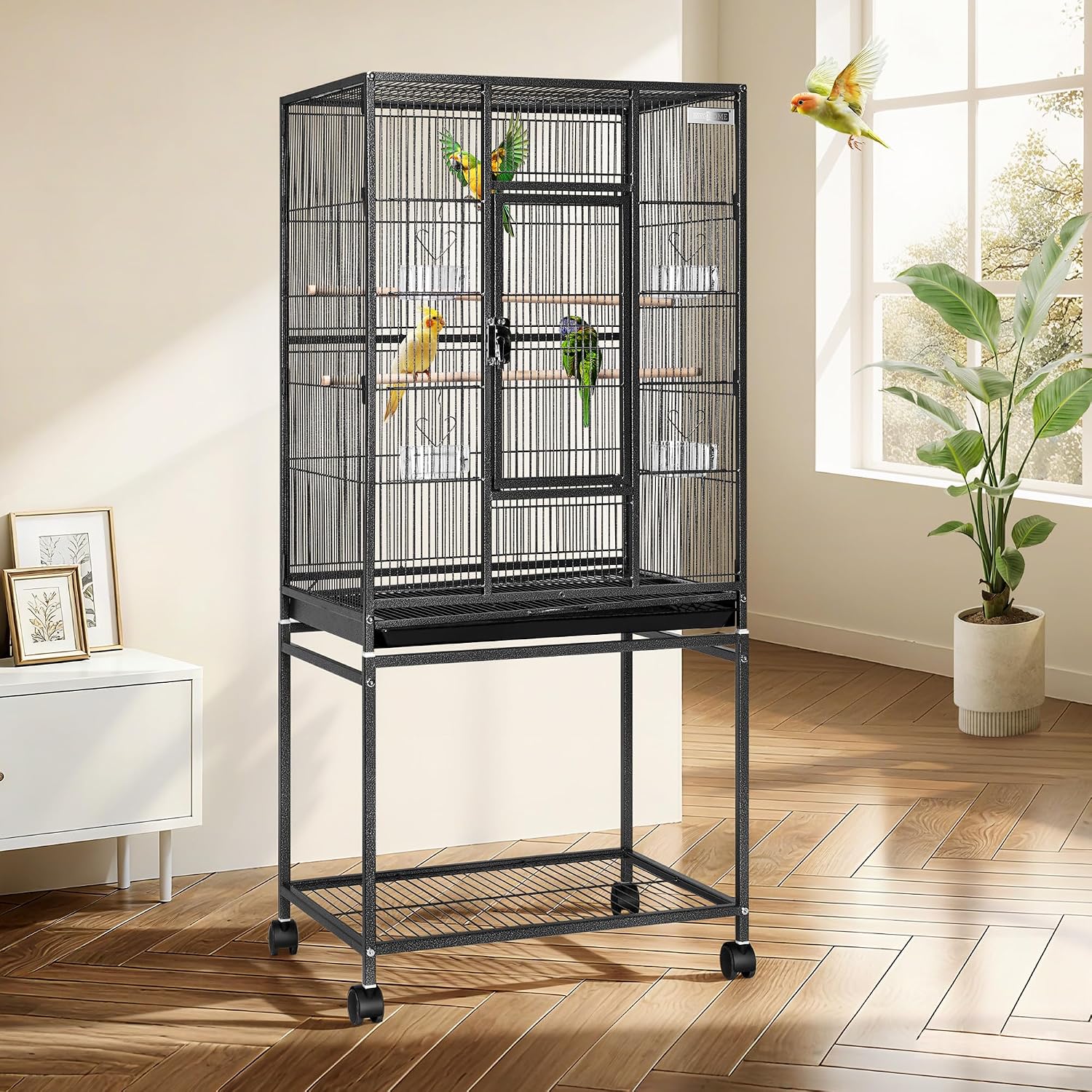
The cage shown above is a representative example of the wide, horizontal flight cage format that suits finches well. It uses powder-coated steel wire with bar spacing in the safe range for small passerines, includes a sliding bottom tray for cleanup, and provides enough horizontal distance for short flights. Owners who have reviewed this style of cage generally describe it as easy to assemble, stable on a stand, and straightforward to wipe down. The main trade-off is footprint: a cage this wide takes up real table or stand space, and it is not a good fit for a small apartment shelf. It also ships flat and requires assembly, which some buyers find fiddly.
For readers who want to see the specifications and current pricing for this type of enclosure, check the current price on Amazon. It is one concrete example of the flight-cage category, not the only option, and it should be compared against the sizing table above before purchase.
Cleaning and Maintenance That Actually Protects Birds
Finch cages need more frequent cleaning than many new owners expect. Droppings should be removed from the tray every one to two days, and the tray itself should be washed with a bird-safe cleaner weekly. Food and water dishes should be washed daily. Perches should be scrubbed weekly and replaced when they become heavily soiled or chewed. A full cage breakdown, including wiping down bars and the base, is generally recommended every two to four weeks depending on how many birds are housed.
Avoid household cleaners that contain phenols, ammonia, or strong fragrances. Birds have sensitive respiratory systems, and aerosolized cleaning products are a recognized hazard. Mild dish soap and hot water are sufficient for most routine cleaning, followed by thorough rinsing. Let surfaces dry completely before returning birds to the cage. If a disinfectant is used, choose one labeled for avian use and follow the contact time on the label.
Safety Hazards Specific to Finch Cages
Several hazards deserve explicit mention. First, any cage with bar spacing wider than 3/8 inch is a risk for small finches. Second, cages with decorative scrollwork, sharp wire ends, or poorly finished welds can catch toes and wings. Third, cages painted with lead-based or unknown paints should be avoided entirely. Fourth, cages placed in kitchens are dangerous because nonstick cookware fumes are lethal to birds at very low concentrations. Fifth, cages near windows with direct afternoon sun can overheat quickly, and finches have limited ability to cool themselves in a confined space.
Toxic plants, scented candles, air fresheners, and cigarette smoke are all recognized respiratory risks for small birds. The ASPCA Animal Poison Control maintains a searchable database of substances that are hazardous to pets, and it is a useful reference when evaluating anything that will be placed near a cage. General bird care guidance from the ASPCA pet care library also covers housing, diet, and enrichment basics for companion birds.
Common Mistakes Finch Owners Make
- Buying a tall cage instead of a wide one. Finches need horizontal flight distance. A tall, narrow cage wastes vertical space and offers little exercise value.
- Ignoring bar spacing. A cage marketed for parakeets may have 1/2-inch spacing, which is unsafe for a zebra finch.
- Housing a single finch. Most finch species are highly social and do poorly alone. Pairs or small groups are generally healthier, provided the cage is large enough.
- Using wooden dowels only. Uniform perches cause foot problems over time. Mix diameters and materials.
- Placing the cage in a high-traffic or drafty area. Finches startle easily and are sensitive to temperature swings.
- Overlooking the tray design. A tray that does not slide out fully makes weekly cleaning a chore and often leads to skipped maintenance.
- Skipping quarantine for new birds. New finches should be kept separate for at least 30 days and ideally examined by an avian veterinarian before introduction.
When a Second Cage Makes Sense
Many finch owners eventually need two cages: one for the main group and a smaller one for quarantine, isolation of a sick bird, or temporary separation of an aggressive individual. A quarantine cage does not need to be as large as the main enclosure, but it should still meet minimum bar spacing and perch requirements. Having a spare cage on hand also makes it easier to move birds safely during a full cage cleaning or during household repairs that produce fumes or dust.
Budget, Value, and What You Are Actually Paying For
Finch cages span a wide price range, and the differences are not arbitrary. Lower-cost cages typically use thinner wire, lighter powder coating, and simpler tray mechanisms. Mid-range cages add heavier gauge wire, better latches, and more thoughtful door placement. Higher-priced flight cages often include stands, larger footprints, and more durable construction that holds up over years of weekly cleaning. The practical question is not which cage is cheapest, but which cage will still be safe and functional after two or three years of daily use.
Replacement parts matter here. Cages with proprietary tray sizes or non-standard latches can become unusable if a single component breaks. Before buying, check whether the manufacturer sells replacement trays, perches, and latches, and whether owner reviews mention parts availability. A cage that costs slightly more but has a replaceable tray is often a better long-term value than a cheaper cage that must be discarded when the tray cracks.
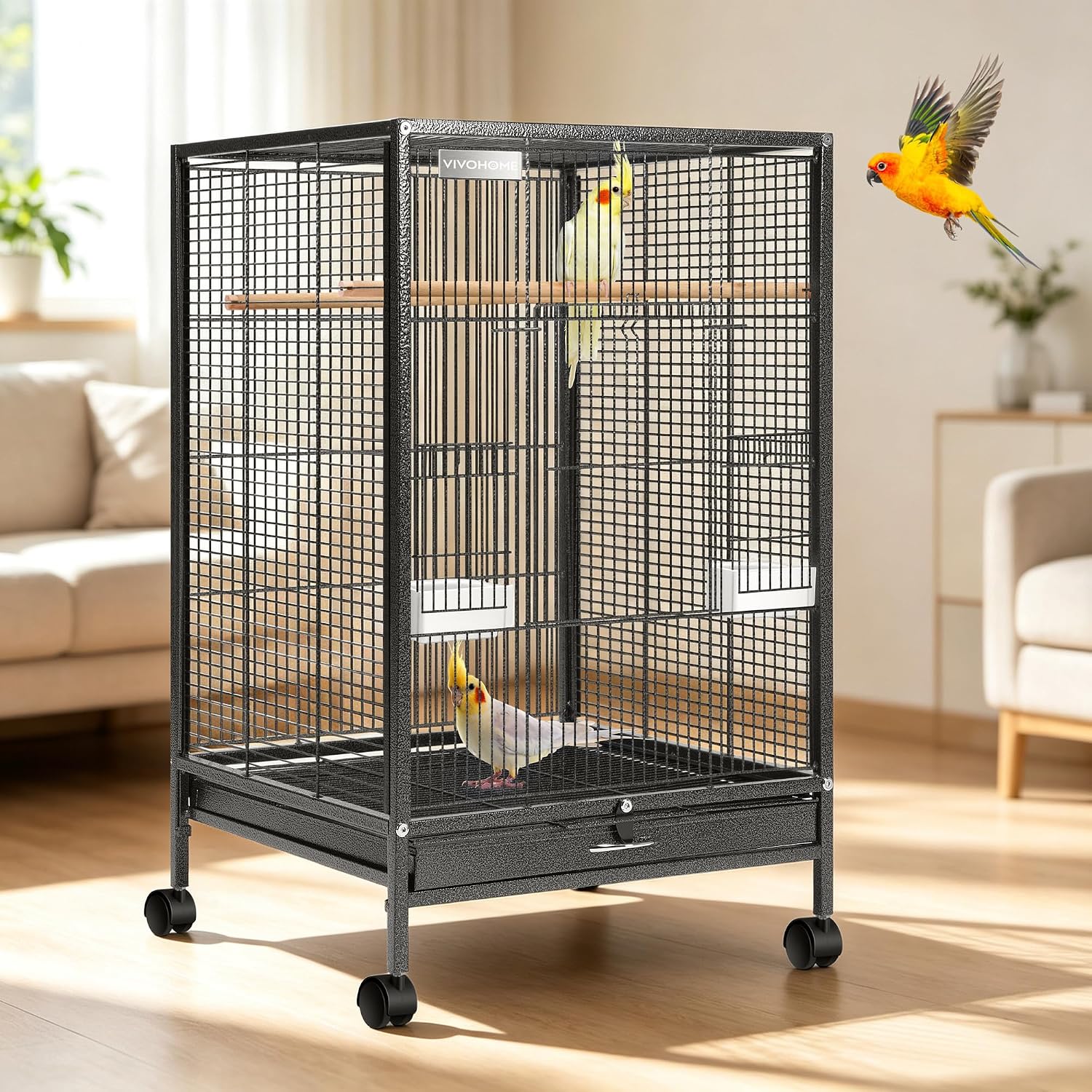
A second example worth comparing is a more compact cage format, which suits a single pair in a smaller space. For specifications and current pricing on that style, view this option on Amazon. As with any cage, confirm bar spacing and footprint against the species table above before ordering.
What Has Changed in the Finch Cage Market for 2026
The flight-cage format has gone mainstream. Long, low enclosures in the 36-to-52-inch width class, once a specialty order from breeder suppliers, now appear in chain pet stores and general online catalogs at prices that compete with the tall narrow cages finches never used well. Marketing has caught up with husbandry guidance faster than expected, but the verification habit matters just as much as before: a listing that shows a wide cage may still hide 1/2-inch bar spacing or a tray that barely extends, so the specification sheet, not the headline photo, remains the deciding document.
Bar spacing disclosure itself has improved. More manufacturers now print spacing in both inches and millimeters directly on the listing rather than describing the cage vaguely as suitable for small birds, and several publish full specification sheets that include wire gauge. Treat the improvement as a convenience rather than a guarantee. A cheap steel ruler check on the assembled cage takes thirty seconds, catches listing errors, and settles any dispute between the marketing copy and the metal.
Tray design has become the quiet differentiator in the mid-range. Full-extension slides that let the tray pull completely free, deeper trays that catch seed hulls on the way down, and grates that lift out for scrubbing all migrated down from premium cages, and they change the daily experience of keeping finches more than any finish upgrade. Replacement part availability has improved alongside it, with several brands now stocking trays and latches as separate items, which is the difference between a five-year cage and a two-year cage once a tray cracks.
Quarantine practice has also shifted from breeder culture into ordinary ownership, driven largely by the heightened attention to avian influenza in recent seasons. New birds from any source now get a 30-day separation period with dedicated dishes and gear as routine guidance rather than expert-only advice, and that single change explains why so many finch keepers end up buying a second, smaller cage. The spare does not need to match the main enclosure, but it should meet the same bar-spacing standard, which makes the compact powder-coated cages in the 30-inch class a sensible quarantine buy.
Frequently Asked Questions
How often should a finch cage be replaced?
There is no fixed schedule. A well-made powder-coated cage can last many years with regular cleaning. Replace a cage when the coating is chipping extensively, when wire is bent or broken, when latches no longer hold securely, or when rust is visible at welds. Any cage with exposed rust or flaking coating should be retired because ingested metal particles are a health risk.
Are expensive finch cages worth the cost?
Often yes, but not automatically. Price correlates with wire gauge, coating quality, tray design, and footprint, all of which affect safety and ease of maintenance. A mid-priced cage with correct bar spacing and a wide footprint is a better choice than a premium cage with the wrong dimensions for the species.
Can two finch species share one cage?
Sometimes, but it depends on species temperament and cage size. Zebra finches can be assertive, while society finches are generally calm. Mixed-species housing works best in a large flight cage with multiple feeding stations. Even then, monitor for aggression, especially during breeding season.
How do I clean a finch cage safely?
Remove birds to a secure carrier or second cage. Remove perches, dishes, and toys. Wipe down bars and base with mild soap and hot water or an avian-safe cleaner. Rinse thoroughly and allow to dry completely before returning birds. Avoid aerosol sprays and strong fragrances near the cage at all times.
Do finches need a nest in their cage?
Only if breeding is intended. Providing a nest when breeding is not planned can encourage egg-laying, which carries health risks for females, including egg binding and calcium depletion. A resting platform or a small sleeping hut is a safer alternative for non-breeding birds.
Final Verdict
The right finch cage is wide, safely spaced, easy to clean, and large enough for the number of birds it will hold. Prioritize bar spacing of 1/4 to 3/8 inch, a horizontal footprint of at least 30 by 18 inches for a pair, and a tray that slides out fully. Powder-coated steel remains the most practical material. For a representative flight cage in this category, see the flight cage linked above, and for a more compact alternative suited to a single pair, see the compact option linked above. Whatever cage is chosen, pair it with daily water changes, weekly perch scrubbing, a draft-free location, and an annual avian veterinary examination.
As an Amazon Associate, PawCritic earns from qualifying purchases. This does not affect our reviews or recommendations.
Related Reading
bird cages and aviaries for parrots, bird toys for mental stimulation, and how to tell if your bird is sick.