Why Reptile Supplements Are Not Optional
In the wild, reptiles obtain nutrition from a varied diet of wild-caught insects, small prey, plants, and mineral-rich water sources, each containing a complex spectrum of vitamins and minerals that no captive diet can fully replicate. In captivity, feeder insects are raised on commercial gut-load that may be deficient in certain micronutrients; frozen-thawed prey loses vitamin potency during freezing; and even the best commercial diets are formulated for average nutritional needs, not the specific requirements of an individual reptile at a particular life stage.
The consequences of vitamin and mineral deficiency in reptiles are severe and often irreversible. According to the Association of Reptilian and Amphibian Veterinarians, nutritional secondary hyperparathyroidism (often called metabolic bone disease) remains one of the most commonly diagnosed preventable conditions in captive reptiles.
- Metabolic Bone Disease (MBD): The most common reptile health crisis, caused by calcium and/or D3 deficiency. Bones soften, bend, and fracture. In early stages, MBD is reversible with treatment. In advanced stages, the skeletal deformity is permanent. MBD is entirely preventable with proper calcium and D3 supplementation.
- Hypovitaminosis A: Vitamin A deficiency causes swollen eyes (especially in turtles and chameleons), respiratory infections, and skin or organ failure. Common in insectivores fed exclusively crickets without gut-loading or vitamin A supplementation.
- Stuck shed: Multiple vitamin deficiencies (especially vitamin A and biotin) contribute to poor shedding cycles that lead to retained eye caps, tail-tip necrosis, and skin infections.
- Reproductive failure: Gravid females without adequate calcium and vitamin D3 develop egg-binding (dystocia) and can die from retained eggs that they cannot pass due to calcium-depleted muscle function.
This guide covers the essential reptile supplements: what they do, when to use them, and how to choose the right product for each species and situation.
The Big Three: Calcium, D3, and Multivitamins
Reptile supplementation revolves around three core products. Understanding how they differ is the foundation of any feeding schedule.
- Calcium without D3: For reptiles with access to unfiltered UVB lighting (which enables natural D3 synthesis in the skin). The most commonly used supplement, dusted onto feeder insects at nearly every feeding.
- Calcium with D3: For reptiles without adequate UVB exposure (no UVB bulb, or housed in enclosures that block UVB). The D3 in the supplement replaces what the reptile would produce from UVB exposure.
- Multivitamin: A broad-spectrum vitamin and mineral supplement covering vitamin A, B-complex, E, K, and trace minerals (zinc, copper, selenium, manganese). Used one to two times per week to fill gaps that calcium alone does not cover.
The Merck Veterinary Manual notes that captive reptiles are particularly susceptible to imbalances in calcium, phosphorus, and vitamin D3 because their natural basking and dietary behaviors cannot be fully replicated indoors. This is why supplementation is not a shortcut or a luxury; it is a structural part of responsible captive care.
What to Look for in a Reptile Supplement
Before looking at any specific product, it helps to understand the categories and the trade-offs among them. A supplement is only as good as its fit for the animal, the enclosure, and the keeper's routine.
Calcium Source and Particle Size
Most reptile calcium supplements use calcium carbonate, which is inexpensive, stable, and well absorbed when D3 is present. Some products use calcium citrate or calcium gluconate, which are more soluble but also more expensive and less common in reptile-specific formulas. Particle size matters more than most keepers realize: ultra-fine powders cling to crickets, roaches, and worms, while coarser powders shake off before the reptile strikes. A supplement that does not stay on the feeder is a supplement that does not get eaten.
D3 Form and Concentration
Vitamin D3 in reptile supplements is usually cholecalciferol, the same form reptiles synthesize in their skin after UVB exposure. The concentration varies widely between products, and this is where problems arise. D3 is fat-soluble and accumulates in the body, so more is not better. A reptile that receives D3 from a UVB bulb, from a D3-fortified gut-load, and from a D3-containing dust can accumulate a toxic dose over time. Hypervitaminosis D causes organ calcification, which is irreversible and often fatal. The safest approach is to count D3 sources and use only one or two, not all three.
Vitamin A Form
Vitamin A appears in supplements as either retinol or beta-carotene. Retinol is the active form and is stored in the liver; excess can be toxic. Beta-carotene is a precursor that the body converts as needed, and excess is excreted rather than stored. For reptiles prone to vitamin A deficiency, such as chameleons and some turtles, a supplement that includes beta-carotene is generally considered safer for routine use. Some keepers use a retinol-based multivitamin only occasionally and rely on beta-carotene for weekly maintenance.
Trace Minerals
Zinc, copper, selenium, and manganese are required in very small amounts. They support immune function, wound healing, and enzyme activity. A broad-spectrum multivitamin usually covers these, but plain calcium does not. Keepers who use only calcium without a multivitamin may see slow-healing wounds, poor appetite, or recurring infections that trace mineral deficiency can contribute to.
All-in-One vs. Separate Products
All-in-one supplements combine calcium, D3, vitamins, and minerals in a single powder. They simplify the routine and reduce the chance of skipping a dose. The trade-off is flexibility: if an animal needs more calcium but less D3, an all-in-one cannot be adjusted. Separate calcium and multivitamin products allow fine-tuning but require more attention to scheduling. Neither approach is inherently better; the right choice depends on the keeper's ability to follow a schedule consistently.
A Closer Look at a Widely Used All-in-One Option
reptile vitamins supplements
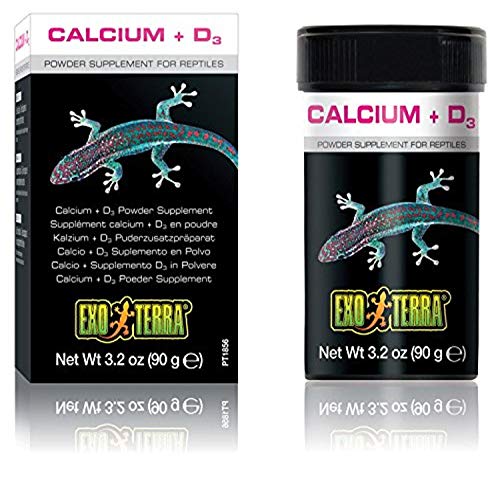
Repashy Calcium Plus is frequently cited in keeper forums and breeder recommendations as an all-in-one formula that combines calcium, vitamin D3, vitamin A, B-complex, and trace minerals in a single powder. Because the powder is milled very fine, owner reports consistently describe it as clinging to feeder insects better than coarser calcium carbonate products, which means more of the supplement is actually ingested rather than left in the dusting bag. For keepers who want one product instead of three, this type of formula removes the scheduling complexity that causes many supplementation failures.
The trade-off is that an all-in-one cannot be adjusted. If a reptile already receives D3 from a strong UVB bulb, the D3 in the powder adds to the total. Repashy addresses this with a lower-D3 version, but the keeper still needs to know which version matches the enclosure. The other limitation is cost: per ounce, an all-in-one is more expensive than plain calcium carbonate, though a single jar typically lasts months for a small collection. For a concrete example of current pricing and packaging, you can check the current price on Amazon.
This product is best suited to insectivores and omnivores, especially for keepers who are new to supplementation or who keep multiple species with similar UVB setups. It is less suitable for reptiles on whole-prey diets, which need less aggressive supplementation, and for keepers who want to fine-tune calcium and vitamin ratios independently.
Dusting Schedules by Species
reptile vitamins supplements
Supplement schedules are not universal. They depend on the species, the age of the animal, the UVB setup, and the base diet. The table below summarizes general guidance that appears in keeper literature and veterinary resources. Individual animals may need adjustments based on body condition, reproductive status, and veterinary advice.
| Species | Every Feeding | 2-3x Weekly | 1x Weekly | Notes |
|---|---|---|---|---|
| Leopard Gecko | Calcium (no D3 if UVB) | - | Multivitamin | Keep a small dish of plain calcium in the enclosure; leopard geckos often self-regulate calcium intake. |
| Ball Python | - | Calcium + D3 (no UVB) or Calcium (with UVB) | Multivitamin | Snakes on whole-prey diets get some nutrition from prey organs; supplement less aggressively than insectivores. |
| Bearded Dragon | Calcium (no D3 if UVB) | - | Multivitamin + Calcium + D3 | Young dragons under 6 months need calcium at every feeding; adults can reduce to 3-4x weekly. |
| Crested Gecko | - | Complete diet replaces supplements | - | A high-quality crested gecko diet is formulated to be complete and eliminates the need for additional supplements. |
| Chameleon | Calcium (no D3 if UVB) | - | Multivitamin + Calcium + D3 | Chameleons are prone to vitamin A deficiency; ensure the multivitamin contains vitamin A or beta-carotene. |
| Tortoise (Russian) | - | Calcium (no D3 if UVB) | Multivitamin | Herbivores: dust leafy greens, not insects. Cuttlebone in the enclosure provides ad-lib calcium. |
The Dusting Technique: Getting Supplements Into Your Reptile
- Bag method (most common): Place feeder insects in a plastic bag with a pinch of supplement powder. Shake gently for 10-15 seconds until insects are evenly coated. Feed immediately; the powder shakes off within 30-60 seconds as the insects groom themselves.
- Cup method: Place supplement powder in a small cup. Add feeder insects and swirl until coated. Good for small numbers of insects.
- Gut-loading (most effective long-term): Feed the feeder insects a nutritious diet for 24-48 hours before feeding them to your reptile. The insects absorb the nutrients, and your reptile digests a nutrient-enriched prey item. This is more effective than surface dusting because the nutrients are inside the insect, not on the surface where they can be shed.
- Salad dusting (for herbivores and omnivores): Sprinkle supplement powder directly onto leafy greens and vegetables. Moisture on the leaves helps the powder adhere. Some reptiles avoid heavily dusted food; start with a light dust and increase gradually.
Common Mistakes in Reptile Supplementation
Even keepers with good intentions run into problems. The following mistakes appear repeatedly in keeper discussions and veterinary case reports.
- Double-dosing D3. Using a D3 supplement while also providing strong UVB and D3-fortified gut-load can push vitamin D3 into toxic territory. Count all sources before adding another.
- Skipping multivitamins entirely. Plain calcium prevents MBD but does not address vitamin A, B-complex, or trace minerals. A reptile can have strong bones and still suffer from deficiency-related skin, eye, or immune problems.
- Using expired or clumped powder. Supplements lose potency over time, especially if exposed to moisture. Replace powders that are clumped, discolored, or past their expiration date.
- Dusting too heavily. A thick coating can make food unpalatable. Reptiles may refuse dusted insects if the powder is caked on. A light, even coat is enough.
- Assuming all species need the same schedule. A young bearded dragon, an adult ball python, and a crested gecko on a complete diet have very different needs. Species-specific guidance matters.
- Relying on supplements to fix a poor diet. Supplements fill gaps; they do not replace a varied, species-appropriate base diet. A reptile fed only one type of insect will be deficient regardless of dusting.
Safety and Toxicity: What to Avoid
Vitamin and mineral toxicity in reptiles is less common than deficiency, but it does occur, usually when multiple D3 sources are combined or when a supplement is used at a much higher dose than labeled. The ASPCA Animal Poison Control maintains resources on household substances that can harm pets, and while its database focuses mainly on mammals, the underlying principle applies to reptiles: anything ingested in excess can become a poison.
Human supplements should never be used for reptiles. They are formulated for mammals with different calcium-to-phosphorus ratios, different vitamin concentrations, and different metabolic rates. Some human products contain sweeteners, flavorings, binders, and fillers that are not appropriate for reptiles. Reptile-specific supplements from established brands are the only safe choice.
Water quality also matters. Reptiles that drink from bowls or are misted with tap water may receive additional minerals from the water itself. In areas with very hard water, the mineral contribution can be significant. Keepers who use distilled or reverse-osmosis water for misting may need to rely more on dietary supplementation, while those with hard tap water should account for the extra calcium and magnesium. Neither situation is automatically a problem, but both are worth knowing about.
How to Choose: A Practical Framework
The right supplement setup depends on four questions. First, does the enclosure provide UVB? If yes, the reptile can synthesize its own D3, and a calcium supplement without D3 is usually the daily choice. If no, a calcium supplement with D3 becomes necessary. Second, what is the base diet? Insectivores need more aggressive supplementation than snakes on whole prey, and reptiles on complete commercial diets may need none at all. Third, how old is the animal? Growing reptiles, gravid females, and animals recovering from illness have higher demands than healthy adults. Fourth, how consistent can the keeper be? An all-in-one product reduces the number of decisions, which often improves compliance.
For many keepers, a two-product approach works well: a plain calcium for daily use and a multivitamin for weekly use. For others, an all-in-one simplifies the routine enough that it is actually used correctly. Both approaches can succeed. The failure mode is not the choice of product; it is inconsistency, double-dosing D3, or skipping vitamins entirely.
If you are considering an all-in-one option as a starting point, you can view this option on Amazon to compare packaging sizes and current pricing. The same product line includes versions with different D3 levels, so check the label carefully before buying.
Frequently Asked Questions
Can I overdose my reptile on calcium?
Calcium without D3 is very difficult to overdose; excess calcium is excreted in feces. However, calcium with D3 can cause hypercalcemia if D3 is overdosed, because D3 drives calcium absorption from the gut into the bloodstream. The real risk is not calcium overdose; it is D3 overdose. Never give calcium with D3 to a reptile that already receives D3 from UVB lighting and D3-fortified gut-load. The three D3 sources can combine to toxic levels.
Do reptiles on whole-prey diets need supplements?
Less than insectivores, but still yes. Whole prey provides calcium from bones, vitamin A from liver, and other nutrients from organs. However, frozen-thawed prey loses some vitamin potency during freezing, and the nutritional content of commercially raised rodents differs from wild prey. For snakes on a whole-prey diet, calcium with D3 two to three times per month and a multivitamin once or twice per month is a common schedule, less aggressive than insectivore supplementation but still part of good care.
Can I use human calcium or vitamin supplements for my reptile?
No. Human supplements are formulated for mammals with fundamentally different metabolic processes. The calcium-to-magnesium-to-phosphorus ratios are wrong for reptiles, and some human supplements contain sweeteners, flavorings, or binders that are not appropriate. Always use reptile-specific supplements from trusted brands.
How long do supplements last?
Most powdered supplements have a shelf life of one to two years if stored cool and dry. Heat, humidity, and light degrade vitamins, especially vitamin A and vitamin D3. Keep the container sealed, store it away from enclosures that produce heat or humidity, and replace the powder if it clumps or changes color. A small jar used for one or two reptiles will usually last well within its shelf life.
Do I need a separate supplement for a crested gecko on a complete diet?
Generally no. A high-quality crested gecko diet is formulated to be nutritionally complete, and adding calcium or multivitamins on top can create imbalances. Some keepers offer a small dish of plain calcium for females during breeding season, but routine dusting is not necessary when the base diet is complete. Check the manufacturer's feeding instructions for the specific diet you use.
Conclusion
For insectivores and omnivores, an all-in-one formula such as Repashy Calcium Plus is a practical choice because it combines calcium, D3, vitamin A, B-complex, and trace minerals in a single product. Dust every feeding for young animals and three to four times weekly for adults. It is the type of supplement most often recommended in breeder and veterinary discussions because it reduces the number of decisions a keeper has to make.
For UVB-exposed reptiles that do not need dietary D3, pairing a plain calcium without D3 for daily use with a standalone multivitamin for weekly use covers the same ground with more flexibility. This two-product protocol provides daily calcium for bone health, since the reptile produces its own D3 from UVB, and weekly vitamins for vitamin A and trace mineral insurance.
For reptiles without UVB lighting, a calcium supplement with D3 becomes necessary. Choose a product with a clearly labeled D3 concentration and avoid combining it with other D3 sources. And for keepers on a tight budget, a basic calcium carbonate supplement provides the essential calcium that prevents MBD, which is the most critical single nutrient at the lowest price point.
Whatever supplement you choose, follow the schedule, dust every feeding for growing animals, avoid double-dosing D3 from multiple sources, and remember that supplements support a good diet; they cannot fix a bad one. Feed a varied, species-appropriate diet, and the supplements fill in the nutritional gaps that captive diets cannot cover.
Related reading: Reptile Calcium and Vitamin Supplements, Reptile Myths Debunked: 12 Things New Owners Get Wrong, How to Choose Your First Pet Reptile: A Beginner's Complete Decision Guide, Reptile Substrate and Terrarium Bedding, Reptile Radiant Heat Panels and Overhead Heating, Reptile Automatic Day and Night Timer Lights and Controllers, Reptile Automatic Misting and Humidity Systems, Reptile Shedding Aids, Humidity Hides and Moisture, Reptile UVB Lighting Fixtures and Reptile Terrarium Stands and Enclosure Cabinets.
Affiliate Disclosure: PawCritic.com participates in the Amazon Services LLC Associates Program. We may earn commissions from qualifying purchases at no extra cost to you.
Where to Buy
As an Amazon Associate, PawCritic earns from qualifying purchases. This does not affect our reviews or recommendations.