What a Night Fright Actually Looks Like
Sometime after midnight, a sound like a small explosion comes from the bird room. You switch on the light and find your cockatiel on the cage floor, wings spread at odd angles, breathing hard, maybe bleeding from a broken feather. The perches are askew. A drift of down and powder floats in the air. The bird that was sleeping peacefully six minutes ago has just tried to fly through solid cage bars at full speed.
Bird keepers call this a night fright, and if you have never witnessed one, the description sounds almost comedic. It is not. A panicking bird can break blood feathers, split the skin over its keel, injure a wing joint, or bleed out before morning. According to the AVMA, bleeding from broken blood feathers is among the more common avian emergencies veterinarians encounter, and uncontrolled bleeding in a bird weighing 90 to 120 grams becomes life threatening fast.
The frustrating part is that night frights are almost entirely preventable once you understand what sets them off. This guide walks through the mechanics of a night fright, the triggers reported most often, how to respond in the moment, and the prevention setup we recommend for any household with cockatiels, budgies, or other flighty species.
Why Cockatiels and Budgies Top the List
Any bird can panic at night, but cockatiels and budgies are the species owners report most often, and the reason is evolutionary rather than dramatic. Both are ground foraging grass parrots native to Australia's arid interior, where their survival strategy against nocturnal predators is not to fight but to explode upward in a whirring mass of wings at the first hint of danger. In a wild flock, that startle response works beautifully. Every bird flushes at once, predators lose track of any single target, and the flock resettles a few hundred meters away.
In your living room, that same hardwired reflex fires inside a wire box. The bird launches, hits bars or the cage ceiling, falls, launches again, and repeats until it injures itself or the stimulus stops. Ground foraging matters here too: because these species naturally sleep low in grass, a cockatiel that ends up on the cage floor during a fright is following instinct, not showing symptoms of illness. Owners regularly misread a post fright bird sitting on the floor as lethargy, when the bird is simply stunned and winded.
African greys, canaries, and finches also show night frights, and the pattern matters more than the species label. Birds that sleep in busy rooms, birds near windows facing streetlights, and birds kept in rooms where rodents move at night all show higher rates. If your bird has never had one, this is not a reason to relax. Many birds go years between episodes, and the first one often happens the night you forget the night light.
The Trigger List: What Sets a Sleeping Bird Off
The classic night fright happens in a dark, quiet room, which is exactly what makes diagnosis frustrating. Your bird is not seeing a monster. It is reacting to a stimulus you probably cannot perceive from your bedroom. The most commonly reported triggers include:
- Car headlights or motion sensor lights sweeping across the cage, throwing sudden moving shadows through the bars
- Rodents. Mice and rats move along walls at night, and a rat bold enough to climb a cage stand will send a sleeping bird into full panic. This is the trigger behind many repeated night frights in the same household
- Large insects. A moth or beetle bumping against the cage cover sounds enormous to a 100 gram animal
- Earthquakes and heavy vehicles. Seismic tremors wake sleeping birds before humans feel anything, and owners in earthquake prone regions report bursts of night frights after tremor swarms
- Drafts and temperature swings. A cold draft across the face mimics the sensation of an owl's wingbeats
- New pets. A cat that stares at the cage at 2 a.m. does not need to touch the cage to terrify the bird inside it
- Sounds at frequencies birds hear better than we do. Smoke detectors with dying batteries chirp, and ultrasonic pest repellers emit constant high frequency sound that people cannot hear at all
Notice the pattern: almost every trigger is something that happens to the room, not to the bird. This is why the standard first question we ask an owner with recurring night frights is not about the bird at all. It is about what else moves in that room after the household goes to sleep.
What Thrashing Does to a Bird's Body
Birds are built to be light, which means their bones are thin, hollow structures with very little tolerance for blunt impact. A bird slamming into cage bars repeatedly is essentially running into a wall every two seconds. The injuries reported after night frights range from minor to fatal.
Broken blood feathers come first. A blood feather is a growing feather with a live blood supply inside its shaft, and birds keep a set of them during and after every molt. Snapped mid shaft, one bleeds heavily because there is no clotting mechanism inside the shaft to stop it. Several broken blood feathers from a single fright can push a small bird into shock.
Keel and breast injuries follow. The keel is the ridge the bird's major flight muscles anchor to, and a hard impact can split the skin over it or bruise the muscle underneath. Wing tip injuries, damaged tail feathers, and toe snags on cage accessories round out the list. Head trauma is less common but serious: a bird that hits the cage ceiling twice can show wobbliness and asymmetrical pupils afterward, which warrants same day veterinary attention.
The cruel math of night frights is that injury risk scales with panic duration. A bird that startles and flutters for three seconds usually lands fine. A bird that cannot locate a perch in the dark keeps launching, and keeps hitting things, until exhaustion stops it. That single detail drives every prevention step below. The goal is not to eliminate the startle, which is instinct you cannot train out. The goal is to shorten the panic and give the bird something safe to land on immediately.
The First Two Minutes: What to Do Mid-Fright
When you hear the thrash, resist the urge to rush the cage and grab the bird. A panicked bird that sees hands coming will startle harder. Move to the cage calmly, speak in a low steady voice so the bird hears something familiar, and turn on the dimmest light you have. Full brightness at 3 a.m. can restart the panic you are trying to end.
Give the bird a target. Many birds settle within seconds once they can see a perch, so position the light so it catches the cage interior without shining into the bird's eyes. If the bird is on the floor and appears stunned, do not reach in. Watch for thirty seconds. Most birds climb back to a perch on their own once the room is dimly lit and quiet.
Then look for blood. Fresh blood on the bars, the bird, or the cage paper means a broken blood feather, and the clock is running. Apply gentle pressure with a clean cloth through the cage door if the bird tolerates it, and use styptic powder only on broken feather shafts, never on soft tissue. If bleeding does not stop within a few minutes of steady pressure, this is an emergency veterinary visit, full stop. According to the ASPCA, birds instinctively hide signs of injury and illness, so a bird that looks calm after a fright can still be in real trouble underneath.
After the Storm: Checking for Injuries
Once the bird is perched and breathing normally, do a quiet physical check before going back to bed. You do not need to restrain the bird for this. Work through the checklist while the bird sits:
- Look at the keel and chest for splits, swelling, or blood spotting on the feathers
- Check both wing tips and the tail base for broken feathers, and note any feather stubs that are still oozing
- Watch the bird's posture for two minutes. A bird holding one wing lower than the other, or standing with a wide unsteady stance, may have a joint or bone injury
- Confirm it can grip the perch with both feet. Grip failure on one side is a red flag for nerve or head injury
- Check the droppings on the cage paper. A heavy bleed or a hard impact often shows up as altered droppings within hours
If everything looks clean and the bird is eating and vocalizing normally by morning, you likely got through it with loose down feathers and a scare. If you find swelling, a drooping wing, blood that clotted but left a large wet patch, or any change in droppings the next day, book a vet visit rather than waiting to see how it develops. Birds hide injury well, and a bird that seems fine on the surface can still be working on an internal problem.
The 3 a.m. Kit: What to Keep Ready
Night fright response is ten times easier when the supplies are already in place. Keep a small kit within arm's reach of the bird room, not buried in a hallway closet: styptic powder or cornstarch in a pinch, gauze pads, a thin towel for covering a bleeding bird gently, a low lumen flashlight or headlamp with a red or warm setting, and the phone number plus after hours details for the nearest avian vet taped inside a cabinet door. Add a spare paper liner roll so a soiled tray can be swapped in the dark without fumbling. None of this costs much, and every item on the list exists because some owner needed it at 3 a.m. and did not have it. Two minutes spent assembling this kit buys back the most expensive commodity in a bird emergency, which is time.
The Prevention Plan That Actually Works
Prevention is where night frights are won, and most fixes cost little or nothing. We break the plan into the room, the cage, and the sleep routine.
Fix the room first
Install a dim night light that stays on all night. This is the single highest impact change and the one avian veterinarians mention most often. A bird that can see its perches never launches blind. A plug in low lumen LED placed where it throws indirect light on the cage, not into the bird's eyes, is all you need. If streetlights or headlights hit the window, add a blackout curtain. The target is steady low light, not darkness and not flashes.
Then deal with the moving things. If you have seen a single mouse near the bird room, assume there are more and treat rodent control as a bird safety issue rather than a housekeeping one. Snap traps placed along walls, well away from the cage, are the option we recommend for bird households. Avoid poison baits entirely, since a poisoned rodent that dies inside a wall can expose a sensitive bird, and secondary poisoning risks to household pets are documented by the EPA. Move ultrasonic pest repellers out of rooms with birds, and check that no motion sensor lights from the street or a neighbor's yard sweep through the window. If a cat shares the home, the bird room door stays closed at night, no exceptions worth making.
Set the cage up for a soft landing
Cage setup changes how much damage a startle can do. A cage that is wide rather than tall gives a startled bird horizontal room to flutter and land instead of a long vertical drop followed by a hard floor impact. Keep the interior low clutter at night: extra toys, ropes, and mirrors near the top of the cage are collision objects for a bird thrashing in the dark. If your bird keeps snagging during frights, relocate food and water dishes to positions where a falling bird will not land on them.
Cage size does real work here, because a bird in a cramped cage has nowhere to flutter but into bars. This is one area where we are comfortable naming a concrete benchmark. For a cockatiel or a pair of small birds, a roomy house style cage with a simple interior is the right sleeping environment, and the Prevue Pet Products House Style Bird Cage with its removable tray and plain wood perches is exactly the kind of low clutter interior that leaves a panicked bird fewer things to hit. For a pair of flighty birds or a species that boomerangs around the cage during frights, a proper flight cage is the safer choice. The Prevue Pet Products Wrought Iron Bird Flight Cage with its rolling stand gives enough wingspan clearance that a startled bird can fly a short arc and land, which is how wild birds end a startle without injury.
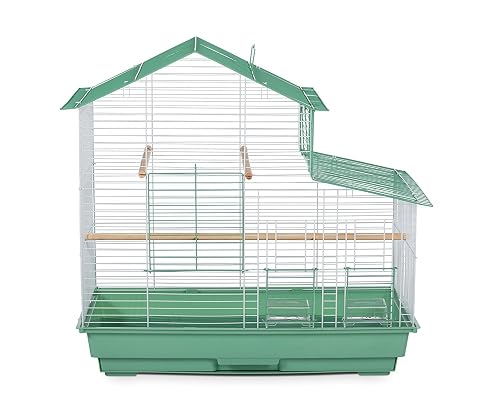
Cover the cage partially, not totally. A cover over two thirds of the cage blocks drafts and light flashes while leaving one side open for airflow and a view of the night light. Full covers that seal every side trap dust and heat and, in warm rooms, raise the risk of overnight heat stress. Wash the cover on the same schedule as the tray liner, since a dusty cover in a small room is a respiratory irritant.

Stabilize the sleep routine
Birds sleep better and startle less on a consistent schedule. Aim for 10 to 12 hours of dark, quiet sleep in the same room every night. Keep the last hour before lights out calm, and run the same wind down sequence daily so the bird knows what is coming. Birds on erratic schedules show more nighttime restlessness generally, and an unsettled bird sits closer to its startle threshold. If the household watches television in the bird room until midnight on weekdays and not on weekends, that inconsistency alone can keep a bird on edge. Predictability is free, and it works.
When Night Frights Keep Happening Anyway
If you have added the night light, covered the window, controlled for rodents, improved the cage setup, and your bird still thrashes several times a month, something is being missed. Two possibilities deserve a veterinary exam. First, vision problems: a bird with a developing cataract or an old eye injury startles more because it cannot see perches even in dim light. Second, pain: birds with arthritis or internal discomfort sleep poorly and wake more easily. An avian vet exam that includes a close look at the eyes is the next step, not more equipment.
Record keeping helps more than owners expect. Keep a simple log for four weeks: date, time, what was happening in the room, weather, and whether anything in the house changed that day. Patterns surface fast. Owners who keep logs have traced recurring frights to a neighbor's motion sensor light, a delivery route that runs at 1:30 a.m., and one memorable case of a hamster wheel spinning in the room next door. The log turns a mystery into a checklist, and a checklist can be fixed.
The Takeaway
Night frights are an instinct problem, not a behavior problem, and scolding or ignoring them does nothing. Give the bird steady low light, a wide and low clutter cage, a partially covered draft free corner, and a room without midnight visitors, and the episodes should stop or drop to rare single events. Keep styptic powder and a clean cloth where you can reach them in the dark, know where the nearest avian vet is, and treat any bleeding that does not stop within a few minutes of pressure as an emergency. Your bird's startle reflex was built by thousands of generations of Australian predators. You are not going to train it out. You are going to build a room where the reflex cannot hurt anything.
Related Reading
Want more on this topic? Check out our guides on best bird feather supplements molting care, parakeet vs cockatiel which bird fits your life, best bird food parakeets.