Lift the Grate Before You Read Another Word
Here is a small experiment worth doing tonight. Wait until the lights are low, shine a flashlight under the wire grate at the bottom of your bird's cage, and actually look. What you find down there — the gray sediment of seed hulls, droppings dried hard onto the bars, that faint sweet-musty smell you stopped noticing months ago — tells you more about your bird's health outlook than any supplement on the shelf. Cage cleaning sounds like the most boring subject in bird keeping, and that is exactly why it quietly causes more illness than almost anything else owners do, or fail to do. Birds are the wrong animal to cut corners with. Their respiratory system has no real equivalent to ours: air moves in one direction through compact lungs and through a network of air sacs that reaches deep into the body, a design that extracts oxygen with brutal efficiency — and delivers airborne irritants with the same efficiency. According to the AVMA, birds are unusually sensitive to fumes, aerosols, and airborne particles that most other pets shrug off without complaint. A cage that looks merely untidy to a cat is, to a parakeet or a cockatiel, a slow respiratory challenge it cannot escape from, because it lives inside the problem twenty-four hours a day.Why a Cage Turns Hazardous Faster Than You Expect
The math is unforgiving. A budgie, a pair of finches, or a single cockatiel lives, eats, and eliminates inside a volume smaller than most kitchen trash cans. Every dropping, every discarded hull, every splash of bathwater sits within a foot or two of where the bird breathes. In a warm room with ordinary household humidity, that debris is not inert. It is an incubator, and it runs on three separate clocks. Moisture works fastest. Seed, bread, egg food, or fruit that stays damp for even a day or two can begin growing Aspergillus, the fungus behind aspergillosis — a respiratory infection that is serious in birds and notoriously hard to treat once it takes hold. Droppings run on a slower clock, releasing ammonia while fresh and drying into a fine powder that gets stirred into the air every time the bird flaps or you walk past. The third clock is the one aimed at you: the bacterium that causes psittacosis can shed in droppings and respiratory secretions, and the Humane Society counts clean housing among the basic steps that keep the whole household safe around pet birds. Read those three together and the conclusion is hard to dodge. Cleaning a cage properly is not housekeeping. It is preventive medicine you administer once a day, and the bird takes the dose whether you show up or not.The Daily Five Minutes
The backbone of the entire schedule is a five-minute pass once a day, and we would argue it matters more than the weekly deep clean. Owners who promise themselves a big weekly scrub but skip the daily pass usually end up with both a filthy cage and a scrubbing session they dread. The daily routine is short, boring, and non-negotiable:- Pull out and replace the paper liner. Ten seconds. Bin the old sheet in the same motion.
- Wash the water dish with hot water and dish soap, not just a refill. Refilling a slimy dish feeds bacteria; washing it removes them.
- Rinse food dishes and remove anything wet — soft food, greens, egg food — before the afternoon. Damp leftovers are the mold clock starting.
- Spot-clean the grate and tray: lift droppings with a paper towel and a scrap of newspaper underneath as your work surface.
- Sweep or vacuum the hulls that land around and under the cage. This single habit decides whether you get seed moths later in the season.
The Weekly Deep Clean, Step by Step
Once a week — same day, so it becomes automatic — the cage gets a full teardown. Budget thirty to forty-five minutes the first few times; with practice and the right setup it drops closer to twenty. Work through the steps in order and do not skip the drying step at the end, which is the one people always rush:- Move the bird out of the room. Not to a perch on the other side of the same room — out, into a comfortable space between roughly 65 and 80 degrees, away from drafts and away from the kitchen.
- Strip everything. Dishes, toys, perches, the paper, the grate, the tray, and any skirts or seed catchers all come out. A cage you clean around accessories is a cage you clean badly.
- Soak and scrub the grate and tray in hot water with dish soap. A plastic scraper or an expired gift card lifts dried droppings far faster than a cloth ever will.
- Scrub the bars and welds with a stiff brush. Seed paste collects where vertical bars meet horizontal ones, and those weld points are exactly where your bird's beak goes.
- Disinfect. F10SC used at label dilution, or plain unscented household bleach diluted 1:32 — half a cup per gallon of water. Wet every surface and let it sit a full ten minutes. Contact time is not a suggestion; it is where the disinfecting actually happens.
- Rinse thoroughly until you cannot smell any cleaner at all, then rinse once more.
- Dry completely before anything goes back in. A damp cage rebuilds the mold problem you just spent forty minutes removing.
- Rebuild with fresh paper and rotate in a different set of perches and dishes — more on rotation below, because it is the trick that makes the whole system sustainable.
 This is also the point where cage design quietly decides whether the weekly job takes twenty minutes or an hour. A stand on casters lets you roll the whole enclosure to a bathtub or a patio instead of scrubbing around a stationary frame, and a tray that slides out from the front means the worst part of the job — the grate — comes to you instead of you bending over it. We like the Prevue Pet Products wrought iron flight cage with wheels for exactly that combination: it is roomy enough for small parrots and finch flights, it rolls, and the bottom pulls out for scraping. For smaller setups, the Prevue Pet Products house style bird cage with removable tray pairs a pull-out tray with wood perches and feeder cups that pop off in one motion, which keeps the weekly teardown for a parakeet or cockatiel down to a rinse-and-refill affair.
Disinfectants That Are Safe and the Fumes That Are Not
Let us sort the cabinet into three piles. The first pile is genuinely useful: F10SC, a veterinary-grade disinfectant that bird keepers and avian vets lean on heavily, and plain unscented bleach at the 1:32 dilution described above. Both are effective against the bacteria and fungi that matter. Both demand a bird out of the room during use and a full rinse and air-dry before the bird comes back. Bleach has one extra rule: never, ever mix it with anything else, and especially not with ammonia or vinegar, because the reaction produces gases that are dangerous to every lung in the house. The second pile is vinegar. White vinegar is excellent at dissolving mineral rings on dishes and softening dried droppings before scrubbing, and it is harmless around birds. But it is a cleaner, not a disinfectant — it does not reliably kill the organisms you are targeting. We use it as a pre-treatment, never as the final step. Treating vinegar as your disinfectant is one of those comforting mistakes that feels natural and accomplishes little. The third pile is the one that ends trips to the emergency vet, or worse. Aerosol sprays of any kind near a cage. Scented multi-surface cleaners and air fresheners. Ammonia-based glass cleaners used in the same room. And the biggest hazard in most homes is not in the cleaning caddy at all — it is the kitchen. Overheated nonstick cookware and other PTFE-coated products release fumes that are lethal to birds, and according to the AVMA, these fumes can kill a bird with no warning at all, sometimes before an owner realizes anything happened. The ASPCA likewise warns that birds are exceptionally sensitive to inhaled toxins and should be moved well away from the room before any cleaning products or cooking fumes are in play. If your bird's cage lives in or near the kitchen, fixing that is a bigger health intervention than any bottle of disinfectant you will ever buy.Perches, Toys, and the Layer Nobody Washes
Bars and trays get all the attention, but the accessories are where grime hides longest. Wood perches are porous, they sit under droppings all week, and they are the surface your bird's feet live on. The fix is a rotation system: two full sets of perches, one in the cage and one drying after its wash. Natural wood perches scrub clean with hot water and a brush, then dry for an afternoon in direct sun, or an hour in a 250-degree oven if the weather refuses to cooperate. Perches that are gnawed soft, stained through, or pocked with droppings get binned, not cleaned forever. And skip the sandpaper perch covers sold for nail trimming — they abrade the bottom of the foot rather than the nail, and avian vets treat the resulting sores more often than the advertising ever mentions. Toys follow the same logic on a slower schedule. Rotate the set weekly: half in the cage, half in the wash. Plastic and acrylic toys tolerate a top-rack dishwasher cycle well — just skip any heated dry with scented detergent, because fragrance residue sits exactly where your bird's beak will be. Rope toys get washed monthly and retired as soon as they fray; loose threads are a toe-catching hazard, and a snared toe escalates fast. Anything chewed past recognition gets replaced. A toy budget is a small price next to the cost of treating an entanglement injury. The dish rotation ties the whole layer together. Two sets of dishes — one in the cage, one in the dishwasher or drying rack — means you never serve a meal on a dish that has not dried since its wash, and you never postpone a wash because you have nothing to swap in. We prefer stainless crocks over plastic for the same reason vets do: plastic develops microscopic scratch crevices where biofilm shelters from your scrubbing, and steel gives those bacteria nowhere to hide.Read the Droppings While You Clean
Here is the part of cage cleaning almost nobody mentions: the daily liner pull doubles as the most reliable early-warning system you own. The morning paper presents you with an overnight record of your bird's internal state, free of charge, every single day. A healthy dropping has three parts — the dark fecal coil, the chalky white urates, and a ring of clear urine. You are not looking for perfection. You are looking for change. Some changes are false alarms. Berries dye droppings startling colors, a first-day switch in seed or pellet brands shifts the consistency, and a large morning dropping after a big dinner is normal volume, not disease. The signals that actually matter are persistent: urine volume that stays high day after day, feces that turn consistently dark green or black when the diet has not changed, undigested seed visible in the feces, or any trace of blood. Give genuine changes twenty-four hours of observation, and if they hold, book an avian vet appointment that day, not that month. Birds compensate hard and visibly crash late, which is why the phrase wait and see costs more pet birds than any single pathogen does. A habit of photographing the morning paper once or twice a week costs nothing and gives your vet a timeline instead of a shrug.Monthly: Inspect the Cage Hardware Itself
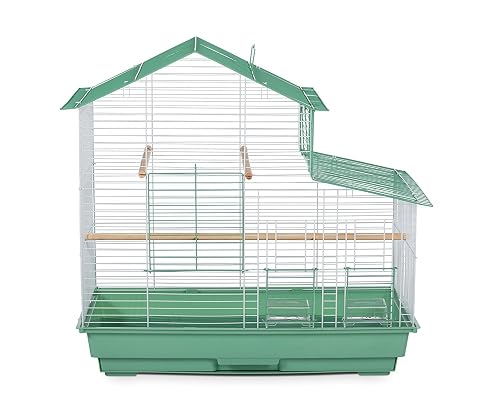 Once a month, after the weekly routine, spend ten minutes inspecting the cage as an object. Run your eyes along the welds and plating: rust patches, chipped coating, and rough spots deserve attention, particularly on cages housing parrots that chew the bars. Zinc exposure from gnawed plating is a recognized concern in parrots, and a chipped weld under an active beak does not repair itself. Chipped spots that your bird cannot reach are cosmetic; chips directly in the chew zone are a signal to replace the cage or the panel. While you are down there, wipe out the caster wheels and the tray track — both collect a startling amount of wet debris and they are usually the source of that smell you have gone nose-blind to. Check the latch springs and the bar spacing for any bent bars while you are at it; a latch that needs a hard shove today will need a repair you have not scheduled yet.
Cage hygiene has an out-of-cage half, too. Droppings on the sofa arm and hulls ground into the carpet are the mess that makes owners quietly resent the bird, and resentment is the real reason cleaning routines collapse. The fix is channeling the chaos instead of chasing it. A dedicated stand gives out-of-cage time a defined zone; the Prevue Pet Products Parrot Playground does this well — a framed perch-and-ladder setup that catches droppings on a wipeable surface in one spot, instead of distributing them across upholstery where you will be scraping dried concrete off the fabric later. Put newspaper under it, and its weekly cleanup collapses into thirty seconds.
The Setup That Shrinks the Work
Everything above gets easier with a small amount of forward planning, so here is the honest version of our advice. Buy two of every dish and two sets of the perches your cage uses, and keep a caddy — scraper, brush, unscented soap, bottle of F10SC, roll of paper — in the room the cage lives in, not under the kitchen sink. Line with plain paper rather than aromatic wood shavings; cedar and pine shavings release volatile oils that add load to the exact respiratory system you are trying to protect, and paper gives you the daily health read for free. And if you are still early in bird keeping, or replacing a cage anyway, prioritize rolling stands and pull-out trays over shape and color. Nobody admires a cage for its tray track, but everybody feels the difference every single week. If you take one thing from this piece, take the daily five minutes. The weekly teardown is just maintenance on top of a habit, and the habit is what keeps the mold, the ammonia, and the moth eggs from ever building a foothold. Your bird breathes the results of your schedule every second of every day. Make the schedule small enough that you never skip it, and the deep clean stays a chore instead of becoming a rescue operation.Related Reading
Want more on this topic? Check out our guides on how to choose first pet bird buying guide, best bird cage stands rolling bases heavy duty, household dangers pet birds safety guide.