Parakeet vs Cockatiel: Which Bird Actually Fits Your Life?
Disclosure: PawCritic is reader-supported. A couple of the links below are Amazon affiliate links, and we may earn a small commission if you buy through them — it costs you nothing extra.
Ask ten bird owners which is the better beginner parrot and you'll get ten confident answers and no consensus. Which tells you something: neither one is objectively better. They're genuinely different birds with different demands, and the people who end up unhappy are almost always the ones who picked based on price or looks instead of on temperament and noise.
I've lived with both. A budgie named Pip who could say about forty words and never once shut up, and a cockatiel named Ash who whistled the first eight notes of a song I never taught him and screamed like a fire alarm whenever I left the room. Both were great. Both were completely different experiences.
Here's the honest head-to-head, based on what actually matters day to day rather than what the care sheet at the pet store tells you.
Quick Comparison
| Parakeet (Budgie) | Cockatiel | |
|---|---|---|
| Adult size | 7 in / 30–40 g | 12–13 in / 80–120 g |
| Lifespan | 7–10 yrs (up to 15 with great care) | 15–20 yrs (25+ documented) |
| Purchase price | $20–60 | $120–250 |
| Minimum cage (single bird) | 30"W × 18"D × 18"H | 24"W × 24"D × 30"H |
| Bar spacing | 3/8" – 1/2" | 1/2" – 5/8" |
| Noise level | Constant chatter, moderate volume | Quieter baseline, much louder peaks |
| Talking ability | Excellent (males), often 50+ words | Poor to fair; whistles far better |
| Cuddliness | Low to moderate; not naturally a snuggler | High; many actively seek head scratches |
| Daily out-of-cage time | 2+ hours | 3+ hours |
| Dust production | Low | High (powder-down species) |
| Best for | Smaller spaces, apartments, budget-conscious, want a talker | Want physical affection, can commit 20 years, have space |
Size and Space: Not As Different As You'd Think
A cockatiel is roughly three times the weight of a budgie, but the cage requirement gap is narrower than that ratio suggests — because the two birds use space differently.
Budgies fly horizontally. They're built for flat-out speed across open ground, and in a cage that means they want length. A tall, narrow cage is nearly useless to a budgie; a wide, shorter one they'll use every inch of. Prioritize width over height, every time.
Cockatiels climb and need tail clearance. That gorgeous 6-inch tail gets shredded against cage bars in anything too cramped, and a cockatiel with a permanently frayed tail is a cockatiel in a cage that's too small. They also need enough vertical room to hold their crest up without brushing the top.
Practical translation: for a single budgie, a 30" wide cage is a genuinely good home. For a single cockatiel, you want at least 24×24×30 and honestly 30×20×36 is better. Both should be measured with the toys already in — a cage crammed with perches and toys has far less usable flight space than an empty one.
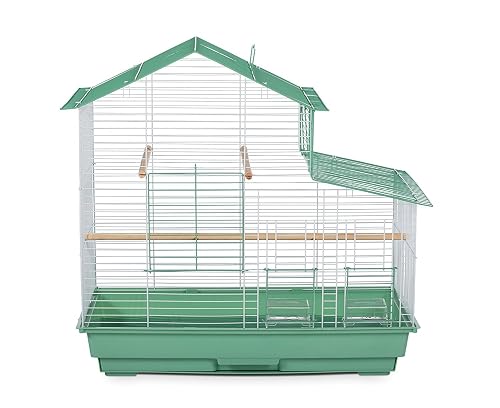
Bar spacing is a safety issue, not a preference. Budgies need 3/8" to 1/2". Anything wider and they'll wedge their head through and either get stuck or escape. Cockatiels take 1/2" to 5/8". Putting a budgie in a cockatiel cage is a real hazard. Our full breakdown of cages for parakeets, cockatiels, and small parrots gets into the specific models that hit these dimensions without costing a fortune.
Noise: The Deciding Factor for Most People
This is where I see the most regret, so let me be specific rather than vague.
Budgies produce near-constant background chatter. Warbling, chirping, mimicking sounds around the house, talking to themselves in the mirror. It runs from wake-up to dark, and it's genuinely pleasant to most people — think of it as a radio you can't turn off. The volume rarely exceeds normal conversation level. A budgie will not wake your neighbors.
Cockatiels are quieter most of the time. They whistle, they chirp softly, and they'll go long stretches saying almost nothing. But cockatiels have a contact call — a sharp, piercing, repeated shriek — that they use to locate flock members. That's you. When you walk out of the room, a bonded cockatiel will call for you. Loudly. It carries through walls and it can go on for ten minutes straight.
Cockatiels also have a "flock call" at dawn and dusk that's hardwired. You can reduce it with training and by responding with a whistle back, but you cannot eliminate it.
My read: if you live in an apartment with shared walls and thin construction, a budgie is the safer bet. If you have a house or tolerant neighbors, the cockatiel's occasional volume is manageable. But don't let anyone tell you cockatiels are "quiet birds." They're quiet birds with a very loud button.
Talking and Whistling
Here's the thing that surprises people: the little $30 budgie is a far better talker than the $200 cockatiel.
Male budgies are among the best mimics in the entire parrot family relative to their size. A dedicated owner working with a young male budgie can realistically get 50 to 100+ words. The catch is the voice — budgie speech is fast, high-pitched, and often described as "scratchy." Guests may not understand a word of it while you hear it clearly.
Female budgies talk rarely. Not never, but don't buy a hen expecting a chatterbox.
Cockatiels, by contrast, are mediocre talkers. Some males pick up a handful of words in a raspy, muttered voice. Most don't. What cockatiels excel at is whistling melodies — a male cockatiel can learn full tunes and improvise variations on them, and it's genuinely charming. Female cockatiels typically neither talk nor whistle much; they chirp.
Sex matters enormously for both species for vocal ability. If talking or whistling is your primary goal, you want a male, and you want a young one.
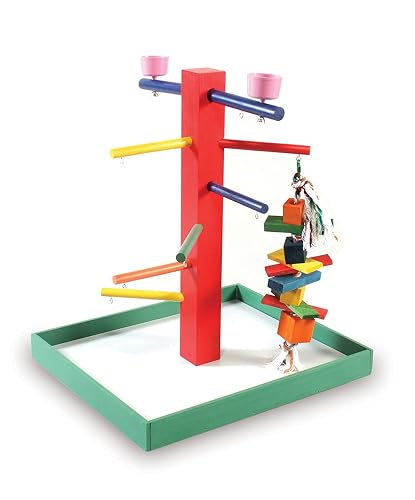
Temperament and Handling
Cockatiels win the affection contest, and it isn't close.
A hand-raised, well-socialized cockatiel will actively solicit head scratches, lower its head into your fingers, sit on your shoulder for hours, and follow you around the house. That crest is also a free emotional readout — straight up means alert or startled, angled forward means curious, flattened tight to the head means fear or aggression. You always know where you stand with a cockatiel.
Budgies are more independent. A tame budgie will step up, ride around on you, and interact enthusiastically — but most don't enjoy being petted, and they're fidgety. They want to be near you, not on you being stroked. Some individuals are exceptions, but as a species trait, budgies are companions rather than cuddlers.
Taming difficulty: Cockatiels are generally easier to hand-tame, partly because they're slower-moving and partly because they seem more predisposed to trust. Budgies are quick, flighty, and take longer to convince — though once tame, they're just as bonded.
On buying pairs: Two budgies housed together will bond heavily with each other and may show little interest in you. If you want a tame, interactive budgie, get one and be its flock. If you're going to be out of the house 10 hours a day, get two and accept that they'll be a pair you observe rather than handle. Cockatiels do somewhat better as singles with adequate human interaction, but the same principle applies — a lone bird with an absent owner is a miserable bird.
Dust and Allergies — Check This Before You Buy
Cockatiels are a powder-down species. They produce a fine white keratin dust that coats every surface within about ten feet of the cage: your furniture, your electronics, your lungs. It's the same trait cockatoos and African greys have, and it's substantially more than budgies produce.
If anyone in the household has asthma or is prone to respiratory irritation, this is a real consideration and not a minor one. Bird fancier's lung — hypersensitivity pneumonitis from chronic exposure to avian proteins in feather dust and droppings — is a documented occupational and hobbyist condition. It's rare, but it's not mythical.
Mitigation: a HEPA air purifier running near the cage, weekly bathing or misting of the bird (which dramatically cuts airborne dust), and regular wipe-downs. Budgie owners can generally skip most of this.
Diet: Basically the Same, and Most Owners Get It Wrong
Both species need the same fundamental diet, and the pet store all-seed mix is not it. An all-seed diet is high in fat, deficient in vitamin A, calcium, and multiple amino acids, and it's the underlying cause of an enormous share of the health problems avian vets see — obesity, fatty liver disease, respiratory infections secondary to vitamin A deficiency, and chronic egg-laying issues in hens.
The Association of Avian Veterinarians recommends a formulated pelleted diet as the base for most companion psittacines, supplemented with fresh vegetables and limited seed as treats rather than as a staple.
Target ratios for both species:
- 60–70% high-quality pellets
- 20–30% fresh vegetables and leafy greens — dark leafy greens, bell pepper, broccoli, carrot, sweet potato, peas
- 5–10% seed, used as training rewards
- Small amounts of fruit as occasional treats (higher sugar than most owners realize)
Never feed: avocado, chocolate, caffeine, alcohol, onion, garlic, apple seeds or stone-fruit pits, or anything salty and processed. The ASPCA Animal Poison Control Center lists avocado as toxic to birds specifically — the persin content causes cardiac damage and can be fatal even in small amounts.
Converting a seed junkie to pellets is the hardest part of bird ownership. It takes weeks. Mix pellets into the seed and gradually shift the ratio, crush pellets over favorite foods, and never let the bird go a full day without eating — birds have fast metabolisms and starvation is a genuine risk. Weigh daily during conversion. Our guide to bird pellet diets covers which brands convert most easily.
One cockatiel-specific note: female cockatiels are notoriously prone to chronic egg-laying, which strips calcium and can lead to egg binding — a genuine emergency. Managing light cycles (12 hours of darkness), removing nest-like spaces, and maintaining calcium intake all reduce the risk. Budgie hens can do this too but it's less common.
Enrichment and Time Commitment
Both species are intelligent flock animals that suffer badly in isolation. Boredom in parrots shows up as feather plucking, screaming, stereotypic pacing, and aggression — and it's much easier to prevent than to fix.
Daily minimums:
- Budgie: 2+ hours out of cage in a bird-proofed room, plus direct interaction. They're happiest with rotating toys, mirrors (controversially — some birds bond obsessively to them), swings, and shreddable material.
- Cockatiel: 3+ hours out, and more direct human interaction. Cockatiels are more prone to separation-related screaming, so building independence early matters.
Toy rotation is the cheapest enrichment upgrade you can make. Keep three sets and swap weekly — the same toy that's ignored on day 20 becomes fascinating again after two weeks away. Shreddable foraging toys work extremely well for both species because they engage the natural behavior of destroying things to find food. A basic shreddable foraging toy sized for small-to-medium parrots fits budgies and cockatiels alike, and it doubles as beak conditioning.
Bird-proofing is non-optional for out-of-cage time. Ceiling fans off, windows covered or closed, toilet lids down, no open water, no other pets in the room, and absolutely no non-stick cookware in use anywhere in the house while the bird is out. Overheated PTFE coatings release fumes that kill birds within minutes — this is the single most common accidental death in pet birds and most owners have never heard of it. We cover the full list in our guide to household dangers for pet birds.
Health: What Each Species Is Prone To
Budgies:
- Tumors — budgies have an unusually high incidence of lipomas and internal tumors, particularly kidney and testicular tumors in older males
- Scaly face mites (Knemidokoptes) — crusty growths around the beak and cere, very treatable but needs a vet
- Obesity and fatty liver from all-seed diets
- Goiter from iodine deficiency, mostly in seed-only birds
Cockatiels:
- Chronic egg-laying and egg binding in hens
- Respiratory issues, partly related to their own dust production
- Night frights — cockatiels thrash violently in the dark when startled, which can cause serious injury. A dim night light in the room prevents most of it.
- Fatty liver disease from high-fat seed diets
Both species are masters at hiding illness — prey animal instinct. A bird that looks sick has usually been sick for a while. Learn the warning signs: fluffed for long periods, tail bobbing with each breath, changes in droppings, sitting on the cage floor, loss of appetite, or any change in vocalization. Our piece on how to tell if your bird is sick is worth bookmarking before you need it.
Sick birds get cold fast. A bird that's fluffed and lethargic needs supplemental warmth at 85–90°F while you arrange a vet visit. A cage-mounted bird warming panel is worth having on hand for exactly that scenario — it's the sort of thing you don't want to be shopping for at 11 PM on a Sunday.
Find an avian vet before you have an emergency. General small-animal practices often won't see birds, and driving 90 minutes with a critically ill bird is a bad night.
The Real Cost
| Expense | Parakeet | Cockatiel |
|---|---|---|
| Bird | $20–60 | $120–250 |
| Cage | $80–180 | $150–350 |
| Initial setup (perches, toys, dishes, playstand) | $80–150 | $120–220 |
| First vet wellness exam | $60–120 | $60–120 |
| Year one total | $240–510 | $450–940 |
| Annual ongoing (food, toys, vet) | $180–350 | $250–500 |
| Lifetime estimate | $2,000–3,500 | $5,000–10,000 |
That cockatiel lifetime number is the one people don't think about. Twenty years is a long commitment. It outlasts most apartments, some jobs, and a fair number of relationships. Budget accordingly — and consider who takes the bird if your circumstances change.
So Which One?
Get a parakeet if: you live in an apartment, you're on a tighter budget, you want a bird that talks, you can't commit to two decades, you or someone in the house has mild respiratory sensitivity, or you want to test whether bird ownership suits you at all before scaling up.
Get a cockatiel if: you want a bird that will genuinely cuddle with you, you can be home enough to satisfy a needier animal, you have the space and can absorb occasional loud contact calls, nobody in the house has respiratory issues, and you're clear-eyed about a 15–20 year commitment.
Get neither if: you're gone 12 hours a day with no one home, you can't tolerate any noise, you cook with non-stick cookware and won't change, or you're not prepared for the daily cleaning. There's no shame in that — there's a lot of shame in rehoming a bird eight months in because you didn't think it through.
If I had to hand one recommendation to a first-time owner with no strong preference either way: start with a single male budgie. Cheaper mistake if it doesn't work out, easier on the neighbors, surprisingly rewarding, and if you fall in love with the hobby, the cockatiel will still be there in two years — and you'll be a much better keeper for it.
Related reading: Cockatiel Cages 2026: Comfortable Spaces for Your Bird, How to Tell If Your Bird Is Sick: 15 Warning Signs You Shouldn't Ignore, Bird Toys & Enrichment Products, Bird Cage Play Tops & Roof Gyms, Bird Nail Clippers, Beak Files & Grooming Tools, Bird Air Purifiers & Dander Removal Systems, Bird Cage Disinfectants & Cleaning Supplies, Bird Flight Harnesses & Outdoor Safety Gear, Bird Cradle Swings & Sleep Perches, Bird Flight Suits & Harnesses, Bird Window Perches & Aviary Accessories and Bird Feather Supplements & Molting Care.