Your Dog's Teeth Are Rotting and You Probably Don't Know It
A six-year-old dog goes under anesthesia for what was booked as a routine cleaning. The owner had sworn the breath was 'just dog breath' and the teeth looked 'a little yellow, but fine.' The vet pulls eight teeth that afternoon. Eight. The dog had been eating kibble with exposed pulp and infected roots for what was likely years. This scene plays out more times than anyone can count, and it is never easy to watch.
Here's the part that should make every dog owner sit up straight: According to the American Veterinary Medical Association (AVMA), by age three, more than 80% of dogs have some form of periodontal disease. That's not a typo. Four out of five dogs. And most owners have no idea until the damage is irreversible.
Dental disease isn't just about bad breath. Bacteria from infected gums enters the bloodstream and can damage the heart, kidneys, and liver. Many veterinarians consider untreated periodontal disease one of the most under-treated conditions in veterinary medicine. We brush our own teeth twice a day and skip our dog's teeth for years. That math doesn't work.
What Actually Happens Inside a Dog's Mouth
Dogs don't get cavities the way humans do. Their teeth are shaped differently, and their saliva has a different pH. What they get instead is periodontal disease, and it's a slow, progressive destruction of the structures that hold teeth in place.
It starts with plaque, a soft film of bacteria that forms on teeth within hours of eating. If you don't remove it, minerals in saliva harden it into tartar within 24 to 48 hours. Tartar is like concrete on the tooth surface. You can't brush it off. Once tartar forms below the gumline, it creates a pocket where bacteria multiply. The immune system attacks, inflammation sets in, and the bone that anchors the tooth starts to dissolve. This is periodontitis, and it's permanent.
The stages break down like this: Stage 1 is gingivitis, where gums are red and inflamed but the attachment is still intact. This is reversible with proper care. Stage 2 is early periodontitis, where you lose up to 25% of attachment. Stage 3 is moderate, with 25 to 50% attachment loss. Stage 4 is advanced, with more than 50% loss and teeth that are literally falling out. Most owners don't notice anything until Stage 3. That's the problem.
Warning Signs Most Owners Miss
Bad breath is the obvious one, but by the time your dog's breath could knock you over, the disease is usually advanced. Here are the signs to watch for, and the ones every dog owner should check weekly:
Red or swollen gums, especially along the gumline where the tooth meets the tissue. A thin red line is early gingivitis. If the gums look angry and puffy, you're past the point where brushing alone will fix it.
Yellow or brown buildup on the teeth, particularly on the upper back molars. That's where food and bacteria collect first. Lift your dog's lip and look at the big chewing teeth. If they're brown near the gumline, tartar has already formed.
Drooling, dropping food, or chewing on one side. Dogs are masters at hiding pain. If your dog suddenly prefers soft food, chews cautiously, or yelps when eating hard kibble, something is wrong. Dogs with fractured teeth can keep eating for months because the alternative is starving.
Pawing at the mouth or rubbing the face on the carpet. This often means oral pain. It can also mean something stuck between teeth, so check carefully.
Loose teeth or missing teeth. If you can wiggle a tooth, that tooth is on its way out. By this point, bone loss is significant and extraction is usually the only option.
According to the American Society for the Prevention of Cruelty to Animals (ASPCA), dental disease is one of the most common health problems in dogs, yet it's also one of the most preventable. That gap between common and preventable is where owners can make a real difference.
Why 'Dental Chews Alone' Is a Lie You've Been Sold
I'm going to take a stance here: dental chews are a supplement, not a solution. The veterinary oral health products that carry the VOHC (Veterinary Oral Health Council) seal do have evidence behind them, and some genuinely reduce plaque and tartar. But they don't clean below the gumline, and they don't replace brushing. Owners can feed a green dental chew every day for years and still end up with a dog needing multiple extractions at age five.
Brushing is the gold standard because it physically disrupts the plaque biofilm before it hardens. The AVMA recommends daily brushing. Daily. Not once a week. Not when you remember. The difference between brushing three times a week and seven times a week is measurable in tartar accumulation, but the difference between never and three times a week is enormous. If you can only commit to three days a week, do that. It's still better than nothing by a wide margin.
Here's the uncomfortable truth: most dogs won't tolerate brushing if you just shove a brush in their mouth one day. You have to train it. And that training takes weeks, not minutes. This goes wrong so many times when owners try to rush it and end up with a dog who hates having their face touched for the rest of their life.
A Step-by-Step Routine That Works (Even If Your Dog Hates It)
This is the protocol recommended by veterinary dentists and used in shelter and home settings alike. It takes about six to eight weeks if you go slow. Go faster and you'll likely fail.
Week one: Touch the muzzle. No toothbrush. No toothpaste. Just gently lift your dog's lip for two seconds and give a treat. Do this three times a day. That's it. You're building a positive association with the handling, not the cleaning.
Week two: Touch the teeth. Same deal, but now rub your finger along the outside of the teeth for one or two seconds. Treat. Repeat. Keep sessions under 30 seconds. If your dog pulls away, you're going too fast. Back up.
Week three: Introduce the toothbrush. Let your dog lick enzymatic dog toothpaste off the brush. Poultry flavor is usually a winner. Don't brush yet. Just let them taste it and associate the brush with something good. Never use human toothpaste. It contains xylitol and fluoride, both toxic to dogs. According to the FDA, xylitol is highly toxic to dogs and can cause life-threatening hypoglycemia and liver failure.
Week four: Start brushing a few teeth. Focus on the outside surfaces of the upper teeth, especially the big molars in the back. The inside surfaces get some natural cleaning from the tongue and saliva, so prioritize the outside. Aim for five to ten seconds of actual brushing. Treat. Done.
Weeks five and beyond: Build up to 30 to 60 seconds of brushing on each side. Use a soft-bristled dog toothbrush or a finger brush. Angle the bristles toward the gumline at about 45 degrees and use small circular motions. Don't scrub hard. You're disrupting plaque, not sanding wood.
If your dog has existing tartar, brushing won't remove it. You need a veterinary cleaning first. Think of it this way: you don't brush over concrete. You get the concrete removed, then you brush to prevent it from coming back.
Professional Cleanings: What They Actually Involve
A proper veterinary dental cleaning is not a spa treatment. It requires general anesthesia, because scaling below the gumline is uncomfortable and impossible to do thoroughly on an awake dog. The vet will take dental X-rays, scale both above and below the gumline, polish the teeth, and probe for pockets. If they find diseased teeth, they may extract them in the same session.
Anesthesia sounds scary. It is a common concern among nervous owners. But here's the reality: modern anesthetic protocols are extremely safe for healthy dogs, and the risk of anesthesia is far lower than the risk of untreated dental disease. The AVMA notes that dental disease can lead to heart, kidney, and liver problems. Leaving infected teeth in place is not the safe choice. It just feels safer because you can't see the damage.
Most vets recommend a professional cleaning every six to twelve months for dogs with a history of dental disease, and every twelve to twenty-four months for dogs with healthy mouths. Small breeds and brachycephalic dogs (flat-faced breeds like pugs and French bulldogs) often need more frequent cleanings because their teeth are crowded and their mouths don't self-clean as well.
Products That Actually Help (and What to Skip)
If you're going to spend money on dental products, spend it on things with evidence. The VOHC seal is your best filter. It means an independent body reviewed the data and found a real reduction in plaque or tartar. Not every product with the seal is equally effective, but products without it are a gamble.
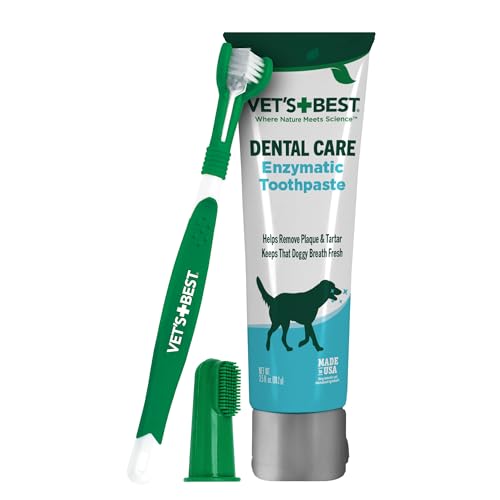
Enzymatic dog toothpaste is non-negotiable if you're brushing. It doesn't need to be rinsed, and the enzymes provide some antibacterial action even where you can't reach. You can find decent options like this enzymatic toothpaste set that comes with a brush and finger brush.
Dental chews with the VOHC seal can help between brushings. Look for chews that are appropriately sized for your dog. Too hard and you risk fracture. Too soft and they do nothing. The general rule from veterinary dentists: if you can't bend it with your hands, it's too hard. That rules out antlers, hooves, and marrow bones, which are common culprits in slab fractures of the carnassial teeth.
Water additives are hit or miss. Some have the VOHC seal and provide a modest benefit. They're not a substitute for brushing, but if your dog absolutely will not tolerate a toothbrush, a VOHC-approved water additive is better than nothing. Just don't fool yourself into thinking it's equivalent.
Dental diets are another option. Some prescription dental foods have the VOHC seal and use a specific kibble shape and size to mechanically scrub the teeth. They work, but they're not cheap and not every dog does well on them. Talk to your vet about whether a dental diet makes sense for your dog's overall nutrition.
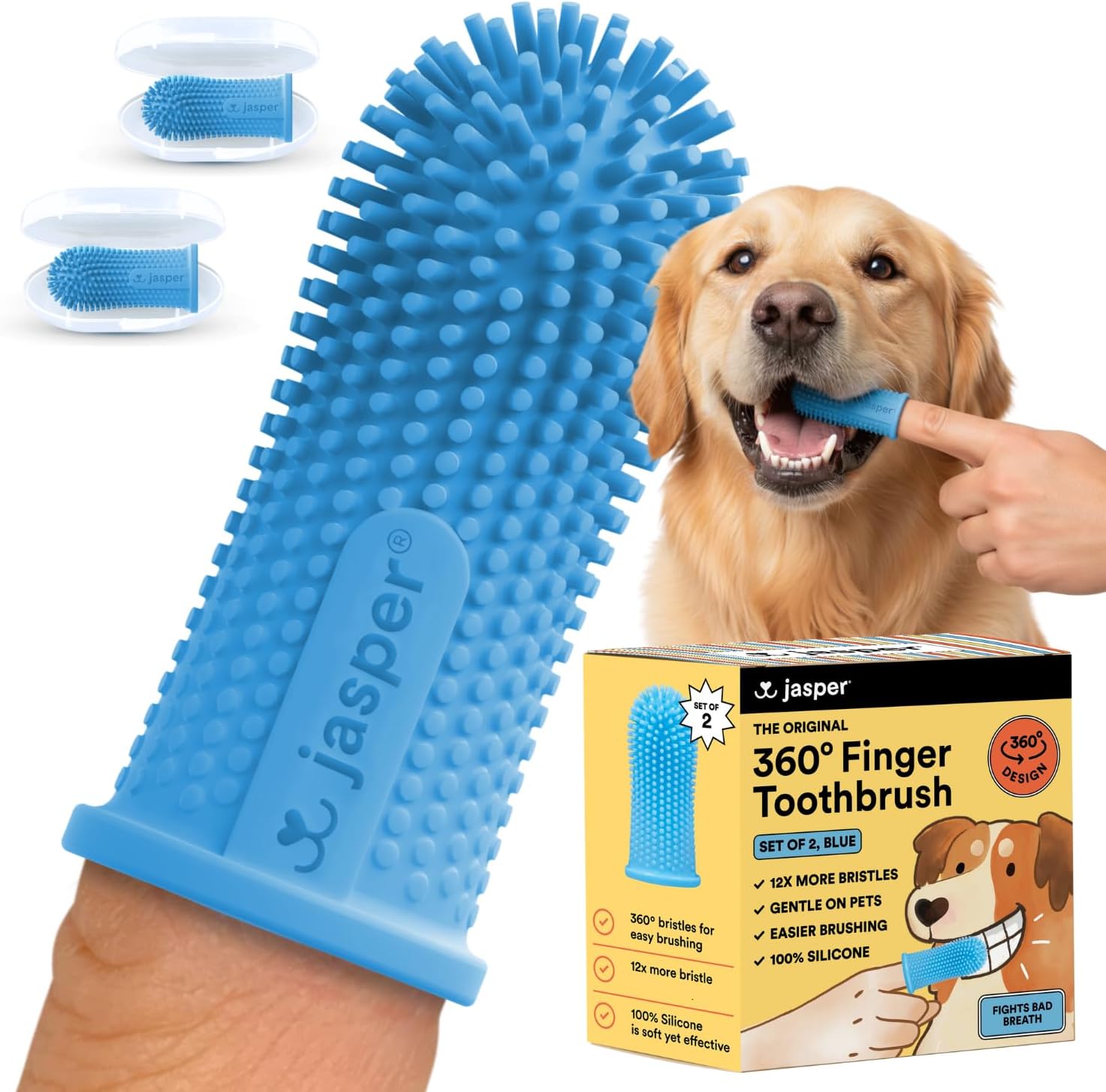
One product that can help with dogs who hate traditional brushing is a finger brush, which allows you to feel exactly where you're cleaning. A simple set like this one often includes both a finger brush and a standard brush. For nervous dogs, starting with the finger brush can make the process easier.
The Breeds and Dogs Most at Risk
Small breed dogs are at significantly higher risk. Toy poodles, Chihuahuas, Yorkshire terriers, dachshunds, and shih tzus often have crowded teeth and thin enamel. Their mouths are small, teeth are packed tightly, and food gets trapped easily. Many small breeds need professional cleanings every six months, not yearly.
Brachycephalic breeds have it worse. Their shortened skulls mean teeth are rotated and crowded, and their mouths often don't close properly, which reduces the natural cleaning action of chewing. French bulldogs, pugs, Boston terriers, and Persian cats (yes, cats too) are notorious for dental problems.
Senior dogs are another high-risk group. Years of accumulated tartar, reduced immune function, and sometimes decreased appetite for hard food all contribute. If you have a dog over seven, dental care should be part of every vet visit.
Dogs with certain medical conditions, like diabetes or Cushing's disease, are also more prone to periodontal disease. If your dog has a chronic condition, be extra diligent about dental care and ask your vet about a cleaning schedule.
What Happens If You Do Nothing
I want to be direct about this because I think sugarcoating it does dogs a disservice. Untreated dental disease causes pain. Real, chronic pain that dogs are experts at hiding. It causes tooth loss. It causes bone loss in the jaw, which can lead to jaw fractures in severe cases. Bacteria from the mouth seeds the bloodstream and can cause infections in the heart valves (endocarditis), kidneys, and liver.
Dogs with severe periodontal disease often have difficulty eating, lose weight, and become lethargic. By the time they show obvious signs, they've been in pain for months. Dogs can transform after dental treatment, becoming playful and energetic again. Owners often say some version of 'I didn't realize how much pain he was in.' That's the tragedy. The dog couldn't tell them.
The financial cost is also real. A routine cleaning under anesthesia might run $300 to $800 depending on your region. A mouth full of extractions can easily hit $1,500 to $3,000 or more. Prevention is cheaper, and it's better for the dog. That's not a sales pitch. It's just the math.
Your Practical Takeaway
Start today. Lift your dog's lip and look at the upper back teeth. If you see brown tartar, call your vet and schedule a dental exam. If the teeth look clean, start a brushing routine this week. Go slow, use enzymatic toothpaste, and treat after every session. If your dog won't tolerate brushing, get a VOHC-approved dental chew or water additive and commit to using it daily. And if it's been more than a year since your dog's last professional cleaning, book one. Your dog can't tell you their mouth hurts. You have to look for it.
Related Reading
Want more on this topic? Check out our guides on best dog joint supplements hip joint health, how to crate train a dog, best dog pools water play equipment.