Fish Tank Mates: The Compatibility Mistakes That Wipe Out Community Aquariums
I once watched a customer at a local fish store buy a beautiful male crowntail betta and, in the same trip, a bag of fancy guppies with flowing tails. The employee said nothing. Three days later the guppies looked like they'd gone through a paper shredder. That's not an unusual story - it's the single most common way community tanks fall apart, and it happens because 'community fish' is a marketing label, not a biological one.
Tank mate compatibility isn't guesswork, but it's also not what the sticker on the tank at the store tells you. Most compatibility disasters come from a handful of predictable mistakes: ignoring temperament, ignoring water parameters, ignoring swimming levels, or stuffing too many fish into too small a tank and calling it 'fully stocked.' I've made two of these mistakes myself over the years, and I've watched the rest play out in other people's tanks dozens of times. So let's go through the errors that actually kill community aquariums, ranked roughly from most to least catastrophic.
Mistake 1: Mixing Aggressive and Passive Fish Because They 'Look Fine' at the Store
Here's the thing about fish stores: the fish you see swimming peacefully together in a retail tank are often juveniles, stressed, and crammed in so tightly that nobody has territory to defend. A red-tailed shark that looks mellow at two inches becomes a territorial menace at four inches. Tiger barbs that shuffle quietly in a school of fifty at the wholesaler turn into fin-nipping machines in your 29 gallon with only three of them.
The rule I follow: research the adult temperament, not the juvenile behavior. Look up whether the species is a fin nipper, a chaser, or a territorial guarder. Serpae tetras, tiger barbs, red-eye tetras, and most barbs in general will shred anything with long fins - bettas, guppies, angelfish, fancy guppies. Meanwhile, slow, passive fish like honey gouramis, corydoras, and otocinclus cats can't compete at feeding time when housed with boisterous feeders like giant danios. They don't die from fights. They starve slowly while the fast fish eats everything within four seconds of it hitting the water.
If you already made this mistake, the fix is not 'wait and see.' Rehome the aggressor or the victim. Waiting is how you end up with one perfect fish and a graveyard.
Mistake 2: Ignoring Water Parameter Mismatches
This one kills more fish than aggression does, and it's quieter. African cichlids from Lake Tanganyika live in hard, alkaline water with a pH around 8.5 to 9.0. South American tetras, rams, and discus come from soft, acidic water, often pH 5.5 to 7.0. If you put a German blue ram in cichlid water, it doesn't get eaten - it burns. Its gills and kidneys fail over weeks. Fish keepers blame the filter, the food, disease, everything except the fact that they forced an Amazon fish to live in a liquid rock.
Test your tap water before you buy anything. According to the U.S. Food and Drug Administration, which regulates ornamental fish as animals under the FDA's Center for Veterinary Medicine oversight, water quality is the single most important factor in ornamental fish health - and that includes pH, hardness, temperature, and ammonia all working together. A reliable liquid test kit is not optional equipment. If your tap runs at pH 8.2 out of the faucet, keep livebearers, rainbowfish, or African cichlids and stop fighting your water. If it comes out at 6.5, keep the South Americans. Chasing a pH with chemicals is a losing battle that swings your tank into instability.
Temperature gets lumped into this too. A heater set to 82°F is great for discus and a slow death for white cloud mountain minnows, which prefer 64 to 72°F. Goldfish and tropical fish don't belong together for exactly this reason, plus the goldfish will eventually eat everything smaller than its mouth.
Mistake 3: Wrong Schooling Numbers
Tetras, rasboras, barbs, and danios are schooling fish. They evolved to live in groups of dozens to hundreds. Keeping six neon tetras is the bare minimum; keeping three is cruelty with a nice label on it. Under-schooled fish either hide constantly, become hyper-aggressive out of fear, or fade and die with no visible cause - which brings me to the part nobody talks about.
Stress in fish is chemical, not just emotional. A fish that's constantly harassed or isolated produces sustained cortisol, which suppresses its immune system. According to research published by the American Veterinary Medical Association on aquatic animal welfare, chronic stress in fish measurably increases susceptibility to opportunistic infections like columnaris and ich. Translation: the fish that got chased for three weeks doesn't die from the chase. It dies from an infection three weeks later, and you blame the pet store for selling you a sick fish. It probably wasn't sick when you bought it.
Practical numbers: most small schooling tetras do best in groups of eight or more. Corydoras want at least six of their own kind - and no, mixing three bronze corys with three panda corys doesn't count. They school by species.
Mistake 4: Size Disparity - the 'It'll Grow Together' Fantasy
Any fish that fits in another fish's mouth will eventually end up there. This sounds obvious until you're standing in front of a tank of two-inch oscars or a cute little bichir. Bala sharks reach a foot long. Common plecos reach 18 to 24 inches. Iridescent sharks get over three feet. Red-tailed sharks, angelfish, and jack dempseys all start cute. People buy them for a 20 gallon, and within a year they're posting on forums asking why their oscar ate all seven neon tetras in one night.
The reverse problem exists too: passive giants. A full-grown angel fish will eat neon tetras. But a big peaceful gourami can still be out-competed by a pack of zebra danios that never stop moving. Size and temperament have to be judged together, not separately.
Before buying any species, look up its adult size, not its sale size. If the adult size doesn't fit your tank with room to swim, don't buy it, no matter how small it is right now. This is the number one reason people end up rehoming fish, and rehoming large fish is genuinely hard - most stores won't take them back.

Mistake 5: Overstocking Disguised as a 'Community'
You've probably heard the old one-inch-per-gallon rule. Throw it out. It was always a rough guideline, and it fails badly in both directions. A ten-inch oscar produces more waste than ten one-inch neons by a factor that isn't even close, because waste scales with mass, not length.
What actually matters is bioload versus filtration versus water change schedule. A heavily filtered, heavily planted 40 gallon with weekly 40 percent water changes can hold more fish than a filterless 40 gallon with monthly top-offs. My practical ceiling for beginners: stock to about 70 percent of what you think the tank can handle, then stop adding. Every compatibility problem gets worse when the tank is crowded. Territory shrinks, chases get constant, disease spreads faster, and oxygen runs lower in summer.
Slow down with stocking, too. Add one group of fish, wait two or three weeks, confirm your ammonia and nitrite stay at zero, then add the next group. Dumping eight species in one weekend is how new tank syndrome kills half your stock while you're still admiring the aquascape.
Mistake 6: Ignoring Swimming Levels and Territory
This one doesn't kill fish directly, but it wrecks the harmony you were trying to build. Fish occupy layers. Corydoras and kuhli loaches work the bottom. Most tetras and rasboras cruise the middle. Hatchetfish, halfbeaks, and killifish use the top. A tank stocked with all mid-water fish wastes two thirds of its space and crowds the middle into a traffic jam.
Territory matters for anything that claims real estate: dwarf gouramis, bettas, red-tailed sharks, most cichlids, even bristlenose plecos can squabble over caves. Provide more hiding spots than there are territorial fish, and break sightlines with driftwood, plants, and rockwork. Two male dwarf gouramis in a bare 20 gallon with no cover will fight until one is hiding in the corner with frayed fins. Give the same tank dense planting and three caves, and they mostly ignore each other.
Stocking Combinations That Actually Work
After twenty years of keeping and killing community tanks, here are combos I'd stake my reputation on for a standard 20 to 40 gallon, pH neutral, 76 to 78°F tank:
- Eight harlequin rasboras, six panda corys, one honey gourami, and a small cleanup crew of otocinclus. Peaceful, hardy, forgiving of beginner mistakes.
- Ten ember tetras, ten chili rasboras, six pygmy corys, and amano shrimp in a heavily planted tank. Tiny fish, huge visual impact, near-zero aggression.
- Eight lemon tetras, six sterbai corys, a pair of apistogramma cacatuoides, and a bristlenose pleco. Slightly more advanced, but the apistos add real personality without the aggression of bigger cichlids.
Combos I'd refuse to sell anyone: tiger barbs with guppies, male bettas with anything long-finned, oscars with community tetras of any kind, African cichlids mixed with South Americans, and goldfish with tropicals. I don't care how good it looks on day one. Give it four months.
Tools That Make This Easier
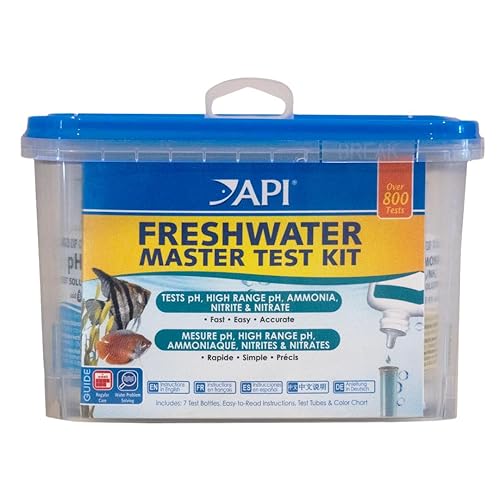
Three things prevent almost every compatibility disaster I've described. A liquid test kit, so you know your actual parameters instead of guessing - the API Freshwater Master Test Kit covers ammonia, nitrite, nitrate, and pH in one box and pays for itself the first time it saves a stock. A quality dechlorinator - I use Seachem Prime, which handles chlorine and chloramine and binds ammonia for a day or two during emergencies. Wait - check that ASIN carefully; the one I keep on my shelf is Prime in the 250ml size, which treats about 2,500 gallons and lasts most hobbyists a year. And for feeding crowded community tanks, a good staple flake or small pellet like Omega One freshwater flakes gets food to the shy fish before the fast ones clear the surface, because it sinks slowly instead of sitting on top.
How to Introduce New Fish Without Breaking the Peace
Even a compatible fish added wrong can throw a tank into chaos. Quarantine every new fish for two to four weeks in a separate cycled tank - I've covered quarantine in detail before, and it's the cheapest insurance in this hobby. When you do add them, rearrange a decoration or two right before release. It disrupts established territories so the residents are too busy re-mapping the tank to bully the newcomer. Turn the lights off for the first evening. Add new fish at night or with a feeding distraction. And never add one single schooling fish to an established group of a different species and expect it to integrate - it won't.
Reading the Tank After You've Stocked It
Compatibility isn't a one-time decision; it's an ongoing observation. Watch at feeding time for fish that never come out. A fish hiding during meals is being excluded, and excluded fish don't last long. Look for split fins, missing scales, fish pinned in corners, or any individual swimming with clamped fins near the surface. Give it a week after major stocking changes before judging, but don't rationalize ongoing harassment as 'they're figuring it out.' Fish figure out a hierarchy in days. Anything beyond that is bullying, and bullying in a glass box has no escape route.
The practical takeaway: before your next fish store trip, write down your tank size, pH, temperature, and current stocking list. Research the adult size and temperament of anything you're considering, and if you can't find two sources agreeing it's peaceful, assume it isn't. One restrained shopping trip beats six months of fish funerals, and the most successful community tanks I've seen weren't built by people who bought the most fish - they were built by people who bought the right ones, then had the discipline to stop.
Related Reading
Want more on this topic? Check out our guides on best aquarium thermometers controllers, best aquarium plant fertilizers, best aquarium quarantine hospital systems.