Fish Gasping at the Surface: What It Means and How to Respond
Disclosure: PawCritic is reader-supported. A few links below are Amazon affiliate links, and we may earn a small commission if you purchase through them at no extra cost to you.
Every fish in the tank is at the top, mouths working at the waterline. That is not a behavior problem. It is a physiological emergency. Surface gasping is one of the few fish behaviors that should be treated as urgent until proven otherwise, because it usually means dissolved oxygen is too low, ammonia or nitrite is burning the gills, or something has poisoned the water. Clear water tells you nothing about oxygen or toxins. A tank can look pristine and still be suffocating its inhabitants.
Gasping has a short list of realistic causes, and almost all of them are fixable the same day with equipment many keepers already own. This reference guide ranks every cause from fix-it-in-an-hour to every-minute-counts, gives the test numbers that confirm each one, and explains what to do. No vague advice like check your water. The goal is to know which number to check and what it needs to read.
Gasping at the Surface vs. Hanging at the Surface
Before panicking, spend sixty seconds watching. Gasping fish are actively working their mouths and gill covers fast, usually right at the waterline, sometimes tilting so their mouths break the surface. They are trying to reach the thin oxygen-rich film at the top because the rest of the water does not have enough. Hanging fish, by contrast, float near the top listlessly, often with clamped fins, not feeding. That pattern more often points to illness or toxin exposure.
Some fish — bettas, gouramis, killifish — naturally visit the surface because they breathe atmospheric air through a labyrinth organ. A betta taking an occasional trip to the top for a gulp is normal. A betta parked at the surface gasping nonstop is not. Bottom-dwellers like corydoras or plecos darting to the top repeatedly are a red flag every time, because those fish avoid the surface and only go there when they are desperate.
Cause #1: Low Dissolved Oxygen
If all fish are gasping at once, oxygen is the prime suspect. Oxygen does not enter water mainly through the flat surface of the tank. It enters where water and air mix, which means agitation. A tank with a glass-flat surface, even a large one, exchanges surprisingly little gas. The reasons oxygen crashes usually fall into four buckets.
Warm water. The warmer the water, the less oxygen it can hold. Goldfish and tropical fish both start feeling the squeeze above about 80 degrees Fahrenheit (27 degrees Celsius). In summer, an un-air-conditioned room can push a tank to 86 degrees Fahrenheit and oxygen saturation drops while the fish's oxygen demand rises. Check the thermometer first. If the tank is above 82 degrees Fahrenheit, cooling the water is step one — float a bag of ice, point a fan across the surface, and do a partial water change with slightly cooler (not cold) water. Rapid environmental shifts are a leading contributor to fish stress and mortality, so bring temperature down gradually, a couple of degrees per hour, not in one shock. The Merck Veterinary Manual section on exotic and laboratory animals notes that water quality parameters, including temperature and dissolved oxygen, are foundational to fish health.
No surface agitation. If the filter outlet pours gently below the waterline and there is no airstone, gas exchange may be minimal. The fix is inexpensive: angle the filter output so it ripples the surface, or add an air pump and airstone. The bubbles themselves add little oxygen directly — it is the circulation and surface turbulence they create that matters. An airstone is the single best low-cost insurance policy in this hobby.
Overstocking. More fish means more oxygen demand and more waste consuming oxygen as it decays. Pushing the old inch-per-gallon rule past its limits leaves a system with no margin. Anything that goes slightly wrong tips the whole tank into hypoxia.
Dead things rotting. A dead fish wedged behind driftwood, a clump of uneaten food decaying under a decoration — bacteria consume enormous amounts of oxygen breaking that down. If one fish died and three days later everyone is gasping, go hunting for the body. The smell usually reveals it before the eyes do.
The immediate fix for low oxygen: agitate the surface now. Drop in an airstone, lower the water level an inch so the filter creates a splash, or point a small fan at the surface. Then address the underlying cause. Fish usually recover within hours once oxygen rebounds.
Cause #2: Ammonia or Nitrite Poisoning
This is the cause that kills quietly and quickly, and it is why every fishkeeper should own a liquid test kit. Ammonia and nitrite chemically damage gill tissue. The fish's gills literally cannot pull oxygen from the water anymore, so the fish heads to the surface where it might get a little more — but the damage is internal, so it does not help much. Gasping is often combined with red or inflamed gills, fish rubbing on objects, and red streaks in fins.
The classic scenarios: a brand-new tank that was never cycled (the number one killer of beginner fish), an established tank where the filter was washed in tap water and the chlorine wiped out the beneficial bacteria, a tank that just got a big new batch of fish all at once, or a medication treatment that crashed the biofilter. If any of those happened in the last two weeks, put ammonia at the top of the suspect list.
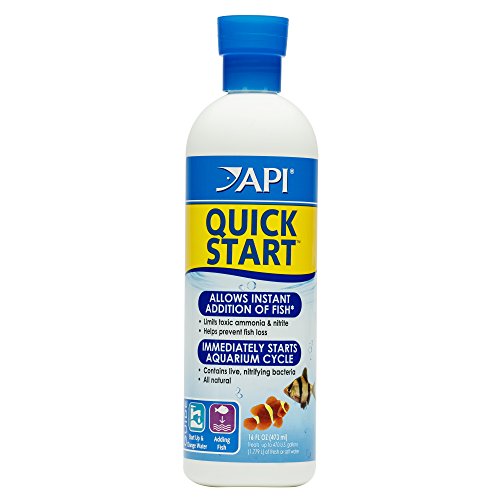
Test it. Not with strips — strips are notoriously unreliable for ammonia. A liquid kit like the API Freshwater Master Test Kit costs less than replacing two fish and gives numbers that can be acted on. The targets: ammonia at 0 ppm and nitrite at 0 ppm, always, no exceptions. Any readable ammonia in a stocked tank is an emergency. If detected, do a 50% water change immediately, treat the new water with a dechlorinator, and re-test a few hours later. Repeat daily until the bacteria catch up. Adding a bottled bacteria supplement like API Quick Start can speed up the recovery of the biological filter, though it is a boost, not a magic reset. The UF/IFAS Extension EDIS aquaculture and fish health resources emphasize that water quality management is the foundation of fish health — medications will not save fish in water that is actively poisoning them.
Cause #3: Chlorine or Chloramine from an Untreated Water Change
This one has a signature: gasping starts within minutes to a couple of hours of a water change. Municipal tap water contains chlorine or chloramine, both of which are added specifically because they kill organisms — and fish gills qualify. If the dechlorinator was forgotten, or the dose was too low and way more new water than usual was added, chlorine burns the gills and fish rush to the surface immediately.
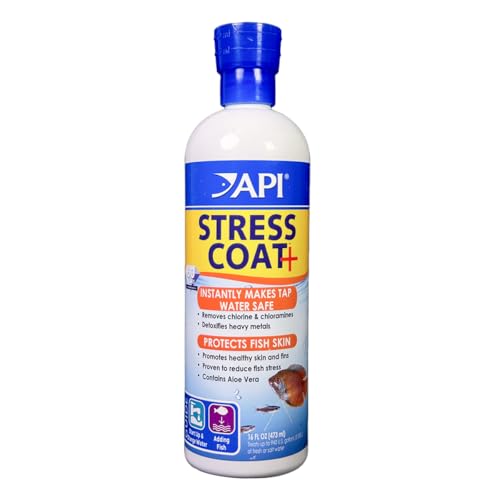
The fix is fast: add a full dose of dechlorinator right away. Products like API Stress Coat neutralize chlorine and chloramine within minutes and the coating agents can help soothe irritated gill tissue. Fish often recover within the hour if the exposure was brief. If it is unclear whether the city uses chloramine (increasingly common because it lasts longer in pipes), call the water utility or check their annual water quality report — chloramine requires a conditioner that specifically says it handles chloramine, and boiling or letting water sit overnight does not remove it, unlike plain chlorine.
Cause #4: Gill Parasites and Disease
If only one or two fish are gasping while the rest behave normally, and ammonia reads zero and oxygen looks fine, think parasites. Ich in its early free-swimming stage, gill flukes, and bacterial gill disease all cause labored breathing because the gills are physically clogged or inflamed. Supporting clues: rapid gill movement (gill covers pumping hard), flashing against gravel or decorations, faded color, and folded or clamped fins. Gill flukes are especially underdiagnosed — they are invisible to the naked eye and common in livebearers and newly imported fish.
Check recent history. Were new fish added in the last month without quarantine? That is the classic route in. A microscope skin scrape confirms flukes definitively, but most home keepers treat empirically. The problem with treating blindly is that some medications devastate the biofilter, which then causes the ammonia scenario above — a vicious cycle. Run any treatment in a separate hospital tank if possible, keep testing for ammonia daily during treatment, and increase aeration, because most parasitic medications reduce dissolved oxygen on their own.
Cause #5: CO2 Overdose in Planted Tanks
If CO2 is injected into a planted tank, gasping fish in the morning is almost always CO2 toxicity. High CO2 drops blood pH and impairs oxygen transport — the water can test fine for oxygen and the fish still suffocate. The tell: symptoms are worst shortly after the CO2 turns on and lights come up, and improve when CO2 shuts off. If running DIY yeast CO2 or a cheap regulator without a solenoid, the risk is high. Drop the CO2 rate by a third, add an airstone running during the injection period, and if fish are actively gasping, do a 30% water change and run heavy aeration for an hour. Plants produce oxygen only when lights are on; at night, a heavily planted tank with CO2 residual can hit a double-low of oxygen and pH right before dawn. Many serious aquascapers run an airstone strictly at night for exactly this reason.
Cause #6: Medication and Chemical Contamination
Some medications — particularly those containing formalin and malachite green — reduce oxygen and irritate gills, which is why the label says to increase aeration during treatment. Then there is contamination: cleaning spray mist near the tank, perfume, cigarette smoke residue on hands, a decoration that leached something, or residue from an un-rinsed ornament. Gasping with no other explanation after something was added or cleaned should point straight back to that item. Remove it, do a 50% water change, and run activated carbon in the filter for a few days — carbon excels at pulling unknown organics out of the water.
Fifteen-Minute Diagnostic Sequence
When gasping is observed, run this order — it is sorted by speed of checking, not by likelihood:
- Look at the thermometer. Above 82 degrees Fahrenheit? Cool the tank.
- Look at the surface. Glassy calm? Add agitation immediately. This helps in nearly every scenario and hurts none of them.
- Sniff and hunt. Any dead fish, decaying food, or foul smell? Remove it.
- Test ammonia and nitrite. Anything above zero triggers a 50% water change with dechlorinated, temperature-matched water.
- Think back 48 hours. New fish? New water? New decoration? Medication? CO2 adjustment? The trigger is usually in that window.
- Count who is affected. Everyone points to water chemistry. One or two fish points to parasites or individual illness.
What Not to Do
Do not do a 100% water change. The instinct is understandable — the water must be bad, so replace all of it — but a total swap with fresh tap water can shock fish with pH and temperature swings and, if conditioner is forgotten, adds chlorine on top of the existing crisis. Do not dump in a fistful of salt because it helps. Salt has legitimate uses for nitrite exposure (it competes with nitrite uptake at the gill) but random dosing in a planted tank or with sensitive fish like corydoras can make things worse. And do not unplug the filter to give the fish a break — the filter is the best oxygenator and ammonia remover in the system; keep it running, hard as it will work.
Prevention: The Boring Basics That Prevent Recurrence
Every gasping emergency traces back to a skipped basic. Keep an air pump running permanently — the energy cost is trivial and the redundancy saves tanks. Test ammonia monthly even in mature tanks, and always after adding fish, medicating, or cleaning the filter in anything other than old tank water. Never wash filter media under tap water. Match new water temperature within 2 degrees and always dechlorinate, every time, no shortcuts. Quarantine new fish for four weeks minimum, which protects against cause #4 entirely. The ASPCA pet care library offers general guidance on responsible pet ownership that applies to aquarium fish as well, including the importance of species-appropriate housing and water quality.
Species-Specific Considerations
Not all fish handle low oxygen the same way. Bettas, gouramis, and other labyrinth fish can supplement gill breathing with atmospheric air, so they may tolerate poor oxygen longer — but that tolerance masks a problem that will still harm other tankmates. Goldfish are cold-water fish with high oxygen demands; they produce a lot of waste and are often kept in tanks that are too warm and too small, making them chronic candidates for gasping. Corydoras, loaches, and plecos are bottom dwellers that rarely surface unless desperate; any of these at the top is a serious warning. Tetras, rasboras, and other small schooling fish show gasping as a group behavior, which makes it easy to spot early. Knowing the normal surface behavior of each species helps distinguish a harmless gulp from a crisis.
Common Mistakes That Lead to Gasping
Several recurring mistakes cause oxygen and toxin problems. Overfeeding is a major one: uneaten food decays, consuming oxygen and releasing ammonia. A general rule is to feed only what fish consume in two to three minutes, once or twice daily. Overcleaning is another: scrubbing filter media or gravel under tap water kills beneficial bacteria, crashing the nitrogen cycle. Filter media should be rinsed in old tank water during a water change, and only lightly. Adding too many fish at once overwhelms the biofilter; stock gradually, a few fish at a time, with weeks between additions. Finally, ignoring temperature is common — many tanks run too warm because heaters are set high or rooms are hot, and warm water holds less oxygen. Keeping temperature at the lower end of each species' comfortable range can help maintain oxygen levels.
Equipment That Helps
An air pump and airstone are the most cost-effective safeguards. They run continuously, add surface agitation, and provide redundancy if a filter fails. A liquid test kit for ammonia, nitrite, nitrate, and pH is essential; strips are convenient but less accurate, especially for ammonia. A thermometer — ideally one with a digital readout — helps monitor temperature daily. A dechlorinator that handles both chlorine and chloramine is a must for every water change. Activated carbon in the filter can remove contaminants and medications after treatment. None of these items are glamorous, but they form the backbone of stable water quality. For a more detailed look at maintaining water quality, see the ASPCA pet care library linked above.
Water Change Best Practices
Water changes are the single most important routine maintenance task, but they must be done correctly. Change 25% of the water weekly for most tanks, or 50% if ammonia or nitrite is present. Always dechlorinate the new water before adding it, or add dechlorinator to the tank before refilling. Match temperature within 2 degrees Fahrenheit to avoid shocking fish. Vacuum the gravel during changes to remove debris, but do not deep-clean all at once if the tank is established — that can disrupt the bacterial colony. Never replace all the water; large changes can cause pH and temperature swings that stress fish. After a water change, test ammonia and nitrite to confirm the filter is keeping up. These practices prevent the buildup of toxins that lead to gasping.
When to Seek Veterinary Help
Fish are pets, and they can suffer from diseases that require professional diagnosis and treatment. If gasping continues after water quality is corrected, or if fish show other signs such as open sores, fin rot, or lethargy, consult a veterinarian who treats aquatic animals. The Merck Veterinary Manual notes that many fish diseases are secondary to poor environmental conditions, so correcting water quality is the first step. However, parasitic and bacterial infections may need specific medications. A veterinarian can perform tests and prescribe appropriate treatments. Do not rely on guesswork with medications, as wrong treatments can harm fish and the biofilter.
The Bottom Line
Gasping fish are telling you, in the only way they can, that the water has failed them. Surface agitation solves the most common cause in minutes, a liquid test kit tells you whether it is ammonia in seconds after that, and a careful look at what changed in the last two days usually reveals the trigger. If one action is taken from this article, make it this: tonight, check that the filter output ripples the surface and that the test kit is not expired. It is two minutes of effort, and it is the difference between a tank that is enjoyed and a tank that is rescued.
Related Reading
Want more on this topic? Check out our guides on best aquarium algae control products cleaning tools, best aquarium air stones bubble walls, how to set up planted aquarium step by step.