Guppies Breed. That's the Problem.
Here's the dirty secret of guppy breeding: getting them to spawn takes zero skill. Keeping the fry alive past week one? That's where 90% of first-timers fail. A single female guppy can drop 30 to 60 fry every 26 to 35 days, and if you're not ready for that math, you'll end up with a tank full of adults and no babies to show for it — because guppies eat their own young with the enthusiasm of a kid at a buffet.
I've kept and bred guppies for over a decade, and I've made every mistake in the book: I once left a gravid female in a community tank, found exactly zero fry three weeks later, and couldn't figure out why. Then I watched a neon tetra chase down a newborn the size of a comma. Lesson learned, the expensive way.
This guide covers the whole process — sexing, conditioning, the breeding setup, birth, fry care, and the awkward question of what to do with dozens of babies every month. Follow it and you'll go from 'where did all my fry go' to selectively breeding fish you're genuinely proud of.
Step 1: Know What You Actually Have
You can't breed guppies if you can't tell males from females, and you'd be shocked how many people write to me convinced their two 'females' are going to have babies any day now. It's two males. They will never have babies.
Sexing adult guppies is easy:
Males are smaller — usually 1.2 to 1.6 inches — slim-bodied, colorful, and carry a modified anal fin called a gonopodium, which looks like a thin, pointy stick behind the belly. Their tails are often large and showy.
Females run 1.6 to 2.4 inches, have rounder, deeper bodies, plain-ish coloring, and a normal fan-shaped anal fin. Look for the gravid spot — a dark patch near the rear of the abdomen that darkens and grows as pregnancy progresses. In lightly colored females it's obvious; in some dark-bodied strains you'll need to squint.
Sex them at 4 to 6 weeks old. Males develop color and a gonopodium early, and if you want controlled breeding (and you do), separate the sexes until the females are fully grown. Breeding females too young — under 3 months — stunts their growth and produces small, weak broods.
Step 2: Pick Your Breeding Stock Like You Mean It
Random breeding gives random results. Pet store guppies are often heavily inbred already, and if you toss twelve random fish together, you'll get mutt fry with patchy color and short tails within two generations. If your goal is simply 'more guppies,' that's fine. If you want quality fish, be picky.
My rules for selecting breeders:
Choose the best male: strong color, a big even tail, erect dorsal, active swimming, no clamped fins. One male is enough for three to five females — actually, I run one male with four females, because a single female gets harassed relentlessly if the ratio is tighter. A 1:4 ratio spreads his attention around and reduces stress on any one female.
Choose young, mature females: 4 to 8 months old, thick-bodied, bright-eyed, actively feeding. Skip any fish that hangs near the surface gasping, has a sunken belly, or shows shredded fins — you do not want to breed weakness into your line.
And here's something beginners miss: a female guppy can store sperm for months. A female from a mixed pet store tank is almost certainly already pregnant by multiple males, and she'll keep dropping broods from those matings for up to six months. If you want to control the genetics, you need to start with virgin females you raised yourself, separated from males at 4 weeks. That's the difference between a breeding project and a guppy lottery.
Step 3: Set Up the Right Tank — Not a Breeder Trap in a Community Tank
Let me get on my soapbox for a second, because this is the single biggest mistake in guppy breeding: dropping a pregnant female into a tiny plastic breeder trap inside a busy community tank. Those boxes are 4 inches of stressful, poorly filtered plastic. Stressed females abort pregnancies, deliver premature fry, or die from stress-related illness. I've seen it go wrong more times than I can count.
A dedicated tank works dramatically better. Here's the setup I use and recommend:
Tank size: 10 gallons minimum for the breeding group, 20 gallons long if you can manage it. Guppy fry need horizontal swimming space more than height.
Water parameters: pH between 7.0 and 8.2, temperature 76 to 80°F, hardness moderately hard to hard — guppies genuinely suffer in soft, acidic water. If your tap water is soft, a small bag of crushed coral in the filter raises hardness and buffers pH gently. Keep temperature steady with a reliable heater; swings of more than a couple of degrees stress pregnant females.
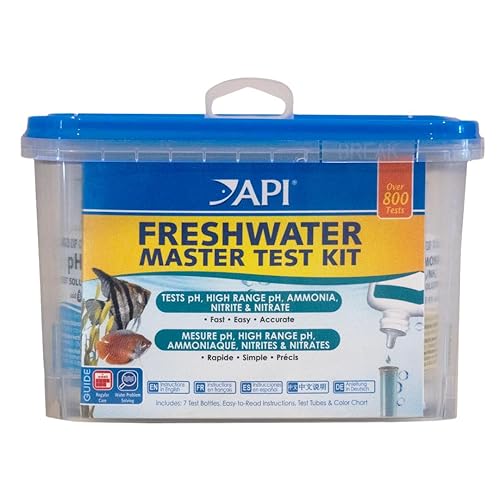
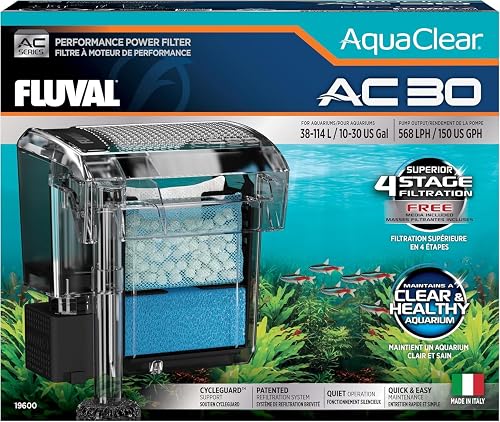
Filtration: a gentle sponge filter. Never a powerful hang-on-back with an intake tube — fry get sucked into those. Sponge filters provide gentle flow, huge surface area for beneficial bacteria, and a snack surface that fry graze on. Run the tank through a full nitrogen cycle before adding breeders; ammonia at any detectable level will kill fry fast. Test with a liquid kit — the API Freshwater Master Test Kit is the one I've used for years, and strips simply aren't accurate enough for breeding work.
Cover, cover, cover: this is the real secret to fry survival. Fill the tank with dense cover where newborns can escape adults: java moss, guppy grass (najas), hornwort, floating plants, spawning mops. Guppy grass is the gold standard — it grows like a weed, costs almost nothing, and forms a dense matrix that adult mouths can't penetrate. I aim for at least a third of the tank as plant mass. In heavily planted tanks, you can skip breeder traps entirely and let fry grow out in with the adults — survival runs maybe 30 to 50%, which is plenty when each drop is 40 fish.
According to the American Veterinary Medical Association (AVMA), aquatic animal welfare depends heavily on stable, species-appropriate water quality — and breeding fish, with their fast metabolisms and dense stocking, amplifies every water quality shortcut you take. Don't take any.
Step 4: Condition Your Breeders
Guppies breed readily, but fry count and quality jump when you condition the parents properly. Feed adults twice daily for two to three weeks before introducing them: a quality flake or micro pellet as the base, plus frozen bloodworms, brine shrimp, or daphnia several times a week. Protein-rich live and frozen foods trigger conditioning the way nothing else does.
Keep the tank around 78°F, do weekly 25% water changes (dechlorinated, temperature-matched), and keep lighting on a consistent 10 to 12 hour schedule. Slightly warmer water and longer days mimic the tropical wet season, which is nature's green light for guppy reproduction.
Introduce the female(s) to the breeding tank first, let them settle for a few days, then add the male. Courtship starts fast — the male will pursue relentlessly, flashing and shimmying. If a female seems constantly harassed and hides without feeding, add more females or more plant cover.
Step 5: Recognize Pregnancy and Prepare for the Drop
A gravid female gets visibly boxy — her belly squares off when viewed from the front, and the gravid spot becomes large and very dark. In the final days before dropping, she may become reclusive, stop eating, shimmy in place, or hang near the heater or in dense plants. Some females get aggressive; some go quiet. You'll learn your fish's tells.
Gestation runs 21 to 35 days depending on temperature — warmer water shortens it. You can roughly estimate how far along she is by belly size and gravid spot darkness, but don't obsess; just have the tank fry-ready at all times.
Now, the breeder box question. If you're using a heavily planted dedicated tank, do nothing — let nature take its course. If you must use a trap (community tank situation), use a larger breeder box with a grated bottom that lets fry drop through to a separate compartment, move the female in only when she's clearly within a day or two of dropping, and release her immediately after she finishes. Never leave her in more than 24 to 48 hours. The Marina breeder box style with a two-compartment design is the least stressful option if you go this route. But I'll say it plainly: a planted 10-gallon tank outperforms any plastic box.
The drop itself usually happens at night or early morning and takes a few hours. Fry emerge as tiny free-swimming vertical slivers, usually heading straight for plants. The female — and any other adult present — will hunt them. This is why the plant cover matters so much.
Step 6: Fry Care — The Part That Decides Everything
Newborn guppies need three things: to not be eaten, to eat constantly, and to stay warm and clean.
Feeding: fry need small food 4 to 6 times a day. Options, in order of quality: live baby brine shrimp (unbeatable for growth, hatches in 24 hours from cysts), vinegar eels, microworms, powdered fry food, and crushed flake — crush it between your fingers until it's genuinely dust-fine. Feed tiny amounts; uneaten food kills water quality, and water quality kills fry. I do 10% water changes every other day on fry grow-out tanks, siphoning the bottom with airline tubing so I don't suck up babies.
Temperature: keep fry tanks at 78 to 80°F. Warmer water speeds metabolism and growth. At this temperature with heavy feeding, guppies sex out at 3 to 4 weeks and are near-adult size by 3 months.
Growth rate: expect fry to hit a half inch in about a month, and start showing color (males first) at 5 to 6 weeks. Cull or separate runts early if you're selecting for quality — small, slow-growing fry rarely catch up, and in a breeding program, every tank slot counts.
Watch for the classic fry killer: bellies that stay flat or sunken despite feeding. That's usually internal parasites or bad water — do a water change immediately and check your parameters. According to the Merck Veterinary Manual, poor water quality is the primary predisposing factor for most freshwater fish disease outbreaks, and fry are far less tolerant than adults.
Step 7: Have a Plan for the Flood
Here's the conversation nobody has before they start: five females can produce 200+ fry per month. Every month. For years. Guppy breeding is not a hobby you can wing logistically.
Your options: grow out and sell to local fish stores (many give store credit for healthy juveniles — call ahead and ask their size requirements), sell or give away via aquarium clubs and local classifieds, use them as feeder breeding stock for other fish, or set up a second tank as a dedicated grow-out. What you cannot do is nothing — an unplanned guppy population crash-and-boom in one tank ends in stunted, deformed fish from overstocking. That's not a thriving colony; it's a slow-motion welfare problem, and responsible breeding means planning for every fish you create.
A practical structure: one 20-gallon breeder tank with adults, one 10 or 20-gallon grow-out tank for fry, and a firm decision point at 6 to 8 weeks — keep the best, rehome the rest. For the grow-out tank, gentle filtration like a sponge filter keeps fry safe while maintaining the biological filtration that dense fry stocking demands. And always condition new water — a dechlorinator like Seachem Prime handles chlorine and chloramine instantly, which matters when your water change schedule ramps up with fry tanks.
Common Questions From New Breeders
How long until guppies can breed? Males are viable around 2 months, females around 3 months. Wait until females are 4+ months for healthier broods.
Why did my female eat her fry? It's normal predator behavior, not a defect — there's no maternal instinct in guppies. More plants, earlier separation, or a proper breeder setup fixes it.
Can guppies breed with mollies or platies? Guppies and mollies can occasionally hybridize; guppies and platies generally can't. Don't count on hybrids either way.
Why do my fry keep dying in week one? Ninety percent of the time it's water quality or food that's too large. Test ammonia and nitrite, drop food size, increase water change frequency.
The Takeaway
Breeding guppies successfully comes down to three deliberate choices: separate sexes until maturity, give fry dense plant cover instead of plastic boxes, and feed tiny protein-rich meals many times a day in clean, warm water. Do those three things and your biggest problem won't be keeping fry alive — it'll be finding homes for all of them. Start with one male and three or four females in a planted 10-gallon, and you'll have your first drop of fry within the month. After that, the math takes care of itself.
Related Reading
Want more on this topic? Check out our guides on betta tank mates compatibility guide, the best aquarium filters for beginners and planted tanks in, best aquarium salt mix marine additives.