I Found a Killifish on My Floor Once. It Changed How I Keep Fish.
I want to start with the mental image that made me take fish jumping seriously. Years ago I walked into my fish room at 6 a.m., coffee in hand, and stepped on something dry and crunchy near the door. It was a male golden wonder killifish, three feet from a tank that sat four feet off the ground. That fish had cleared the rim, arced over a light fixture, and traveled across a doorway. He did not survive, and honestly, that one was on me: the tank had no lid and the water was days overdue for a change because I had been traveling.
Since then I have run lids on everything, and I have spent a lot of time figuring out why fish launch themselves in the first place. Because here is the thing most guides skip: jumping is not random, and it is not always a sign that something is wrong. Fish jump for at least six distinct reasons, and the fix for each one is different. Slap a lid on a tank and you stop the symptom, not the cause. This guide covers both.
Fish Are Jumpers by Evolution, Not by Accident
Before you blame your water quality, understand that a huge number of popular aquarium species are designed to jump. Halfbeaks, hatchetfish, killifish, guppies, mollies, swordtails, arowanas, hatchetfish again (they deserve the emphasis), bichirs, ropefish, rainbowfish, and most bettas are all proven escape artists. Many of these fish come from habitats that dry out or shrink seasonally. In the wild, jumping is a survival move: when your puddle is evaporating and oxygen is dropping, the fish that hops to the next puddle over lives, and the fish that stays put does not. Natural selection spent millions of years building fish that leap first and ask questions later.
This is why my first rule of fishkeeping is simple: if the species is a known jumper, the lid is not optional. It does not matter how perfect your water is. A perfectly healthy, happy killifish will still jump, because in its head it is looking for a better puddle. I have watched gorgeous, contented specimens of nothobranchius killifish ping off glass canopies for fun at lights-on. That is not stress. That is Tuesday.
According to the Humane Society of the United States, providing an environment appropriate to a species' natural behaviors is one of the foundations of responsible pet care, and for surface-dwelling and jumping species, that absolutely includes a secure cover. This is not a niche hobby hack. It is basic husbandry.
Cause Number One: Water Quality Is Driving Them Out
Now the reason nobody wants to hear. When fish jump repeatedly, darting at the surface, gasping, then flinging themselves upward, water chemistry is usually the culprit. Ammonia or nitrite spikes, suffocatingly low oxygen, a pH crash, or a temperature swing will all send fish looking for literally any other body of water. The fish cannot test the water, but its gills are burning, and jumping is the only escape behavior it has.
The classic scenarios I see over and over:
- An uncycled tank. New setups with detectable ammonia or nitrite. Fish start flicking, breathing hard at the surface, and jumping within days of being added.
- A missed water change in an overstocked tank. Nitrates north of 80 ppm combined with low oxygen. Common in kid-owned tanks and office tanks.
- A recent deep clean. Someone scrubbed the filter media in tap water, nuked the biofilter, and ammonia spiked a week later.
- Warm water with poor circulation. Water above about 82°F holds less dissolved oxygen, and still surface film blocks gas exchange. Fish hang at the surface gulping, then jump.
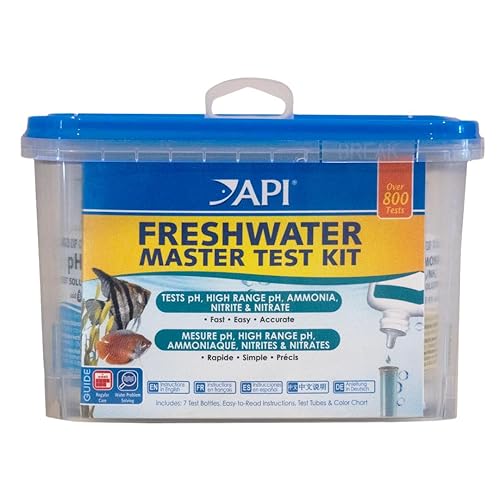
If your fish jumped and the water was the cause, you will usually find other evidence: rapid gill movement, clamped fins, red streaks on the body, or the whole group behaving strangely rather than one individual. Test immediately. A liquid test kit is worth its weight in gold here, and strips are honestly not precise enough for ammonia and nitrite. I recommend the API Freshwater Master Test Kit because it measures ammonia, nitrite, nitrate, and pH with real resolution, and it is the kit I have used for a decade. Test, do a 50 percent water change with a good conditioner like API Stress Coat, increase surface agitation, and retest in 12 hours.
Cause Number Two: Aggression and Harassment
The second most common reason I get emails about: one specific fish keeps jumping while its tankmates seem fine. That pattern points at social stress, not chemistry. A harassed female guppy, a subdominant male swordtail getting chased nonstop, a betta sharing space with fin-nippers, or a rainbowfish pinned in a corner by a bully will all take the exit ramp. Fish do not understand that there is no second puddle. They just know this one has teeth in it.
Watch the tank for twenty minutes at feeding time and again after lights-out. If one fish is getting chased more than a couple of times a minute, or is hiding constantly with ragged fins, that is your jumper. Fixes: rearrange decor to break sightlines, add more plants and hiding cover (floating plants are excellent because they also calm surface-oriented fish), return the bully to the store, or split the group so no single fish is the odd one out. Odd numbers help with some schooling species; with livebearers, the standard advice of two or three females per male exists precisely to spread harassment around.
Cause Number Three: They Are Hunting or Being Fooled by Reflections
Halfbeaks, archerfish-in-spirit hatchetfish, arowanas, and even large guppies jump to catch food. In the wild many surface fish eat insects that land on or hover above the water. In your living room, that instinct gets triggered by fruit flies, moths circling the light, or even shadows. Some fish will also jump at their own reflection in the glass or at the reflection of a hanging light fixture, especially at certain angles in the evening.
There is a cheap behavioral fix here: feed so that some food floats, and feed on a schedule. Surface-feeding hunters that get floating pellets or live/frozen food at the top are dramatically less likely to go aerial hunting on their own. I feed my hatchetfish and killifish first thing with floating micro pellets and it cut random leaping almost entirely.
Cause Number Four: Panic Events
Sudden light changes, a hand splashing in the tank, a cat pawing at the glass, a filter backflow sputtering, or you banging the stand while vacuuming can spook fish into a single explosive leap. Nocturnal jumps are common for this reason: lights snap on in a dark room, or a cat visits at 3 a.m., and you find a fish on the carpet at breakfast. Hatchetfish and marbled hatchets especially will clear a tank in one panicked bound from a standstill. This is another argument for full coverage rather than partial cover, and for turning room lights on before tank lights to soften the transition.
Cause Number Five: Breeding Behavior and Territorial Displays
Male livebearers chasing females during courtship, cichlids sparring over territory, and cyprinids chasing during spawning rushes all end with fish near the surface moving fast. Momentum carries them out. Rainbowfish are notorious for spawning jumps at dawn. If your jumps cluster at first light and involve two or three fish in a chase, this is likely what is happening, and a lid solves it completely without any other intervention.
Cause Number Six: Something in the Water You Cannot See
Occasionally fish jump in response to skin irritation: flukes, ich, or chemical contamination. Aerosols, cleaning sprays used near the tank, paint fumes from a home project, or residue on your hands (soap, sanitizer, insect repellent) can all end up in the water and irritate gills and skin. According to the American Veterinary Medical Association (AVMA), environmental contamination and improper husbandry are leading contributors to disease in aquarium fish, and the association's aquatic animal guidance emphasizes quarantine, water quality, and minimizing chemical exposure as core preventive care. If several species start flashing (rubbing on objects) and jumping simultaneously with no ammonia or nitrite present, suspect an irritant or parasite and act accordingly: carbon in the filter for chemicals, close inspection and treatment for parasites.
What to Do If You Find a Fish on the Floor
People assume a dried-out fish is dead. Not always. Fish can survive surprising periods out of water, especially labyrinth fish like bettas and gouramis, because they can breathe air and their mucus coat slows drying. I have personally revived a betta that was on hardwood for what I estimate was close to an hour.
The protocol:
- Do not throw it away, and do not assume the worst. Check for any gill movement or eye response.
- Return it to clean, conditioned tank water immediately, ideally in a breeder box or shallow container so it does not have to fight current.
- Do not feed it. It will not eat and the food will just foul the water.
- Keep the light dim and leave it alone. Recovery takes hours, not minutes.
- Watch for fungal or bacterial patches on the dried areas over the next several days. A torn slime coat is an infection risk, so pristine water matters more than any medication.
Handle it gently. Scales and slime coat are damaged by drying, and rough treatment makes it worse.
Stopping the Escape: Lids, Actually Done Right
Every jumping species tank in my fish room has a full cover. Here is what actually works, ranked:
Glass canopies with a hinged feeding flap. The best all-around solution. They hold humidity, slow evaporation, keep dust out, and let light through. The gap where the cutout is for filters is the escape point, so cut filter sponges or order a proper gap cover for those slots. This is where most 'but I had a lid!' fish losses happen.
Rigid mesh or screen covers. Great for reptile-style builds, paludariums, and tanks with hanging lights that run hot. Better gas exchange than glass, but more evaporation.
DIY plastic eggcrate lighting grid. Cheap, effective for big fish, useless for guppy fry and small killifish, which slither right through the grid.
Lowering the water line. Reducing water level by three or four inches gives most mid-size fish a jump margin. It is a supplement, never a substitute for a lid, but it is smart extra insurance for hatchetfish and halfbeaks.
Floating plants. Not a lid, but a real deterrent. Fish are measurably less likely to launch through a mat of frogbit or water lettuce, and the dimmed surface calms surface-dwelling species. Free, attractive, and it soaks up nitrates too.
Whichever cover you use, weigh or clip it. I once had a juvenile arowana push a loose glass canopy up and out with its snout. Big fish test your hardware assumptions.
Species That Absolutely Demand a Lid
If you keep any of these, treat an uncovered tank as an accident waiting to happen: hatchetfish (all species), halfbeaks, killifish of every genus, arowanas, butterfly fish, bichirs, ropefish, african butterflyfish, needlefish, gar, bettas and gouramis, guppies, mollies, swordtails, rainbowfish, eels of all kinds, plecos (yes, plecos dart up the glass when startled), koi and goldfish in outdoor-style tubs, and most marine wrasses and jawfish. Blennies and firefish in reef tanks are legendary escapees through overflow teeth and powerhead gaps. In saltwater, the sump is often the escape route, so screen your overflow weir.
Checklist: Making Your Tank Escape-Proof This Weekend
- Test ammonia, nitrite, nitrate, and pH. Fix any numbers that are off before assuming behavior is the problem.
- Inspect every gap: filter cutouts, heater cord exits, overflow boxes, airline holes. Block them.
- Add or repair a full cover. Glass canopy, mesh lid, whatever fits your lighting.
- Increase surface agitation slightly so oxygen is never the trigger.
- Add floating plants for shy surface fish.
- Feed at the surface on a schedule if you keep insect-hunting species.
- Turn room lights on before tank lights to prevent startle jumps.
The Takeaway I Want You to Remember
Fish jump because a hundred million years of puddle-hopping evolution says the grass might be greener one pond over, and because your tank sometimes gives them genuine reasons to agree. You cannot argue with the instinct, but you can remove the reasons: stable, clean water; no chronic harassment; surface food; and a cover with no gaps. Do those four things and jumping goes from a nightly heart attack to a rare curiosity that thumps the glass once in a while. My killifish that died on my fish room floor deserved better than an open top and a stale water change schedule. Learn it the cheap way, from my story, instead of from your own carpet.
Related Reading
Want more on this topic? Check out our guides on best aquarium air stones bubble walls, best aquarium protein skimmers complete saltwater guide, best aquarium water test kits conditioners.