Almost Every Fish Death Traces Back to One Thing: Too Much Food
Disclosure: PawCritic is reader-supported. A few links below are Amazon affiliate links, and we may earn a small commission if you purchase through them at no extra cost to you.
Ask ten fishkeepers what killed their fish and you'll get ten different answers. Ich. Bad stock from the store. A heater failure. But when you dig into the details of a tank that crashed, the actual culprit is usually food going in faster than the filter can process the waste it creates. Overfeeding doesn't kill fish directly. It kills them slowly, through ammonia spikes, nitrate creep, algae blooms, and the diseases that follow stressed fish around like a shadow.
Here's the number that should reframe how you think about feeding: a fish's stomach is roughly the size of one of its eyeballs. That betta eagerly begging at the front glass isn't starving. Bettas beg because begging worked on you yesterday. Fish in home aquariums are almost never underfed. They're chronically overfed, and their owners have no idea because the fish keeps eating.
The second number: uneaten flake food starts breaking down and producing ammonia within hours of hitting the substrate. That single pinch you shook out 'just in case' the fish were still hungry? That's the equivalent of dumping a week's worth of waste into your biological filter at once. According to the FDA's animal food safety guidance, even properly stored fish food loses nutritional value over time and spoiled feed can introduce harmful bacteria and mycotoxins to your aquarium, so how you store the container matters as much as how much you pour from it.
This guide covers exactly how much to feed, how often, and how the answer changes depending on what you keep. You'll get the two-minute rule that ends portion-size guesswork forever, the species-specific schedules commonly recommended across the hobby, and the warning signs that your feeding routine is quietly poisoning your water.
The Two-Minute Rule (And Why It Beats Any Measuring Spoon)
Forget counting flakes. The simplest, most reliable portioning method is this: feed only what your fish can completely consume within two minutes. Watch the clock. If food is still drifting to the bottom at the two-minute mark, you fed too much. Next feeding, cut the portion by a third and repeat until the food disappears inside that window.
Some keepers prefer a stricter version: what the fish eat in 30 seconds, twice daily. For small tropicals like tetras, rasboras, and guppies, this works beautifully. Their metabolisms run hot, they're grazers by instinct, and two small meals beat one big one because less food sits uneaten in the tank at any given moment.
One thing the two-minute rule doesn't handle well: bottom feeders. Your corydoras and plecos eat after the lights go out, and your bristlenose won't compete with mid-water fish for a single flake. For these fish, drop sinking wafers after lights-out, count how many wafers vanish overnight versus how many are still rotting in the gravel at morning, and adjust. A single wafer per five bottom-feeding fish is a safe starting point. The waste-on-the-floor test is the only portion guide that matters for nocturnal eaters.
Feeding Frequency by Fish Type: The Actual Schedules
Portion size is half the equation. The other half is how often you feed, and this is where the generic advice of 'once a day' falls apart, because a juvenile guppy and an adult oscar have completely different fuel demands.
Small community tropicals (tetras, guppies, rasboras, danios, platies): two small feedings daily, morning and evening, roughly 8 to 10 hours apart. Growing fry are the exception. If you're raising guppy or betta fry, they need four to six tiny feedings a day or their growth stalls badly.
Bettas: once or twice daily, with the total daily amount equal to about two to three pellets per feeding for an adult. Betta-specific pellets are sized so that two or three genuinely fill them. Bettas will eat until they look like marbles, and constipation and swim bladder trouble follow. One fasting day per week is standard practice and gives their digestion a reset.
Goldfish: once or twice daily, small amounts. Goldfish have no true stomach and food passes through them fast, which means heavy feedings produce heavy waste immediately. Two modest feedings beat one giant one.
Large predatory fish (oscars, arowanas, larger cichlids): once daily for juveniles, and for full-grown adults you can drop to every other day. A fully grown oscar does not need daily feeder fish, and live feeder fish from the store are a disease vector best avoided entirely. Frozen alternatives and quality pellets deliver the nutrition without the parasite lottery.
Carnivorous bottom feeders and nocturnal hunters (many plecos, some catfish): three or four targeted feedings per week is plenty for adults. These fish evolved to find food irregularly. Daily heavy feeding just fouls the tank.
Invertebrate tanks (shrimp, snails): shrimp graze biofilm constantly and most established tanks feed themselves. A tiny pinch of shrimp-specific food two or three times a week is more than enough, and a blanched spinach leaf every week or two gets demolished as a treat.
Fasting Days: The Cheat Code Nobody Uses
Here's the habit that separates experienced keepers from beginners: skip a day. One fasting day per week does three things at once. It lets fish clear their digestive tracts, which matters enormously for bettas and goldfish prone to constipation and swim bladder issues. It forces bottom feeders to actually clean up leftovers hiding in the substrate. And it gives your biological filter a small window to catch up on the waste load instead of constantly running at capacity.
A healthy adult fish can go a week or more without food without harm, which also explains why automatic feeders, for all their convenience, are often set dangerously generous. If you use one on vacation, set it below what you'd feed manually. Underfeeding during a week away is essentially harmless. Overfeeding through a badly calibrated dispenser while you're on a beach somewhere is how tanks crash with nobody home to notice.
What to Feed: Matching Food to Mouth Shape and Hunting Style
Feeding right isn't just about amount. Surface-hunting fish like hatchetfish and guppies need floating foods. Mid-water fish take slow-sinking micro-pellets best. Bottom feeders need food that actually reaches them, which means wafers and sinking pellets, not flakes that dissolve into mush on the surface film before ever reaching the substrate.
Feed size matters more than most keepers realize. A pellet wider than a fish's mouth isn't food, it's an obstacle, and small fish will spend ten minutes battering a too-big pellet while it disintegrates into water-column waste. Match the pellet to the smallest fish you're feeding.
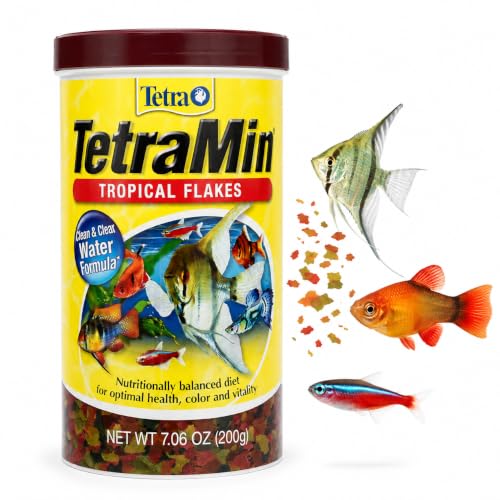
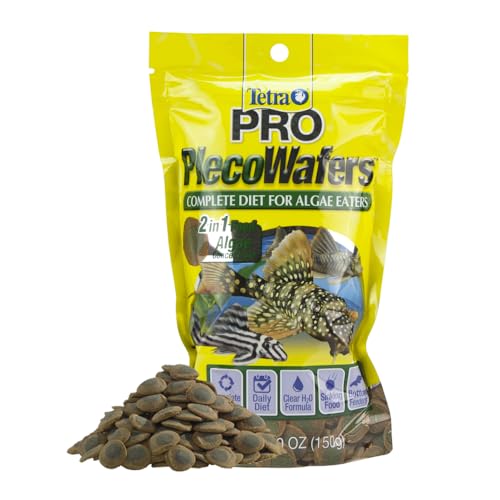
Variety is worth the small effort. A base of quality staple flake or pellet covers daily nutrition, and rotating in frozen bloodworms, brine shrimp, or blanched vegetables a couple of times a week keeps even picky eaters interested. For a reliable daily staple that suits mixed community tanks, Tetra's staple flake food has held up across decades of use and doesn't cloud water when fed in correct portions. Bottom-dwellers in the same tank get their own diet entirely: a sinking wafer formulated for algae eaters, like Hikari algae wafers, dropped after lights out so the mid-water fish don't strip it first.
For livebearers and other fish needing vegetable matter, spirulina-based flakes round out the rotation. And if you keep mostly small mid-water species, a micro-pellet like Hikari Micro Pellets portions more predictably than flake because each pellet is uniform. Flakes encourage overfeeding because you can't see how much you're actually shaking out of the bottle. Pellets force portion discipline.
Read Your Water: The Warning Signs of Overfeeding
Your test kit tells you the truth about your feeding routine whether you want to hear it or not. According to the ASPCA pet care library, regular water testing is fundamental to fish health because toxins like ammonia and nitrite are invisible and their presence signals an environment in crisis. Here's what to watch for:
Nitrates climbing faster than your water change schedule can handle means your bioload, and that means your feeding, exceeds what the tank processes. In a lightly stocked, correctly fed tank, weekly 25 percent water changes keep nitrates under roughly 20 to 40 ppm. If you're fighting 80 ppm every week, cut the food by half before you buy a single new gadget.
Ammonia or nitrite above zero in an established tank is a five-alarm signal. Adult fish showing symptoms of poor water quality, lethargy, clamped fins, gasping, red streaks in the fins, means something is rotting in there producing waste the filter can't touch. Nine times out of ten, that something is excess food.
Then there's the visual evidence. Film algae on the glass you're scraping more than weekly. Detritus worms blooming across your substrate in writhing masses. Cloudy water that returns two days after every water change. A swampy smell from the filter media. All of these point at the same root cause: more organic matter entering the tank than leaving it.
The Six Feeding Mistakes Seen Over and Over
Feeding every time a fish begs. Fish beg because it's an evolved survival behavior, not because they're hungry. Some species, especially bettas and cichlids, would eat themselves sick daily if allowed. Begging is not a feeding cue.
The vacation dump.Pouring a week's worth of food in before leaving town. Never do this. Uneaten food kills faster than a week of fasting ever could. Healthy adult fish are fine for a week without food. If you'll be gone longer, use a sparingly set automatic feeder or have someone feed every third day with pre-measured portions.
One type of food forever.Flake-only diets produce nutritional gaps over a fish's lifespan, particularly in carnivores and herbivores whose needs the staple wasn't built for. Rotate at least two or three food types.
Feeding before a water change.Fine, honestly, this one's minor. But feeding after maintenance lets you siphon out any next-morning leftovers sooner, keeping the substrate cleaner between cleanings.
Ignoring the 'load-bearing' fish.The shyest fish in the tank eats last and least. If your schedule only offers one fast feeding, the timid fish in the back never gets a full meal. Two smaller feedings give everyone a chance.
Trusting 'didn't eat it, must still be hungry' logic.A fish refusing food is usually a health or water quality signal, not a request for more. Never answer a hunger strike with extra food.
Storing Food Without Ruining It
Fish food degrades. Flake and pellets lose vitamin potency within months of opening, and moisture intrusion breeds mold and bacteria you'd then be feeding directly to your fish. Buy containers you'll finish in three to six months rather than bulk sizes that sit half-full for a year. Keep the lid tight, store the container dry and away from the aquarium's lights and humidity, and never feed with wet fingers straight from the jar. Dry hands, sealed lid, cool cupboard. If food smells off, clumps, or changes color, throw it out. A $10 container of food is never worth a tank of sick fish. For frozen foods, thaw a portion in tank water before feeding rather than dropping a frozen cube in whole, and never refreeze a thawed portion.
A Sample Week That Works for Most Community Tanks
Here's a routine that suits anyone stocking a typical 20 to 40 gallon community tank with tetras, a betta or guppies, and a few corydoras:
Monday through Saturday: one small feeding in the morning and one in the evening, each consumed inside two minutes. Bottom feeders get a single wafer on Tuesday, Thursday, and Saturday after lights out. Wednesday's evening feeding is a frozen or veggie treat instead of staple. Sunday: total fast. Then weekly water test, and adjust the portions downward if nitrates run past 40 ppm.
That's it. No complicated schedules, no gadgets required, nothing expensive. Feeding correctly is the cheapest filtration upgrade you will ever make, because every pinch of food you don't overpour is waste your filter never has to fight. Get the two-minute rule down, fast one day a week, match the food to the fish actually eating it, and you'll have eliminated the single biggest killer in this hobby before it ever touches your tank.
Related Reading
Want more on this topic? Check out our guides on best fish tanks beginners, canister vs hob aquarium filter comparison, best aquarium led lighting.