Two Dogs, One Living Room: How to Introduce a New Dog Without a Blowup
Most fights between housemate dogs do not come out of nowhere. They start on day one, in a doorway, over a food bowl, or in a hallway where one dog felt cornered and the other never got the message. According to the ASPCA, how a pair of dogs is introduced in their first meetings shapes the whole relationship afterward, and the most common mistake is skipping straight to the part where both dogs are loose in the house together. We have put together the plan we recommend to every reader who writes in about a new adoption: slow, structured, and deliberately boring for the first two weeks. Boring is the goal. Excitement on day one is how doors get rushed, leashes get tangled, and one dog learns that the other one is a problem.
This guide walks through the entire sequence: how to prepare the house before the new dog arrives, how to run the first meeting on neutral ground, how to handle the walk that settles most of the early tension, and what the first fourteen days should actually look like. We will also cover the body language that separates normal awkwardness from a genuine problem, because knowing the difference is what keeps a rough first hour from turning into a months-long behavior project.
Why Introductions Go Wrong
Dogs are territorial in a very specific way. They are not protecting square footage; they are protecting a predictable routine. A resident dog has a mental map of the house: where food appears, which couch is theirs, what happens at 6 p.m. A newcomer drops into that map like an uninvited guest who does not know the house rules. The resident dog is not being jealous or stubborn. That dog is reacting to a broken routine with the only tools it has — avoidance, stiffening, growling, or worse.
The second failure point is human enthusiasm. Owners want the adoption photo: two dogs lying together on the same bed within an hour. That pressure to fast-forward is responsible for a huge share of the introduction failures we hear about. The dogs never got a chance to form a neutral opinion of each other before being asked to share space, food, and attention. According to the Humane Society of the United States, introductions should be done gradually and on neutral territory precisely because the early interactions set the pattern for everything that follows.
There is also a physical safety issue that gets underestimated. Even a fight that lasts three seconds can produce puncture wounds, vet bills, and a dog that becomes fearfully reactive around other dogs for years. Prevention is dramatically cheaper than repair, in every sense of the word.
Before Day One: Set the House Up for Two Dogs
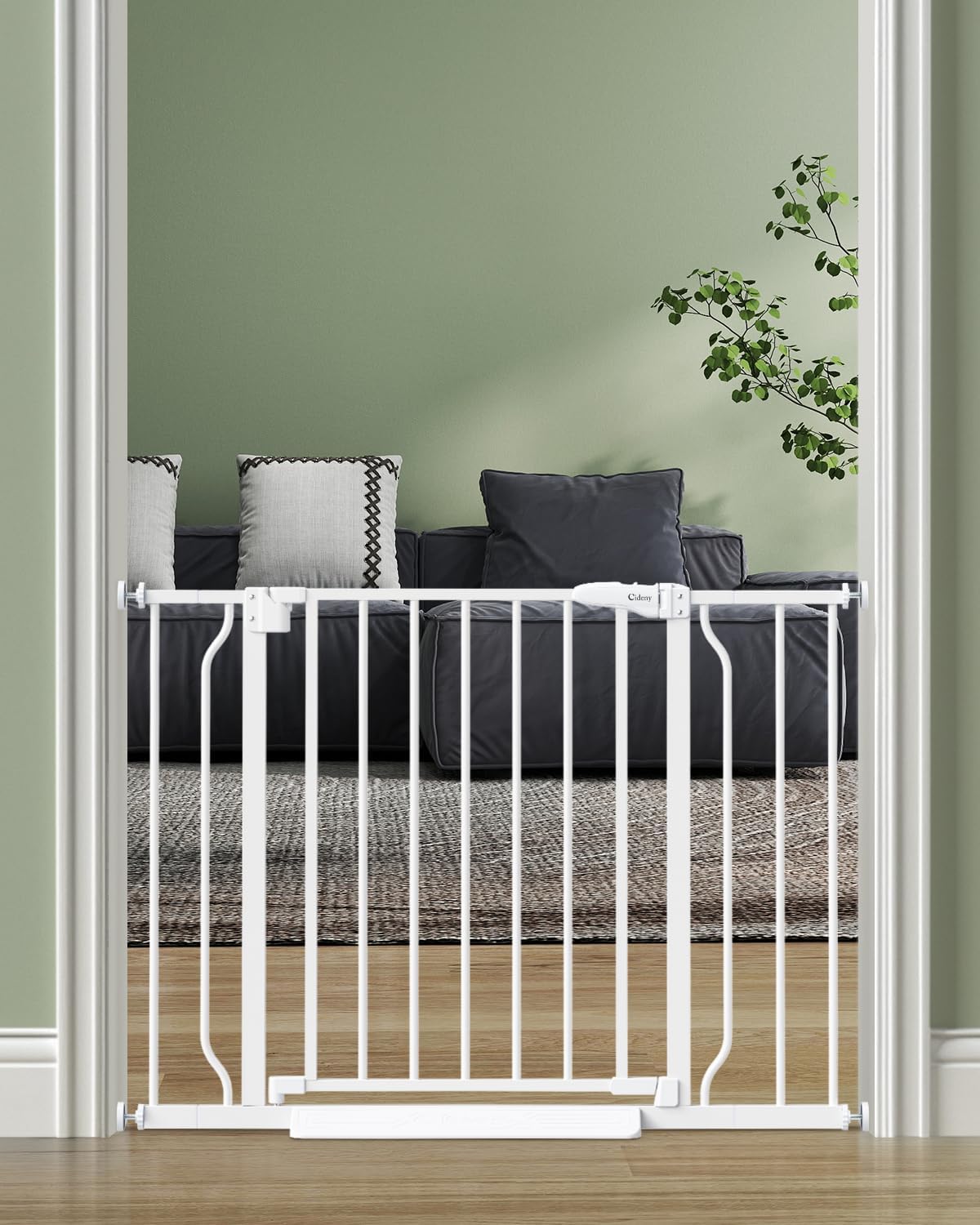
Preparation happens before the new dog ever crosses the threshold. The single most useful piece of equipment is a gate. We recommend a sturdy auto-closing dog gate for stairs and doorways placed at the point where the dogs will first be able to see each other inside the house. A gate does two jobs at once: it prevents physical contact when nobody is ready for it, and it lets the dogs get used to each other's sight, smell, and sound with a safe barrier between them. Barrier exposure is one of the most underused tools in the whole process.
Next, duplicate the resources. Two water bowls, two feeding stations placed well apart, and enough resting spots that neither dog has to share. Take inventory of high-value items — favorite chews, the bed the resident dog sleeps on, food-dispensing toys — and put them away for the first two weeks. Resource guarding is the most common trigger for early conflict, and the simplest fix is to remove the resources that would be worth guarding until both dogs have settled.
If the new dog does not already wear identification, sort this out on day one. A new dog in an unfamiliar house is a flight risk, especially during the first week, and a door left open a crack is all it takes. A personalized stainless steel ID tag engraved with your phone number is cheap insurance that we consider non-negotiable for any recent arrival. Microchips matter too, but a tag is what a neighbor can read without a trip to a vet clinic.
Step 1: The Neutral-Territory Meeting
Neutral territory means a place neither dog considers home: a quiet park neither of them visits regularly, a quiet street, a neighbor's yard. The resident dog walks its own neighborhood every day, so even the sidewalk outside your building is not truly neutral. Drive or walk a few minutes away if you can.
Each dog gets one handler. This is a two-person job, and trying to handle two leashes alone is how dogs get tangled at exactly the wrong moment. Start with the dogs 20 to 30 feet apart, walking parallel in the same direction. Do not walk toward each other head-on. A head-on approach with a taut leash is, in dog terms, a confrontation — two animals moving directly at each other, both slightly restrained, with no escape route. Parallel movement instead reads as two companions traveling together who just happen to keep some distance.
Watch for the soft signals that the meeting is going well: loose bodies, normal sniffing of the environment, an occasional glance at the other dog followed by looking away on their own. The dogs do not need to interact in this first session. Ten to fifteen minutes of calm parallel walking is a successful meeting, even if they never touch noses.
Step 2: The Parallel Walk That Does the Real Work
If the first session stays calm, let the gap shrink over several minutes until the dogs are a few feet apart, still side by side. Sniffing is allowed and encouraged — this is the actual conversation. Short sniff exchanges, then movement again. The rhythm matters: sniff, walk, sniff, walk. Continuous forced proximity is what causes pressure to build.
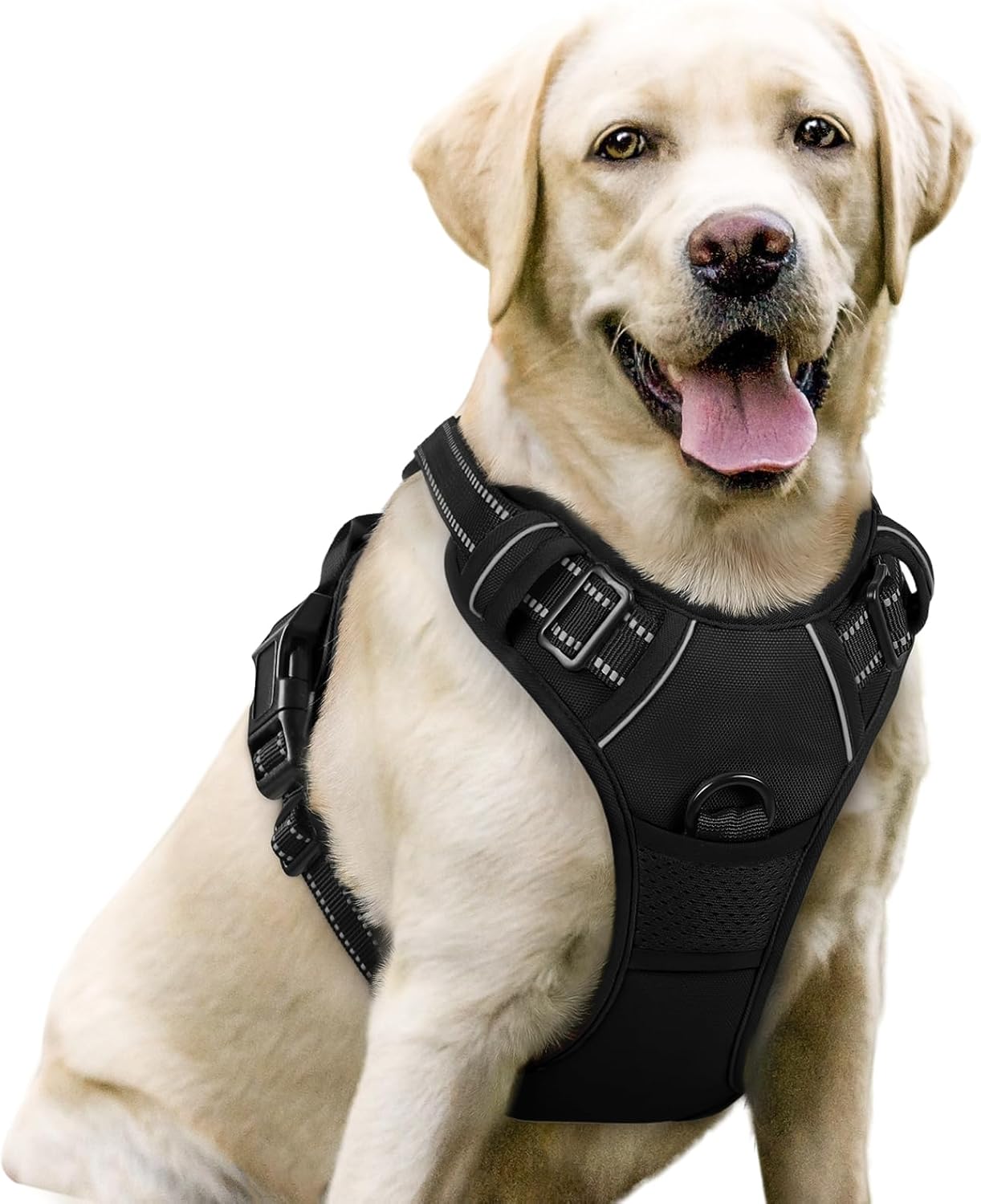
Equipment makes a difference here. A dog that pulls or lunges turns a controlled meeting into a wrestling match, so we suggest a well-fitted no-pull harness with front and back leash clips for either dog that tends to surge forward. For the handler holding the more powerful or more reactive dog, a heavy duty leash with a padded second traffic handle gives you close-in control near the collar without having to wrap the leash around your hand, which is how broken fingers happen.
Keep the first few sessions short. Five to fifteen minutes, ending while both dogs are still relaxed. Several short successful meetings beat one long one that goes sour in the final five minutes. If either dog stiffens, stares hard, or refuses to eat treats that it would normally take, that is your exit cue. Leave calmly. You lose nothing by ending early; you can lose a lot by pushing through.
Step 3: Coming Home
The home arrival is where many owners relax too early, so treat it as its own stage. A useful trick from shelter behavior programs: walk both dogs together on the way in, so they enter the property as a pair rather than as a resident defending a doorstep. Take a short final loop around the block, then come in together.
Inside, keep the new dog on leash for the first several minutes and let the resident dog move freely. Do a slow tour. Pick up any leftover food bowls, toys, or chews before the dogs enter — you did this in preparation, but double-check. Let them investigate the house and each other with the leash as a safety net, not as a restraint. Slack leash, calm follow, brief sniffs, plenty of breaks.
Do not crowd them. Handlers hovering anxiously over the first indoor interaction transmit tension straight down the leash. Stand back, chat with your co-handler, and let the dogs do their thing. Intervene only for the hard signals described later in this guide, not for normal clunky greeting behavior like over-the-top sniffing or a resident dog that simply walks away and lies down across the room. Walking away is a healthy, polite choice. Respect it.
The First Two Weeks: Management Beats Optimism
Rescue groups talk about the 3-3-3 rule: roughly three days for a new dog to stop panicking, three weeks to start learning the routine, three months to feel at home. That timeline is a useful frame even for a confident adult dog. During the first stretch, the new dog is running on stress hormones and does not yet know that food arrives twice a day no matter what. A dog in that state can be perfectly friendly one minute and startle-snappy the next.
The management plan we recommend is simple and unglamorous:
Separate whenever unsupervised. For the first two weeks, the dogs are never alone together, period. The gate you installed does this work for free. Crates or separate rooms work when you leave the house. Every uneventful hour apart is a deposit in the account; one bad scuffle with no human present is a withdrawal you cannot undo.
Feed apart, always, at the start. Food is the number one flashpoint between new housemates. Separate rooms or opposite ends of the house, and pick the bowls up when the meal is over. Free-feeding two recently acquainted dogs is asking for a standoff over the bowl at 2 p.m.
Keep the high-value items locked up. Bully sticks, favorite toys, the good bed, human food. Reintroduce them one at a time, weeks later, while you are watching. If either dog stiffens over an item, that item goes back into storage and you have learned something specific about this pair.
Supervise all together-time and keep sessions short. Ten minutes of calm coexistence after a walk, then separate again. End every session before tension appears, not after. The pattern you are building is simple: being together predicts good things and never predicts bad ones.
Reading the Signals: Normal Awkwardness vs a Real Problem
Not every stiff moment is a disaster, and knowing which signals matter keeps owners from both extremes — panicking over normal behavior and ignoring real warnings.
Normal early behavior includes: brief stiffening that resolves within seconds, one dog walking away from interaction, play bows with bouncy back-and-forth movement, exaggerated sniffing of the other dog and then disengaging, and occasional low grumbles during an otherwise loose interaction. Dogs negotiate politely all the time without human help. A resident dog that growls once when the puppy dives at its face is teaching a lesson, and that lesson is worth more than any training session.
The signals that require immediate, calm interruption are different: hard staring that does not break, a body that freezes completely, lips curled with teeth showing while the body stays rigid, one dog pinning another to the ground with no role reversal, escalating barking that rises in pitch, and any bite contact. When you see these, do not grab collars and do not shout. Make a short interrupting sound, toss a handful of treats in opposite directions, and physically separate with the gate or leashes. Grabbing the collar of a dog mid-fight is the fastest way to get bitten yourself.
One more pattern deserves special mention: the pest. Sometimes the risk is not aggression but harassment — a young or exuberant new dog that will not leave the resident alone. The resident's corrections escalate because the puppy ignores them, and eventually a patient dog snaps harder than anyone expected. This is preventable. Enforce naps and separate time so the resident dog is never cornered by enthusiasm. According to the AVMA, appropriate exercise and mental stimulation significantly reduce stress-related behavior problems in dogs, and a tired newcomer is simply less annoying than a bored one. A simple treat-dispensing puzzle toy that occupies the new dog for twenty minutes after walks is one of the cheapest pair-preserving purchases in this whole process.
Feeding, Doors, and Other Flashpoints
Beyond food bowls, the classic flashpoints between new housemates are doorways, staircases, and the humans themselves. Doorways are narrow, high-arousal bottlenecks — dogs get compressed into a small space with their hackles already up from excitement. Manage them by releasing dogs one at a time, a few seconds apart, until the pair is rock solid. Same with narrow hallways: if the dogs are tense with each other, route around with the gate rather than forcing a squeeze-past.
Human attention causes more scuffles than owners expect. Two dogs crowding for the same petting can tip from competition to conflict in a second. Pet them separately at first, or one at a time on opposite sides of the room. Greetings when you come home — the highest-arousal moment of any dog's day — are best handled with the dogs separated until everyone's brain is back online.
Walks together are a skill the pair builds over weeks. Start with one handler per dog on separate routes, then merge into short joint walks once the home routine is stable. Joint walks are actually one of the best relationship builders available: parallel movement through shared space is how dogs bond with each other, which is exactly why the parallel-walk introduction works in the first place.
When to Bring in a Professional
Some pairs need help, and calling a trainer early is not an admission of failure — it is the cheap version of the problem. Contact a qualified professional (look for credentials like CPDT-KA, CAAB, or a veterinary behaviorist) if you see any of the following: a first-week fight with skin contact, hard staring or freezing that repeats despite management, one dog that cannot eat or sleep in the presence of the other, guarding behavior that spreads from food to locations to people, or your own honest feeling that you are scared to leave the room.
A behavior consult in week one costs a fraction of what repairing a genuinely broken relationship costs in month three, and far less than emergency vet care. There is no prize for doing this alone.
The Takeaway
The introduction plan in one breath: neutral ground, parallel walks, home arrival on leash, two weeks of strict management with the gate doing the heavy lifting, and separation whenever nobody is watching. Go slower than feels necessary. Every extra day of boring, structured exposure is a day the two dogs are quietly writing a good first draft of their relationship — and unlike a rushed introduction, a slow one can almost always be fixed if a step goes sideways. The pairs that end up as inseparable couch buddies are, nearly always, the ones whose owners treated week one as a process instead of an event.
Related Reading
Want more on this topic? Check out our guides on best dog harnesses no pull crash tested adventure, the best dog beds for large breeds in, dog zoomies why dogs run like maniacs guide.