The 12-Hour Rule That Saves Rabbit Lives
If your rabbit hasn't touched food in 12 hours, you don't have a picky eater. You have a potential emergency. Too many owners wait 24, 36, even 48 hours because the rabbit was 'still hopping around' or 'seemed fine otherwise.' By the time they called, the rabbit was hypothermic and barely responsive. The window for easy treatment had closed.
Rabbits are prey animals. They hide pain and illness until they physically can't. A rabbit that stops eating is almost always already sick. And the number one cause of that sudden appetite loss is gastrointestinal stasis — a slowdown or complete halt of the gut. It kills fast. According to the ASPCA, GI stasis is one of the most common and most preventable causes of death in pet rabbits. The key word is preventable.
Let's talk about what's actually happening in your rabbit's gut, the early signs most owners miss, and the exact steps to take when you notice something's off. This guide also covers the feeding and habitat mistakes that trigger stasis in the first place, because most cases are fixable with a few changes.
What GI Stasis Actually Is (And Why It's Different From Dog or Cat Vomiting)
Rabbits can't vomit. Their digestive system is a one-way tube designed for near-constant movement. The stomach empties into the small intestine, then the cecum — a fermentation vat the size of a small fist — then the colon, and out. Food moves through in roughly 4 to 6 hours under normal conditions. When that movement slows, everything backs up.
The cecum is where the magic happens. It's packed with beneficial bacteria that ferment fiber into volatile fatty acids, which your rabbit absorbs for energy. It also produces cecotropes — soft, nutrient-dense pellets your rabbit eats directly from its rear. Those cecotropes are not poop. They're a second pass at nutrition, and a rabbit that stops producing or eating them is in trouble.
When gut motility drops, several things happen at once. Gas builds up because bacteria keep fermenting without moving forward. The cecum's pH shifts, killing off good bacteria and letting harmful ones bloom. The rabbit feels bloated and nauseated, so it stops eating. That makes motility worse. That makes gas worse. It's a spiral, and it can go from mild to life-threatening in under 24 hours.
This can go wrong in a rabbit that was 'fine this morning.' By the time an owner comes home in the evening, the rabbit is pressed into a corner, grinding its teeth, and refusing even a strawberry — and by midnight it can be in surgery. Stasis doesn't wait for your schedule.
Early Warning Signs You Can Actually Catch
You need to know your rabbit's normal. How much hay does it eat in a day? How many poops in the litter box? What does it do when you walk in the room? If you can't answer those questions, start paying attention today. The earliest stasis signs are behavioral, not physical.
1. Smaller or fewer poops. This is the single most reliable early sign. Normal rabbit poop is round, uniform, and plentiful — a healthy adult produces 100 to 300 pellets a day. If you're seeing tiny, irregular, or string-of-pearls poops, motility is already compromised. Count for a day. If the number drops by half, call your vet.
2. Picking at food. A rabbit that normally attacks its greens and now nibbles half-heartedly is not being fussy. It's nauseated. Same with hay — if the hay rack is still full at the end of the day, that's a red flag.
3. Hunched posture. A rabbit in pain sits with its back arched, belly pressed to the floor, eyes half-closed. It looks like it's loafing, but the body language is different. A relaxed loaf has soft eyes and a normal ear position. A pained loaf is rigid.
4. Tooth grinding. Soft grinding while eating is normal. Loud, constant grinding — especially when the rabbit isn't eating — means severe pain. That's the rabbit equivalent of a person groaning through a kidney stone.
5. Reduced grooming. Rabbits are fastidious. A rabbit that stops cleaning its face or leaves its bottom messy is not feeling well. A messy bottom also attracts flies, which can lead to flystrike — a whole separate emergency.
6. Lethargy or hiding. A rabbit that normally greets you at the cage door and now stays in its hide is telling you something. Don't wait for it to 'come around.'
If you see two or more of these signs together, treat it as stasis until proven otherwise. Don't wait for a full 12 hours if the rabbit is obviously uncomfortable. The 12-hour rule is for the borderline cases — the rabbit that's a little off but still moving. For the obvious ones, call immediately.
What to Do in the First 12 Hours
First, call your vet. Not a general practice that 'sees rabbits sometimes' — an exotics vet or a rabbit-savvy vet. The House Rabbit Society maintains a directory, and your local rabbit rescue will know who's good. If it's after hours, call the emergency clinic and ask if they have a rabbit vet on call. Many don't. Know your options before you need them.
While you're waiting for the appointment, here's what you can do at home. This is not a substitute for veterinary care. It's what you do to keep the rabbit stable until you get there.
Offer warm water in a bowl. Not cold. Rabbits in stasis often become dehydrated and hypothermic. Warm water is more appealing and easier on the gut. If your rabbit won't drink, you can offer a small amount of unflavored Pedialyte via syringe — 5 to 10 mL at a time, slowly, into the side of the mouth. Never squirt straight down the throat. Rabbits can aspirate, and that's a fast track to pneumonia.
Keep the rabbit warm. Normal rabbit body temperature is 101 to 103 degrees Fahrenheit. A stasis rabbit can drop below 100. Use a SnuggleSafe or a rice sock heated in the microwave, wrapped in a towel, placed in one corner of the cage so the rabbit can move away if it gets too warm. Do not use a heating pad on high — rabbits can't regulate well and can burn themselves.
Gentle belly massage. With the rabbit on your lap or a towel, use two fingers to make small circles on the abdomen, starting near the ribs and working down. You're trying to move gas. If the rabbit tenses, grinds its teeth, or tries to bite, stop. That means it's painful, and you need the vet now.
Offer favorite greens. Not pellets, not treats. Fresh herbs — parsley, cilantro, basil — or a small piece of romaine. The smell can sometimes trigger eating. If the rabbit takes a bite, great. If not, don't force it. Forcing food into a rabbit with a full stomach can cause a rupture.
Do not give over-the-counter gas drops without vet guidance. Simethicone is sometimes used, but the dose matters, and it doesn't address the underlying motility issue. Owners give it and feel reassured, then wait another day. That's the danger.
What the Vet Will Do
A good rabbit vet will start with a physical exam — palpating the abdomen for gas, checking hydration, taking temperature, listening to gut sounds with a stethoscope. They'll likely take X-rays to rule out a blockage. This is important: stasis and blockage look similar but are treated differently. If there's a physical obstruction, you can't just push motility drugs. Surgery may be needed.
If it's uncomplicated stasis, treatment usually includes subcutaneous fluids, a motility drug like metoclopramide or cisapride, pain relief (meloxicam is common), and sometimes a prokinetic. The vet may also give a dose of famotidine for stomach acid. Many rabbits go home the same day with oral meds and a feeding plan.
Critical care feeding is the next step. If the rabbit won't eat on its own, you'll syringe-feed a recovery formula like Oxbow Critical Care or Sherwood SARx. This is not optional. A rabbit's gut needs food moving through it to keep working. The vet will calculate how many milliliters per day based on weight — usually 15 to 30 mL per kilogram, split into 4 to 6 feedings. It's messy, it's slow, and it's the difference between recovery and losing the rabbit.
Ask your vet to show you how to syringe-feed before you leave the clinic. Watching a video is not the same as doing it with a wiggly rabbit on your lap. Get hands-on instruction.
The Feeding Mistakes That Cause Stasis
Now the part most owners don't want to hear: stasis is often a husbandry problem. The rabbit didn't just 'get sick.' Something in its diet or environment set the stage.
Not enough hay. This is the big one. A rabbit's diet should be 80 to 90 percent grass hay — timothy, orchard, brome, or meadow. Hay provides the long-strand fiber that keeps the gut moving. A rabbit on a pellet-heavy diet is a rabbit on the fast track to stasis. Pellets are concentrated nutrition with short fiber. They're a supplement, not a base. An adult rabbit should get about 1/4 cup of plain pellets per 5 pounds of body weight per day, and unlimited hay.
Too many treats. Carrots, bananas, apples, yogurt drops — these are sugar bombs. Sugar feeds the wrong bacteria in the cecum and disrupts the pH. A small piece of carrot once or twice a week is fine. A handful every day is not. Rabbits develop stasis purely from a 'treat habit' the owner thought was harmless.
Sudden diet changes. Switching pellets or introducing a new green cold turkey can throw the gut off. Always transition over 7 to 10 days, mixing old and new. Same with new vegetables — one at a time, small amounts, watch the poop.
Dehydration. A rabbit that doesn't drink enough is a rabbit at risk. Water bottles are fine, but many rabbits drink more from a bowl. Offer both. Change the water daily. If your rabbit suddenly stops drinking, that's a warning sign on its own.

Stress, Pain, and Other Triggers
Diet is the main lever, but it's not the only one. Stress can trigger stasis in a rabbit with a perfectly good diet. Moving to a new home, losing a bonded mate, a predator in the yard, a loud construction project next door — all of these can shut down a rabbit's gut.
Pain is another trigger. Dental disease is a huge one. Rabbits' teeth grow continuously, and if they're not wearing down properly, they develop sharp points (spurs) that cut into the tongue and cheeks. A rabbit with dental pain stops eating, and then stasis sets in. If your rabbit is dropping food, drooling, or losing weight despite eating, get the teeth checked. According to the AVMA, dental disease is one of the top three health problems in pet rabbits, and it's often the hidden cause behind a stasis episode.
Other pain sources: urinary tract infections, arthritis in older rabbits, abscesses, and injuries. Any of these can put a rabbit off its food. The stasis is a symptom, not the root cause. Treating the stasis without addressing the pain is a temporary fix.
A rabbit can go into stasis every few weeks even when the diet is perfect and hay intake is great, because of a molar spur that is just bad enough to cause intermittent pain. Once the vet files the teeth, the stasis stops. That's the kind of thing you only find if you look.
Setting Up the Habitat to Prevent Stasis
Environment matters more than most owners realize. A rabbit that doesn't move doesn't poop. Exercise stimulates gut motility. A rabbit confined to a small cage all day is at higher risk.
Give your rabbit room to run. A minimum of 12 square feet of floor space for a single rabbit, plus supervised time outside the enclosure every day. If you can't free-roam, use an exercise pen. The goal is 3 to 4 hours of active time daily. That's not a lot. A bored rabbit is a static rabbit.
Enrichment also matters. Foraging toys, cardboard boxes to shred, tunnels to run through — these encourage movement and natural behaviors. A rabbit that's mentally engaged is a rabbit that's physically active. Simple things often work well: a paper bag stuffed with hay, an untreated wicker basket, a stack of towels to dig in. You don't need to buy much.
Water access is critical. Both a bowl and a bottle are worth providing. Bowls are more natural and encourage drinking, but bottles stay cleaner. Having both gives your rabbit options and lets you monitor intake. If the bowl is empty every morning and the bottle is untouched, you know your rabbit is drinking. If both are full, you have a problem.
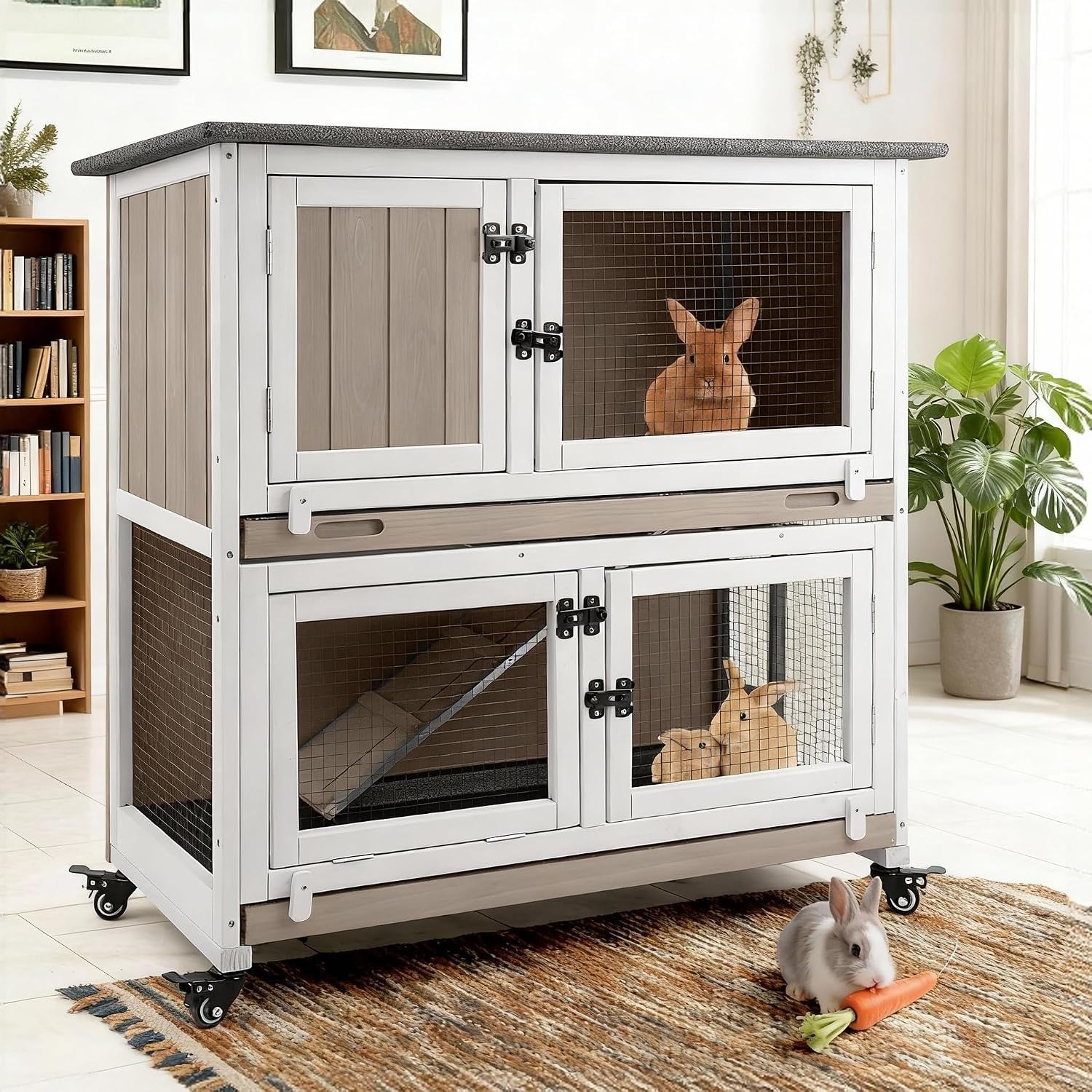
Monitoring: The Daily Five-Minute Check
You don't need to be a vet to catch stasis early. You need a routine. I tell every rabbit owner to do a five-minute check every morning and every evening. It's not obsessive. It's how you catch problems before they become emergencies.
Morning: Look at the litter box. Are the poops normal in size, shape, and number? Fill the hay rack. Did the rabbit eat overnight? Offer a small handful of greens. Does the rabbit come over? Check the water bowl. Is it lower than yesterday?
Evening: Same routine. Look at the rabbit. Is it moving normally? Grooming? Interested in its surroundings? Feel the belly gently — is it soft or tense? A normal rabbit belly feels like a soft dough. A gassy belly feels tight and may make a hollow sound when you tap it.
Write it down if you have to. A simple note on your phone with the date and a checkmark for 'normal' or a note about what was off. Patterns emerge. You'll notice a day where the rabbit ate less hay, or the poops were smaller, and you can act before it's a crisis.
When to Call the Vet Immediately (No Waiting)
Call now, not in the morning, if you see any of these:
- No eating for 12 hours or more
- No poop for 12 hours or more
- Lying on the side, unresponsive
- Labored breathing
- Cold ears and feet (temperature under 100°F)
- Loud, constant tooth grinding
- Bloated, drum-tight abdomen
- Collapse or seizures
These are late-stage signs. The rabbit needs emergency care, not a wait-and-see approach. If your regular vet can't see you, call the nearest emergency clinic and ask specifically if they have a veterinarian experienced with rabbits. Not all do. If they don't, ask for a referral. Drive an hour if you have to. Stasis at this stage is a race.
Recovery: What the Next Two Weeks Look Like
If you caught it early and the vet treated it, recovery is usually straightforward. The rabbit gets fluids, motility drugs, pain meds, and syringe feeding until it starts eating on its own. That can take 3 to 7 days. The first sign of improvement is usually poop — small at first, then bigger and more regular. Appetite comes back gradually. Don't rush it.
Keep the rabbit warm, quiet, and stress-free. Limit handling to feeding and meds. Offer hay constantly, even if the rabbit ignores it. Offer greens multiple times a day. Fresh water in a bowl. No treats until the rabbit is fully back to normal. I know it's tempting to celebrate with a carrot, but sugar is the last thing a recovering gut needs.
After the episode, do a full husbandry review. What was the diet? What was the stress? What was the hay quality? If you can't identify a cause, assume it's diet and fix the hay-to-pellet ratio anyway. Most rabbits improve on a hay-first diet. Rabbits can go from monthly stasis episodes to zero after switching to unlimited timothy hay and cutting pellets to a measured 1/4 cup.
One thing worth remembering: don't assume the problem is solved just because the rabbit is eating again. The underlying cause is still there unless you fix it. Rabbits can relapse within a month because the owner went back to the old feeding routine. Stasis is a symptom. Treat the symptom, then treat the cause.
The Bottom Line
Your rabbit's gut is a delicate, fast-moving system that depends on constant fiber intake. When it stops, the clock starts. Know the early signs — smaller poops, picking at food, hunched posture — and act on them. Don't wait for the dramatic symptoms. By then, you've lost time you can't get back.
Feed hay first, always. Keep water available in a bowl. Give your rabbit room to run. Do the five-minute check twice a day. And find a rabbit-savvy vet before you need one. That's the whole game. Do those things and you'll likely never see stasis. If you do see it, you'll know exactly what to do.
Related Reading
Want more on this topic? Check out our guides on how to choose first small pet buying guide, best guinea pig bedding comfortable litter for your cavy, guinea pig vs hamster which pet choose.