The Tank Looks Fine Until It Is Empty
Escaped reptile threads online follow a pattern. The owner fed the snake at seven, closed the lid the way they always close it, and by ten the animal was gone. Not sick, not buried under the substrate, gone. The search that follows usually ends well — most escaped reptiles are recovered within a few feet of the enclosure, wedged behind a warm amplifier, a computer tower, or the refrigerator — but the two or three days between escape and recovery are hard on the animal and harder on the household. A reptile outside its enclosure dehydrates fast, meets hazards nobody planned for, and sometimes simply vanishes into a wall void.
Here is the uncomfortable part: in nearly every case, nothing sabotaged the setup. The screen top had quietly rusted at one corner. A clip had lost its spring. A cord cutout had been left open since the heat lamp was repositioned three months ago. Escape-proofing fails as maintenance, not as a purchase decision, which is why we treat it as an audit — a recurring, boring, ten-minute walk around the enclosure — instead of a one-time upgrade. This guide covers what we check, in what order, and what to do tonight if the hide is already empty.
Why Reptiles Test Every Seam You Own
Snakes are push-testing machines. A ball python will press the top of its head into the same seam of a screen lid hundreds of times a week, especially in the hours after lights-out, when the room quiets down and the animal's natural activity window opens. Each push is mild. The accumulated effect is not: clamps loosen, plastic frames flex, and one night the flex is enough for a snake to fold itself through an opening smaller than its own head. Lizards work differently. A leopard gecko does not need a hole — it needs a gap, because a healthy adult can compress through a slit roughly as wide as the space between a lid frame and the glass rim. Arboreal species solve the problem vertically: give a crested gecko one branch touching the screen top and it owns the ceiling by midnight.
The persistence is the part owners underestimate. A reptile that has found a weak seam once will return to it, because the animal remembers the spot the same way it remembers a warm hide. That is also why escape attempts cluster right after husbandry changes — a new lamp position, a substrate swap, a moved enclosure — and why the audit matters most in the week after any change. If your animal has been staring at the lid more than usual, do not wait for the monthly schedule.
The Lid Audit: Where Enclosures Actually Fail
Start with the lid, because that is where most failures live. Remove every clamp, then press the center of the screen with your palm using firm, even pressure — the same push a large snake delivers. If the frame bows enough to open a visible gap anywhere along the rim, the lid has already failed the test, whether or not anything has escaped yet. Next, inspect the screen itself under a bright light. Look for rust blooms, brittle spots, and hairline tears near the corners, where water from drippers and high humidity collects and corrodes mesh faster than anywhere else. Rusted mesh does not tear dramatically; it crumbles quietly, one strand at a time.
Then judge the hardware honestly. Friction clips — the spring clamps sold as universal accessories — lose tension over months, and they are the first thing we replace. Slide bolts that require a deliberate slide-and-lift are far harder for a snake to defeat, because they need a sequence of motions the animal cannot produce. Hinged glass tops deserve special suspicion: a heat lamp resting on warm glass makes the panel expand and slowly walk until one corner hangs open. If a lamp must sit on glass, add a physical stop on both sides.
When a lid or door is beyond reinforcing, replacement is the honest answer, and lockable designs have become common at reasonable prices. The RepWild 20 gallon PVC enclosure with a locking heavy-duty screen top removes the clip question entirely for a leopard gecko, a juvenile bearded dragon, or a small terrestrial snake. For smaller animals, this lockable 16 gallon wooden reptile tank with a metal mesh top pairs the mesh with a lockable front door, and we would repeat the same caveat the listing itself makes: sixteen gallons suits a leopard gecko or a small colubrid, not an adult bearded dragon. We stay skeptical of any 30-inch enclosure marketed for adult ball pythons too; the footprint can work for a juvenile, but an adult of that species deserves a longer runway, so treat sizing claims as marketing until you have measured the interior yourself.
Cord Cutouts, Seams, and the Gaps Nobody Photographs
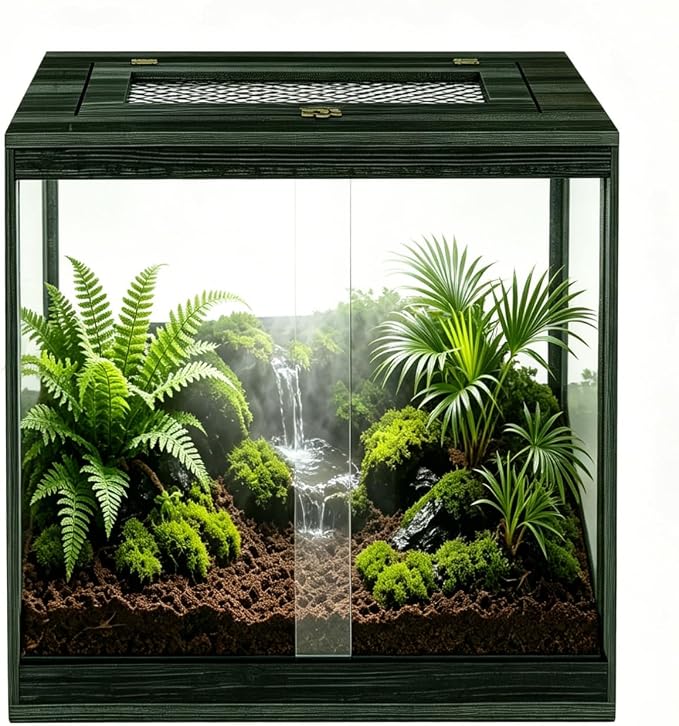
Cord cutouts are the single most overlooked escape route, and they fail in a specific way. Every screen top has notches where the heat lamp, UVB fixture, and thermostat probe cords exit. Each notch is a gap roughly the diameter of a finger, positioned exactly where a snake pushes hardest — the back rim, at the warm end, where the animal lingers because the heat is there. If your cords exit through open notches, your enclosure has a finger-width door that never closes. Seal them. Aluminum HVAC tape holds well on glass and PVC frames, brush-style cord grommets fill the gap while letting the cord slide, and either fix costs less than one emergency vet visit.
Two more quiet gaps deserve attention. First, the corner seams of wooden and PVC enclosures can separate after a year of humidity cycling — run a fingernail along every inside corner and feel for a ridge or split. Second, the mesh panels directly above water bowls and misting zones corrode first, because they stay wettest. On front-opening enclosures, test the doors themselves: lift each door upward while pushing outward. Doors riding in open rails can be raised by a determined snake unless the rail has a stop or the design locks, which is one reason we like door locks on arboreal setups in particular.
The Second Perimeter: Audit the Room, Not Just the Tank
An enclosure audit stops escapes; a room audit limits the damage when something slips through anyway. Close the door to the reptile room every night, even if the tank has never failed. Push a rolled towel against the gap under the door if the floor is hard surface. Then walk the room at reptile eye level and note every route that leads from the enclosure stand to a warm appliance: shelves that stair-step upward, curtains touching a media console, a chair back sitting beside a radiator. Remove the bridges. After that, remove the hazards behind the bridges — houseplants that are toxic if chewed, adhesive traps forgotten under furniture (pull them out; they injure a reptile exactly as they injure anything else that touches them), and open water features a small animal could drown in.
The stakes are real rather than dramatic. According to the AVMA, escaped exotic pets face dehydration, burns from heat sources, temperature extremes, and injury within hours of leaving their enclosure — and a reptile loose in a climate-controlled home is still an animal whose heat and humidity needs are not being met. A leopard gecko on a tile floor in January is losing heat faster than it can generate it. A snake behind a computer tower may be warm but bone dry. The clock starts the moment the lid fails, which is why the room perimeter exists: it buys the search time the animal needs.
Already Out: The First-Night Search Plan
If you come home to an empty enclosure, resist the two reflexes that waste the first hour: tearing the room apart and assuming the animal is far away. Escaped reptiles stay close. Search the thermal map first — behind and under anything warm: the refrigerator's compressor bay, the computer tower, the television and amplifier shelf, the dryer, heat vents, and the warm side of the enclosure itself. Then work the perimeter: run your hand along baseboards, inside shoes, under rugs, behind curtain hems. Arboreal species go up, so check the tops of bookcases, curtain rods, and anything near the ceiling before you search the floor twice.
Set the trap that actually works: a water dish and a hide box placed at the room's warmest quiet point, with a line of flour or a strip of paper towel laid across each approach. Check the lines twice a day. A disturbed flour line or a moved towel tells you where the animal is moving, and the hide gives it a reason to stay put once found. Search at night, during the hours the species is normally active, with a flashlight held low — you are looking for eye-shine, not movement. Before you run the washing machine or dryer, open the drum and look inside. We also want to be blunt about glue traps: veterinary welfare guidance treats them as unacceptable for reptile recovery, because a struggling animal tears skin and loses toes in the adhesive. Flour lines cost nothing and answer the same question without the injury risk.
One more lever helps more than people expect: lower the room's overall heat slightly while raising it near the open hide. A reptile that cannot find warmth anywhere in the room will find the one warmth you left for it.
Species Notes: Match the Audit to the Animal
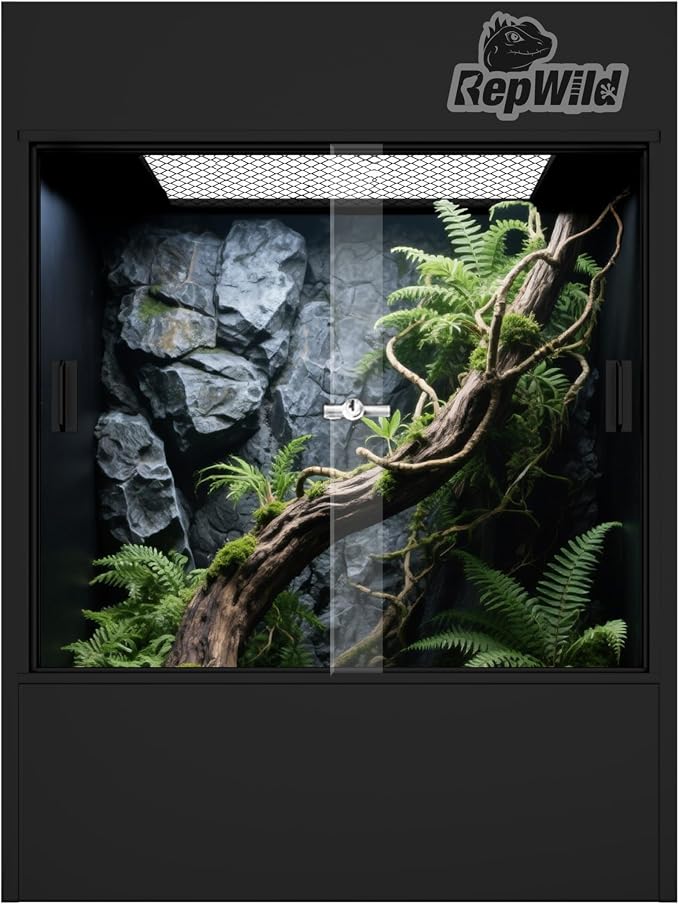
Weight the audit toward the species you keep. Ball pythons are slow, patient pushers — their heads look too big for gaps they routinely defeat, so treat any opening wider than a pencil as an open door. Corn snakes are the classic escape artists of the hobby: curious, thin, relentless about seams, and small enough as juveniles to slip through mesh damage you would need a flashlight to see. Leopard geckos are ground-level gap hunters; the lid matters less to them than the cord cutouts and the seam where glass meets frame. Crested geckos and other arboreal geckos think in three dimensions, which is why a tall, lockable enclosure earns its price — the REPWILD 33 gallon PVC arboreal terrarium, eighteen by twenty-four inches tall with a front door lock, is the sort of design we mean when we say height plus hardware. Bearded dragons rarely escape by squeezing, but a dragon pacing the glass in the evening — the behavior keepers call glass surfing — presses the lid constantly from below, so a bearded dragon setup needs the same lid discipline as a snake cage even though the animal itself almost never leaves.
The Ten-Minute Monthly Audit
Put the whole routine on paper so nothing depends on memory. Once a month, working top to bottom:
- Palm-push the lid at the center and at all four corners. Any visible gap is a fail.
- Lift each front door upward and outward at the same time.
- Pass a flashlight over the full mesh surface, especially corners and the panel above the water bowl.
- Run a fingernail along the interior seams of wooden or PVC frames and feel for splits.
- Check every cord cutout: taped, grommeted, and tight around the cable.
- Operate every latch and lock once; replace any friction clip that has lost its spring tension.
- Re-measure temperatures and humidity after any repair — fresh tape and new grommets change airflow, and a just-sealed enclosure can quietly overheat.
- Walk the room perimeter once, looking for new bridges to warm appliances: new furniture, a new cable run, a decoration leaning on the stand.
Schedule it for the same day as the monthly deep clean so the two routines become one habit. After any deep clean, re-run the full audit before the animal goes back in — screens get knocked, cords get re-routed, and the two jobs interfere with each other more often than owners expect.
Six Habits That Quietly Undo Good Audits
A few habits undo otherwise solid audits. Trusting a single clip because it has held so far. Sealing the lid while leaving the cord cutout open — the fix that looks complete from above and is wide open at the back. Storing spare equipment boxes on the screen top, loading the mesh the same way every day for months. Assuming a juvenile-sized setup will keep holding an adult, because strength grows faster than the frame. Skipping the audit the week after a deep clean, which is exactly the week hardware has been disturbed. And the biggest one: ignoring an animal that has already found a seam. Escapes are learned behavior — a snake that got out once and found the room warm will work that seam every night until the hardware changes, not until it gets bored.
Run the Push Test Tonight
The welfare framing is simple. According to the RSPCA, keepers are responsible for providing secure reptile housing that prevents escape, both for the animal's own safety and because an escaped exotic poses risks inside a home and beyond it. In practice, security is not a product you buy once. It is the palm test, the flashlight pass over the mesh, the sealed cord notch, and the closed room door, repeated every month. Run the push test tonight. If the lid shifts under even pressure without a deliberate unlatch, treat the enclosure as open — because your snake already does.
Related Reading
Want more on this topic? Check out our guides on how to choose first pet reptile beginners guide, best reptile lighting kits uvb fixtures, best gecko thermostats.