Your Cat Didn't Get Old Overnight — But It Feels Like It
A cat can stop jumping onto the kitchen counter. She was 13, and the counter had been her throne for a decade. One week she was up there knocking pens off the edge, and the next she was staring up at it like it was a cliff face. Nothing dramatic happened. No yowl, no limping. She just quietly stopped. That is how aging works in cats — it sneaks in through the side door while you are busy worrying about something else.
Cats are considered seniors around age 11, according to the American Association of Feline Practitioners, and they are geriatric by 15. But here is the thing that gets missed: a 12-year-old cat is not simply a slower version of a 6-year-old cat. Their physiology changes. Kidney function declines. Joint cartilage wears down. Muscle mass drops. Their senses dull. The cat that used to hear a can opener from three rooms away might now sleep through dinner prep entirely.
The good news is that most of these changes respond really well to small, cheap, unglamorous adjustments around the house. Every one of these changes can transform miserable old cats into comfortable ones with nothing more than a litter box swap and a heating pad. Here is what actually matters.
1. Lower the Litter Box Entry — This Is Non-Negotiable
Arthritis is wildly underdiagnosed in cats. A 2023 study in the Journal of Feline Medicine and Surgery found radiographic evidence of degenerative joint disease in over 90 percent of cats over 12. That means almost every senior cat you meet has some degree of joint pain, whether they show it or not. And cats are masters at hiding it.
A high-sided litter box that requires a jump or a big step over the rim becomes a genuine obstacle. Your cat may start peeing on a bath mat, and you may assume it is behavioral when it is actually orthopedic. This goes wrong often — owners spend months and hundreds of dollars on behavioral consults when the fix was a $12 shallow pan.
What to do: switch to a low-entry box with a rim no taller than 2 to 3 inches. If your cat has significant mobility issues, a simple baking pan or a puppy training tray works fine. Cut a doorway into the side of a covered box, or just remove the lid entirely. Keep the box on the same floor as your cat's main hangout spot — stairs become a real barrier.
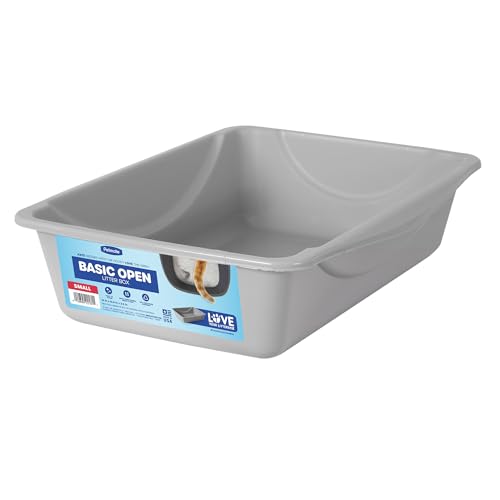
If you want a box that is genuinely easy for older cats, this low-entry litter box has a shallow lip and a generous interior, which makes turning around less of a production. I like it because there is no lid to negotiate and the sides are low enough that a stiff cat can walk in without a hop.
2. Warmth Is Medicine for Old Joints
Senior cats run cold. Their circulation is less efficient, they carry less insulating fat, and their metabolism often slows. A 70-degree house that felt fine at age 5 can feel genuinely chilly at 15. Cold makes arthritic joints stiffer, which makes cats move less, which makes them stiffer still. It is a nasty spiral.
Give your cat a warm spot. A heated cat bed is often the single most appreciated thing you can buy an old cat. If you do not want to spend money, a folded fleece blanket on top of a radiator-adjacent chair works. So does a cardboard box lined with a wool sweater. Cats do not care about aesthetics.
One warning: if you use a heating pad designed for humans, never leave it on high and never let your cat lie on it unsupervised. Cats with reduced sensation can develop burns. Pet-specific heated beds are designed to reach only about 102 degrees Fahrenheit, which is roughly their natural body temperature, and they shut off automatically. That is the safe range.
3. Rethink the Food and Water Setup
Two things happen to senior cats at the bowl. First, they often cannot crouch comfortably to eat from a floor-level dish. Second, their sense of smell declines, which makes food less appetizing. A cat that cannot smell dinner may just walk away.
Raise the bowls. A simple stack of books under a shallow dish, or a proper elevated feeder, takes the strain off the neck and shoulders. Cats can start eating again within a day of having their bowl lifted 4 inches off the floor. It sounds too simple to matter. It matters.
Warm the food slightly, too — about 10 seconds in the microwave, stirred, and tested with your finger. Warming releases aroma, and aroma drives appetite. For water, a fountain often helps because moving water is more attractive to cats and encourages drinking, which is critical for aging kidneys. According to the ASPCA, chronic kidney disease affects a large percentage of senior cats, and hydration is one of the few things owners can control directly.
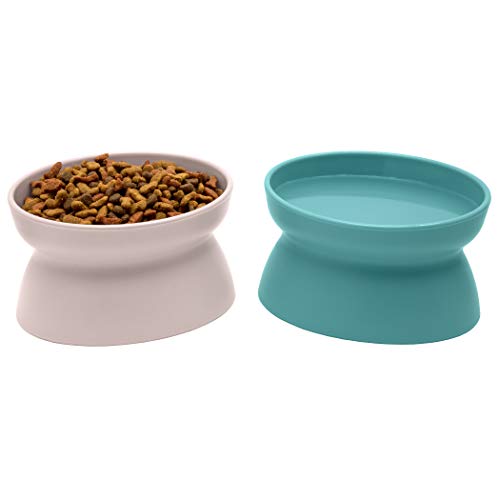
This elevated bowl set is the option most often recommended. It is stable, the bowls are shallow enough that whiskers do not drag, and the height works for cats in the 8 to 15 pound range. Whisker fatigue is real, by the way — deep narrow bowls can make eating genuinely unpleasant for sensitive cats.
4. Add Night Lights and Reduce Startle Triggers
Senior cats frequently develop nuclear sclerosis, a cloudiness in the lens that looks like cataracts but is not the same thing. It reduces contrast vision, especially in low light. Your cat is not blind, but they are navigating a world that is dimmer and blurrier than it used to be.
Plug in a couple of night lights near the litter box, the food station, and the path between them. This is a tiny change that prevents a lot of middle-of-the-night confusion and howling — the kind that wakes you up at 3 a.m. and makes you wonder if something is wrong. Sometimes nothing is wrong. Your cat just cannot see well enough to feel confident, and they are calling out to locate you.
Also, stop rearranging furniture. Old cats rely on routine and spatial memory. Moving the couch two feet to the left is a minor inconvenience to you and a disorienting event to a 16-year-old cat with fading vision.
5. Groom Them More — They Cannot Keep Up
Old cats stop grooming effectively. It is not laziness. It hurts to twist around to reach the back, and arthritic spines do not bend the way they used to. The result is mats, dandruff, and a greasy coat that smells a bit off.
Brush your senior cat daily with a soft slicker brush or a rubber curry. Keep sessions short — 2 to 3 minutes is plenty. Pay attention to the lower back, the hindquarters, and the belly, which are the spots they cannot reach. If you find mats, do not cut them out with scissors. Cat skin is paper-thin and moves constantly. Owners can slice a cat open trying to remove a mat, and it is a vet visit every time. Use blunt-tipped grooming scissors or, better, let a groomer or vet tech handle dense mats.
Check the claws, too. Senior cats shed claw sheaths less effectively, so nails get thick, curved, and sometimes grow into the paw pad. Trim every 2 to 3 weeks, just the clear tips. If you can see the pink quick, stay well away from it.
6. Keep Them Mentally Sharp With Easy Wins
Cognitive dysfunction syndrome — basically feline dementia — affects a meaningful percentage of cats over 15. Signs include staring at walls, yowling at night, getting stuck in corners, and seeming to forget where the litter box is. It is heartbreaking and it is also somewhat manageable.
Keep their brain working, but make it easy. Puzzle feeders are great for young cats; for seniors, use a simple muffin tin with treats in a few cups, or scatter a handful of kibble on a snuffle mat. The goal is engagement without frustration. A cat that fails repeatedly at a hard puzzle will just stop trying, which is the opposite of what you want.
Interactive play still matters, but shorten the sessions. Two 5-minute wand sessions a day beats one 15-minute marathon for an old cat. Let them catch the toy often. Winning is the point.
7. Bloodwork Twice a Year, Not Once
Here is my strong opinion: every cat over 10 should get a senior blood panel every 6 months, not annually. Cats are notoriously good at masking illness until they are 70 percent into organ failure. A twice-yearly panel catches kidney disease, hyperthyroidism, and diabetes early — when they are manageable — instead of late, when they are emergencies.
The panel should include a complete blood count, a chemistry profile, a T4 thyroid test, and a urinalysis. Ask for a blood pressure check too. Hypertension is common in older cats and silently damages the kidneys, heart, and eyes. According to the AVMA, routine wellness screening is one of the highest-value things owners can do for aging pets, and it can catch early kidney changes in cats that looked completely normal at home.
Yes, it costs money. It costs far less than treating a crisis at 2 a.m.
8. Watch the Weight — Both Directions
Weight loss in a senior cat is a red flag, not a normal part of aging. It can mean hyperthyroidism, kidney disease, diabetes, cancer, or dental disease. If your cat drops more than 5 percent of body weight in a few months, that is a vet visit. Weigh your cat monthly on a baby scale if you can. It is the cheapest early warning system you have.
Weight gain matters too. An overweight senior cat puts more load on arthritic joints and is at higher risk for diabetes. If your cat is carrying extra pounds, talk to your vet about a senior-appropriate diet before you just cut portions — seniors need adequate protein to maintain muscle mass, and generic light formulas can shortchange them.
Dental health deserves a mention here. Periodontal disease is extremely common in older cats and can make eating painful enough that they stop. If your cat is dropping food, chewing on one side, or has truly terrible breath, get the mouth checked. A dental cleaning under anesthesia is a real risk-benefit conversation for a 16-year-old cat, but it is a conversation worth having.
9. Set Up a Comfortable Base Camp
Old cats like their spots. Give them several. A soft bed in the sunniest window, another near you on the couch, a third in a quiet corner away from foot traffic and other pets. Cats in pain or feeling vulnerable want to be near their people but not in the middle of the action.
Ramps and steps help cats who still want to reach the couch or the bed but cannot jump. A sturdy ottoman placed as a halfway point often works as well as a commercial ramp. Test it yourself — if it wobbles under your hand, it will wobble under your cat, and they will not use it.
Keep resources spread out. One litter box per floor. Water in more than one room. An old cat with arthritis should never have to walk more than about 20 feet to reach what they need.
The Thing Nobody Tells You About Old Cats
Living with a senior cat is a different relationship than living with a young one. It is quieter. It is more about maintenance than adventure. There is a temptation to treat every change as decline, and that is not quite right either. 17-year-old cats can start playing again after their arthritis was managed. Cats who had not purred in months can start purring on a heated bed.
The work is small and constant: lower the box, warm the bed, lift the bowl, book the labs, brush the fur. None of it is dramatic. All of it adds up. Start with the litter box and the warmth, because those two give you the biggest return for the least effort, and then work your way down the list. Your cat cannot tell you their knees hurt. You have to notice for them.
One last practical note: find a vet you trust before you need one urgently. Ask them directly how they handle senior cats, what diagnostics they recommend, and how they approach quality-of-life decisions. Having that relationship in place makes the hard days less chaotic. Your old cat has spent years reading your moods and adjusting to your schedule. This is the part where you return the favor.
Related Reading
Want more on this topic? Check out our guides on toxic plants for cats safety guide, best cat strollers outdoor exploration, cat hairball prevention guide.