The Starter Tank Countdown Nobody Mentions at the Register
Every big-box pet store sells a reptile starter kit, and every starter kit has the same quiet flaw: it is built for the animal you bring home, not the animal you will have in a year. A 10 or 20 gallon tank with a clamp lamp and a water dish gets a hatchling leopard gecko or a juvenile bearded dragon through its first months just fine. Then the calendar does what calendars do. The bearded dragon doubles in length. The leopard gecko hits its adult frame and starts pacing the same three-wall loop every evening. Suddenly the kit that got everything off to a good start has become the reason your lizard won't settle down, won't eat on schedule, and spends its nights rubbing its nose along the glass seam in the corner.
Here is the part we want you to take away before anything else: an undersized enclosure almost never announces itself as a housing problem. It shows up looking like a behavior problem, an appetite problem, or a shedding problem, and owners respond by tweaking temperatures and adding supplements when the actual fix is square footage. Upgrading on time — not eventually, but on a schedule you planned the day you brought the animal home — prevents most of it. According to the AVMA, reptiles depend entirely on their surroundings to regulate body temperature and hydration, which means an enclosure that is too small physically cannot hold the thermal gradient and humidity zones these animals need to function. The tank is not furniture. It is the animal's entire climate.
This guide covers when to upgrade, how to read enclosure sizes without getting fooled by gallon labels, what the current minimums actually look like for the most popular species, and a moving-day plan that keeps the transition from turning into a week of refused meals and hiding.
Gallons Lie. Footprints Don't.
The single most confusing thing about reptile enclosure sizing is that the industry still sells by liquid volume. Gallons were a fishkeeping unit first, and they map badly onto reptile needs, because a reptile lives on the floor of the tank, not suspended in its water column. Two enclosures can both say 35 gallons while offering completely different usable space.
Take a real listing as an example. A tank marketed as a 35 gallon glass reptile terrarium — the URUQ 35 Gallon model is a typical listing — measures 23 inches long by 18 inches wide by 19 inches tall. Now compare that with a 20 gallon PVC enclosure like this RepWild 30 by 12 by 12 inch terrarium. The PVC tank is labeled half the size. Its footprint, 30 by 12, is longer than the 35 gallon's 23-inch floor, and for a terrestrial lizard that longer floor is worth more than the extra height. Surface area is where the basking spot, the cool side, the hide, and the water dish all have to fit without crowding each other. Height matters for climbers and almost nobody else.
The practical rule we recommend: ignore the gallon number entirely and read the dimensions. For terrestrial species, you want floor space first and you want to check whether the listed dimensions are the tank's interior or its packaging. For anything arboreal, flip the priority — height becomes the headline number. And measure your stand before you order anything, because a 36-inch-long enclosure does not fit on a 34-inch shelf, and discovering that after the box arrives is its own special frustration.
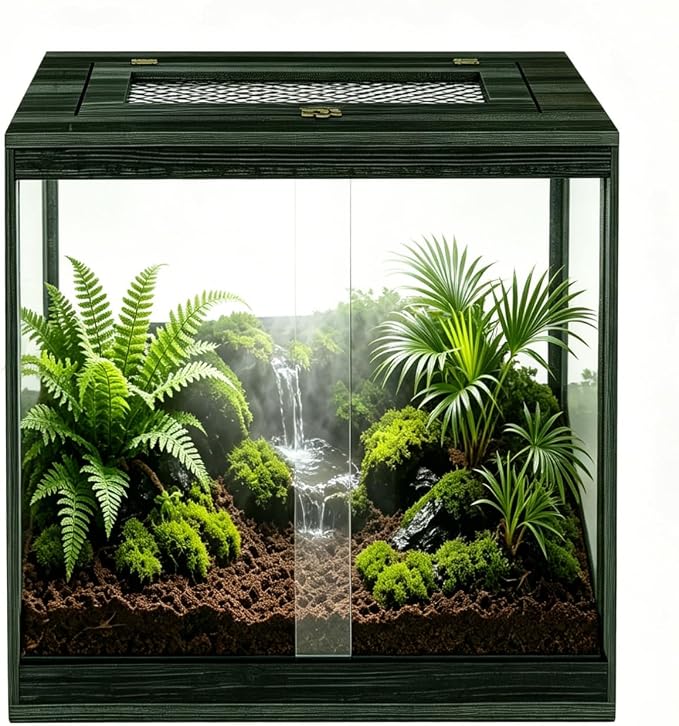
One more honest note about starter gear: enclosures like this 16 gallon wood terrarium with an openable mesh top are perfectly reasonable housing for a juvenile gecko, and we would rather see a hatchling in a 16 gallon that holds temperature well than in a giant drafty tank it can't thermoregulate. The mistake is not starting small. The mistake is still housing an adult in it two years later. Most starter-format enclosures in the 10 to 20 gallon range fall below the minimum floor space for every popular pet lizard once it matures, and the upgrade date should be on your calendar, not in the back of your mind.
Six Signs the Tank Has Already Lost the Argument
If you didn't plan an upgrade date, your reptile will plan one for you. These are the signals, roughly in the order they tend to appear.
Glass surfing and corner pacing. A lizard repeatedly running the front glass or pressing its nose into the same seam is doing two bad things at once: burning calories it can't spare and abrading its snout. Occasional front-glass interest at feeding time is normal. Repetitive nightly pacing is a space problem wearing a behavior costume. This is the single most common first symptom in bearded dragons and leopard geckos housed past their footprint limit.
The gradient collapsed. Measure the actual temperatures at both ends. In an undersized tank, the basking lamp's heat bleeds across the whole floor and the cool side stops being cool — or, in a tall thin tank with weak overhead heat, the opposite happens and nothing reaches target. Either failure means the animal can no longer thermoregulate, and chronic gradient failure shows up as poor digestion, lethargy, and appetite swings long before it shows up as a number on a thermometer you happen to check. This is also why the first thing we tell people to do after any upgrade is re-verify the entire gradient from scratch rather than assuming the old lamp settings carry over.
Gear is staging a coup. Count the hardware: heat source, UVB fixture, thermostat probe, two hides minimum, water dish, food dish, climbing or digging furniture. If adding any one of these forces you to remove another, the tank has stopped being a habitat and started being a storage puzzle. A bearded dragon that has no unobstructed cool-side retreat because the hide had to move next to the basking rock is living in a studio apartment with the oven on.
Shedding turned from routine to ordeal. Adult reptiles in good conditions shed cleanly and quietly. When an otherwise healthy animal starts retaining shed around the toes, the eyecap, or the tail tip season after season, insufficient humidity gradient and a lack of a proper humid retreat are usual suspects — and in a too-small tank, there is often no room to maintain both a dry zone and a humid one at the same time.
Growth has visibly outpaced the box. This one is arithmetic, not behavior. A common keeper guideline for terrestrial snakes is that the combined length plus width of the enclosure floor should at least equal the snake's body length. A four-foot ball python in a three-foot tank fails that test no matter how calm it seems, and calm in a snake that has stopped trying to move is not the same as content.
You are adjusting the animal instead of the tank. Reduced feeding, defensive posturing in a previously handleable animal, a snake striking at movement near the glass — when several of these appear together in an otherwise healthy animal with stable parameters, experienced exotic vets tend to reach for the husbandry history first. Enclosure size is one of the first questions on that form.
What the Minimums Actually Look Like
Numbers vary between countries and welfare organizations, and the trend across the last decade has been one direction only: up. Older care sheets that recommended 20 gallon longs for adult leopard geckos have been superseded, and breeders who keep hundreds of animals on racks are not a useful benchmark for a single pet in a living room. Here is the current consensus floor for the species we get asked about most.
Leopard gecko: 36 by 18 inches of floor space is the modern baseline for a single adult, with anything larger used gladly. UK welfare guidance points the same direction — the RSPCA's advice for leopard geckos centers on enclosures of roughly 90 cm in length, and the charity's general position is that reptile housing should be as large as the owner can properly heat and furnish. An adult leopard gecko in a 20 gallon long is not doomed, but it is living below the standard.
Bearded dragon: 48 by 24 by 24 inches — the 4-by-2-by-2 footprint — is now the widely accepted minimum for an adult, and honestly it should be treated as the starting conversation rather than the finish. A 120 cm adult dragon in a 40 gallon breeder has a basking spot and almost nothing else. If your dragon is a year old and still in starter housing, the upgrade is overdue, not upcoming.
Ball python: adults do well at 48 by 24 inches of floor space with modest height, and they famously prefer clutter and tight hides over open floor. Bigger is better only if you fill the space — a four-foot tank with two hides and bare walls stresses these animals more than a well-furnished smaller one.
Corn snake: same combined-length guideline as above; a five-foot adult wants a floor that adds up to at least that, and secure locking lids, because corn snakes are the Houdinis of the hobby.
Crested gecko and other arboreals: height is the point. An 18 by 18 by 24 inch vertical enclosure is the standard adult minimum, and taller is better when the furniture makes the height usable.
Treat every number here as a floor, in both senses. Above the minimum, more space is nearly always a benefit — provided the heat and humidity equipment scales with it.
The Arboreal Exception: When Upgrading Means Going Up
Everything above assumes a terrestrial animal, and it is worth pausing on the species for whom the whole mental model flips. Crested geckos, gargoyle geckos, day geckos, and most tree-dwelling snakes evaluate their world vertically. For them, a wide shallow tank is not a compromise — it is the wrong shape entirely.
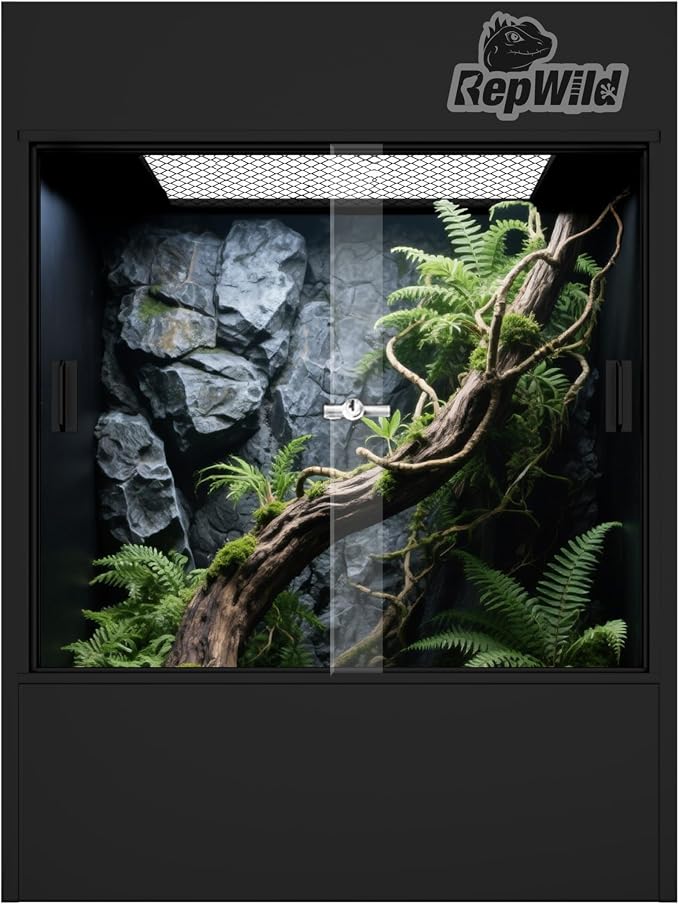
The classic arboreal upgrade is the 18 by 18 by 24 format, and the REPWILD 33 gallon PVC tall terrarium is a representative example — same nominal footprint as a 20 gallon long, but with 24 inches of vertical runway instead of 12. Height alone doesn't do the job, though. An arboreal enclosure only works when the vertical space is broken up: cork tubes, vines, and planted branches at multiple levels so the gecko can move through the volume instead of staring at it. A tall empty tank is a climbing gym with the holds removed, and it produces exactly the same stress signals as a floor-level tank that is too small.
Watch the height-versus-heat interaction too. Tall enclosures with overhead basking trap warmth at the top and can leave the lower third cool and damp, which for a crested gecko is often the intended design — but only if you verify it with a thermometer at every level rather than assuming the gradient exists.
Glass, PVC, or Wood: What the Upgrade Itself Should Be Made Of
Once the timing question is settled, the material question follows, and the three common options trade off differently.
Glass is heavy, scratch-prone, and mediocre at holding heat — its main virtues are price, visibility, and availability in every pet store in the country. For a dry-served species in a warm room, glass is completely serviceable, and front-opening glass tanks have made daily maintenance far less awkward than the old top-opening aquariums ever were.
PVC and similar engineered boards have become the default recommendation among experienced keepers for a reason: they insulate several times better than glass, they hold humidity without warping, they weigh a fraction of a glass tank of equal size, and they are far harder for a large lizard to see through, which reduces glass-surfing on its own. The tradeoffs are cost and light transmission — you lose the panes, and you pay more per gallon.
Wood and melamine enclosures insulate well and can be cheap if you build them, but they are the least forgiving of leaks and high humidity, and used ones carry quarantine risk you can't easily inspect. For a desert species they work. For anything tropical, we would steer you to PVC.
Whichever material you pick, budget for the unglamorous parts of the upgrade at the same time: a thermostat you trust on the new heat source, a second thermometer for the cool end, and locks if the new enclosure is taller and opens differently than the old one. An escape on moving night is the classic first-week disaster, and it is entirely preventable with hardware that costs less than one replacement cricket shipment.
Moving Day: The Plan That Prevents the Refused-Meal Week
A well-run upgrade is boring. The animal barely notices. A badly run one costs you a week of appetite and two weeks of second-guessing. The difference is almost entirely preparation.
Seven days out: set the new enclosure up fully — substrate, hides, furnishings, water — and run it empty. Bring the thermal gradient to target and let it hold steady for at least three or four days. New heat sources need burn-in time, thermostats need their probes placed and verified, and you want any humidity surprises to happen while the animal is still comfortably in the old tank. If you are using secondhand furnishings, this is also when they finish their cleaning and drying cycle.
Three days out: stop deep-cleaning. This sounds backwards, so here is the reasoning: reptiles navigate largely by scent and chemical cues, and an enclosure that smells like nothing is an enclosure that smells like danger. Let the new tank accumulate the same dish, the same hide surfaces, and ideally a scoop of the old substrate mixed into the new so the scent profile carries over.
Moving day: do it early in the day, never right before a scheduled feed. Move the animal's own hides and furnishings across rather than substituting new ones — the goal is that its favorite retreat arrives smelling and sitting the same way it left. Transfer the animal in a lidded tub rather than chasing it around the old tank with your hands, both for your stress and its. Place it in its old hide inside the new enclosure and leave it alone for the rest of the day. No handling, no photos with the flash on, no rearranging the furniture because the layout looked better your way.
The first week: expect some increased hiding and skip the first scheduled feeding if the animal seems withdrawn — one missed meal is harmless for a healthy adult and forcing the issue just adds stress on stress. Hold handling to zero for five to seven days. Verify temperatures at both ends daily for the first three days, because new setups drift as furnishings settle. By the end of the week, most animals are basking, eating, and behaving as if the old tank never existed.
The one thing people skip: re-tune the thermostat from scratch. A heat mat or lamp that ran at 40 percent power through glass may need a completely different setting through PVC, and assuming the old number carries over is how upgraded animals end up either too cool or dangerously hot in their shiny new home. Check with a probe at animal level, not the tank wall.
Three Upgrading Mistakes That Cost People Real Money
Skipping sizes on the way up. A hatchling in a 40 gallon tank often struggles to find its food and its warm zone, and some keepers report picky feeding in oversized juvenile setups. Moving from starter tank to adult-sized home in one step is usually fine for lizards given dense furnishing, but for some snakes and shy geckos, one intermediate step is the calmer path. Judge by the animal, not just the calendar.
Buying the big tank but the small equipment. The enclosure is half the purchase. A 4-by-2-by-2 with the same 100-watt bulb that heated a 20 gallon will not reach target basking temperatures, and under-powered heating in a big volume is exactly how you end up with a lethargic dragon and a mystery. Size the heat and UVB hardware to the new footprint before the animal moves in.
Upgrading the box while downgrading the security. Front-opening doors, mesh tops, and taller frames all change the escape math. Screen clips, door locks, and a top that actually seats flush matter more in a large enclosure than a small one, because a bigger animal has more leverage. Check every seam on day one, not after the first night.
The Takeaway: Put the Date on the Calendar Now
If you read one paragraph of this guide, make it this one. Your reptile's adult enclosure is not a someday purchase — it is a scheduled one, and the date is knowable today. Hatchling bearded dragons typically need the full adult setup by twelve to eighteen months. Leopard geckos mature into adult housing by about a year. Ball pythons and corn snakes grow on a curve that puts them past most starter tanks inside eighteen months. Whatever your species, look at its adult minimum footprint now, check what it is living in now, and if the gap between those two numbers is a starter kit, set the upgrade date and start watching for the six signals. The animals that thrive for fifteen and twenty years in this hobby are almost always the ones whose owners treated the first tank as what it is: a nursery, not a permanent address.
Related Reading
Want more on this topic? Check out our guides on leopard gecko shedding problems prevention guide, reptile stuck shed dysecdysis fix guide, leopard gecko health problems prevention guide.