Cloudy Water Is a Symptom, Not a Diagnosis
New fishkeepers send the same message over and over, usually with a photo of a milky tank: 'I did a water change and it got worse.' That's the tell. If a water change makes the cloudiness worse, you're not dealing with dirt. You're dealing with a biological bloom, and fighting it with more water changes is like bailing out a boat while the tap is still running.
Cloudy water in a freshwater aquarium has roughly seven distinct causes, and they look similar enough that most people misdiagnose them. Milky white haze from a bacterial bloom is a completely different problem from pea-soup green water, which is different again from the grey-brown tint that comes from stirred-up substrate. Treat the wrong one and you'll spend three weeks and a lot of money chasing your tail.
This guide walks through each cause in the order you're most likely to encounter it, how to confirm it's actually what you think it is, and the specific fix. No product roundups. Just the diagnosis and the work.
First: Rule Out the Obvious
Before you diagnose anything biological, check three mechanical things. Experienced keepers can miss these because they assume the problem is chemistry.
Stirred-up substrate. If you just added new sand or gravel and didn't rinse it thoroughly, that fine particulate will hang in the water column for days. It looks like a grey-white haze and it settles on every surface. Test: turn off your filter for an hour. If the water clears noticeably from the top down, it's particulate, not biological. Fix: mechanical filtration with fine filter floss, and rinse any new substrate under running water until the runoff is clear before it ever touches the tank — I mean twenty minutes of rinsing, not two.
Filter malfunction. A clogged impeller or a filter that's lost prime will stop moving water, and stagnant water goes cloudy fast. Check that water is actually flowing out of the return. If your canister filter is gurgling, it's got air in it and you need to reprime it.
Dead fish or decaying matter. A fish that died behind the rocks will spike ammonia and trigger a bacterial bloom within 24 hours. Do a headcount. Check behind decor, inside caves, and around filter intakes. A dead pleco wedged behind a heater for three days can turn a 75-gallon tank into milk.
If all three check out, you're dealing with one of the seven causes below.
Cause 1: Bacterial Bloom (Milky White Haze)
This is the single most common cause of cloudy water in a new tank, and it's also the most misunderstood. The water looks like someone poured milk into it. It's white or slightly grey, it doesn't clear with water changes, and it often shows up 3 to 10 days after setup.
What's happening is a heterotrophic bacteria bloom. These are the bacteria that break down organic waste, and they reproduce explosively when there's a sudden food source. In a new tank, that food source is the organic matter leaching from your substrate, your plants, and your tap water. The bacteria multiply so fast that they become visible in the water column — each milliliter can contain millions of cells.
Here's the counterintuitive part: a bacterial bloom is a sign your tank is cycling correctly. It's not a disease. The bloom will clear on its own in 3 to 7 days as the bacteria consume the available food and die back. What kills fish during a bloom isn't the cloudiness — it's the oxygen depletion. Those billions of bacteria are consuming oxygen, and in a warm tank with poor surface agitation, dissolved oxygen can crash.
The fix: Increase surface agitation. Point a powerhead or filter return at the surface to create ripples. Add an air stone if you don't have one. Don't do large water changes — that just resets the cycle and prolongs the bloom. Small 10 to 15 percent changes every other day are fine if fish are gasping. And critically, don't add more fish or overfeed during this period.
If the bloom hasn't cleared after 10 days, you've got a persistent organic source. Check for decaying plant matter, uneaten food, or a dead fish you missed.
Cause 2: Green Water (Algae Bloom)
Green water is a free-floating algae bloom, usually single-celled chlorophytes that multiply in the water column. It's distinct from the algae that grows on glass and decor — this stuff makes the entire tank look like pea soup, and it can get so dense that you can't see your fish from six inches away.
The cause is almost always an excess nutrient combined with too much light. Specifically: ammonia or nitrate above 20 ppm, plus 10 or more hours of light per day, plus phosphate from overfeeding or tap water. Green water is the classic symptom of a tank that's getting too much food and too much light.
Green water can appear overnight in tanks where the owner feeds three times a day and leaves the light on for 12 hours. The algae had everything it needed.
The fix: This is the one cause where you need to attack on multiple fronts simultaneously. First, black out the tank completely for 3 to 5 days. Wrap it in a blanket or towel so no light gets in. Feed nothing during this period — fish can go a week without food easily. Second, do a 50 percent water change at the end of the blackout. Third, reduce your photoperiod to 6 to 8 hours per day and feed once daily, only what the fish consume in two minutes. Fourth, test your tap water for phosphate and nitrate. If your tap water comes out at 20 ppm nitrate, you're fighting a losing battle with water changes alone and need to consider a different water source or a nitrate-removing filter media.
An ultraviolet sterilizer will clear green water in 3 to 5 days and is the fastest mechanical fix. But if you don't address the nutrient and light imbalance, it comes right back. People often run UV continuously for months because they never fixed the root cause.
Cause 3: Yellow or Tea-Colored Water (Tannins)
If your water looks like weak tea or apple juice, you've got tannins. These come from driftwood, Indian almond leaves, peat, and some botanical additives. Tannins are not harmful — in fact, they have mild antibacterial and antifungal properties, and many South American fish like tetras and discus actually prefer blackwater conditions.
But if you didn't intend to have tannins, they're annoying. The water is clear, just tinted. It doesn't look cloudy in the milky sense.
The fix: If you don't want the tint, remove the wood and boil it for an hour, then soak it in fresh water for a week, changing the water daily until it runs clear. Even then, some wood leaches for months. A quality activated carbon in your filter will pull tannins out of the water column and needs replacing every 3 to 4 weeks while the wood is still leaching. If you have a lot of wood, expect this to be a months-long process.
Fighting tannins is usually not worth it. They're beneficial for most community fish, and a slight amber tint looks natural. But if you're keeping fish that prefer hard, clear water like African cichlids, tannins are a problem and you need to remove the source.
Cause 4: White, Stringy Cloudiness (Diatoms)
Diatoms look like a brown or greyish-white film on glass, substrate, and decor, and they can make the water look dusty. They're most common in new tanks between weeks 2 and 8, and in tanks with high silicate levels.
Diatoms are actually a normal part of tank maturation. They consume silicates from the water and substrate, and once the silicate is used up, they die off on their own. The key is not to panic and not to over-clean.
The fix: Wait it out. Diatoms disappear in 2 to 4 weeks in most tanks. Snails — especially nerites — and otocinclus catfish will graze them down. If the tank is older than 3 months and you still have diatoms, check your tap water for silicate, which is common in some municipal supplies and in sandblasting sand used as substrate. Rinsing new substrate more thoroughly helps, and removing silica-based sand is the long-term fix if your tap water is the source.
Cause 5: Grey or Brown Haze That Clears From the Top Down
This is particulate matter — fine debris that's suspended in the water column. It's almost always mechanical, not biological. Sources include unrinsed substrate, filter media that's breaking down, decaying plant matter, and the dust that comes off some aquarium rocks during initial setup.
The diagnostic test is simple: turn off all flow for an hour. If the water clears from the top down, leaving a layer of debris on the bottom, it's particulate. If it stays uniformly hazy, it's biological.
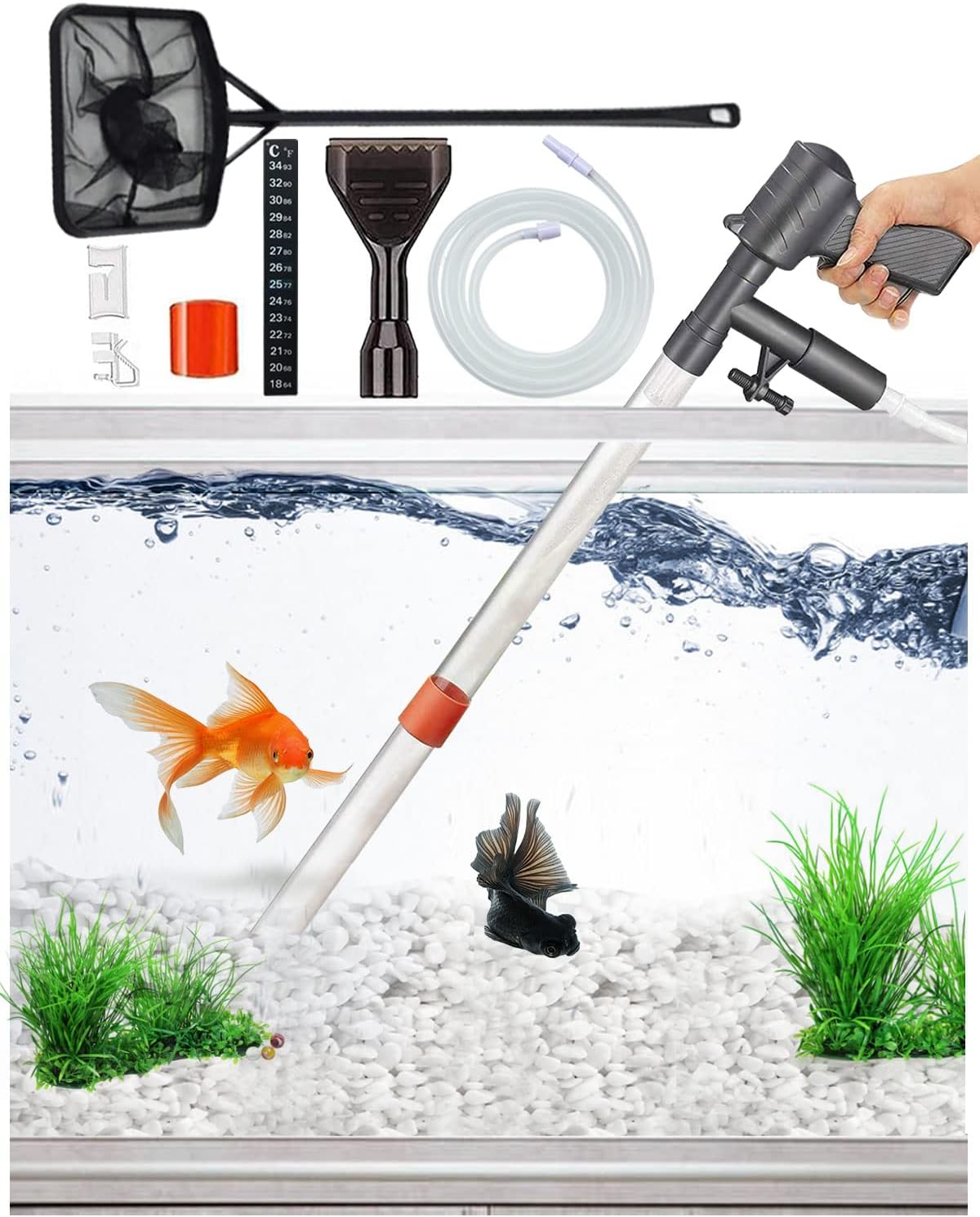
The fix: Mechanical filtration with progressively finer media. Start with coarse sponge, then filter floss, then a polishing pad. Clean or replace the floss every 2 to 3 days until the water clears. A diatom filter or a filter packed with filter floss will polish 100 gallons of water in a few hours. Don't vacuum the substrate aggressively during this period — you'll just stir up more.
Cause 6: Cloudy Water After a Water Change
If the water goes cloudy within hours of a water change, you've either disturbed the substrate or shocked the bacterial colony. The second one is more common than people realize.
When you do a large water change with water that's significantly different in temperature, pH, or hardness, the beneficial bacteria in your filter can go dormant or die off partially. That causes an ammonia spike, which triggers a bacterial bloom, which causes cloudiness. This is why I tell people never to do more than a 50 percent water change at once, and to match temperature within 2 degrees Fahrenheit and to dechlorinate before the water goes in, not after.
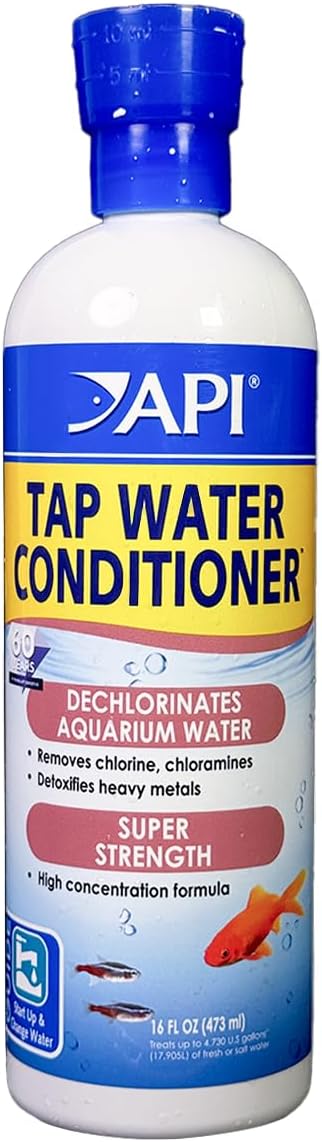
If your tap water has chloramine rather than chlorine, standard dechlorinators that only bind chlorine will leave the ammonia component behind. That ammonia feeds a bloom. You need a conditioner that specifically binds chloramine — most modern ones do, but check the label.
The fix: Stop doing large water changes. Do 20 percent changes every 3 to 4 days until the bloom clears. Match temperature precisely. Use a conditioner that handles chloramine. And don't clean your filter media in tap water during this period — rinse it in tank water you've removed, or you'll kill the bacteria you're trying to preserve.
Cause 7: Persistent Cloudiness With No Obvious Cause
Sometimes the water is cloudy, all your parameters look fine, and nothing you do helps. When I hit this wall, it's almost always one of three things.
Overstocking. If your tank has more fish than the filter can process, you'll have a chronic low-level bacterial bloom that never fully clears. The fix is a bigger filter, more frequent water changes, or fewer fish. There's no chemical that solves an overcrowded tank.
Overfeeding. Uneaten food decays and feeds bacteria. Feed only what the fish consume in 2 minutes, once or twice a day. If food hits the substrate, you're feeding too much. Tanks can clear up in a week just from cutting food in half.
Dead spots in filtration. If your filter is running but the flow isn't reaching all parts of the tank, you'll get localized stagnation and blooms. Add a powerhead or reposition the return to eliminate dead zones.
What About Chemical Clarifiers?
You'll see products that claim to clear cloudy water in hours by clumping particles together so the filter can catch them. They work — for particulate cloudiness. They do nothing for bacterial blooms, green water, or tannins, and using them repeatedly can stress fish by coating their gills. A bottle kept on hand is useful for polishing after a substrate disturbance, and that's it. They're a bandage, not a cure.
The same goes for 'cloudy water' products that claim to add beneficial bacteria. If you're mid-cycle, they might help seed the colony. If you're dealing with an established bloom, adding more bacteria doesn't fix the underlying nutrient imbalance.
The Diagnostic Cheat Sheet
Here's the short version I give people who message me with a photo and no other information.
Milky white, new tank, doesn't clear with water changes — bacterial bloom. Increase oxygen, wait it out, don't overfeed.
Pea green, visibility under 6 inches — algae bloom. Blackout 3 to 5 days, reduce light to 6 to 8 hours, cut feeding, test for nitrate and phosphate.
Tea-colored but clear — tannins. Remove or boil wood, run carbon, or accept it as beneficial.
Brown film on surfaces plus dusty water — diatoms. Wait 2 to 4 weeks, add snails, check silicate.
Grey haze that settles when flow stops — particulate. Mechanical filtration with fine floss, rinse new substrate better.
Cloudy within hours of a water change — bacterial shock or chloramine. Match temperature, use the right conditioner, do smaller changes.
Persistent low-level haze with good parameters — overstocking, overfeeding, or dead spots. Fix the husbandry, not the water.
When Cloudy Water Is Actually an Emergency
Cloudy water itself rarely kills fish. What kills fish is what's causing it. If your fish are gasping at the surface, that's an oxygen emergency — increase surface agitation immediately and do a 25 percent water change with temperature-matched, dechlorinated water. If your ammonia or nitrite is above 0.5 ppm, you've got a toxicity problem and need daily 25 to 50 percent water changes until it drops. If fish are lethargic, losing color, or developing red streaks, you're looking at a bacterial infection secondary to poor water quality and you need to test everything and possibly treat the tank.
According to the ASPCA, poor water quality is one of the leading contributors to disease in aquarium fish, and ammonia and nitrite toxicity are the most common culprits. That's worth repeating: the cloudiness is a signal, and the signal is usually telling you your nitrogen cycle is out of balance.
What Actually Works
When cloudy water appears in a tank, the first move is not a product. Test ammonia, nitrite, and nitrate first. That tells you whether you're dealing with a cycle problem or a nutrient problem. Then look at the color. White means bacteria. Green means algae. Brown means diatoms or particulate. Tea means tannins.
Ninety percent of the time, the fix is the same: feed less, light less, increase oxygen, and stop doing large water changes. The other ten percent is a specific mechanical issue — unrinsed substrate or a dead fish — that I find by looking harder.
If you take one thing from this, let it be this: cloudy water is your tank telling you something is out of balance. The answer is almost never a bottle. It's a change in how you're running the tank. Fix the cause and the cloudiness clears. Chase the cloudiness and you'll be back here in a month with the same photo.
Related Reading
Want more on this topic? Check out our guides on best aquarium substrate, aquarium myths debunked fish keeping beliefs, best aquarium thermometers controllers.