The Fish That Vanished Into the Driftwood for Three Days
Last spring a reader emailed me in a panic. Her clown loach had been missing for three days. She'd torn apart half the tank, moved the driftwood, checked the filter intake, and was convinced it had jumped out and died behind the stand. I told her to stop digging and wait. On day five, the loach strolled out at feeding time like nothing had happened. Loaches do that. They're the introverts of the aquarium world, and a fish that hides is not automatically a sick fish.
But sometimes it is. And that's the problem with hiding as a symptom: it sits at the messy intersection of normal behavior, environmental stress, and genuine medical emergency. I've kept fish for over two decades, run quarantine tanks for most of that time, and I still occasionally misread a hiding fish. What I've learned is that context decides everything. A hiding fish plus normal appetite plus good color is usually fine. A hiding fish that refuses food, breathes hard, or has clamped fins is a fire alarm.
So let's go through every cause I've encountered, ranked from completely normal to drop-what-you're-doing emergency, with the specific fixes for each one.
Cause 1: The Species Is Just Built That Way
Some fish hide because hiding is their entire personality. Before you panic about a hidden fish, ask yourself whether you actually researched its behavior before buying it. A lot of people didn't, and the fish pays for it.
Nocturnal and crepuscular species are the biggest category here. Clown loaches, many plecos, knife fish, bichirs, and some catfish species are most active at dawn and dusk, or only after lights out. If your bristlenose pleco vanishes during the day and reappears to rasp on the glass at 10 p.m., that's not illness. That's a job description.
Naturally shy schooling fish are the second category. Chili rasboras, habrosus corydoras, celestial pearl danios, and glass catfish will stay hidden if they feel exposed. Glass catfish are almost transparent for a reason; they hate open water with no cover. If you put twelve chili rasboras in a bare 20 gallon with bright light and no plants, you will essentially never see them. Add dense vegetation and dim lighting, and they'll parade around the front glass.
The fix: match your expectations to the animal. Before you buy any fish, look up whether it's nocturnal, shy, or bold. A fish that hides by design needs appropriate cover, not treatment.
Cause 2: The Tank Has Nowhere to Hide, So the Fish Feels Exposed
This one sounds backwards to new keepers, so let me be blunt about it: fish hide MORE in bare tanks, not less. Cover means security. When a fish can see a cave or dense plant within darting distance, it relaxes and swims in the open, because it knows an escape route exists. Strip the tank down to gravel and one plastic castle, and even bold species spend the day pressed behind the heater.
I've watched this play out in my own tanks more than once. I once rescaped a 40 gallon breeder and left the fish in a mostly bare tank for two weeks while plants grew in. My boesemani rainbowfish, normally out front strutting like they owned the place, sulked in the back corners the entire time. Two weeks after the plants filled in, they were back to normal. The fish didn't change. The escape options did.
The fix: give every fish a bolt-hole. That means driftwood, rock piles with real caves, dense plants (live or silk), or leaf litter. In my experience you want cover that breaks line-of-sight across at least a third of the tank. A good starting point for hardscape is a piece of natural driftwood like the Zilla Brazilian driftwood, which sinks, looks natural, and creates instant territory. Territorial fish especially need visual barriers; two dwarf gouramis in an open tank fight constantly, while the same two fish with a row of plants between them barely acknowledge each other.

Cause 3: New Fish, New Territory — The Adjustment Period
Almost every newly added fish hides for the first few days. It has just been netted, bagged, driven home, and dumped into unfamiliar water with unfamiliar fish and unfamiliar sights. From the fish's perspective, everything in that tank might be a predator. Hiding is the sane response.
A healthy new fish typically follows a predictable arc: day one to two, hidden almost constantly. Day three to five, darting out for food, then retreating. By the end of week one or two, out and behaving normally. Some shy species take three or four weeks to fully settle. I tell people to judge a new fish's hiding against that timeline, not against day one.
What you should NOT do during this window is constantly redecorate or chase the fish around trying to get a look at it. Every disruption resets the clock. Feed lightly, keep the lights on a normal schedule or slightly dimmed, and leave it alone. Patience does most of the work here.
One related note: acclimation quality matters. Fish that get rushed through a five-minute temperature dump into the tank seem to hide longer and stress harder than fish drip-acclimated over 45 minutes to an hour. Slower is better, especially for sensitive species like rams, discus, and otocinclus.
Cause 4: Water Quality — The Silent Driver of Hiding Behavior
Now we move from normal to problematic. Poor water quality is, in my experience, the single most common cause of hiding in otherwise outgoing fish. The frustrating part is that the water can look perfectly clear while quietly poisoning everything in it. Ammonia and nitrite are invisible, and both cause gill irritation and systemic stress that makes fish retreat to corners, hover near the bottom, or wedge themselves behind filters.
According to the American Veterinary Medical Association (AVMA), water quality is the foundation of aquatic animal health, and hobbyists should test routinely rather than waiting for visible signs of illness, because behavioral changes like hiding and reduced appetite often appear before physical symptoms. I agree completely, and I'd take it further: if a previously outgoing fish starts hiding, a water test should be your FIRST move, before any medication, before any food change, before anything.
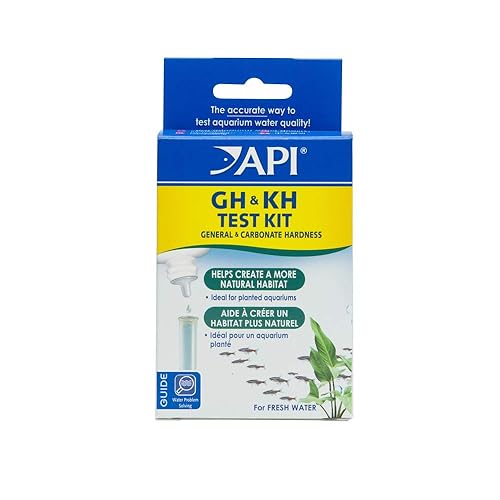
What to test for and what the numbers should look like in a mature tank: ammonia at 0 ppm, nitrite at 0 ppm, nitrate under roughly 40 ppm (lower is better, and under 20 is my personal target for sensitive fish). If you don't own a liquid test kit, fix that today. Strips are better than nothing but they're notoriously unreliable for ammonia, which is the one parameter you most need right. I use and recommend the API Freshwater Master Test Kit, which covers all four core parameters with enough reagent for well over a hundred tests.
If you find ammonia or nitrite above zero, do a 40 to 50 percent water change immediately, dechlorinate the new water, and figure out the cause. Common culprits: the tank was never fully cycled, a filter was cleaned in untreated tap water and the bacterial colony got nuked by chlorine, a dead fish is decaying somewhere under the driftwood, or the tank is simply overstocked. Fix the cause or the spike comes back.
Cause 5: Aggression and Bullying From Tank Mates
A fish that's getting harassed hides to survive. This cause is easy to miss because the bullying often happens when you're not watching, or it's so fast you'd miss it blinking. I once spent two weeks baffled by a honey gourami that lived inside a cave, until I happened to sit down quietly one evening and watched a serpent tetra spend forty straight minutes nipping at it every time it dared to emerge.
Signs the hiding is bullying-related: the hidden fish has ragged or bitten fins, the fish eats only when the aggressor is distracted, one particular tank mate is always in great condition while others look frayed, and the hidden fish positions itself high in a corner or behind the heater rather than in a cave (fleeing upward is escape behavior, not shelter-seeking).
Fixes, in order of effectiveness: remove the bully, not the victim. Rehoming one aggressive fish fixes the whole tank. If you can't remove it, add more visual barriers and break up sightlines so chases end quickly. For schooling aggression, increase the school size; a single tiger barb is a menace, while twelve tiger barbs chase each other and mostly leave other fish alone. And honestly, some combinations just don't work. If your stocking list was a bad idea from the start, no amount of driftwood saves it.
Cause 6: Stress From Environment and Handling
Beyond water chemistry, several environmental factors push fish into hiding. Bright lighting is the underrated one. Tanks with high-output lighting and no shaded zones are stressful for most fish. Watch where your fish go when a shadow passes over the tank; that darting response is hardwired, and constant overhead movement (kids banging the glass, cats perched on the hood, a TV flashing at night) keeps fish on edge and in cover.
Wait, that's a heading mistake, let me keep going properly.
Rapid temperature swings do it too. A heater that's failing or undersized lets the temperature sag at night, and chilled fish go lethargic and hide near the bottom. Check your temperature against a separate thermometer, because built-in heater thermostats drift and lie. Sudden chemistry changes, like adding water that's far colder than the tank or a massive water change with untreated tap water, can also send fish into hiding within hours.
Chemical stress deserves special mention. Paint fumes, aerosol sprays, cleaning products, and cigarette smoke near a tank all introduce compounds fish hate. So does a hand that's covered in lotion or soap residue. Fish breathe that water directly through their gills; they can't get away from what's dissolved in it.
For general stress recovery after moves, aggressive cleanings, or new-tank reshuffles, a conditioner with aloe like API Stress Coat helps repair the protective slime coat that stress strips away. I keep a bottle on the shelf for exactly these situations. It's not medicine, it's damage control while you fix the underlying problem.
Cause 7: Disease — When Hiding Is a Warning Light
Now the serious tier. Sick fish hide. It's one of the earliest disease indicators keepers get, often a day or two before visible symptoms show up. The difference between stressed hiding and sick hiding usually comes down to the company it keeps.
A hiding fish PLUS any of these signs means start treatment mode:
- Refusing food for more than two or three days
- Clamped fins held tight against the body
- Rapid gill movement or gasping at the surface
- Fading or blotchy color, or unusual darkening
- White spots (ich), frayed fins, bloated body, or stringy white feces
- Lying flat on the substrate or listing to one side
- Scratching or flashing against gravel and decor
Ich is the classic example. Fish with early ich often hide and flash before the white spots become obvious. According to the Food and Drug Administration (FDA), which regulates aquarium medications, proper diagnosis before treatment matters because misused fish medications can harm invertebrates, plants, and the beneficial bacteria your filter depends on. I've seen hobbyists dump three different medications into a tank in one week and kill everything, including the fish they were trying to save. Pick one diagnosis, one treatment, and follow the full course. Ich treatments, for instance, need to continue well past the last visible spot because the parasite's free-swimming stage is what you're actually killing.
Internal parasites and bacterial infections are sneakier. A fish that eats voraciously but stays thin and increasingly reclusive is often carrying worms. A fish that hides and bloats may have an internal bacterial problem or constipation from a poor diet. These cases usually need a quarantine tank, targeted medication, and sometimes a vet who sees aquatic animals, a resource more common than most people realize.
Cause 8: The Emergency Signs — Act Today, Not Tomorrow
A few hiding scenarios are emergencies. Gasping at the surface while hiding between breaths points to oxygen crisis or severe gill damage from ammonia; do an immediate 50 percent water change and increase surface agitation. A fish lying on its side at the bottom is either in late-stage disease, severe water poisoning, or swim bladder failure. Fish that have jumped out and been returned to the tank, even briefly, need pristine water and observation because their slime coat is damaged and their gills may be injured.
And a dead fish under the driftwood is a real risk in any tank with heavy hardscape. When a fish is truly missing, check the filter intake and the floor around the tank before anything else. Jumpers end up in the strangest places. I found a kuhli loach two feet from a tank once, dried onto a bookshelf, and I still don't know how it got there.
My Diagnostic Order, Every Single Time
When someone messages me about a hiding fish, here's the exact sequence I walk them through, and it resolves the problem in the vast majority of cases:
- Check the species. Is this fish naturally shy or nocturnal? If yes, relax.
- Is it new? Under two weeks in the tank, hiding is expected.
- Test the water. Ammonia, nitrite, nitrate, temperature. This catches more hiding fish than everything else combined.
- Watch for aggression at feeding time and after lights-out. Sit still and observe for ten minutes; you'll see the tank's real politics.
- Inspect the fish closely for spots, fraying, bloat, or clamped fins. Good lighting and a phone camera zoom help.
- Only after all of that, treat in a quarantine tank with a specific diagnosis.
Notice what's last on that list. Medication. That's deliberate. The vast majority of hiding fish I've dealt with over the years were dealing with a habitat problem, not a pathogen, and throwing medicine at clean water problems makes things worse.
Setting Up a Tank Where Hiding Is a Choice, Not a Survival Strategy
The end goal isn't a tank where fish never hide. It's a tank where hiding is one option among many because the fish feels secure. That means cover in the form of plants and hardscape, stable water parameters maintained through regular partial water changes with a gravel vacuum, appropriate tank mates chosen before purchase rather than after a disaster, consistent lighting schedules, and a lid, because a stressed fish that would have hidden will sometimes jump instead.
If you're building from scratch or restocking, the single best investment is structure. Add more cover than you think you need, then watch. Healthy, secure fish in a well-structured tank come out. Fish in exposed tanks don't. Twenty years of keeping fish has never once proven that wrong.
And if you want a hard-earned starting point for a community cave system, the Exo Terra snake cave habitat style hides and comparable ceramic caves give shy species a dark retreat that speeds up settling dramatically. Fish that know they can retreat come out sooner, not later.
So before you panic the next time your fish disappears, run the sequence. Species first, timeline second, water test third. Nine times out of ten the answer is sitting in your test kit, and the tenth time, you'll have caught a real disease two days earlier than you would have by guessing. That margin is what keeps fish alive.
Related Reading
Want more on this topic? Check out our guides on best aquarium canister filters powerful filtration crystal clear, common aquarium fish diseases symptoms treatment prevention, best aquarium wavemakers circulation pumps.