The $60 of Media You Probably Don't Need
Walk down the filter aisle at any big-box pet store and you'll find a wall of cartridges, pouches, pads, bio-balls, ceramic rings, carbon bags, ammonia pads, and something called 'ammo-lock' that costs more per gram than silver. Beginner fishkeepers buy four or five of them because the packaging implies you need all of it. Then they wonder why their tank still reads 0.5 ppm ammonia after three weeks.
Here's the thing nobody tells you at the register: a filter is a pump plus a place for bacteria to live. That's it. Everything else — carbon, phosphate remover, ammonia-neutralizing resins — is optional polish, and some of it actively causes problems if you run it constantly. The most reliable setups run on mechanical sponge, a bag of ceramic media, and nothing else. The fancy media earns its place only when there is a specific problem to solve.
So let's go through what each media type actually does, in the order water hits it, and where the money is wasted.
Water Flow Order Matters More Than the Media Itself
Most canister filters push water through stages in a fixed sequence: intake, then coarse mechanical, then fine mechanical, then biological, then chemical (if you use it), then back to the tank. That order isn't arbitrary. If you put fine floss first, it clogs in four days and starves everything downstream of flow. If you put biological media first, it gets coated in mulm and the bacteria suffocate under their own waste.
This goes wrong in a Fluval 307 where the owner stacks ceramic rings in the bottom basket and floss in the top. Water hit the rings first, loaded them with gunk, and within six weeks nitrates were climbing and the flow had dropped to a trickle. Reversing the stack — coarse pad, then fine pad, then rings — fixed it without buying a single new part.
The rule I follow: biggest holes first, smallest holes last, and biological media in the cleanest water you can give it. Mechanical filtration exists to protect biological filtration. That's the whole relationship.
Mechanical Media: Sponges, Pads, and Floss
Mechanical media traps visible crud. Fish poop, uneaten food, dead plant matter, the slime that sloughs off driftwood. This is the stuff that, left in the water column, breaks down into ammonia.
Coarse sponge, usually 20 to 30 pores per inch, is the workhorse. It catches the big debris without clogging fast, and it's also a genuinely good biological surface because water moves through it slowly enough for nitrifying bacteria to colonize. Rinse it in a bucket of tank water every two to three weeks, and replace it roughly once a year when it starts crumbling.
Fine filter pads and floss are polishing stages. They catch particles down to a few microns and give you that crystal-clear look people chase. The tradeoff is clogging speed. In a heavily stocked tank, floss can need rinsing weekly. That's not a flaw — it's the job. If you're not willing to rinse it, don't run it.
One product worth knowing about here is the HQRP Fine and Coarse Media Filter Pads (3+2) Compatible with Eheim Classic 600/2217 External Aquarium Canister Filter — if you run an Eheim Classic, pre-cut pads save you from scissors-and-cursing sessions every time you swap media. Cut-to-fit generic pads work just as well for half the price in most other filters, so weigh that against the convenience.
Biological Media: Where Your Tank Actually Lives
This is the part that matters. Nitrifying bacteria — Nitrosomonas converting ammonia to nitrite, Nitrobacter and Nitrospira converting nitrite to nitrate — need surface area, oxygen, and steady flow. They don't care whether that surface is ceramic, plastic, lava rock, or a sponge. They care that you don't kill them.
Ceramic rings and sintered glass media like Eheim's Substrat Pro offer enormous surface area per volume, which is why they're the default in canisters. Bio-balls are less efficient per cubic inch but resist clogging, which makes them a reasonable choice in wet/dry sumps where water sheets over them in open air. Matrix-style media sits somewhere in between.
What you don't need is to replace biological media on a schedule. Manufacturers print 'replace every 3 months' on the box because they sell media. Your bacteria colony is the single most valuable thing in your filter. Toss it and you've just triggered a mini-cycle — ammonia spikes, fish stress, sometimes deaths. Bio-media should be rinsed in tank water only when flow drops noticeably, perhaps twice a year, and a bag of rings can last for years.
Never rinse any filter media under tap water. Chlorine and chloramine kill the colony on contact. Bucket of tank water, gentle squeeze, back it goes.
Chemical Media: Use It Like a Tool, Not a Crutch
Chemical media adsorbs dissolved compounds that mechanical and biological filtration can't touch. It's genuinely useful in specific situations and genuinely harmful as a permanent fixture.
Activated carbon pulls out dissolved organics, tannins, medication residue, and some odors. Run it after treating a tank with medication, or when you want to strip yellow tint from driftwood. Don't run it constantly — it exhausts in two to four weeks, and if you leave spent carbon in the filter it becomes a biological surface that you'll then destroy when you finally swap it. Carbon also removes trace minerals some planted-tank keepers want in the water.
Phosphate removers like granular ferric oxide bind phosphate, which is a primary driver of algae blooms. In a reef tank or a planted tank fighting stubborn algae, they're legitimately useful. In a lightly stocked freshwater tank with a decent water change schedule, they're a solution to a problem you don't have. If you do run one, the Fluval ClearMax Phosphate Remover, 3-Pack, 100-gram is a straightforward granular product that goes in a media bag in your canister. Just don't expect it to fix algae if your lighting runs twelve hours a day and your nitrates are 40 ppm. Media doesn't outrun bad husbandry.
Ammonia-neutralizing resins are the ones I'd argue against most strongly. They convert toxic ammonia into a less toxic form, which sounds great until you realize they mask the signal you need. A new tank cycling with ammonia pads in the filter will read zero ammonia while the bacteria colony never develops. Then you pull the pad, and the tank crashes. Use them only in a genuine emergency — a broken filter, a shipping delay, a quarantine tank with a surprise ammonia spike — and dose a real water conditioner instead for routine chlorine removal.
Zeolite, Purigen, and the Rest of the Shelf
Zeolite is a natural mineral that exchanges ammonium ions. Same caveat as ammonia pads: fine for emergencies, a trap for routine use. It also exhausts and can release what it absorbed if you recharge it wrong with saltwater.
Purigen is a synthetic polymer that removes dissolved organics and clears water beautifully. It's rechargeable with bleach and a dechlorinator, which makes it cheaper long-term than carbon. I like it in shrimp tanks and any setup where I want water clarity without stripping trace elements. It's not necessary, but it's not a gimmick either.
Bio-pellets, denitrate media, and nitrate-reducing resins are the deep end. They work — a denitrate reactor can genuinely pull nitrates down in a heavily fed tank — but they need specific flow rates and anaerobic conditions to function. If you're still figuring out why your ammonia won't drop, skip this shelf entirely.
HOB Filters: The Cartridge Problem
Hang-on-back filters are the most common beginner filter in North America, and most of them ship with disposable cartridges. The cartridge is a floss pad with a bit of carbon glued inside, wrapped in a plastic frame. When you throw it away, you throw away your bacteria colony.
That's the design flaw. Manufacturers sell cartridges; they don't care that you're resetting your cycle every month.
The fix costs about eight dollars. Buy a coarse sponge cut to fit the cartridge slot, or a reusable media bag filled with ceramic rings, and never replace it. Rinse in tank water. The cartridge frame can hold the sponge, or you can buy a media basket for most AquaClear, Penguin, and Tidal models. A common setup for an AquaClear 30 Power Filter, Fish Tank Filter for 10- to 30-Gallon Aquariums is a sponge block and a bag of rings that stays in place indefinitely, eliminating cartridge purchases entirely.
If you're running a HOB and the flow has slowed to a dribble, check the impeller before you blame the media. A single strand of hair wrapped around the magnet will cut flow by half, and no amount of new floss fixes it.
How to Stack a Canister: A Reliable Setup
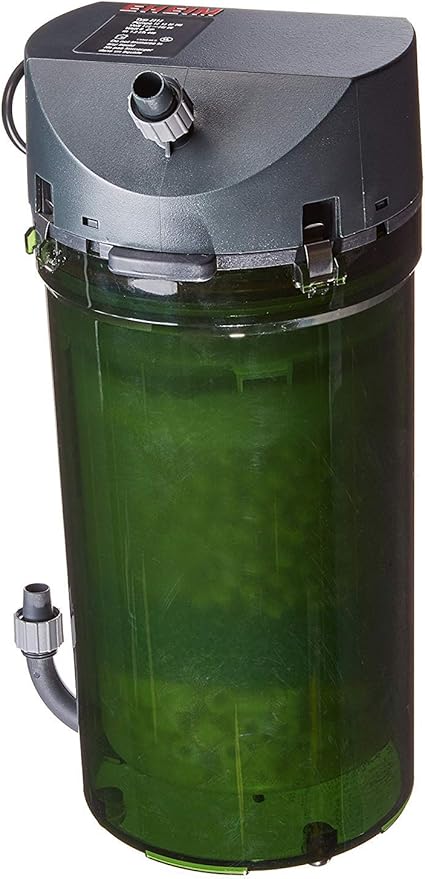
Bottom basket to top basket, water flowing upward through a typical canister:
Basket 1 (bottom, water enters here): coarse sponge or a pad, 20-30 PPI. Catches the bulk. Rinse every two to three weeks.
Basket 2: medium pad or a second sponge layer. Catches what slipped through. Rinse monthly.
Basket 3: ceramic rings, sintered glass, or matrix media. This is your bio. Rinse in tank water twice a year at most, and only if flow drops.
Basket 4 (top, water exits): fine floss or a polishing pad. Optional. Rinse or replace weekly in a heavily stocked tank. Skip it if you hate maintenance — the tank will still be healthy, just slightly less sparkling.
Chemical media goes in a bag in the top basket or a dedicated compartment if your filter has one, and only when you have a reason.
Total media cost for a mid-size canister: maybe $25 up front, and $10 a year in replacement floss and sponges. That's the whole budget. Anyone telling you to spend $80 a year on cartridges is selling cartridges.
How Often to Actually Touch the Media
Here's a schedule that's worked across planted tanks, cichlid tanks, and a goldfish tank that produces waste like a small cow:
Mechanical media: rinse in tank water every 2-3 weeks for coarse, weekly for fine. Replace sponge when it crumbles, floss when it stops holding shape.
Biological media: leave it alone. Rinse in tank water only when flow drops. Never replace unless it's physically disintegrating.
Chemical media: carbon every 3-4 weeks if running, phosphate remover every 4-6 weeks or when you see phosphate climbing on a test, Purigen when it turns dark brown and stops clearing water.
The rest of your maintenance — 20 to 30 percent water changes weekly, gravel vacuuming, not overfeeding — matters far more than which media you bought. According to the ASPCA, poor water quality is behind the majority of preventable health problems in aquarium fish, and no filter media compensates for a tank that never gets a water change.
Testing Beats Guessing Every Time
You can't manage media you don't measure. Ammonia, nitrite, nitrate, pH, and hardness tell you whether your biological filtration is keeping up. If ammonia reads zero and nitrate climbs steadily between water changes, your bio media is doing its job. If ammonia shows up out of nowhere, something killed your colony — a tap-water rinse, a filter that ran dry during a power outage, or a medication that nuked the bacteria along with the infection.
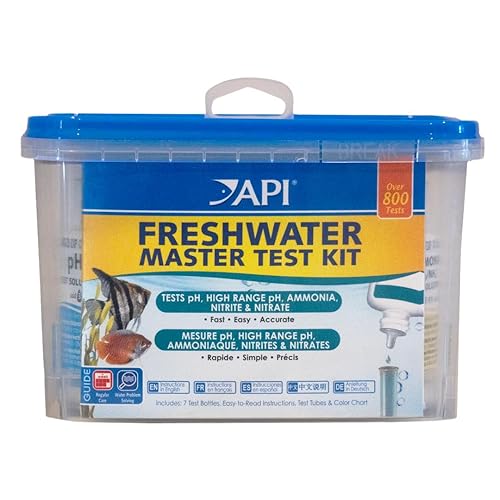
A liquid test kit is worth keeping on the shelf, used weekly on new tanks and monthly on established ones. Strips are faster but less accurate, and for ammonia specifically the resolution matters — 0.25 ppm versus 0.5 ppm changes what you do next. The API Freshwater Master Test Kit 800-Test Freshwater Aquarium Water Kit is a common choice, largely because 800 tests at weekly intervals is roughly fifteen years of monitoring for one tank.
If you keep soft-water species or run a reef tank, add a GH and KH kit. Hardness affects how your bio filter performs and whether your pH swings after a water change, and it's the parameter most beginners never test.
What to Skip Entirely
Ammonia-removing pads for routine use. Filter cartridges you replace monthly. Any media marketed with a 'recharge' process that requires you to soak it in bleach and then pray you dechlorinated it properly. Media that claims to 'seed' a new tank instantly — bottled bacteria works, but it's a liquid, not a rock. And anything sold in a package with a fish on it and the word 'crystal' in the name.
Buy a sponge, a bag of rings, and a roll of floss. Rinse them in tank water. Test your water. Change 25 percent of it every week. Your fish will outlive the marketing.
Related Reading
Want more on this topic? Check out our guides on best fish medications disease treatments, betta fish care guide, why is my fish gasping at surface causes fixes guide.