Most Owners Wave It Off. The Vets We Quote Do Not.
A cat who vomits twice a year is a non-event. A cat who vomits twice a month has quietly become a household joke: someone grabs the paper towels, someone else yells the cat's name, and fifteen minutes later nobody remembers it happened. That shrug is exactly what the Cornell Feline Health Center warns against, because chronic vomiting is one of the most common reasons cats present to veterinarians and one of the most commonly dismissed symptoms owners report. The cat is not being dramatic. The cat is being a cat, which means the symptom got masked until it stopped being subtle.
We have written about vomiting's quieter cousins before: the cat who stops eating, the hairball that will not come up, the litter box that suddenly stops getting used. Vomiting itself deserves its own treatment, because it sits at a strange intersection. It is sometimes meaningless, sometimes the first visible sign of kidney disease, hyperthyroidism, inflammatory bowel disease, or a string wrapped around the base of the tongue. Telling those apart from the kitchen floor is the whole job, and the tools are frequency, timing, appearance, and a handful of hard lines. That is what this guide covers: how to categorize what came up, how to keep a ledger worth showing your vet, which patterns mean the appointment can wait until Monday, and which ones mean it cannot.
First, Figure Out What Actually Happened
The word vomiting covers three different plumbing events, and your vet will want to know which one you are describing. Getting this right changes everything downstream, so it is worth the ten seconds of staring at the pile that everyone else in the house is trying to avoid.
Regurgitation is passive. Food comes back up with no heaving, no abdominal effort, and it looks the way it went down: tube-shaped, undigested, often within minutes of a meal. The cat lowers its head and it slides out. This points at the esophagus, the throat, or the speed of eating rather than the stomach.
True vomiting is active. You will hear it: the rhythmic contractions, the hunched posture, the retching. What comes up is partially or fully digested, may contain yellow or green-tinged fluid, and the timing is not tied to a specific meal. This implicates the stomach, the small intestine, or systemic disease elsewhere in the body.
A hairball is a third thing, though it is really vomit with a passenger. Cylindrical, matted, mostly fur. Occasional hairballs are normal, especially during seasonal sheds. The frequency is what turns them from a nuisance into a symptom, and we will come back to that.
Why does the distinction matter so much? Because the workup is completely different. Chronic regurgitation sends a vet thinking about esophageal disease, megacolon of the esophagus, hair rings, or congenital issues. Chronic vomiting sends them toward bloodwork, thyroid values, kidney values, and imaging of the abdomen. If you report vomiting when the cat is regurgitating, diagnostics chase the wrong organ for weeks. According to the Cornell Feline Health Center, describing the event accurately, with timing and appearance, is one of the most useful things an owner brings to the appointment.
Start a Ledger, Not a Memory
Memory lies about frequency, always in the direction of reassurance. When a cat vomits weekly, owners tend to remember the two worst episodes and forget the quiet Tuesdays. When asked at the clinic, the honest answer is often a guess. So do not guess. Put a note on the fridge or an entry in your phone: date, time of day, relation to meals, what came up, roughly how much, and anything unusual the cat did before or after.
After a month you will have something no vet can get any other way: a true rate. Here is the editorial position we take after reading through the veterinary guidance on this, and it is firmer than what most casual advice offers:
- A few times a year, clearly tied to grass or a fast meal, cat otherwise bright and eating well: normal enough. Note it and move on.
- Once a month or more, even with normal appetite and energy: worth a conversation at the next scheduled visit. Bring the ledger.
- Every week or two, consistently: schedule a visit. Do not wait for the annual exam. Chronic vomiting that persists for months is how inflammatory bowel disease and early kidney disease present in cats, and both are far cheaper to manage when caught early.
- Multiple times in a day, or vomiting plus any red flag in the next section: same-day call, possibly an emergency.
The ledger also protects your cat from the opposite error, the unnecessary panicked midnight run for a single episode in a cat who is acting completely normal. Vomiting data turns a vague worry into an actual clinical picture. It is the cheapest diagnostic test there is.
The Red Flags: When the Vet Gets Called Today
Frequency is the long game. These are the immediate ones. Any single item on this list plus vomiting means the appointment is today, not after the weekend.
Blood in the vomit
Fresh blood looks like streaks or flecks of red. Digested blood looks like coffee grounds, dark brown flecks that are easy to miss in a pile of food. Either one means bleeding somewhere between the mouth and the upper small intestine. Ulcers, foreign bodies, toxins, and clotting problems all present this way. Coffee-ground vomit is the sneaky one because it does not look alarming, so look twice.
The string, the ribbon, the thread
Cats, especially young ones, swallow linear foreign objects: sewing thread, dental floss, tinsel, the string from a toy. If you see material hanging from the mouth or emerging from the other end, do not pull it. Ever. Linear foreign bodies can be anchored internally, and pulling can saw through the intestine, which converts a manageable surgery into a catastrophic one. The cat needs imaging and likely surgery, and the only correct move is containment and transport. According to the AVMA, foreign body ingestion is among the more common surgical emergencies in young cats, and the outcome is dramatically better when owners do not attempt retrieval first.
Unproductive retching, or a swollen, painful belly
Repeated retching with nothing coming up, a cat hunched over the water bowl without drinking, a belly that feels tight or the cat cries when touched near it: these point at obstruction or other acute abdominal problems. This is an emergency, full stop.
The behavioral cluster
Vomiting alone in a cat who then begs for dinner and grooms on the couch is one thing. Vomiting plus hiding, plus refusing food, plus dull eyes is a different animal entirely. Cats are prey species and they spend their sick-day energy budget on looking fine, so when one stops bothering, the illness has already outspent the performance. Lethargy plus vomiting means today.
Poison, real or suspected
If vomiting follows access to lilies, antifreeze, human medication, rodenticide, or anything else on the toxic list, you do not wait to see if it resolves. Call the ASPCA Animal Poison Control Center at 888-426-4435 or your emergency vet immediately. Lilies deserve a special warning: every part of the plant is nephrotoxic to cats, a sniff and a licked paw is enough to trigger acute kidney failure, and the treatment window is measured in hours.
Weight loss on top of chronic vomiting
If the ledger shows frequent vomiting and the scale is trending down while appetite stays normal or even ravenous, the top differentials become hyperthyroidism, diabetes, and intestinal disease. An overactive thyroid gland in a vomiting, hungry, thinning twelve-year-old cat is a textbook presentation, and it is a blood test away from diagnosis. This combination does not wait for the annual visit.
The Scarf-and-Barf Pattern: When the Problem Is Speed
Some cats eat like they are being timed. Food hits the stomach in fist-sized clumps, the stomach objects, and the whole meal comes back up ten minutes later, looking exactly like it did going down. Then, notoriously, the cat tries to eat it again. This is regurgitation from gorging, it is common in multi-cat households where one cat guards the bowls, and it is the most fixable pattern on this entire list.
The fixes are mechanical, and they work in order of escalation:
- Spread the meals out. Two big meals twice a day invites gorging; four to six small meals flatten the peaks. An automatic feeder dispensing small portions removes the human schedule from the equation entirely, which matters for cats who wake their people at 5 a.m. demanding service.
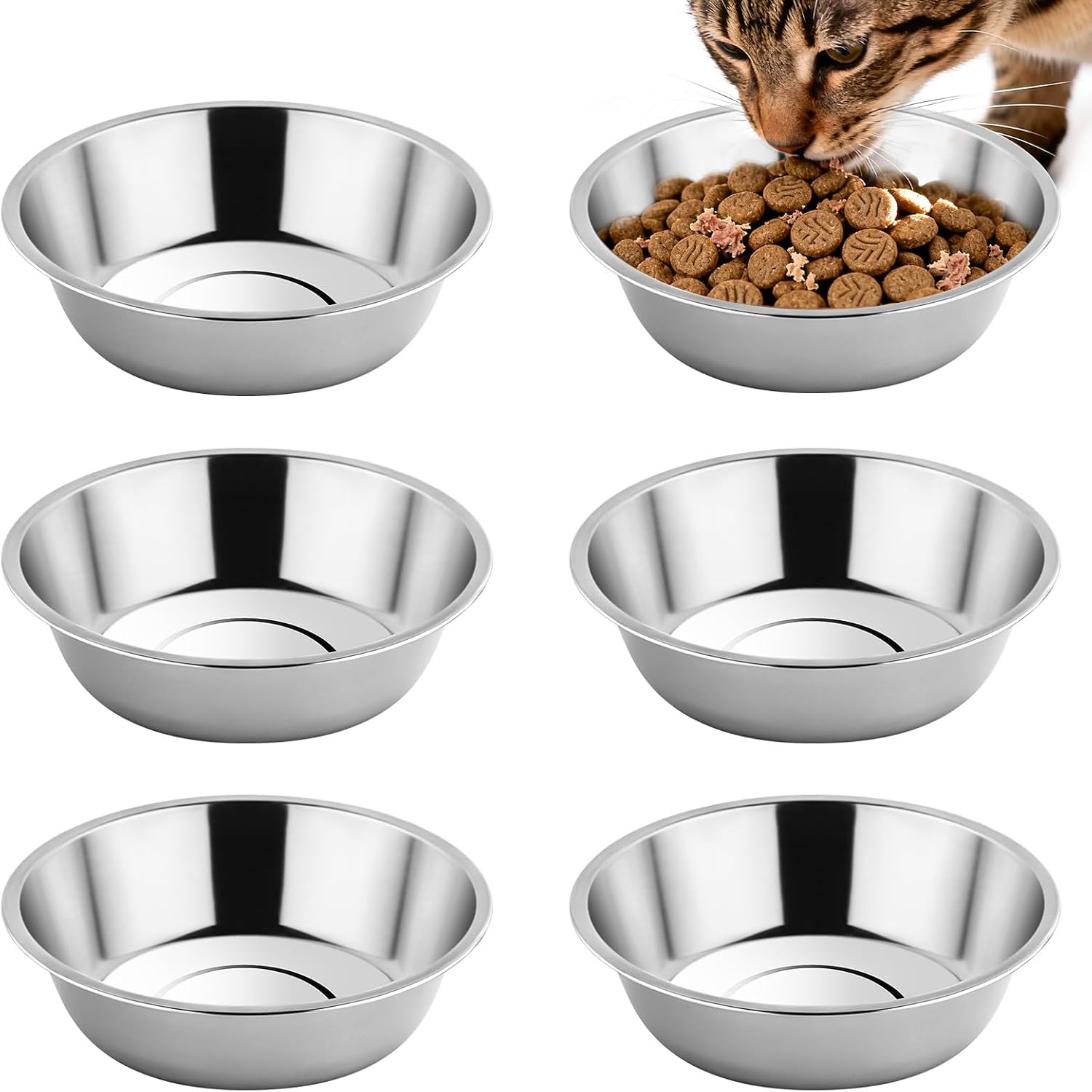
- Use a shallow, wide bowl. Deep narrow bowls force whiskers against the sides, and many cats respond by either gulping to escape the sensation or leaving food and returning stressed. A wide ceramic or stainless dish with room for the whiskers is a two-dollar-shaped solution, and something like a Tifanso whisker-friendly stainless steel bowl set is built exactly for this. We recommend shallow and wide over the trendy raised angle dishes for this specific problem; the geometry that matters here is surface area, not height.
- Make the cat work for the food. Puzzle feeders and food balls meter out kibble a few pieces at a time, which slows intake, adds enrichment, and converts the fastest eater in the house into a problem-solver. For the most determined gulpers, putting a large, clean stone or a special ball in the middle of a regular bowl, forcing the cat to eat around it, does the same job for free.
- Feed the gorger separately. If one cat is eating fast because another cat is hovering, move the bowls to different rooms. Competition at the food bowl is one of the most overlooked sources of chronic low-grade stress in multi-cat homes.
One caution: regurgitation from fast eating is common, but it is a pattern you diagnose by elimination, not by assumption. If the ledger shows the classic shape, food up within ten minutes, undigested, tube-shaped, cat fine immediately after, and the fixes above resolve it over a few weeks, you likely had your answer. If you change the bowls and slow the meals and the episodes continue, stop assuming and start the vet conversation. Esophageal disease can masquerade as gorging, and it does not care about your bowl upgrades.
Hairballs: A Normal Nuisance Until the Count Is Not
Hairballs deserve their own honest paragraph, because the internet advice on them ranges from accurate to folklore. The mechanism is simple: cats swallow fur while grooming, most of it passes through and exits the back door, some of it collects in the stomach and comes up the front. Shorthaired cats typically produce a hairball every month or two. Longhaired breeds and cats who overgroom for stress or itch reasons produce more.
Here is the line we draw: more than one hairball a month from a shorthaired cat is not a grooming quirk, it is a symptom looking for an explanation. The usual suspects are excessive shedding from skin disease or diet, overgrooming driven by allergies or anxiety, and slowed gut motility, which becomes more common as cats age and is worse in dehydrated cats eating only dry food. Hairballs that come up with unusual frequency in an older cat sometimes share the stage with chronic vomiting from bigger causes, so the ledger matters here too.
Management runs from fur to gut: brush the cat more often, which removes the fur before it is swallowed; add moisture to the diet, because well-hydrated guts move fur along better; and consider a dedicated remedy. For owners who want something between brushing and a vet visit, Pet Honesty hairball remedy chews use a lubricant-and-fiber approach in a chew format many cats accept, and we think that is a reasonable tool for the one-to-three-hairballs-a-month cat. What it is not is a substitute for diagnosing the overgroomer. A cat pulling out her own fur and swallowing it has a skin or behavior problem, and no chew fixes that.

Chronic Vomiting: The Workup Your Vet Is Planning
So the ledger shows the weekly-or-better pattern, the red flags are absent, and the appointment is booked. Here is what a competent workup looks like, so you know what you are paying for and can ask better questions.
Bloodwork comes first, and it should include a full chemistry panel, complete blood count, and a thyroid value. In a vomiting cat over eight, T4 is non-negotiable: hyperthyroidism is wildly common in senior cats, it causes vomiting plus ravenous appetite plus weight loss, and it is treatable. Kidney and liver values rule the metabolic causes in or out. Diabetes shows up on the same panel.
A fecal test follows, because parasites cause intermittent vomiting and are cheap to rule out, even in indoor cats. Owners of indoor-only cats skip this one out of confidence; we suggest not. Roundworms and giardia do not respect the front door.
Then imaging. Abdominal radiographs catch foreign bodies, masses, and constipation. Ultrasound sees the intestinal wall itself, and in cats with chronic vomiting plus weight loss it is how inflammatory bowel disease and low-grade intestinal lymphoma get distinguished, which matters enormously because their treatments differ.
Diet trials come with a warning from us: do not free-lance this at home with a parade of different foods. Rotating foods weekly muddies the picture and teaches pickiness. If food intolerance is suspected, the trial is a single prescribed novel-protein or hydrolyzed diet, fed exclusively for eight to twelve weeks, with nothing else passing the lips. That means no treats, no table scraps, no flavored medications. A sloppy trial is a wasted trial, and the vet, not the pet store shelf, should choose the diet.
Alongside the formal workup, some vets recommend probiotic support for cats with chronic GI upset, and the evidence base, while thinner than anyone would like, is growing. Nutramax Proviable sprinkle capsules are a widely used veterinary-line probiotic formulated for dogs and cats, and in our view they are worth discussing with your vet as a supplement to the workup, never instead of one. A probiotic does not diagnose anything. If a cat vomits weekly and the internet says sprinkle a capsule, the thyroid tumor, the string, and the kidney values are all still waiting.
The Day It Happens: What to Do and What Not to Do
The single episode, cat acting normal, no red flags. Here is the realistic playbook. Clean it up, note the time and contents in the ledger, check that the cat is bright and interested in life, and offer water. Watch the next meal for interest and keep it modest.
What not to do matters as much. Do not withhold food for a full day on the theory that the gut needs a reset. Cats are not dogs in this respect, and anorexia in a cat, especially an overweight one, risks hepatic lipidosis, a serious fatty liver condition that can develop after just a few days without adequate intake. A short fast of a few hours overnight is reasonable, beyond that, food goes back down, even in small amounts. Do not give any human medication. Pepto-Bismol contains a salicylate compound that is toxic to cats, and so do many other things in the human medicine cabinet. Do not deworm or dose a vomiting cat with anything on speculation.
And do not punish the cat for the location of the event. A cat vomiting on the bed is not making a point. If anything, cats seek their owners or soft surfaces when they feel unwell, which is one more reason to notice and not just clean.
The Takeaway
Vomiting is a symptom with a very wide personality range, and the difference between ignore and emergency is usually knowable from your own kitchen floor: what came up, when, how often, and how the cat is acting around it. Keep the ledger. Learn the difference between regurgitation and true vomiting. Memorize the short red-flag list, blood, strings, retching without result, lethargy, poison, weight loss with hunger, and let it make your same-day decisions for you. And when the pattern crosses the weekly line, book the workup instead of buying a fourth brand of food and hoping. The cats who do well long-term are not the ones who never vomit. They are the ones whose owners noticed the pattern early and brought the data.
Related Reading
Want more on this topic? Check out our guides on best cat scratching posts top reviews ultimate buying guide, best cat flea tick prevention, cat food recall alerts safety guide.