Choosing a dog carrier is a safety decision before it is a convenience decision. A carrier that is too small restricts breathing and circulation, one that is too flimsy can collapse in a car, and one that does not fit under an airline seat can get a dog turned away at the gate. The right carrier depends on how the dog will travel, how large the dog is, and how often the carrier will be used. This guide covers the categories of carriers sold in 2026, the specifications that actually matter, and the trade-offs that separate a carrier that lasts for years from one that ends up in a closet.
Published veterinary guidance, including the Merck Veterinary Manual dog owner reference, consistently treats carrier acclimation as part of basic travel preparation, because stress and restraint problems cause more travel incidents than carrier defects do. The sections below translate that guidance into practical buying criteria.
Types of Dog Carriers and What Each Is For
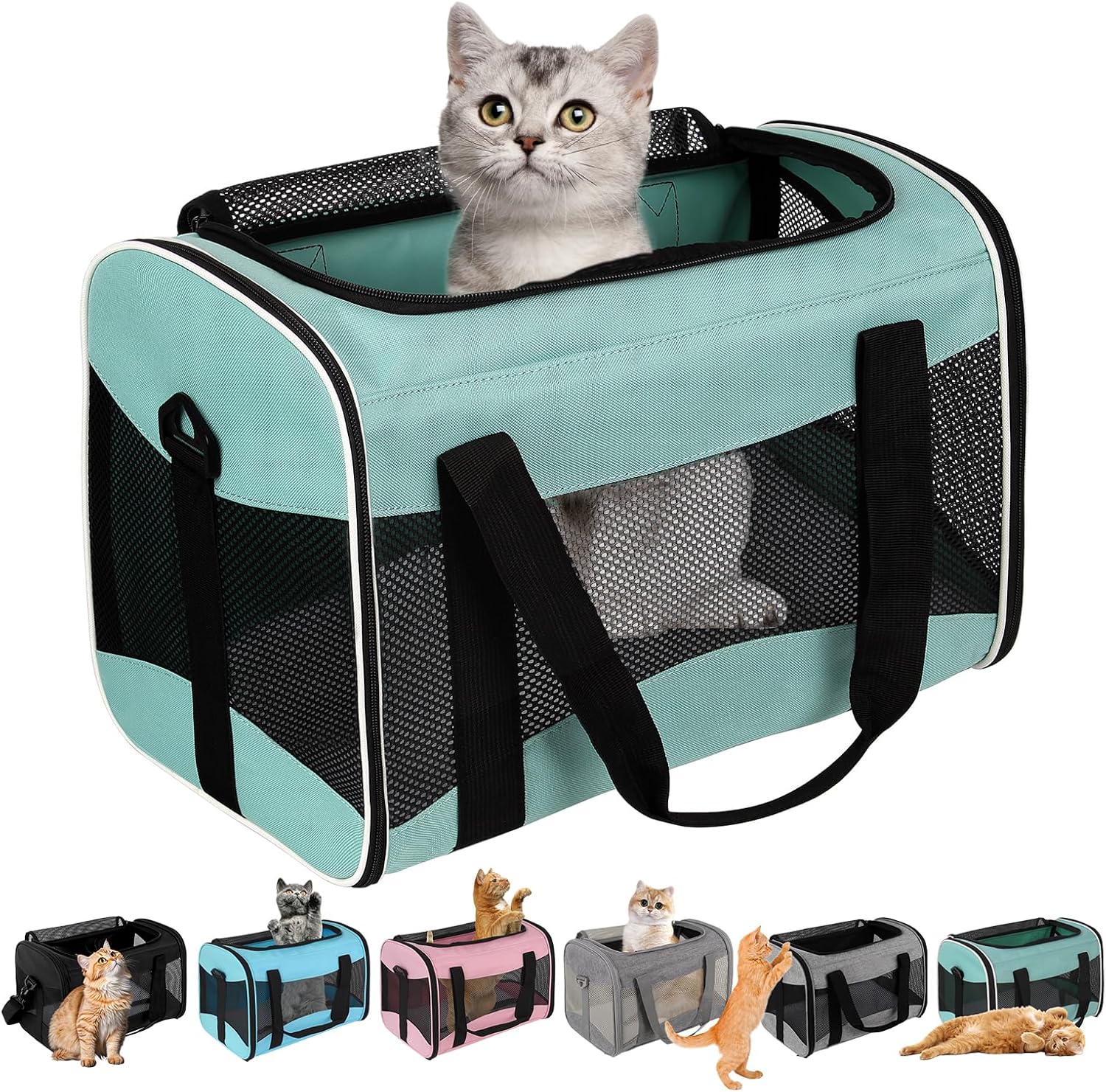
Soft-sided carriers are fabric bags with mesh panels, usually built around a flexible frame. They are the default choice for in-cabin airline travel because they compress slightly and fit under a seat. Their weakness is structural: a soft carrier offers little protection in a collision unless it is specifically crash-tested, and the side panels on cheaper models can sag inward.
Hard-sided crates, usually molded plastic with a wire door, are the standard for cargo travel and for veterinary transport of larger dogs. They hold their shape, ventilate well when the door and side openings are aligned, and are much easier to clean after an accident. The trade-off is bulk. A hard crate for a medium dog can weigh 20 pounds empty and will not fit in a passenger cabin.
Backpack carriers place the dog behind the wearer's shoulders in a structured bag with a frame. They are popular with hikers and cyclists who need both hands free. They suit small dogs only, generally under 20 to 30 pounds depending on the model, and they trap heat, so they are a poor choice for summer midday walks.
Car seats and booster-style carriers are a fourth category, designed specifically to restrain a dog in a vehicle rather than to be carried. Owners who travel mostly by car should treat these as a separate purchase from an airline bag, because the design priorities are different: crash performance and seatbelt routing matter more than under-seat dimensions.
What to Look For Before You Buy
Airline compliance is specific, not generic
There is no single universal airline carrier size. Each airline publishes its own maximum dimensions for in-cabin pets, and those dimensions vary by aircraft type and even by seat row. A carrier marketed as airline-approved may still be rejected if it exceeds the limits on the specific flight. The practical approach is to look up the carrier limits for the airline being flown, then choose a carrier whose exterior dimensions fall comfortably inside them, not exactly at the limit.
For cargo travel, the carrier must meet the airline's structural requirements, which typically include a rigid shell, a metal door with a secure latch, ventilation on at least three sides, and no wheels or exterior attachments that can snag. Details are published in the AVMA pet owner resources and in individual airline cargo policies.
Ventilation
Mesh panels should be present on at least two sides of a soft carrier and should be fine enough to prevent a dog's nose or paws from pushing through. On hard crates, ventilation openings should be large enough for airflow but small enough that a paw cannot pass through. Ventilation matters more than most buyers expect, because a dog in a closed carrier is breathing warm, humid air, and airflow is the primary way that heat is carried away.
Frame and structure
A soft carrier with a spring wire frame holds its height when the zipper is closed, which keeps the mesh panels from resting against the dog's face. Carriers without a frame collapse onto the dog when carried by the shoulder strap. This is the single most common quality difference between budget and mid-range soft carriers, and it is visible in product photos: look for a visible wire rim around the top opening.
Zippers and closures
Locking zippers, which allow a small clip or zip tie to be threaded through the pulls, prevent a determined dog from opening the carrier from the inside. This matters on airlines, where an escaped pet in the cabin is a serious problem. On hard crates, the door latch should be a squeeze latch or a screw-fastened mechanism rather than a simple hook that a paw can flip.
Interior padding and liner
Removable, machine-washable liners are worth paying for. Travel stress frequently causes accidents, and a carrier whose bedding cannot be removed and washed becomes unpleasant for the dog and the owner. Faux lambskin and fleece liners are common; the relevant question is whether they attach with hook-and-loop strips or elastic, because loose liners bunch up under a moving dog.
Carry options
Shoulder straps should be padded and adjustable, and the carrier should have a top handle as well, since a shoulder strap alone makes it difficult to lift a carrier in and out of a car seat. Backpack carriers should have a waist belt and a sternum strap to transfer weight off the shoulders, and the internal frame should be rigid enough that the bag does not fold against the dog's back.
Materials
Exterior fabrics range from thin polyester to coated nylon and waterproof canvas. Coated nylon and canvas resist moisture and clean up more easily, but they add weight. For a carrier that will mostly ride in a car or sit under an airplane seat, a lighter fabric with a water-resistant coating is usually the better balance. For outdoor use, heavier coated fabric is worth the weight.
Weight limits
Published weight limits are guidelines, not guarantees. A carrier rated to 20 pounds may be technically within limits for a 19-pound dog but too short for that dog to stand. Weight limits should be treated as an upper bound that assumes the dog also fits the interior dimensions. When the two conflict, interior dimensions win.
Sizing: The Measurements That Matter
Carrier sizing is based on three measurements taken while the dog is standing on a flat surface. Length is measured from the base of the tail to the tip of the nose, not including the tail. Height is measured from the floor to the top of the head, or to the top of the ears if the ears stand up. Weight should be the dog's current weight on a scale, not an estimate from a breed chart.
The carrier interior should allow the dog to stand without the head touching the ceiling, turn around without crouching, and lie down fully extended. A carrier that meets all three criteria but has no room to spare is correctly sized for air travel, where space is at a premium. A carrier for car travel can be more generous.
Common sizing mistakes include buying for the dog's adult weight when the dog is still a puppy, choosing a carrier based on the exterior dimensions listed in a product title without checking the interior, and assuming that a carrier rated for a certain weight will fit any dog of that weight. A long-backed dog and a tall dog of the same weight need very different carrier shapes.
Safety in the Car
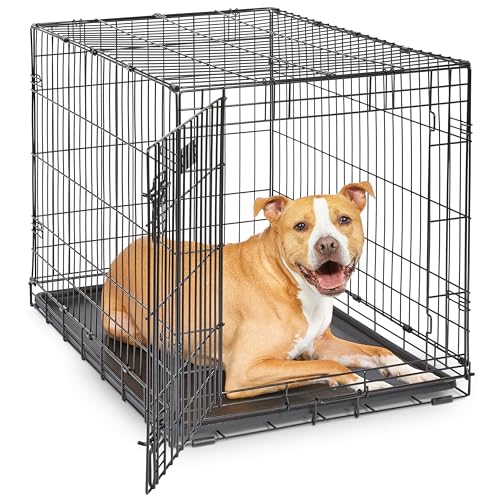
An unrestrained dog in a moving vehicle is a hazard to itself and to the people in the car. In a sudden stop, a 20-pound dog becomes a projectile with the force of several hundred pounds. The safest options are a crash-tested carrier secured with a seatbelt, a crash-tested crate anchored in the cargo area, or a crash-tested harness attached to a seatbelt. Carriers that are not crash-tested should still be secured with a seatbelt loop or placed on the floor behind a seat, never left loose on a seat. A foldable wire crate such as the Midwest iCrate can also be belt-secured in a cargo area for car use; treat it as a vehicle solution rather than a cabin carrier, since wire bars will not meet cabin carrier rules.
Crash testing for pet carriers is voluntary, and manufacturers that have completed it usually publish the test speed and the testing organization. A carrier that claims to be crash-tested without naming a test protocol should be treated with caution. For dogs that travel frequently by car, a dedicated car seat or crash-tested crate is a better investment than a general-purpose soft carrier.
Temperature is the other car safety issue. A carrier sitting in a parked car in summer can reach internal temperatures that cause heatstroke within minutes, even with the windows cracked. Dogs should never be left in a parked car in warm weather, regardless of carrier type.
Air Travel: Cabin Versus Cargo
In-cabin travel requires a carrier that fits under the seat in front of the passenger, which in practice means a soft-sided carrier with flexible sides. Most airlines allow one pet per passenger in the cabin, and the pet must remain in the carrier for the entire flight, including taxi and takeoff. Sedatives are not recommended for air travel without veterinary guidance, because the effects of altitude and pressure on a sedated animal are unpredictable.
Cargo travel requires a hard-sided crate that meets the airline's structural specifications and is large enough for the dog to stand, turn, and lie down. Cargo compartments are temperature-controlled on most modern aircraft, but they are noisy and dark, and the experience is stressful for many dogs. Dogs with flat faces, such as pugs and bulldogs, face additional respiratory risk in cargo and are restricted by many airlines.
Whichever mode is used, the carrier should be introduced at home well before the trip. Leaving the carrier open with bedding and treats inside for several days before travel gives the dog a chance to investigate it on its own terms. This acclimation period is the most reliable way to reduce travel stress, and it is recommended in general pet travel guidance such as the AVMA pet owner resources.
Carrier Options Worth Looking At
The two carriers linked below are representative examples of the soft-sided travel category and the hard-sided crate category. They are not the only options, and they are not ranked against each other, because they serve different travel scenarios.
Soft-sided travel carrier
This style of carrier is built around a spring wire frame that holds the top of the bag open, with mesh panels on multiple sides and a removable, machine-washable liner. It is the format most commonly accepted for in-cabin airline travel, and it suits small dogs and cats that fit comfortably within the interior dimensions. The trade-off is that soft-sided carriers are not crash-tested for car use, and the side panels on lighter models can sag when the bag is carried by the shoulder strap. Owners who fly frequently and want a carrier that doubles as an everyday bed may find this format convenient, while owners who mostly drive should look at a crash-tested car seat or crate instead.
check the current price on Amazon
Hard-sided crate
This format uses molded plastic walls with a wire door and a squeeze latch, and it is the standard for cargo travel and veterinary transport. The rigid shell protects the dog in a collision, the ventilation openings on the sides and door move air even when the crate is stationary, and the interior wipes clean after accidents. The trade-offs are weight and bulk: a hard crate for a medium dog is heavy to carry and will not fit in a passenger cabin, and most models require some assembly out of the box. Owners who travel by air cargo, who need a crate that can be hosed out, or who want a carrier that a larger dog cannot deform will find this format the more appropriate choice.
As a concrete example, the Amazon Basics two-door top-load hard-sided carrier (22.8 by 15 by 13 inches) shows the format's typical layout: front and top entry, molded ventilation channels instead of mesh, and a handle sized for short carries between the car and the vet. You can check the current price on Amazon to compare its interior dimensions against your dog's measurements.
Maintenance and Cleaning
Soft carriers should be vacuumed or brushed out after each trip and the liner washed according to the manufacturer's instructions, usually cold water and air drying to prevent shrinkage of the frame pocket. The exterior fabric can be wiped with a damp cloth and a mild pet-safe cleaner. Zippers should be checked for fabric caught in the teeth and lubricated occasionally with a zipper wax or a graphite pencil.
Hard crates should be disassembled periodically so that the seams and the area around the door latch can be cleaned. A pet-safe disinfectant diluted according to its label is sufficient; bleach solutions should be avoided unless thoroughly rinsed, because residue can irritate a dog's paws and nose. The metal door and latch should be inspected for rust and for bending that could prevent the latch from engaging fully.
Backpack carriers need the shoulder straps and waist belt checked for stitching wear, since those are the load-bearing components. The internal frame should be inspected for cracks, and the mesh panels should be checked for holes that a dog could enlarge.
Common Mistakes
- Buying a carrier the dog has never been inside and expecting the first trip to go smoothly. Acclimation takes days, not minutes.
- Choosing a carrier by weight rating alone without checking interior height and length.
- Assuming that a carrier marketed as airline-approved will be accepted by every airline. Limits vary by carrier and aircraft.
- Using a soft-sided carrier as a car restraint without securing it with a seatbelt. An unsecured carrier slides and tips in turns and stops.
- Leaving a dog in a parked car in warm weather, even briefly and even with windows cracked.
- Feeding a full meal immediately before air travel. Most veterinarians recommend a light meal several hours before departure and no food in the two hours before boarding.
- Sedating a dog for a flight without veterinary guidance. Sedation can interfere with a dog's ability to regulate body temperature and to brace itself.
- Skipping the carrier inspection after each trip. A torn mesh panel or a bent latch is easy to miss and can fail at the worst moment.
Safety and Health Notes
Dogs with short muzzles, heart conditions, or respiratory disease are at higher risk during air travel, particularly in cargo. A veterinarian should evaluate whether a dog is fit to fly before any trip is booked. The Merck Veterinary Manual dog owner reference covers the conditions that most commonly affect travel suitability.
Dogs should be secured in a carrier or with a crash-tested harness any time they ride in a vehicle, and they should never be allowed to ride with their head out of a window, where debris and airflow can cause eye and ear injuries.
If a dog shows signs of heat stress during travel, including heavy panting, drooling, or weakness, the carrier should be opened in a cool area and a veterinarian contacted. The ASPCA Animal Poison Control is the appropriate resource if a dog ingests something during a trip, and general travel health questions are best directed to a veterinarian.
Airline and Transit Rules: Verify Before You Book
Carrier rules change more often than carrier hardware, so treat every flight plan as unverified until you check the airline's current pet policy page. Cabin space is capped per flight, some routes suspend pet transport entirely during summer heat, and health certificates are commonly required within ten days of travel even on domestic routes. A label that says airline approved is marketing shorthand, not a certification; what matters is whether the carrier meets the dimensions and ventilation requirements the airline publishes, and whether it is soft-sided where the airline requires soft-sided. Rail and intercity bus policies differ from airline rules and are often stricter about weight limits, so measure your dog standing and sitting, then compare against the published container size rather than the carrier's claimed approval. When a trip involves a connection, confirm the pet fee and container rules for each carrier segment separately, because codeshare partners do not always match policies.
ventilated travel carrier for cabin use
Frequently Asked Questions
Are soft-sided carriers allowed in the cabin?
Most airlines allow soft-sided carriers in the cabin as long as they fit under the seat in front of the passenger. Hard-sided carriers are generally required for cargo. The specific limits are set by each airline and should be confirmed before booking.
How do I get a dog used to a carrier?
Leave the carrier open in the home with bedding and treats inside and let the dog investigate at will. Once the dog enters voluntarily, close the door for a few seconds at a time and gradually extend the duration. Several days of this before a trip is more effective than any single training session.
What is the difference between an in-cabin carrier and a cargo crate?
In-cabin carriers are soft-sided and sized to fit under a seat. Cargo crates are hard-sided, larger, and built to meet airline structural requirements for the cargo hold. They are not interchangeable.
Is an expensive carrier worth it?
For frequent travelers, a carrier with a rigid frame, locking zippers, and a washable liner tends to last longer and to be accepted by airlines more reliably. For occasional car trips, a simpler and less expensive carrier can be adequate, provided it is secured properly.
How do I clean a carrier?
Remove and wash the liner according to the label, wipe the exterior with a damp cloth and mild cleaner, and inspect the zippers, mesh, and latch for damage. Hard crates should be disassembled periodically for a full cleaning.
Bottom Line
The right dog carrier is the one that fits the dog, fits the mode of travel, and can be secured safely. For in-cabin flying, a soft-sided carrier with a rigid frame and locking zippers is the practical choice, and the soft-sided option linked above is a representative example of that format. For cargo travel, veterinary transport, or any situation where structural protection matters, a hard-sided crate is the appropriate category, and the crate linked above is a representative example. Neither format is universally better; the decision depends on how the dog will travel and how often.
Whichever carrier is chosen, the dog should be introduced to it well before the trip, the carrier should be secured in the car, and the dog should never be left in a parked vehicle in warm weather. Those three habits prevent more travel problems than any product feature.
Where to Buy
As an Amazon Associate, PawCritic earns from qualifying purchases. This does not affect our reviews or recommendations.
check the current price on Amazon
view this option on Amazon
dog carriers safe travel solutions for dogs
Late-2026 Holiday Travel Notes
If winter travel includes the dog this year, the carrier deserves attention weeks before the booking does. Airlines sell out their pet quota early in December, and every carrier that has flown under one airline's rules needs re-verification under the next: dimension limits, soft-versus-hard requirements, and pet fees all shift by carrier and by season, so read the current policy page rather than a forum post from last year. For cabin travel, book the pet when you book the seat. For ground trips, the constraints are yours to set, which is both the freedom and the responsibility.
Acclimation is the part most owners skip and most dogs pay for. A carrier that appears the morning of a trip announces itself as a trap; the same carrier that has been sitting open in the living room for three weeks, occasionally containing meals, reads as furniture. Our crate training guide walks the same progression — feed near it, then in it, then close the door for a minute — and it works for soft carriers too.
Winter adds its own checklist. Water bottles freeze in cold cars, so carry water in an insulated bottle and offer it at rest stops every two to three hours. Keep blankets in the kit for the dog and for yourself, because roadside trouble in January is a different problem than in June. A coat from our winter coat guide earns its place on short-coated breeds at rest stops, and a seat cover saves the back seat from wet coats and road salt. Never leave a dog alone in a parked car in freezing weather; the cold builds quietly and faster than most people expect.
For longer trips where a wire crate rides in the cargo area, our travel crate guide covers anchoring and sizing, which matter far more than any carrier feature once you are on the highway.
Related Reading
dog harnesses for comfort and control, training treats for travel rewards, and GPS trackers for adventure dogs.