The Most Dangerous Part of the Dog Park Is the Gate
Watch any dog park for twenty minutes and you will see the same scene play out at the entrance: a cluster of excited dogs surging toward the gate, owners fumbling with clasps, leashes tangling into a web, and at least one dog who did not want any of this standing frozen while three strangers barrel into its face. Nothing about that moment is neutral. According to the AVMA, dog parks can be a source of exercise and socialization, but they also concentrate risks: dog-to-dog conflict, disease transmission, and injuries that happen in the seconds when an owner is still clipping or unclipping a lead.
We think most park problems are predictable, and most are preventable, because they follow patterns. The dogs who get hurt or scared are rarely the ones playing hardest. They are the ones whose signals got ignored while the humans chatted. This guide walks through how to read play, which red flags deserve an immediate exit, how to interrupt a bad interaction without making it worse, and how to decide when the park simply is not the right tool for your particular dog.
What Real Play Looks Like
Healthy play between dogs is not silent chaos. It has a rhythm: bursts of intensity followed by micro-pauses, role reversals where the chaser becomes the chased, and a constant low-level exchange of signals that keeps both animals opting back in. A play bow, front end down, rear end up, is the classic opening move, but the pauses matter more than the bow. In a review of play research published in the journal Animals, Sommerville and colleagues noted that canine play is maintained by clear communication, and that breakdowns in those signals are what turn rough play into a fight.
Here is the test we use when evaluating any pairing at the park: stop watching for thirty seconds, then look back and check who is on top. If the roles have swapped, the game is fair. If the same dog is pinned under the same dog every single time you look, and the underdog is flattening its ears, tucking its tail, or turning its head away, that is not play anymore. That is harassment with aerobic benefits.
Self-handicapping is the other marker. A healthy adult Lab rolling over so a smaller terrier can tackle it is performing one of the most endearing behaviors in the species. Dogs that consistently fail to handicap, the 90-pound adolescent who body-slams a 15-pound Cavalier with full force, are either under-socialized or simply not suited to a mixed-size park. Size segregation is not vanity. It is physics.
The Red Flags Deserve a Same-Minute Exit
Most owners can name the obvious red flag: snarling, snapping, a fight. The dangerous red flags are quieter, and they compound. Watch for these.
Mobbing is the first. Three or more dogs converging on one target, especially a nervous newcomer, is the single most reliable predictor of trouble we know of. The target's stress climbs with every additional dog, and play between two dogs can flip into a pile-on in seconds. If your dog is the target, walk in, call your dog away calmly, and reset somewhere else. If another dog is the target and its owner is absent, you can still create space by calling your dog out of the group.
Pinning without release is the second. Rough wrestling is fine while the underdog keeps re-engaging. The moment a pinned dog stops struggling and goes still, or starts snapping at the air near the other dog's face, the interaction needs to end now.
The third is chase that changes character. Play chase is loopy, with turn-taking. Predatory chase is linear and silent: one dog locked onto another, head low, eyes fixed, accelerating. Predatory drift, where play triggers a hard-wired chase sequence, is rare, but it is the mechanism behind many of the worst park injuries, and small dogs running and squealing are the classic trigger. If you see silent linear pursuit, intervene immediately.
Guarding clusters are the fourth. Treats, balls, water bowls, and even favorite humans become flashpoints. A dog who stiffens and freezes over a ball is not being stubborn; it is giving a distance-increasing signal. A park full of people dispensing jerky is a park full of future conflicts. Our standing advice: leave the high-value food at home, and if another owner is tossing treats around, keep your dog's distance from the treat zone.
Interrupting Without Making It Worse
Here is a mistake we see constantly: an owner spots tension, panics, and grabs their dog by the collar while yelling. Two dogs in high arousal do not consciously register whose hand that is, and redirected bites, where a dog snaps at whatever touched it mid-conflict, are among the most common injuries owners inflict on themselves at parks. The AVMA's bite-prevention guidance is blunt about this: never reach into a dog fight, and never put your face or hands between two dogs.
The better tool costs nothing: your own dog's name plus a cheerful exit cue, trained at home until it beats the environment. Practice calling your dog away from distractions before you ever need it under pressure. Then, at the park, interrupt early and move. A calm call-away that ends a good play session on a high note, followed by a treat and a short reset, teaches your dog that leaving play is profitable. Do that a few times a week and your dog becomes the one parked politely at your side while other owners chase their zooming maniacs around the fence line.
If a genuine fight breaks out despite everything: do not grab collars. Make noise, throw something soft but substantial near, not at, the dogs, use a barrier like a trash can lid or a folding chair, or ask a second person to grab the rear legs of one dog and wheel it away like a wheelbarrow. That wheelbarrow technique is what trainers teach for a reason. It works, and it keeps human hands on the least bite-prone part of the dog.
The Health Layer Nobody Thinks About Until Wednesday
Every dog at the park shares more than space. Shared water bowls and communal tennis balls are efficient vectors for whatever is going around: kennel cough circulates through parks the way colds circulate through preschools. The AVMA recommends that dogs be fully vaccinated before visiting a dog park, and that means more than rabies. Distemper, parvovirus, bordetella, and canine influenza vaccines are the baseline that makes group settings defensible. Puppies who have not finished their vaccine series do not belong at a dog park at all; there is no play session worth a parvo diagnosis.
Parasites ride the same routes. Giardia and roundworm eggs survive in damp soil and standing water, and a park puddle is an amoeba cocktail by late summer. Bring your own water and a collapsible bowl. It is the least glamorous gear recommendation we will ever make and one of the highest-value ones.
Chemical exposure gets less attention than it deserves. Parks are treated with fertilizers, herbicides, and pesticides on schedules most visitors never see. According to the ASPCA Animal Poison Control Center, lawn chemicals rank among their common call categories, and wet grass right after an application is the highest-exposure window. If the grass smells chemical, if there are little flags planted in the turf, walk somewhere else that day.
Reading the Room Before You Even Unclip
The best park decisions happen from the parking lot. Spend three minutes watching through the fence before you go in, and the visit will tell you almost everything you need to know. Count the dogs: past ten or twelve, individual supervision collapses and the crowd starts self-organizing into mob scenes. Scan the corners: a dog pacing the fence line and staring hard at arrivals is rehearsing fence-fighting, and it will test your dog's nerve the moment you enter. Check the humans: phones out and heads down means nobody is watching the games that are about to involve your dog. Listen: a park with constant shrill barking is a park running hot, and arousal there is a shared resource that is already spent.
Deciding not to enter on a given day is not a wasted trip. It is a training rep. You walked your dog to an interesting place, let it observe calmly, and left together on your terms. That pattern, approach, assess, decide, builds exactly the handler-focus that makes future visits safer. Owners who treat every trip as an all-or-nothing commitment tend to stay too long in bad conditions, and that is where the incident reports come from.
Gear That Actually Earns Its Place
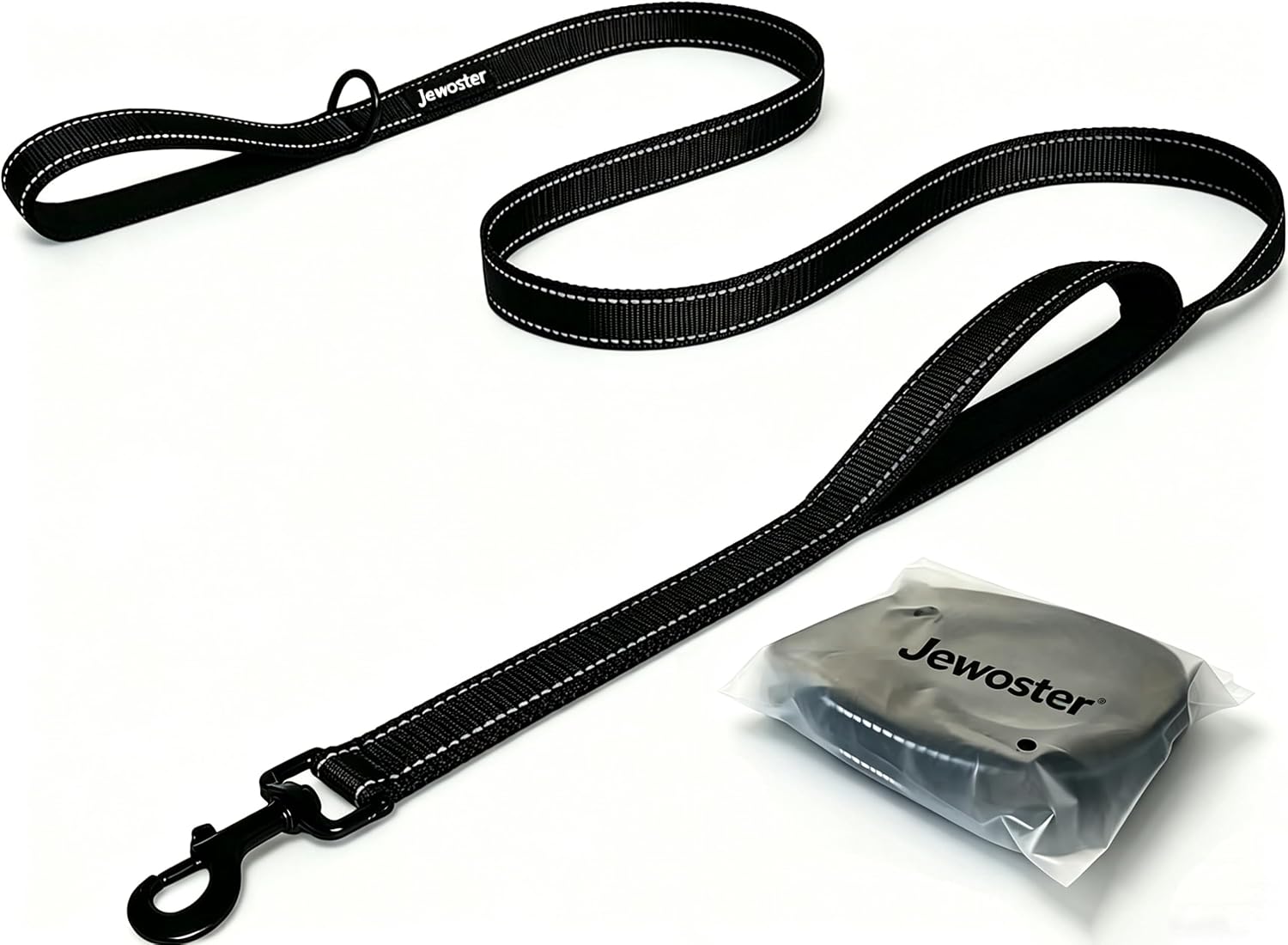
We are skeptical of most park gear culture, but three items genuinely change outcomes. The first is a leash with real stopping power for the walk through the entry corridor. A heavy duty double-handle leash with a padded traffic handle lets you shorten your grip to a few inches in the choke zone where gate manners matter most, then release to full length outside. The second handle is not a gimmick; it is the difference between guiding a dog through a doorway and being dragged through one.
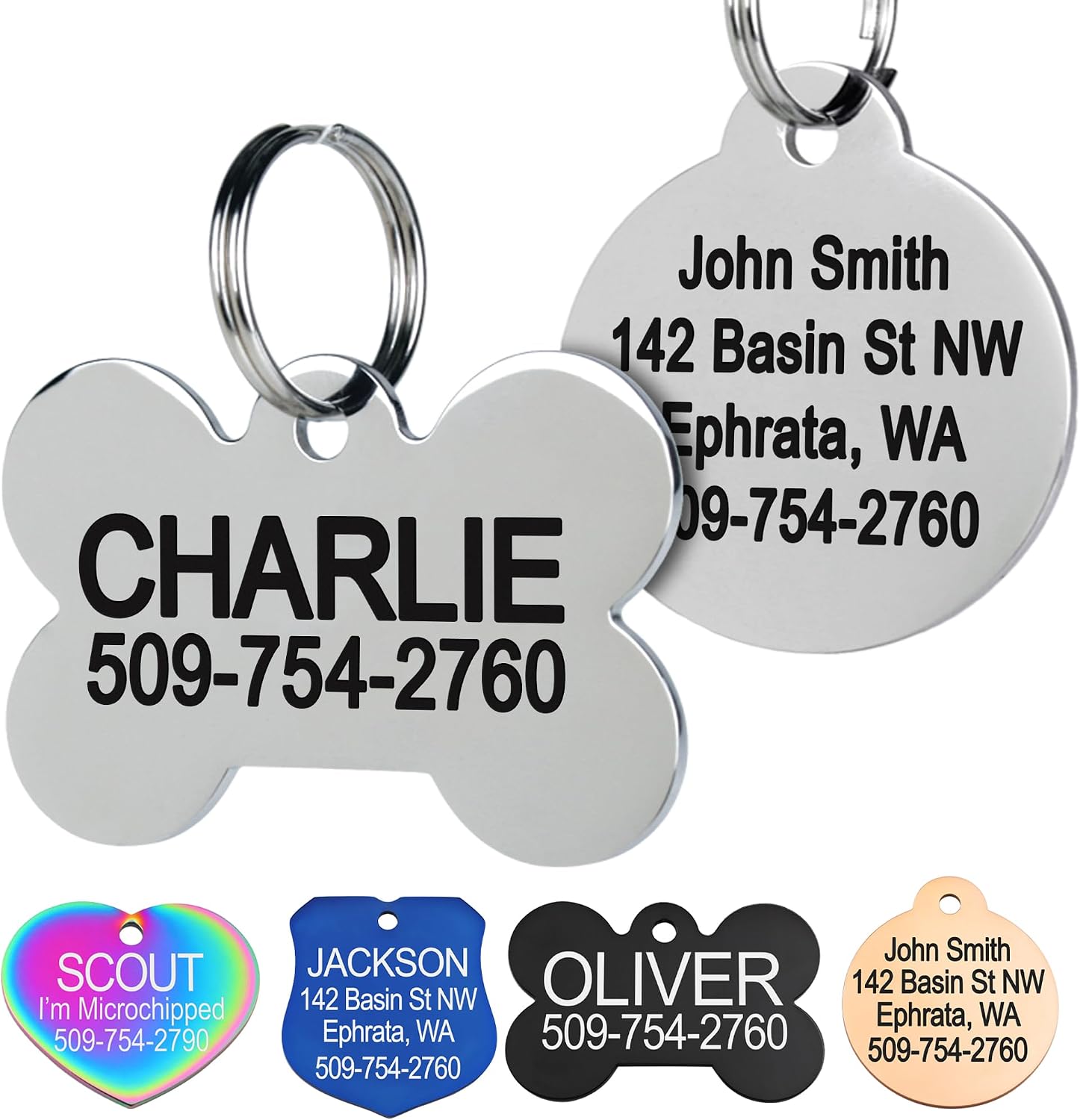
The second is identification that works even if your dog leaves without you. Gates get left open, dogs slip harnesses, and the worst moments happen fast. A stainless steel personalized ID tag with your phone number survives mud, wrestling, and the dog who figures out collars better than you would like. Pair it with a microchip and the recovery math improves dramatically.
The third depends on your dog. For dogs who lunge or spin when excited, a no-pull front-clip harness with two leash attachment points converts chest pressure into a steering correction instead of a throat-full coughing fit. For anyone walking to the park at dawn or dusk through street crossings, a reflective six-foot leash is cheap insurance against the driver who did not expect a dog at 6 a.m. What we do not recommend: retractable leashes inside the park, which offer no control and entangle everything, and prong or e-collars in a chaotic multi-dog environment, where the dog learns to associate pain with nearby dogs rather than with its own behavior.
When the Park Is the Wrong Tool
Some dogs should not be at dog parks, and saying so is not anti-social. It is honest. Dogs in a fear period, typically between 8 and 10 months for many breeds, can have one bad encounter that colors their view of strange dogs for life. Reactive dogs who lunge on sight rehearse that behavior at the park and get better at it. Elderly dogs who used to love the park but now get bulldozed by adolescents are telling you something; listen. And dogs who resource-guard, who freeze over toys, or who have ever scuffled and come away more amped than apologetic are accumulating risk every visit.
The alternative menu is long. Sniff walks on quiet trails satisfy more of a dog's mental needs than an hour of chaotic wrestling. Parallel walks with one compatible dog friend build social skills without the crowd. Trainer-supervised playgroups exist in most cities and are worth their fee precisely because a professional is watching the same signals we described above, but with the authority to separate dogs before things escalate. According to the ASPCA, quality of interaction beats quantity: a few well-matched play partners outperform a park full of strangers for most dogs.
A Ten-Second Exit Standard
Before every visit, run the same check. Vaccines current, including bordetella? Water and bowl packed? Entry corridor clear before you unclip? Then during the visit, apply the exit standard: if you would not comfortably turn your back on the group for thirty seconds, stay engaged. If play has gone one-directional for more than a minute, call your dog out. If the park feels off, more dogs than usual, a newcomer doing hard stares, a owner tossing treats into a scrum, leave early. Cutting a visit short costs you nothing. Pushing through a bad session can cost you a vet bill or a setback in your dog's social confidence that takes months to repair.
The park is a privilege, not a requirement of good dog ownership. The dogs who thrive there are the ones whose owners watched, interrupted early, and left while everyone was still having fun. That last part is the skill nobody practices: ending on a high note, on purpose, before the energy curdles. Do it the next three visits and you will notice something strange. Your dog starts watching you at the gate, checking in, asking permission. That check-in is worth more than any toy in your bag.
Related Reading
Want more on this topic? Check out our guides on best dog leashes from standard to retractable options, how to introduce a new dog to resident cat or dog, best dog dental care products.