Cat GPS Trackers 2026: Know Where Your Cat Goes
For outdoor cats or escape-prone indoor cats, a GPS tracker can make the difference between a quick reunion and days of searching. The category has matured considerably: tags are smaller, batteries last longer, and the better units combine cellular positioning with Bluetooth and Wi-Fi fallbacks. Knowing which technology fits your cat, your neighborhood, and your budget matters more than any single feature list.
According to the ASPCA Animal Poison Control, outdoor access introduces risks that indoor-only cats never face, from toxic plants and antifreeze to vehicle traffic. A tracker does not remove those risks, but it shortens the time a cat spends unaccounted for, which is often when injuries and exposures happen. The Cornell Feline Health Center notes that even indoor cats benefit from controlled outdoor access or enriched indoor environments, and many owners use trackers to supervise patio time or hallway exploration safely.
This buying guide covers the technology behind cat trackers, what published specifications and owner reports say about real-world performance, and the trade-offs that separate a useful device from an expensive collar charm. It is written for owners who want checkable facts rather than marketing claims.
How Cat GPS Trackers Actually Work
There are three main positioning technologies in the cat tracker market, and most devices combine at least two. Cellular GPS uses satellites to fix a location, then transmits that fix over a mobile network to an app. Bluetooth trackers rely on a short-range radio link to a phone or a community of nearby phones. Radio frequency (RF) trackers use a handheld directional antenna and no phone at all. Each has a different range, cost structure, and failure mode.
Cellular GPS offers the widest coverage, effectively unlimited as long as the cat is within cell service. The trade-off is a subscription, typically five to fifteen dollars per month, and higher battery drain because the device must both receive satellite signals and transmit over cellular. Bluetooth trackers cost nothing per month but only work within roughly 100 to 300 feet of a phone, unless a community network of other users happens to be nearby. RF trackers split the difference: they work up to several hundred feet and never carry a subscription, but they cannot tell you where your cat is from across town.
Accuracy varies by technology and environment. Published manufacturer specifications for consumer GPS units generally cite 10 to 30 feet under open sky. That precision degrades near buildings, under dense tree cover, and indoors, where satellite signals weaken. Most trackers compensate with Wi-Fi or Bluetooth positioning, which is less accurate but more reliable inside a home. Understanding this hierarchy prevents the common disappointment of expecting a tracker to pinpoint a cat hiding under a bed.
What to Look For Before You Buy
Weight and Size
Weight is the single most important specification for cats. Veterinary guidance and cat welfare organizations generally suggest that a tracker plus collar should stay under about 2 percent of the cat's body weight, which for a ten-pound cat means roughly three ounces total. Many GPS units sit between 25 and 35 grams, or about one ounce, which is comfortable for average adult cats but can be noticeable on kittens and small breeds such as Singapuras or Cornish Rexes. RF tags can weigh as little as 6 to 10 grams, making them the better choice for petite cats.
Size matters as much as weight. A bulky unit can catch on furniture, brush, or fencing, and it can make a cat reluctant to move normally. Owners of small cats frequently report in reviews that devices marketed for cats still look oversized on their animals. If your cat is under eight pounds, measure the collar width and compare it to the device footprint before ordering.
Battery Life and Charging
Battery claims range from three days to a full year depending on the technology. Cellular GPS trackers typically need charging every two to seven days, and cold weather shortens that window. Bluetooth and RF tags often use replaceable coin or button cells that last months. A short battery life is not automatically disqualifying, but it does mean the tracker becomes useless if you forget to charge it, so consider whether a weekly charging routine fits your household.
Water Resistance
Cats groom themselves and walk through wet grass, so a tracker should be at least water-resistant. Most reputable units carry an IP67 or IP68 rating, meaning they survive splashes and brief submersion. Check the specific rating rather than assuming; a device that is only splash-proof may fail after a rainstorm or a tumble into a water bowl.
Subscription and Total Cost
The purchase price rarely tells the whole story. Cellular trackers require an ongoing plan, and the monthly fee over two years can exceed the device cost. Bluetooth and RF trackers usually have no subscription, which makes them cheaper long-term but limits range. Before buying, add up device price plus twenty-four months of service and compare that figure across options.
Collar Safety
Every tracker should be mounted on a breakaway collar. A breakaway clasp releases under tension so a cat cannot be strangled if the collar snags on a branch or fence. This is not optional for outdoor cats. A heavy tracker on a non-breakaway collar is a genuine hazard, and several manufacturers sell breakaway collars designed to pair with their tags. If a tracker's mounting system requires a standard buckle collar, that is a reason to look elsewhere.
Types of Trackers Compared
| Type | Range | Accuracy | Best For | Cost Structure |
|---|---|---|---|---|
| Cellular GPS | Unlimited within cell coverage | 10 to 30 feet outdoors | Outdoor cats, travel, wide-roaming cats | Device plus monthly subscription |
| Bluetooth | 100 to 300 feet | About 10 feet | Indoor cats, neighborhood wanderers | Device only |
| Radio frequency | 400 to 1600 feet | Directional guidance, not coordinates | Finding cats in the house or yard | Device only |
The table above summarizes the practical differences, but the choice is not purely technical. A cat that slips out an open door and hides under the neighbor's porch is best served by an RF or Bluetooth tag, because the cat is close and the goal is precise local finding. A cat that roams several blocks needs cellular GPS, because only that technology reports a location from a distance. Some owners use two devices, a light RF tag for everyday hiding and a GPS unit for outdoor sessions, though that adds weight and complexity.
Representative Options and What They Trade Off
The tracker market changes quickly, but a few models illustrate the trade-offs clearly. The descriptions below are based on manufacturer specifications and patterns in verified owner reviews, not on hands-on testing.
Tractive GPS Tracker
Tractive is the most widely reviewed cat GPS tracker and is often cited as a default choice for outdoor cats. Manufacturer specifications list real-time tracking, virtual fence alerts, activity monitoring, and location history, with a water-resistant housing and a battery rated for two to five days depending on usage. The subscription is comparatively affordable, which matters over the life of the device.
The trade-off is bulk. At around 30 grams, the unit is fine for average adult cats but can look large on small ones, and owner reviews occasionally mention app glitches or delayed updates. It suits owners who want dependable cellular coverage and do not mind a weekly charge.
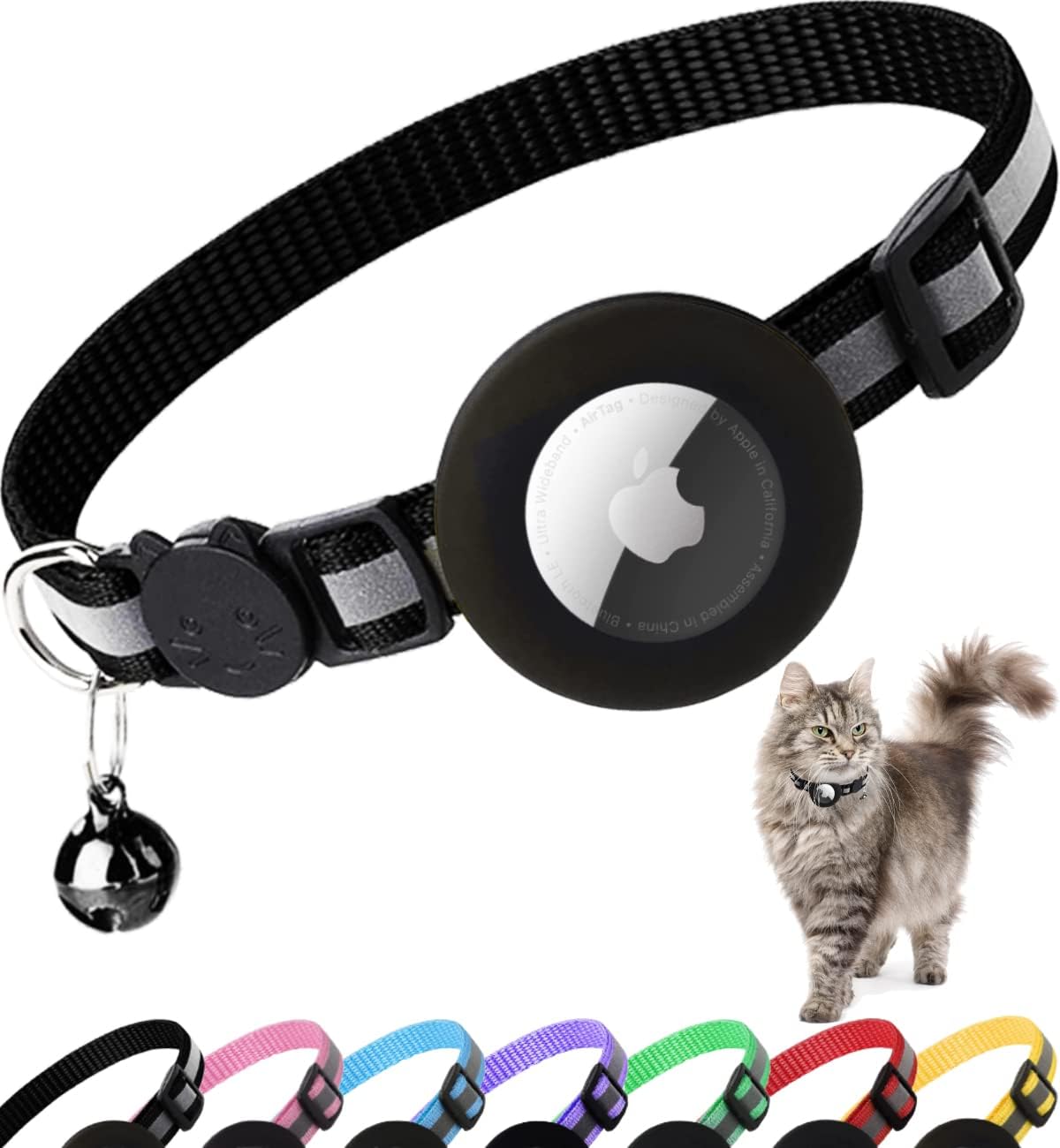
If a monthly subscription is the sticking point, an AirTag in a breakaway holder collar covers the same basic location need for a fraction of the long-term cost — the buying box below links one widely available example.
Whistle GO
Whistle GO combines GPS with health monitoring, tracking activity, sleep, and behaviors such as scratching and licking. Its headline specification is a battery rated for up to twenty days, which is exceptional among cellular trackers, and it includes a tele-vet chat feature. The device is water-resistant and the app is generally well regarded.
The trade-offs are price and size. Both the device and the subscription sit at the premium end of the market, and the unit is large enough that owners of small cats often report it looks disproportionate. It suits owners who want health data alongside location and are willing to pay for both.
Jiobit
Jiobit is marketed as one of the smallest GPS trackers available, at roughly 18 grams, and offers encrypted tracking, trusted-place alerts, and multiple attachment options. Battery life is rated at seven to ten days. For cats that will not tolerate a bulkier device, the lower weight is a genuine advantage.
The trade-off is feature scope. Jiobit does not include the activity and health monitoring found in some competitors, and both the device and subscription are expensive. It suits owners whose priority is a light, secure tracker rather than a fitness dashboard.
Pawscout
Pawscout is a Bluetooth tracker that uses a community finder network and carries no monthly fee. It stores a medical profile and supports virtual leash alerts. At around 10 grams, it is light enough for most cats, and the absence of a subscription is a real long-term saving.
The trade-off is range. Bluetooth tracking works within roughly 300 feet, and lost mode depends on other Pawscout users being nearby. It is not true GPS and cannot report a location from across town. It suits indoor cats and owners who want an affordable safety net without ongoing costs.
Weenect
Weenect offers real-time tracking, a ring and vibrate feature for locating hiding cats, territory analysis, and a water-resistant housing with a battery rated for about three days. The ring feature is particularly useful for cats that hide indoors, and territory mapping appeals to multi-cat households.
The trade-offs are battery life and size. Three days is short compared with competitors, the unit is on the larger side, and owner reviews describe the app as less polished than the leading alternatives. It suits owners who value the training and finding features and will charge frequently.
Girafus
Girafus uses radio frequency rather than GPS, which means no subscription ever. It offers directional finding, a standby battery rated for about thirty days, and a very light tag. It excels at locating cats hiding in the house or yard, where RF direction-finding is more precise than GPS.
The trade-off is range and capability. RF tracking works within roughly 500 to 1600 feet, requires a separate directional finder, and provides no smartphone app or location history. It suits owners who want a one-time purchase and whose cats stay close to home.
Tabcat
Tabcat also uses RF technology, guiding the owner with visual and audio signals from a handheld finder. The tag is very small, the battery is rated for up to a year, and there is no subscription. For indoor cats that hide in closets and under furniture, it is exceptionally effective at close range.
The trade-off is limited range, roughly 400 feet, and the absence of GPS or location history. It is expensive for what it does, and it is useless for tracking a cat that has left the property. It suits owners of indoor cats who want a reliable way to find a hiding animal.
Sizing and Fit
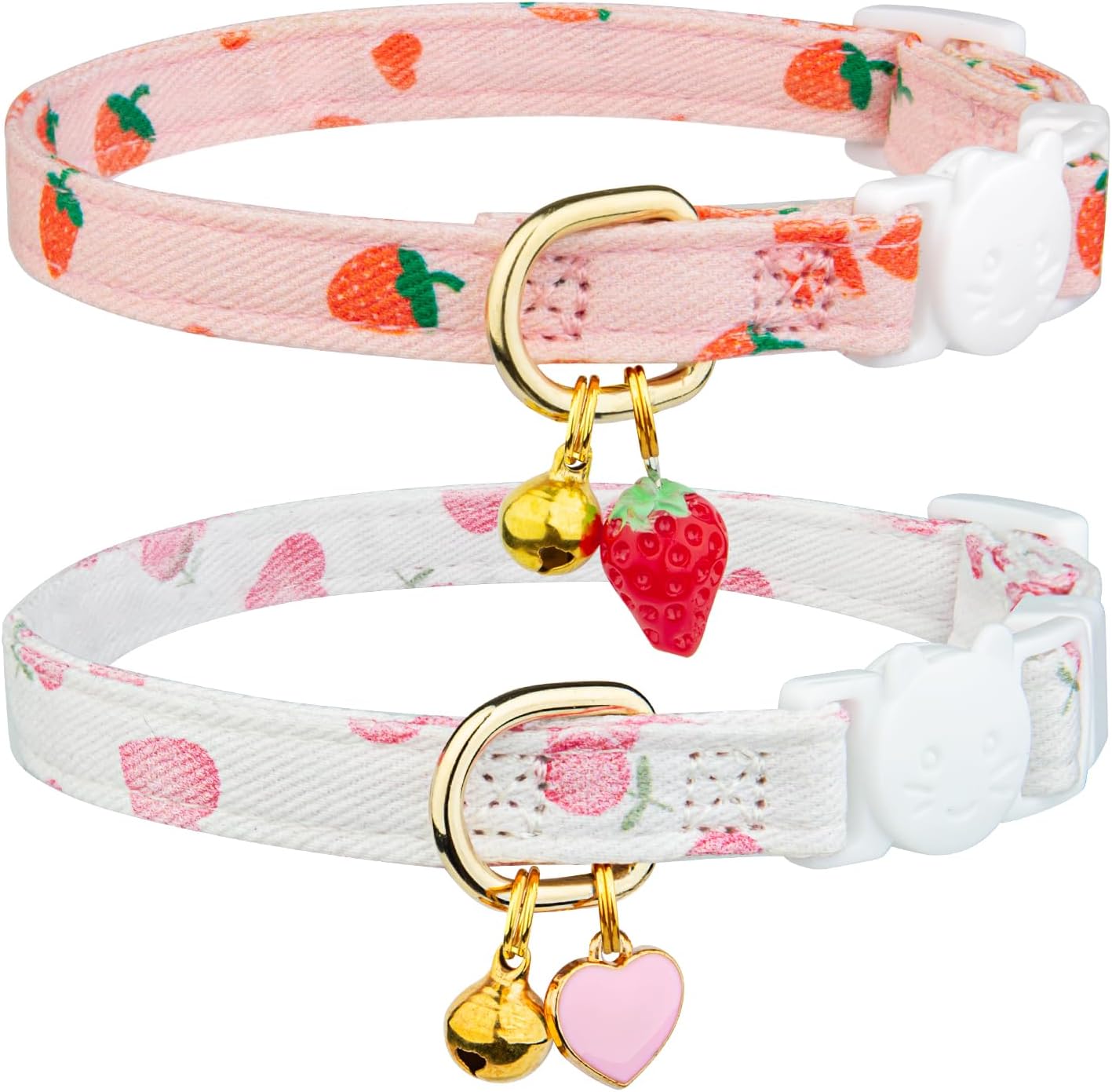
lightweight breakaway collar sized for small necks
A tracker is only useful if the collar stays on, and a collar only stays on comfortably if it fits correctly. The general rule is that you should be able to slide two fingers between the collar and the cat's neck. Too loose and the cat can paw it off or catch a leg; too tight and it causes irritation or restricts swallowing. Kittens grow quickly, so a collar that fits at eight weeks may be too tight at sixteen.
Weight distribution matters as well. A tracker that hangs below the collar swings more than one mounted flat against it, and swinging can annoy a cat or catch on obstacles. Some manufacturers offer collar mounts designed to keep the device close to the neck. If your cat has never worn a collar, introduce it indoors for short periods before adding the tracker, and reward calm behavior. Most cats adjust within a few days according to owner reports, but a minority never tolerate collars and may need a harness-based alternative.
Safety and Welfare Considerations
No tracker replaces supervision. The Merck Veterinary Manual cat owner reference documents the range of hazards outdoor cats face, including trauma, infectious disease, and parasites. A tracker helps you find a cat after something goes wrong; it does not prevent the wrong thing from happening. Owners who want outdoor access without the full risk often combine a tracker with a catio or a supervised harness walk.
Breakaway collars are essential, and so is checking the collar regularly for wear. A frayed collar can snap at the wrong moment, and a corroded clasp can fail to release when it should. Inspect the collar and tracker housing monthly, and replace the collar at the first sign of damage. If the tracker uses a rechargeable battery, follow the manufacturer's charging guidance; swollen or damaged batteries should be retired immediately.
There is also a privacy dimension. Cellular trackers transmit location data to a company server, and the terms governing that data vary. Read the privacy policy before buying, particularly if you plan to use the device on a cat that spends time near your home. Reputable manufacturers publish clear retention and sharing policies.
Maintenance and Everyday Use
Keeping a tracker working is mostly about routine. Charge or replace the battery on a schedule rather than waiting for a low-battery alert, because a dead tracker is worse than no tracker: it creates false confidence. Test the app's live tracking periodically while the cat is in view, so you know the update interval and accuracy before you need them in an emergency.
Clean the housing with a damp cloth and mild soap, and avoid submerging a device beyond its rated depth even if it is water-resistant. Check the mounting hardware for looseness, and confirm the breakaway clasp still releases under firm pull. If the tracker includes a virtual fence, verify the boundary after moving furniture or changing your routine, since indoor positioning can drift.
Subscription management is part of maintenance. Set a calendar reminder before renewal, compare plans occasionally, and cancel service if you stop using the device. Some owners keep an old tracker active out of inertia, paying monthly for a device that sits in a drawer.
Common Mistakes to Avoid
- Buying a dog tracker for a cat. Dog units are typically heavier and larger, and the weight can be uncomfortable or unsafe for a cat.
- Using a non-breakaway collar. This is the most serious mistake and can be fatal.
- Assuming GPS works indoors. Satellite signals weaken inside buildings, so indoor finding usually relies on Bluetooth, Wi-Fi, or RF.
- Ignoring the subscription cost. A cheap device with an expensive plan can cost more over two years than a premium device with a modest one.
- Expecting pinpoint accuracy. A 10-to-30-foot radius is normal outdoors, which means the app shows an area, not a dot.
- Skipping the fit check. A collar that is too loose or too tight causes problems regardless of how good the tracker is.
- Forgetting to test the app. Owners who never practice with live tracking often struggle when they actually need it.
Tracking Market Notes for 2026
The biggest practical change since this category matured is the network, not the hardware. As older 2G and 3G cellular service was shut down, cheap GPS trackers built on those networks lost live tracking, which is why used and clearance listings in this category deserve suspicion; current hardware rides on LTE-M and works the way the box promises. Subscription pricing has also crept upward, so check the monthly plan before buying the collar, because over three years the service usually costs more than the device. Bluetooth-only tags remain the low-cost option: they have no live map, but they piggyback on nearby phones through large finding networks, which is often enough for a cat that stays within a garden. For live-tracking units, real-world battery life usually lands between two and seven days depending on how often the cat crosses out of safe-zone range, well short of the headline claims. Whatever the technology, the collar strap should still be a breakaway type.
Frequently Asked Questions
Will my cat tolerate a tracker? Most cats adjust within a few days according to owner reports. Choose a light device, use a breakaway collar, and introduce it gradually indoors.
How accurate is GPS tracking? Consumer GPS is typically accurate to within 10 to 30 feet outdoors. Use sound or light features to close the final distance.
Why does tracking fail indoors? Satellite signals are weak inside buildings. Most trackers fall back to Wi-Fi or Bluetooth positioning, which is less precise.
Are trackers safe for cats? Yes, when the device is light and mounted on a breakaway collar. Never attach a heavy tracker to a standard buckle collar.
Can I use a dog tracker on my cat? Most dog trackers are too heavy. Choose a cat-specific model designed for lighter weight and smaller necks.
Bottom Line
For most owners of outdoor cats, a cellular GPS tracker offers the best combination of coverage, features, and predictable cost, provided the device is light enough for the cat and mounted on a breakaway collar. The Tractive is the most widely used option in this category; compare its current specifications and price on the manufacturer's own listings, since subscription devices come and go from retail stock. For a subscription-free fallback, an AirTag holder collar such as the Dgerp model in the buying box below is the practical alternative. Owners who want health monitoring alongside location should look at premium units such as Whistle GO, while those who want no ongoing fees are better served by Bluetooth or RF tags.
Whatever you choose, treat the tracker as one layer of a broader safety plan. A breakaway collar, a microchip with up-to-date registration, regular veterinary care, and a secure home environment all matter more than any single gadget. A tracker shortens the search; it does not replace prevention.
cat gps trackers know where your cat goes
Where to Buy
As an Amazon Associate, PawCritic earns from qualifying purchases. This does not affect our reviews or recommendations.
Winter Tracking Considerations for Late 2026
Winter changes the risk profile for outdoor cats in two ways that matter to anyone buying a tracker right now. First, the escape window shifts: darkness arrives by late afternoon, and a cat that slips out at dusk is harder to see, harder to corner, and slower to be reported by neighbors. A tracker's live-location value is highest in exactly these hours, which is a good argument for checking that your subscription plan's update rate is the fast one rather than the economy tier.
Second, cold is hard on batteries. Lithium cells lose effective capacity in freezing weather, and a tracker that runs five days in October may need charging in three by January; manufacturer ratings are usually quoted at room temperature, so treat winter runtime as a discount on the spec sheet. Bring the charger indoors, top the unit up before any cold snap, and if the tracker rides on a cat that uses an unheated outdoor shelter, expect the battery to cycle faster still.
Visibility and redundancy do the work a signal cannot. A reflective strip or small light on the collar — our breakaway and reflective collar guide compares options — makes a dark cat legible to headlights and porch lights. Layer identification the boring way as well: a tracker, a tag with a current phone number, and a registered microchip answer three different kinds of finder. If you are weighing whether outdoor access makes sense for your cat at all, our indoor versus outdoor comparison lays out the trade-offs plainly.
For holiday travel, charge the tracker the night before drop-off, confirm your contact details inside the app, and leave a printed description with whoever is watching the cat. A sitter also benefits from a harness and leash setup if the cat wants supervised fresh air in an unfamiliar house.
Related Reading
cat outdoor enclosures, catios, and tents, cat window perches and wall furniture, cat water fountains and filters, and automatic feeders for scheduled meals.