Humid Tropical Gecko Tanks: A Complete Buying Guide
Geckos from humid tropical regions, such as crested geckos, gargoyle geckos, day geckos, and mossy forest species, have very different housing needs from desert dwellers like leopard geckos. Their enclosure has to hold humidity, survive daily misting, allow climbing on glass and branches, and ventilate well enough to prevent stagnant air and mold. Choosing the wrong tank is one of the most common and most expensive mistakes new keepers make, because a poorly suited enclosure leads to chronic respiratory infections, stuck sheds, dehydration, and escapees. This guide explains what actually matters when shopping for a humid tropical gecko habitat, what specs to check, and what trade-offs exist between front-opening tanks, glass terrariums, and converted storage containers. Rather than a ranked list of winners, treat this as a checklist you can apply to any enclosure on the market.
As a single concrete example to look at while reading, we reference one widely available budget plastic terrarium tub — the Exo Terra Faunarium — sold on Amazon. It is not a front-opening glass tank; it is the low-cost tub many keepers use for quarantine, transport, or temporary housing, and it is useful here mainly as a reference point for how product pages present dimensions and ventilation claims. You can check the current price on Amazon and compare its listed dimensions and features against the criteria below before deciding whether that style suits your species and space.
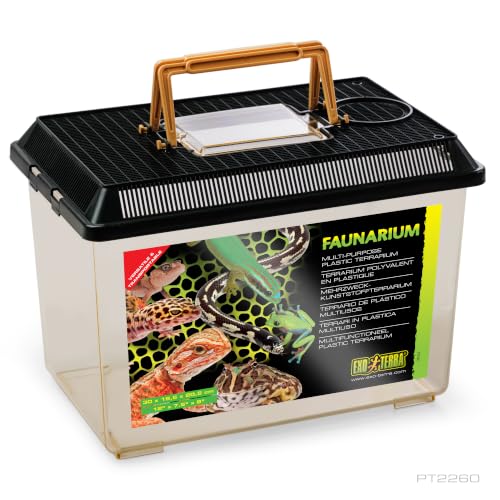
gecko tanks humid tropical homes for your gecko
Why Humid Species Need a Different Tank
A tropical gecko enclosure is fundamentally a humidity management tool. Crested geckos, for instance, do best with humidity that spikes to around 80 to 100 percent after a nighttime or morning misting and then dries down to roughly 50 to 60 percent by the next misting cycle. Achieving that cycle requires glass or sealed panels rather than screen, because a full-screen cage in a dry home loses moisture within an hour and forces the keeper to mist constantly. Published husbandry guidance from sources such as the Merck Veterinary Manual's exotic animal section emphasizes that improper humidity and temperature are leading contributors to disease in captive reptiles, which is why enclosure selection comes before any decoration decisions. A good humid tank therefore balances two competing requirements: it must retain moisture, and it must still allow enough airflow to prevent condensation from sitting permanently on the walls, which encourages bacteria and fungal growth.
The second factor is orientation. Most tropical geckos are arboreal or semi-arboreal, meaning they climb vertically and feel safest resting on elevated foliage. A long, low tank wastes vertical space for these species. Conventional guidance for crested geckos suggests a minimum footprint of about 18 by 18 by 24 inches for a single adult, with height valued over floor area. A 20 gallon tall aquarium converted with a screen lid can work as a budget starting point, but front-opening glass terrariums designed for reptiles have largely replaced them because access is safer and less stressful for both keeper and animal.
Front-Opening Glass Terrariums
The most popular category for humid tropical geckos is the front-opening glass terrarium with two hinged or sliding doors, a mesh top panel, and cable ports for running heater and probe cords neatly through the wall. For a closer look at this style, see our roundup of front-opening reptile enclosures and check typical heights, door mechanisms, and ventilation layouts against your species' needs. This style suits keepers who want daily access without lifting a heavy lid off the top, which matters because arboreal geckos often perch near the ceiling and can bolt out of a top-opening cage in a second. Front doors also make misting, feeding, and spot cleaning far quicker, which in practice means the enclosure gets maintained more consistently. The trade-offs are price and weight: quality front-openers cost noticeably more than converted aquariums, glass is heavy, and the door seals must be checked for gaps small enough for hatchlings or day geckos, which are famous escape artists. Verified owner reports on front-opening models frequently mention that the lock mechanism and the cable port gaskets are the first components to wear, so inspect those parts when the tank arrives.
Converted Aquariums With Screen Lids
A traditional 20 gallon tall or 30 gallon vertical-conversion aquarium with a fitted screen lid is the classic budget route. These suit keepers starting with a young gecko or a single adult on a tight budget, and glass aquariums are easy to find secondhand. The downsides are real, however. A full screen lid dumps humidity quickly, so most tropical keepers cover one third to one half of the mesh with a plastic panel or acrylic sheet to slow evaporation. Top-only access means working from above, which stresses arboreal geckos and increases escape risk during feeding. Aquariums also lack built-in cable ports and secure door locks, so equipment cords get draped over the rim and lids often need aftermarket clips. If you go this route, verify the lid is escape-proofed with locks or clips before the first night, because geckos are most active and most curious after lights-out.
PVC and Hybrid Enclosures
PVC-panel enclosures with a glass front door have grown popular for humid species because plastic walls insulate better than glass, hold humidity with less frequent misting, and weigh far less than all-glass tanks of comparable size. They suit keepers in dry climates, keepers with large collections, and anyone mounting the enclosure on shelving that cannot support a heavy glass unit. The trade-off is visibility and thermal behavior: PVC sides mean you can only view through the front door, and plastic can warp if a heat source is mounted incorrectly, so manufacturer instructions about lamp placement distances must be followed exactly. As a concrete example of the format, the REPWILD 33-gallon tall PVC terrarium — an 18 by 18 by 24 inch arboreal layout with a glass front door and knock-down flat-pack construction — shows what the style offers; you can check the current price on Amazon and compare its layout against the criteria in this section. Hybrid enclosures, which pair a glass front with PVC sides, split the difference and are worth considering if humidity retention is your primary struggle. In very humid setups, note that solid-sided enclosures can develop mold in corners if airflow is insufficient, so a model with both top and lower ventilation channels is preferable to one vented only at the top.
Bioactive and Planted Setups
Many tropical gecko keepers eventually move toward bioactive enclosures, which include live plants, a drainage layer, and cleanup crews of springtails and isopods that consume waste and mold. Any of the enclosure types above can be made bioactive, but the tank needs enough vertical space for a deep substrate layer plus a tall planting area, and the base must be waterproof and able to handle the weight of drainage layers, soil, cork bark, and hardscape, which together can add substantial load. Before stocking live plants, cross-check every species against the ASPCA's animal poison control plant listings, because geckos will nibble or drink water dripping off foliage, and some common houseplants are toxic. Pothos, bromeliads, and sansevieria are widely used safe staples in tropical terrariums, but pesticide-free sourcing matters as much as species choice, since nursery plants are often treated with systemic insecticides that persist in the leaves.
Key Specifications to Check Before Buying
First, match dimensions to species. A crested or gargoyle gecko needs height; roughly 24 inches of vertical clearance is a sensible adult minimum, with larger always being better. Day geckos, which are fast, delicate, and prone to nose-rubbing on glass, need generous width as well so they can retreat from the front pane, plus fine mesh they cannot squeeze through. Second, check ventilation geometry. The best tropical terrariums pair a mesh top with ventilation strips at the front lower edge, creating a passive chimney effect that moves air without dumping humidity. Third, count and size the cable ports, because a typical humid setup runs at least three cords, such as a heat cable or ceramic emitter, a misting line, and a thermometer or hygrometer probe, and drilling glass yourself is not a beginner task. Fourth, examine the door design: hinged doors with keyed locks deter both escapees and curious household pets and children, while sliding doors can be lifted out of their tracks by a determined gecko pushing at the corner unless a lock pin is fitted.
Fifth, consider the raised bottom. Many quality front-opening terrariums have a recessed base that allows a shallow water layer or drainage system underneath the false floor, and it also permits mounting an under-tank heat cable with an air gap, which is important because direct contact heat on glass can crack it or create hot spots. Sixth, look at the mesh material itself. Fine stainless or coated steel mesh tolerates misting nozzles and claw contact better than fiberglass screen, which sagging and tearing owners frequently report in reviews of cheaper cages. Finally, confirm the manufacturer's stated weight capacity for the top mesh if you plan to hang heat lamps above it, and never rest a heat lamp directly on mesh that the manufacturer has not rated for it.
Humidity Control Equipment Compatibility
The enclosure you choose determines what humidity equipment will work. Hand misting twice daily suits glass and PVC tanks alike, but many keepers eventually automate with a misting system whose nozzles mount through the mesh top or a drilled hole. If you plan to automate, verify the tank's top frame can accept nozzle grommets, or choose a model with pre-cut ports. Foggers and humidifiers connected via a hose are popular for high-humidity species like mossy geckos, but they should run on a timer or hygrometer control rather than continuously, since constant saturation is as harmful as dryness. Every heat source must run through a thermostat with the probe secured inside the tank, because unregulated heat mats and emitters are a documented cause of thermal burns in reptiles, a risk husbandry resources from the Association of Reptilian and Amphibian Veterinarians repeatedly warn keepers about. For overhead heat, a heavy-duty switch-operated clamp lamp such as the Fluker's Repta-Clamp Lamp, rated for up to 150 watts, is the standard housing for a thermostat-controlled ceramic emitter in this kind of setup. When comparing enclosures, picture where the probe cord, misting line, and any lighting will physically enter the cage, because a tank with only one small port becomes a frustration once your equipment list grows.
Sizing Guidelines by Species and Life Stage
- Crested gecko adult: minimum around 18 by 18 by 24 inches, oriented tall; larger vertical space improves exercise and enrichment.
- Gargoyle gecko adult: similar footprint to crested geckos, but slightly heavier-bodied, so sturdy branches and cork are essential.
- Day geckos: taller and wider tanks with fine mesh and dense planting; these agile species exploit any gap.
- Juveniles: smaller transitional enclosures of roughly 12 to 16 inches tall make feeding easier and reduce the chance of a tiny gecko failing to find food in a large tank.
- Pairs: only house compatible animals together, and provide extra visual barriers and feeding stations; never house different species together.
Remember that minimums are survival floors, not ideals. Verified keepers consistently report more natural behavior, better muscle tone, and easier weight management in larger enclosures with varied climbing structure.
Common Mistakes to Avoid
The most frequent humid-tank mistake is over-misting without a dry-down period, which keeps the substrate permanently soggy and leads to scale rot and bacterial infections. The goal is a cycle, not constant saturation, and a cheap digital hygrometer placed at gecko level, not at the top of the cage where readings run artificially high, makes the cycle visible. Another recurring error is relying on analog stick-on dials, which are notoriously inaccurate in humid enclosures. The third mistake is using pure screen cages for tropical species, and the fourth is its mirror image: sealing a tank so tightly that air never moves and black mold colonizes the corners within weeks. Fifth, keepers often buy a tank sized for a hatchling and never upgrade; plan the adult enclosure from the start, since it is usually cheaper than buying twice. Sixth, avoid substrate choices like pure sand or cedar-based products entirely; cedar oils are toxic to reptiles, and sand causes impaction risk if swallowed while hunting. Finally, do not skip the escape audit, checking lock, port gaskets, and lid clips with a flashlight from inside a dark enclosure before the animal ever moves in.
Maintenance and Long-Term Care
Humid enclosures demand more upkeep than desert setups, so build a routine. Daily, spot-remove feces from leaves and glass, wipe condensation off the front pane if it obstructs viewing, and check that the hygrometer is cycling properly. Weekly, remove food dishes, wash them with hot water and reptile-safe disinfectant, prune any moldy leaves, and turn or replace the top layer of substrate in non-bioactive tanks. Monthly or quarterly depending on occupancy, do a deep clean: relocate the gecko to a secure temporary container, discard substrate, scrub glass and hardscape with a reptile-safe cleaner, rinse thoroughly, and dry before rebuilding. Never use household bleach at full strength or aerosol cleaners near reptiles, and rinse anything that contacted disinfectant until no odor remains. Hinges, door tracks, and locks deserve occasional cleaning too, since mineral deposits from misting water make doors sticky and gaskets brittle. Check the mesh panel and its frame every few months for corrosion, and replace any cable port plug that has shrunk or cracked. An enclosure maintained on this schedule routinely lasts many years, whereas neglected tanks fail at the doors and seals long before the glass itself degrades.
Where Prices and Value Land
Budget humid setups built from converted aquariums with modified lids generally land in the lower double digits plus substrate and lid clips, while quality front-opening glass terrariums occupy a mid range and large or premium-branded units sit well above that. Higher prices mostly buy better door hardware, proper dual-zone ventilation, and thicker glass, all of which affect daily usability rather than the gecko's basic survival. A sensible strategy many keepers use is to buy the largest front-opening enclosure your space and budget allow early on, then upgrade equipment such as hygrometers, misting systems, and lighting incrementally. Reading verified owner reviews on the specific model you are considering remains one of the most reliable signals available, because long-term issues like warping lids, leaking bases, and stiff doors only surface after months of misting cycles. Whatever model you shortlist, anchor the comparison in concrete listings — the Faunarium tub above and the PVC enclosure below show what real product pages disclose about dimensions, ventilation layout, and price — before committing.
What Changed in the 2026 Enclosure Market
Three shifts are worth knowing if you last shopped for enclosures a few years ago. Front-opening glass terrariums, once confined to specialist brands, now come from a dozen manufacturers, and the differences between them show up in details rather than price: door latches that a determined crested gecko cannot nosed open, drilled cable pass-throughs at the base for thermostat probes, and a raised, waterproof bottom liner that survives damp substrate. Vertical 18 by 18 by 24 inch formats have become the default arboreal size, which suits crested and gargoyle geckos far better than the long, low tanks marketed for desert species. Bioactive-ready features, such as deeper base clearance for drainage layers, have also moved into midrange tanks instead of staying custom-build territory. None of this removes the checklist above; it just means fewer compromises are necessary at the same budget than a couple of years ago.
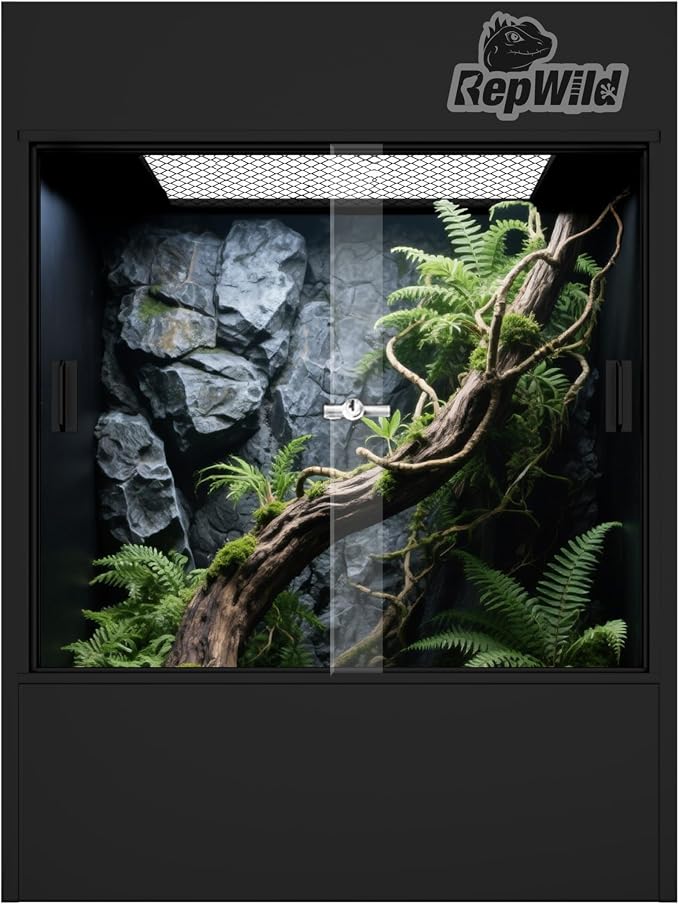
tall PVC arboreal enclosure with front glass door
Frequently Asked Questions
How big should a humid tropical gecko tank be?
For an adult crested or gargoyle gecko, keepers widely use around 18 by 18 by 24 inches as a floor, with height prioritized over floor space. Day geckos and larger arboreal species benefit from more width so they can retreat from the viewing pane. Hatchlings do better in smaller transitional enclosures where food is easy to find.
Screen top or glass top for humidity?
A partial mesh top is usually the right compromise. Full screen dries out too fast in most homes, while solid tops trap stale air and invite mold. Covering one third to one half of the mesh with an acrylic panel, leaving the rest open, achieves the daily humidity cycle tropical geckos need.
Are expensive terrariums worth it?
Frequently, yes, but not automatically. What higher prices reliably buy is better door hardware, lockable closures, engineered ventilation, and serviceable cable ports, and those features affect you every single day. Compare build details and long-term owner reviews rather than brand name or price alone.
How do I know a tank is safe for my gecko?
Check for tempered or thick glass, gasketed cable ports, escape-proof locks, and non-toxic coatings. Avoid enclosures with sharp stamped-metal edges at the mesh frame. If your gecko is a delicate species or you have any doubt, consult an exotic-animal veterinarian before finalizing the setup.
Can I keep two geckos in one humid tank?
Only with compatible animals, adequate space, and multiple feeding and basking stations, and never across different species. Even compatible pairs need visual barriers. Males of most species should not be housed together, and aggression or weight loss means immediate separation.
How often does a humid tank need full cleaning?
Spot clean daily, do a partial substrate refresh weekly or biweekly, and perform a full teardown every one to three months depending on occupancy and whether the setup is bioactive, since cleanup crews handle much of the decomposition in bioactive systems.
Winter Humidity and Heating Notes for Late 2026
Seasonal timing matters more for humid-species enclosures than most care sheets acknowledge. From late November through February in most temperate regions, indoor heating pulls ambient humidity down sharply, which shortens the wet half of your misting cycle. A tank that held a comfortable 50 to 60 percent baseline through October can fall into the 30s between mistings once radiators or forced-air systems run around the clock. The fix is usually not more misting but slower drying: partially cover a mesh top with foil or a strip of glass, leaving plenty of open area for air exchange, and shift your misting toward the evening so humidity peaks overnight, when crested and gargoyle geckos are actually active and drinking.
Heating deserves a fresh look in winter too. Nighttime drops that were harmless in October can edge into risky territory during a cold snap, especially in older rooms with drafty windows; our guide to winter heating and safe night drops for reptiles walks through the numbers by species. If you add heat, do it through a thermostat. Heat mats are the usual answer for glass tanks, but PVC panels change the calculus — follow the enclosure manufacturer's placement instructions exactly, because a mat stuck to a plastic wall at full power is a warp-and-burn risk; our heat mat and heat tape guide covers placement rules in detail. For overnight warmth without light, a thermostat-controlled ceramic emitter is the standard pick, and our ceramic heat emitter guide compares wattages for typical enclosure sizes.
- Re-check hygrometer readings against a second unit in December; inexpensive sensors drift, and winter is when their accuracy matters most.
- Inspect door seals and lid gaskets after the first month of heating season, since repeated expansion and contraction loosens them.
- Watch shed quality as your leading indicator: repeated stuck sheds in winter usually point to a baseline humidity problem, not a one-off misting miss.
If shed problems cluster in the coldest weeks, adjust the ventilation setup and drying curve first. An enclosure whose winter performance matches its October performance rarely needs any other intervention.
Related Reading
crested gecko tanks and arboreal habitats, reptile foggers for humidity control, and turtle tanks and aquatic habitats.
Disclosure: This article contains affiliate links. If you make a purchase through these links, we may earn a commission at no extra cost to you. This helps support PawCritic and allows us to continue providing free, unbiased pet product reviews. Thank you for your support!