Best Catnip Toys 2026: A Research-Based Buying Guide
Catnip toys occupy a strange and wonderful place in feline enrichment. The herb itself, Nepeta cataria, is a member of the mint family, and its active compound, nepetalactone, binds to olfactory receptors in a cat's nasal cavity in a way that resembles a pheromone signal. The result is the familiar sequence of sniffing, licking, head-rubbing, rolling, and occasionally full-body zoomies. Not every cat reacts, and the reasons are genetic rather than psychological. Published behavioral literature and shelter guidance consistently put the responsive share of the domestic cat population at roughly 50 to 75 percent, with kittens under about six months usually showing little or no interest because the receptor response appears to develop with maturity.
That single fact shapes how a catnip toy should be chosen. A toy that fails with one cat may be perfectly potent for another, so the sensible approach is to treat catnip toys as a category with a few measurable variables: the quality and quantity of the herb inside, the fabric or shell that holds it, whether the herb can be refreshed, and whether the shape supports the kind of play your cat already prefers. This guide walks through those variables in detail, explains where the common marketing claims hold up and where they do not, and points to one widely available option readers can examine as a concrete example.
Veterinary guidance is a useful anchor here. The Cornell Feline Health Center notes that environmental enrichment, including novelty and opportunities to express hunting behavior, is a core part of preventive care for indoor cats, and the Merck Veterinary Manual cat owner reference describes play and object exploration as normal, necessary outlets for feline energy. A catnip toy is one of the cheapest and simplest ways to supply both.
What Actually Matters in a Catnip Toy
Herb Quality and Freshness
Nepetalactone is volatile, which means it evaporates over time and degrades faster when exposed to air, heat, and light. A toy that smelled strongly on arrival can be nearly inert six months later even if it has never been chewed. This is the single most common reason owners report that a toy 'stopped working.' Manufacturers that sell loose catnip typically recommend storing it in an airtight container away from sunlight, and the same logic applies to the herb sealed inside a toy. Look for products that state the country of origin and whether the catnip is organic, because those labels usually correlate with fresher stock and fewer filler ingredients such as stems and seed heads, which carry far less nepetalactone than the leaves and flowers.
Fabric, Stuffing, and Safety
The shell of a catnip toy matters more than most buyers expect. Tightly woven cotton twill, canvas, and felted wool hold up to repeated biting and rabbit-kicking, while loose knit fabrics and thin polyester shed fibers that cats can swallow. Cotton batting and polyfill stuffing are a particular concern: if a cat tears a seam, the stuffing can be ingested, and linear foreign bodies from string, thread, or long fabric strands are a recognized surgical emergency in cats. Toys described as stuffing-free, or filled only with compressed catnip, remove that risk entirely. Eyes, bells, ribbons, and glued-on embellishments are another failure point and should be treated as removable hazards rather than features. Any toy with a loose or dangling string longer than a few inches should be supervised only.
Refillability and Longevity
Because the herb fades, the most economical catnip toys are the ones designed to be recharged. Some have a Velcro or zippered pouch, others a small hook-and-loop opening, and a few are simply sewn shut and intended to be replaced. A refillable toy paired with a bag of loose organic catnip typically costs less over a year than repeatedly buying sealed plush toys, and it lets you control the strength of the scent. Sealed toys are not worthless, but their useful life is measured in weeks to a few months of regular play rather than years.
How Cats Respond, and Why Some Do Not
The classic catnip response runs in stages. A cat typically sniffs the toy, licks or chews it, then rubs its cheeks and chin against it before rolling and kicking. The intense phase lasts somewhere between five and fifteen minutes, after which the cat usually loses interest and walks away. This is not boredom; it is a temporary desensitization that behavioral references describe as a refractory period, and it can last from several minutes to a couple of hours. Offering the same toy again during that window usually produces nothing, which is why rotating toys in and out of storage keeps them effective.
Roughly a quarter to half of cats carry no response at all, and no amount of stronger catnip will change that. For those cats, silvervine (Actinidia polygama) is the most common alternative. Silvervine contains actinidine and dihydroactinidiolide in addition to nepetalactone-like compounds, and surveys of cat owners and behavioral studies report that a substantial share of catnip-nonresponsive cats do react to silvervine. Valerian root and Tatarian honeysuckle wood are two other options with smaller but real followings. If a cat ignores catnip entirely, switching the herb is a more rational next step than buying a more expensive catnip toy.
Safety questions come up constantly, and the answer is reassuring. Catnip is not addictive, and cats do not overdose on it. The ASPCA's Animal Poison Control database does not list catnip among toxic plants for cats, and the worst outcome of a large ingestion is usually mild digestive upset. The real risks in this category are mechanical, not chemical: swallowed stuffing, ingested string, broken plastic wands, and small parts that can be batted under furniture and chewed. Kittens under six months are generally not interested and can be overstimulated, so most veterinarians suggest waiting until the response appears naturally.
Matching the Toy to the Play Style
Cats tend to fall into recognizable play categories, and the toy should follow the cat rather than the other way around. A cat that stalks and pounces benefits from a toy it can grab and kick with the hind feet, which favors elongated shapes like bananas, cigars, and thick mice. A cat that bats and chases prefers small, light objects that skitter across hard floors. A cat that carries things around, often with a distinctive yowl, does best with small, soft toys it can grip in its mouth. Households with multiple cats usually need several toys in rotation rather than one shared favorite, because a single high-value toy becomes a resource to guard.
Interactive play with a wand or a moving toy is a different category from solo catnip play, and the two serve different purposes. Wand play burns energy and builds a bond with the owner; catnip toys provide independent enrichment when the house is empty. A complete enrichment plan uses both, along with scratching surfaces and vertical space. The American Association of Feline Practitioners and other veterinary bodies consistently recommend that indoor cats receive daily interactive play and access to self-directed toys, and catnip items are one of the easiest ways to satisfy the second half of that recommendation.
Scratchers, Sprays, and Multi-Packs
Not every product in this category is a plush toy, and the adjacent products deserve their own evaluation. Cardboard scratchers infused with catnip solve two problems at once: they give a cat a legal place to scratch and they use the herb to draw the cat to it. The trade-off is mess, because corrugated cardboard sheds flakes as it is clawed, and the surface compacts and loses its appeal within a few months of heavy use. Reversible or double-sided designs roughly double the working life, and a scratcher placed near the furniture a cat has already targeted is far more likely to be used than one tucked in a corner.
Catnip sprays are a convenience product rather than a toy. They are useful for reviving a faded plush toy, encouraging a cat to investigate a new bed or carrier, and refreshing a scratcher. The limitations are real: the oil is dilute compared with loose herb, some cats do not respond to spray at all, and the carrier liquid can leave marks on pale upholstery or silk. A common homemade alternative is to seal a toy in a zip-top bag with a spoonful of fresh loose catnip for a few days, which recharges the fabric without any liquid.
Multi-packs of small catnip mice occupy the budget end of the market. Their value is not durability but replaceability: mice disappear under appliances, get batted into unreachable gaps, and lose their scent quickly, so buying ten at once is often cheaper than buying one premium toy every few weeks. The catnip inside budget mice is usually lower grade and fades faster, and the seams are the first thing to fail, so these are best treated as semi-disposable. They are also the safest choice for multi-cat homes and for kittens approaching the age where the catnip response appears.
What to Look For, in Order of Importance
- Fresh, identifiable catnip. Organic, leaf-and-flower material with a stated origin beats unlabeled filler every time.
- Stuffing-free construction. A shell filled only with compressed herb cannot shed polyfill if it tears.
- Reinforced seams and no small parts. Double stitching, no glued eyes, no bells, no long strings.
- A shape that matches your cat's play style. Kickable for stalkers, light and skittery for batters, small and soft for carriers.
- Refillability. An opening that lets you add fresh herb extends the toy's life by months.
- Washability or easy surface cleaning. Saliva and dust accumulate; a toy that cannot be spot-cleaned becomes a hygiene problem.
- Honest sizing. A toy small enough to be swallowed whole is a hazard, and one too large to grab is ignored.
Common Mistakes Buyers Make
The most frequent error is expecting a single toy to work for every cat in the house. Because the response is genetic, a multi-cat household may contain one enthusiast, one indifferent cat, and one that reacts only to silvervine. Buying one premium toy and concluding that catnip 'does not work' is a conclusion about that cat, not about the herb. The second most common mistake is leaving every toy out at once. Constant access accelerates desensitization and scent loss; storing half the collection in an airtight container and swapping weekly keeps the novelty and the potency higher.
Owners also underestimate how quickly the herb fades. A toy that was a hit in January is often ignored by spring, and the fix is fresh catnip rather than a new toy. Finally, safety oversights are common: toys with glued-on googly eyes, thin ribbons, and long elastic strings are sold everywhere and are exactly the features most likely to end in a veterinary visit. Checking seams by hand before handing a toy over, and removing anything that pulls free, takes seconds and prevents the expensive problems.
Maintenance and Rotation Schedule
A simple rotation keeps catnip toys working. Keep two or three toys available and the rest sealed in a jar or bag with a pinch of loose catnip. Swap the active set every one to two weeks. Inspect each toy for torn seams, exposed stuffing, and loose parts before it goes back into circulation, and discard anything that fails. Spot-clean fabric toys with a damp cloth and mild soap, then let them dry fully before recharging with herb, since moisture speeds the breakdown of nepetalactone. Loose catnip should be stored in an airtight container in a dark cupboard and replaced every six to twelve months.
For cats that react strongly, limit sessions to a few times a week rather than daily. Frequent exposure does not harm the cat, but it does reduce the intensity of the response, and the toy becomes background furniture rather than an event. Pair catnip play with wand play on the days the catnip toys stay in the drawer, so the overall level of daily enrichment stays steady. Veterinary behavior guidance repeatedly emphasizes variety and predictability of routine as much as the specific toys used.
A Concrete Example to Examine
Because the affiliate relationship on this page covers a single product, the honest framing is this: readers should treat the link below as one specimen of the stuffing-free, organic-catnip plush category described above, not as a ranked winner. The features worth verifying against the criteria below are the stuffing-free construction, the tightly woven cotton shell, the stated organic catnip fill, and the absence of glued-on parts. If those check out against the current listing, the toy fits the profile of a durable, refillable-adjacent plush that suits cats which grab and kick. If the listing shows polyfill, glued eyes, or unlabeled filler, the same criteria say to keep looking. Specifications and availability change, so confirm the details on the product page before buying.
check the current price on Amazon
Species and Life-Stage Notes
Kittens generally do not respond to catnip before about six months of age, and offering it earlier mostly wastes herb. Once the response appears, small soft toys are appropriate, but any toy with string, elastic, or loose parts should be withheld until the cat is past the chew-everything stage. Senior cats often retain the catnip response even as their interest in chasing declines, and a plush toy placed near a favorite sleeping spot can be more useful than an interactive wand for an arthritic cat. Cats with dental disease may avoid biting hard toys, so softer fabric is kinder to sore gums. Cats with allergies or sensitive skin occasionally react to dyed fabrics, and undyed cotton or wool is the safer choice for those animals.
Multi-cat households should provide one toy per cat plus one extra, placed in separate locations, so that a confident cat cannot monopolize the supply. Cats that live with dogs need toys stored out of the dog's reach, because ingested cat toys are a common cause of foreign-body surgery in dogs as well as cats. None of these considerations are exotic; they follow directly from the same enrichment principles veterinarians apply to feeding, scratching, and litter box management.
Beyond Catnip: Silvervine, Honeysuckle, and Valerian
If your cat ignores catnip, the toy category is not closed to you. Research on silvervine, a Japanese kiwifruit relative, found that roughly two thirds of domestic cats respond to it, and many cats that have no reaction to catnip do react to silvervine leaves or gall fruit, apparently through different active compounds. Tatarian honeysuckle wood chips and valerian root work for a smaller share of cats, and some cats respond to one but not the others. The practical consequence for shopping is simple: multi-plant refill toys, or toys sold with replaceable silvervine pouches, give a non-responding household a second chance without buying an entirely new toy. The rub-and-roll behavior these plants trigger is the same harmless few-minute episode as catnip, with no hangover and no known toxicity at normal exposure. Check that refill pouches are stitched rather than glued, since crushed silvervine dust escapes glued seams within a few weeks.
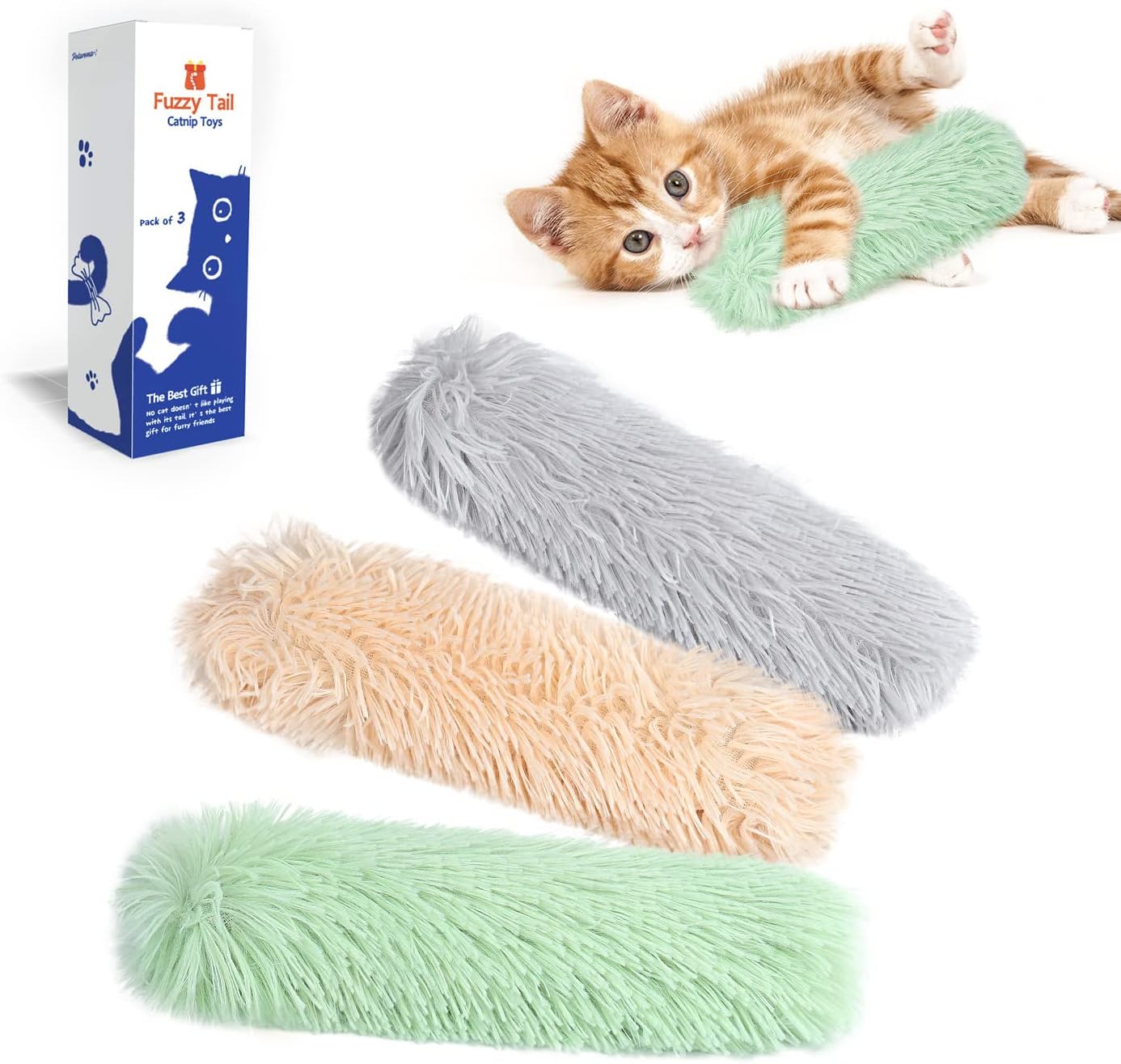
refillable toy with replaceable pouch
Frequently Asked Questions
Is catnip safe for cats?
Yes. Catnip is non-toxic to cats and is not addictive. Cats self-regulate their exposure, and the ASPCA does not list it among plants toxic to cats. The realistic risks are mechanical, such as swallowed stuffing or string, not the herb itself.
How often should a cat get catnip?
Two or three sessions a week is a reasonable default. Daily exposure tends to reduce the intensity of the response, and the short refractory period after each session means more frequent offering produces diminishing returns.
My cat ignores catnip. What else can I try?
Try silvervine first, since a large share of catnip-nonresponsive cats react to it. Valerian root and Tatarian honeysuckle are secondary options. If none produce a response, the cat simply lacks the genetic trait, and interactive play is the better enrichment route.
At what age can kittens have catnip toys?
Most guidance suggests waiting until about six months, when the olfactory response typically develops. Younger kittens are more likely to be overstimulated and are also more likely to chew toys apart.
How do I refresh a catnip toy that has lost its scent?
Seal it in a zip-top bag with a spoonful of fresh loose catnip for a few days, or use a catnip spray lightly on the surface. Refillable toys with a pouch or opening are the easiest to recharge and last the longest.
Where to Buy
As an Amazon Associate, PawCritic earns from qualifying purchases. This does not affect our reviews or recommendations.
The single product referenced below can be viewed at the link below. Confirm the current specifications, fill material, and sizing on the listing before purchase, since manufacturers revise construction without changing the product image.
For readers comparing alternatives, the same buying criteria apply: stuffing-free fill, tightly woven natural fabric, labeled organic catnip, reinforced seams, and no glued-on small parts. Those five checks eliminate most of the unsafe and short-lived products in this category regardless of brand or price.
Bottom Line
Catnip toys are simple products with a short list of things that genuinely matter: fresh herb, safe construction, a shape that matches the cat, and a plan for refreshing the scent. The genetic lottery determines whether a given cat responds at all, and no purchase changes that. Buy for the cat in front of you, rotate the collection, inspect seams regularly, and treat sprays and scratchers as supporting tools rather than substitutes for interactive play. Done that way, a modest handful of toys will outperform an expensive pile of them.
check the current price on Amazon
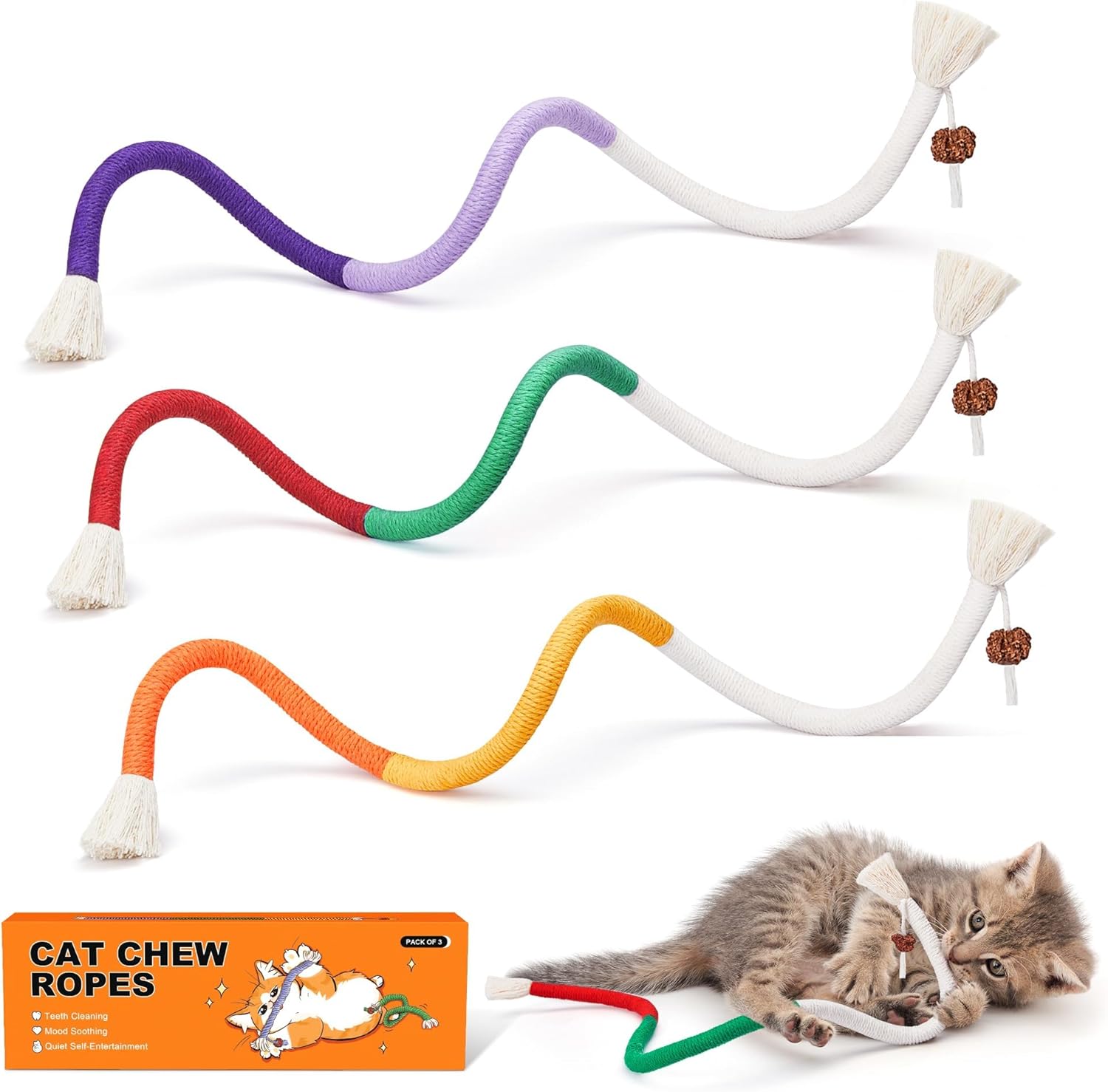
catnip toys irresistible fun for your cat
Winter Indoor Enrichment Notes for Late 2026
Short days push even outdoor-adjacent cats into full-time indoor living by late November, and the change shows up as 3 a.m. zoomies, curtain climbing, and complaints at the door. Catnip toys are one of the cheapest ways to rebalance the schedule. A catnip session runs roughly ten to fifteen minutes from first sniff to the post-roll mellow, so two or three planned sessions — one timed before dusk — give the day a shape it otherwise lacks.
Rotation matters more in winter because the same three toys on the same floor become invisible. Keep most of the supply sealed in a jar with a pinch of loose catnip to recharge the fabric, and swap four or five toys into circulation each week. If your cat is among the minority that ignores catnip entirely — the response is inherited, and kittens under about six months rarely respond at all — silvervine is the usual workaround, and several of the products reviewed above blend it in. Kicker toys filled with both herbs earn their space during this season specifically, because a cat with limited territory still needs something to grab and rabbit-kick.
Combine catnip sessions with the rest of the winter toolkit. A short catnip window followed by a food puzzle from our interactive toy and puzzle feeder guide converts the post-catnip buzz into problem-solving instead of the midnight sprints. Broader rotation ideas live in our cat toys roundup. And since a warm cat plays longer, a spot from our heating pad and warming bed guide near a window makes an excellent post-session landing zone.
Holiday gatherings deserve their own note. A cat that has retreated under a bed during a party is not missing playtime; set out one known, well-loved catnip toy in a quiet room and let the cat re-emerge on its own schedule once the noise drops.
Related Reading
cat treats and reward formats, cat vitamins and supplements, and complete cat food nutrition.