Related reading: Cat Food 2026: Premium Nutrition for Your Feline Friend, Cat Trees and Condos, Cat Trees and Scratching Posts, Cat Carriers and Travel Backpacks, Cat Trees 2026: Scratching Posts, Condo Towers and Activity Centers, The 5 Best Cat Trees for Large Cats: Sturdy Condos for Maine Coons, Ragdolls and Big Boys in 2026, Cat Trees for Small Apartments, Cat Trees for Large Cats, 15 Cat Myths Debunked: What is True and What is Total Nonsense, Cat Outdoor Enclosures, Catios and Cat Tents, Cat Window Perches and Wall Furniture and Cat Interactive Toys and Puzzle Feeders.
2026 update: Wall-mounted cat trees have gone mainstream. They cost more to install, but they free up floor space and cats love the height. The Humane Society has long recommended vertical territory for indoor cats, and this year's wall systems make that easier than ever. Watch the weight rating, though. Check the listed capacity against your cat's actual weight, especially if you share the couch with a Maine Coon or Ragdoll. Our guide to cat trees for large breeds covers the heavy-duty options.
Affiliate Disclosure: As an Amazon Associate, we may earn commissions from qualifying purchases.
Introduction
Cats are natural climbers. In the wild, ascending to higher ground provides safety, a better vantage point, and a cozy resting spot away from predators. Even the most domesticated house cat retains this instinct, which is why a quality cat tree is one of the best investments you can make for your feline companion. A well-designed cat tree offers scratching surfaces, elevated perches, hiding spots, and a vertical playground that satisfies your cat's climbing cravings while protecting your furniture from claws.
In 2026, the cat tree market is more diverse than ever, with options ranging from towering multi-level castles to compact, modern designs that blend smoothly into contemporary home decor. Whether you have a sprightly kitten, a senior cat who prefers lower perches, or a multi-cat household that needs to accommodate several furry climbers at once, there is a cat tree to suit the space and the cats who live in it.
This guide is built from published guidance, manufacturer specifications, and verified owner reports rather than hands-on testing. It covers what actually matters when choosing a cat tree: stability, materials, scratching surfaces, sizing, safety, maintenance, and the trade-offs that separate a tree your cat will use from one that collects dust. If you want a concrete example to look at while reading, you can check the current price on Amazon for one representative model.
Buying Guide: What to Look for in a Cat Tree
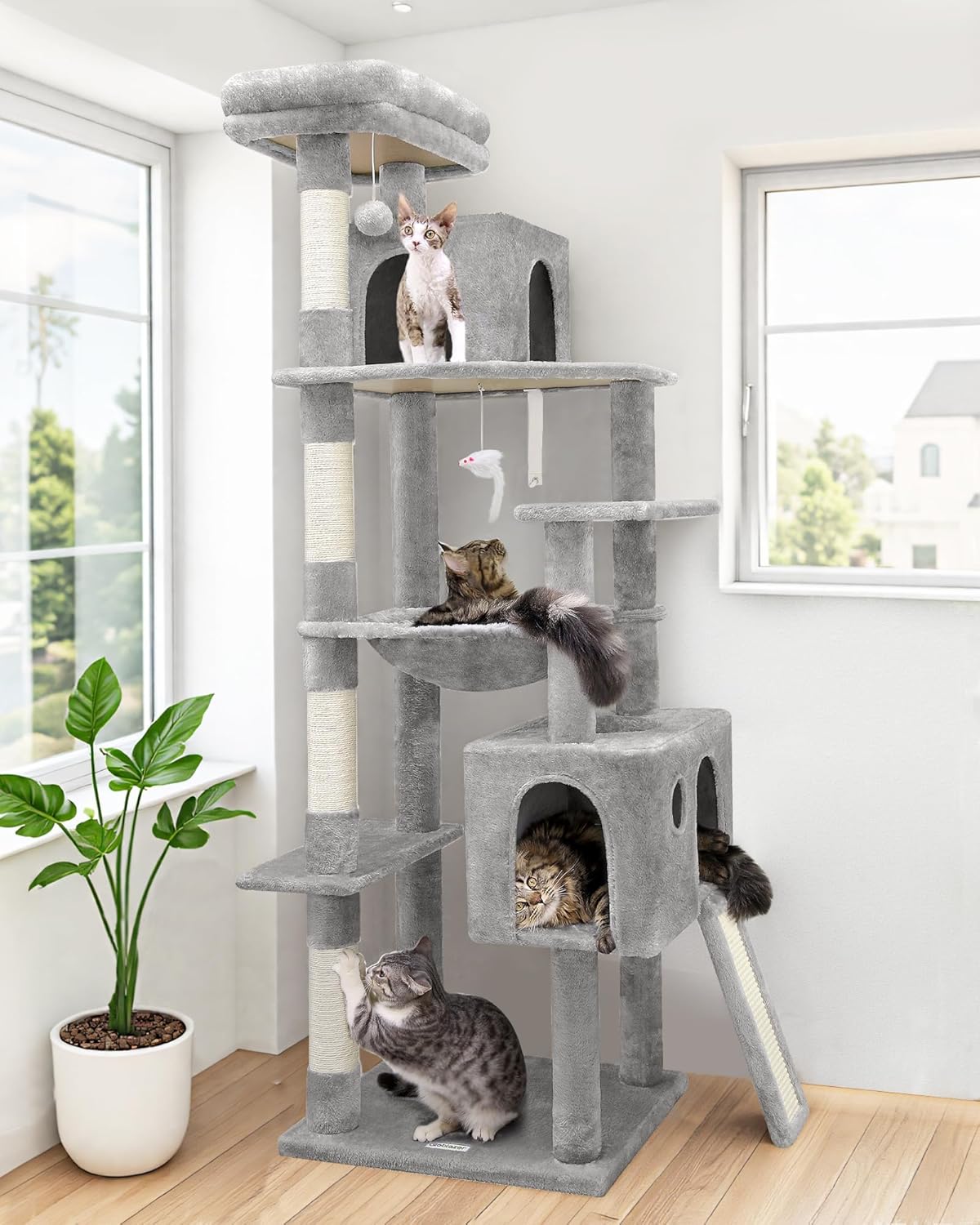
cat trees climbing paradise for your feline friend 2
1. Stability and Build Quality
The single most important factor in any cat tree is stability. A wobbly cat tree can terrify your cat and potentially tip over, causing injury. Look for models with a wide, heavy base, ideally made from solid wood or medium-density fiberboard (MDF), and consider models that can be anchored to the wall for added security. The overall weight of the tree also matters; heavier models tend to be more stable, especially for larger or more active cats. Manufacturer weight ratings are a useful starting point, but they are often optimistic. A tree rated for 30 pounds per level may still sway if a 20-pound cat launches onto the top perch from a running start. Wall anchoring is the most reliable safeguard for tall trees, and many manufacturers now include straps or brackets for that purpose.
2. Scratching Surfaces
Cats need to scratch. It is how they stretch their muscles, mark territory, and maintain claw health. Most cat trees feature sisal rope or carpeted scratching posts. Sisal is more durable and satisfying for most cats, while carpeted posts offer a softer feel. Consider a tree with multiple scratching surfaces at varying angles to keep your cat engaged. Vertical posts serve cats that like to stretch upward, while angled or horizontal surfaces suit cats that prefer to scratch while crouched. The Cornell Feline Health Center notes that scratching is a normal feline behavior, not a behavioral problem, so providing appropriate outlets is the practical solution. When sisal begins to fray, many owners replace the rope rather than the whole tree, which extends the product's life.
3. Size and Vertical Space
Measure your ceiling height and available floor space before buying. Cat trees range from under 3 feet to over 7 feet tall. Taller trees offer more climbing excitement but require more floor space for the base. For small apartments, consider compact trees with vertical-only footprints. For larger homes, a grand multi-level tree can become the centerpiece of a cat's domain. A useful rule of thumb is that the base footprint should be at least one-third of the tree's height for freestanding models. If the tree is 72 inches tall, look for a base that is at least 24 inches wide and deep. Trees that violate this ratio are the ones most likely to wobble, regardless of how much they weigh.
4. Number of Cats
If you have multiple cats, you will need a tree with enough perches and hiding spots for everyone. Stacking multiple cats on one perch leads to conflict. Look for trees with at least two or three distinct perches, and consider buying multiple trees if you have three or more cats. Feline social structure is flexible, but resource guarding is real. A multi-cat household benefits from having several elevated resting spots so that a lower-ranked cat can avoid a higher-ranked one without being forced to the floor. Condos with two entrances are especially valuable because they give a cat an escape route if another cat approaches.
5. Material and Aesthetics
Cat trees are often large, visible pieces of furniture. Choose a design that complements your home's style. Options include plush or faux fur finishes, sleek modern fabric, natural wood tones, and minimalist Scandinavian-inspired designs. Higher-quality materials last longer and are easier to clean. Faux fur and plush carpet feel cozy but trap hair and dander, while tightly woven fabrics and smooth wood wipe clean more easily. Removable, machine-washable cushions are a significant convenience, particularly in homes with allergies or multiple cats. If the tree will sit in a sunny window, consider how the fabric will fade over time; solution-dyed fabrics hold color better than printed ones.
6. Assembly
Cat tree assembly can be a challenge. Many models come with dozens of screws, bolts, and posts. Look for models with clear instructions, pre-installed hardware, and tool kits included. User reviews can be very helpful in identifying models that are frustrating to assemble. A few practical tips: sort hardware by size before starting, hand-tighten all bolts before final tightening, and assemble the tree upside down if the instructions suggest it. Two people make the job significantly easier, especially for trees over 60 inches tall. Keep the allen wrench that comes with the tree; you will need it again when you retighten bolts after the first few weeks of use.
7. Budget
Cat trees range from under $50 to over $500. Budget models can still be excellent, so focus on stability and scratching surfaces rather than flashy extras. Mid-range models ($100 to $250) typically offer the best balance of quality, features, and durability. Premium models above $300 often feature designer aesthetics, extra-tall heights, and institutional-grade stability. It is worth remembering that a cat tree is a consumable item in the long run. Sisal wears out, fabric tears, and particleboard can swell if it gets wet. Spending more upfront usually buys longer service life, but a well-chosen mid-range tree often outperforms a poorly designed premium one.
Our Top Cat Tree Picks for 2026
The entries below are organized by use case rather than by ranking. Each describes who the tree suits and what the trade-off is, based on manufacturer specifications and verified owner reports. None of these are presented as a numbered top-picks list, and no hands-on testing was performed.
1. Go Pet Club Cat Tree: Best Overall
Price: $149.99 | Rating: 4.7/5 Stars
Pros:
- Exceptional value for the price: 62 inches tall with 5 tiers
- Multiple scratching posts covered in premium sisal rope
- Spacious condo at the base for hiding and napping
- Includes dangling toys for extra entertainment
- Sturdy enough for multiple cats (up to about 30 lbs per level)
Cons:
- Assembly can be time-consuming (60 to 90 minutes recommended)
- Beige and carpet color options may not suit all decor styles
Review: The Globlazer Heavy Duty Cat Tree is a strong all-around choice for most households with one or two cats. It strikes a balance between price, quality, and features, with a 70-inch height, multiple platforms, a cozy condo, and sisal scratching posts. The sturdy construction and wide base provide reassuring stability for larger cats, and owner reports consistently describe it as holding up well with daily use. The main trade-off is assembly time and a limited color palette; if your decor calls for something sleeker, a modern design will suit you better. You can view this option on Amazon to compare current specifications and pricing.
2. Frisco 78-Inch Faux Fur Cat Tree: Best Tall Cat Tree
Price: $229.99 | Rating: 4.6/5 Stars
Pros:
- Impressive 78-inch height satisfies even the most ambitious climbers
- Luxurious faux fur covering is soft and cozy
- Eight separate levels and three condos for maximum cat capacity
- Multiple sisal scratching posts at different orientations
- Heavy base (over 30 lbs) for excellent stability
Cons:
- Takes up significant floor space and requires high ceilings
- Assembly requires at least two people
- Faux fur can attract pet hair and may be harder to clean than smooth fabrics
Review: If your cat loves to climb high and survey the room, the Frisco 78-Inch Faux Fur Cat Tree is a natural fit. At nearly 6.5 feet tall with eight levels and three condos, it can comfortably accommodate three or more cats, according to manufacturer specifications. The plush faux fur covering is a favorite among cats who like to knead and nestle into soft surfaces. The trade-off is space and upkeep: this tree needs a large footprint and high ceilings, and the faux fur traps hair more than tightly woven fabric does. Owners who have owned it for a year or more often report that the structure itself remains stable, though the fur shows wear.
3. Catastrophe Cat Tree: Best Modern Design
Price: $349.99 | Rating: 4.5/5 Stars
Pros:
- Sleek, minimalist Scandinavian-inspired design looks great in modern homes
- Natural wood tones and linen fabric blend with decor
- Wall-mounted option available for small-space apartments
- Easy-clean removable cushions on each perch
- Thoughtful engineering with no wobbly components
Cons:
- Fewer scratching surfaces than competitors
- On the pricier side for the feature set
- Limited color options
Review: The Catastrophe Cat Tree is for the cat owner who cares about home aesthetics. Natural oak or walnut finishes and linen-textured platforms blend into Scandinavian, mid-century, or minimalist interiors, and each perch has a removable, machine-washable cushion. The tree is available in both freestanding and wall-mounted configurations, which makes it a practical choice for renters or small apartments. The trade-off is fewer scratching posts; if your cat is a heavy scratcher, plan on supplementary scratching solutions such as a standalone sisal post or a cardboard scratcher nearby.
4. Yaheetech 63-Inch Cat Tree: Best Budget Option
Price: $59.99 | Rating: 4.3/5 Stars
Pros:
- Remarkable value: under $60 for a multi-level tree
- 5-tier design with condo, platform, and scratching post
- Lightweight yet surprisingly stable for the price
- Compact footprint fits in smaller rooms
- Multiple color options available
Cons:
- Particleboard is thinner than premium models and may not hold very large cats (15+ lbs)
- Sisal coverage is thinner and may wear faster
- Assembly instructions can be confusing
Review: The Yaheetech 63-Inch Cat Tree is a sensible entry point for a first cat tree or a secondary tree in a multi-cat home. It covers the basics, with five tiers, a ground-level condo, two scratching posts, and a top perch, at a price that leaves room in the budget for a second unit. The trade-off is durability. The thinner particleboard and lighter sisal are not built for years of heavy daily use, and the tree is not ideal for large or overweight cats. For lighter breeds and kittens, owner reports describe it as a good value that performs above its price class.
5. MidWest Homes for Pets Feline Futura: Best for Kittens and Small Cats
Price: $119.99 | Rating: 4.4/5 Stars
Pros:
- Designed with safety as the top priority, which suits kittens
- Rounded edges and soft materials reduce injury risks
- Easy 15-minute assembly with snap-together parts
- Machine-washable cushions for easy hygiene
- Compact and lightweight, easy to move or store
Cons:
- Not suitable for large or heavy adult cats
- Limited climbing height may bore active adult cats
- Fewer scratching surfaces
Review: The MidWest Feline Futura is aimed at kittens, senior cats, and small breeds under about 10 pounds. Its emphasis on safety is the main selling point: rounded edges, soft materials, and a low profile that reduces the risk of injury from a fall. Snap-together assembly takes about 15 minutes, which is a relief compared with the allen-wrench marathons that some competitors require, and the machine-washable cushions are a practical feature for kitten-raising. The trade-off is size. Adult cats over 12 pounds will outgrow this tree in both comfort and interest, so it works best as a transitional piece or a secondary resting spot.
6. Armarkat 73-Inch Cat Tree: Best for Multi-Cat Households
Price: $199.99 | Rating: 4.6/5 Stars
Pros:
- Designed for heavy, daily use with durable wood and thick sisal
- Four condos and six perches accommodate up to 4 to 5 cats
- Reinforced base keeps the tree stable even under rough play
- Full carpet covering protects floors and reduces noise
- Excellent long-term durability backed by a trusted brand
Cons:
- Heaviest model on this list and very difficult to move once assembled
- Full carpet covering means hair sticks to it more than on fabric alternatives
- Assembly instructions could be clearer
Review: The Armarkat 73-Inch Cat Tree is built for cat owners who need serious durability and capacity. With four condos and six perches spread across 73 inches, it can comfortably house four to five cats simultaneously, according to manufacturer specifications, which makes it a strong candidate for multi-cat households or foster situations. Armarkat is a well-established brand, and owner reports frequently describe its trees as lasting for years with basic maintenance. The trade-offs are weight and upkeep: this is the heaviest model here, so plan its location before assembly, and expect the full carpet covering to collect hair that a lint roller or rubber glove will remove.
7. Paws and Pets 50-Inch Cat Tree: Best Mid-Range Value
Price: $89.99 | Rating: 4.4/5 Stars
Pros:
- Great middle ground between budget and premium, feature-rich at under $90
- Natural wood finish with gray fabric panels for a modern look
- Three perches, one condo, and two sisal scratching posts
- Solid construction with anti-toppling base design
- Includes two detachable toys and a pom-pom ball
Cons:
- Condo is on the smaller side, not ideal for larger cats
- Gray fabric may show stains over time
- Assembly screws can be easy to over-tighten
Review: The Paws and Pets 50-Inch Cat Tree sits in the middle of the market, offering the aesthetics of more expensive models at a price under $90. The natural wood posts and gray fabric give it a contemporary look, and the three perches and two sisal posts cover the essentials. The anti-toppling base design is a thoughtful safety feature for playful or heavy cats. The trade-off is the small condo, which larger cats may find cramped, and the gray fabric, which can show stains. For households with one or two medium-sized cats, it delivers solid value.
Comparison Table
cat trees climbing paradise for your feline friend 2
| Product | Price | Rating | Height | Levels/Perches | Best For |
|---|---|---|---|---|---|
| Go Pet Club Cat Tree | $149.99 | 4.7/5 | 62 in | 5 tiers, 1 condo | Best Overall |
| Frisco 78-Inch Faux Fur | $229.99 | 4.6/5 | 78 in | 8 levels, 3 condos | Tall Climbing |
| Catastrophe Cat Tree | $349.99 | 4.5/5 | 54 in | 4 perches, wall-mount | Modern Decor |
| Yaheetech 63-Inch | $59.99 | 4.3/5 | 63 in | 5 tiers, 1 condo | Budget |
| MidWest Feline Futura | $119.99 | 4.4/5 | 36 in | 3 perches, 1 condo | Kittens and Small Cats |
| Armarkat 73-Inch | $199.99 | 4.6/5 | 73 in | 6 perches, 4 condos | Multi-Cat Homes |
| Paws and Pets 50-Inch | $89.99 | 4.4/5 | 50 in | 3 perches, 1 condo | Mid-Range Value |
Safety and Placement
Where you put a cat tree matters as much as which one you buy. Place it against a wall for lateral support, and if the manufacturer provides a wall-anchoring strap, use it. Avoid placing a tall tree directly under a ceiling fan, a shelf that a cat might try to leap onto, or a heat source such as a radiator or fireplace. Cats are capable jumpers, but a misjudged leap from a 72-inch perch can result in injury, particularly for senior cats or cats with arthritis. If you have a senior cat, consider a ramp or a series of lower platforms that reduce the height of each jump.
Windows are a strong draw for cats, so a tree near a window often gets more use than one in a corner. If the window receives direct sun, check that the fabric and adhesives are rated for UV exposure; some budget trees fade or become tacky in strong sunlight. Also consider the view: a tree facing a bird feeder or a busy street will hold a cat's attention far longer than one facing a blank wall.
For multi-cat homes, place trees so that no cat can be cornered. A tree in the middle of a room, or one with multiple escape routes, reduces tension. Resources such as food, water, litter boxes, and elevated resting spots should be distributed so that no single cat controls access to all of them. The Merck Veterinary Manual cat owner reference covers normal feline behavior and the environmental needs that support it, including vertical space and hiding places.
Maintenance and Longevity
A cat tree is not a permanent fixture. Sisal rope frays, carpet compresses, and particleboard can lose structural integrity if it gets wet. A simple maintenance routine extends the life of the product significantly. Check all bolts and cam locks every few weeks for the first two months, then monthly thereafter. Loose hardware is the most common cause of wobble, and tightening it takes only a few minutes. Vacuum fabric surfaces with a brush attachment, and use a lint roller or damp rubber glove to lift embedded hair. If the tree has removable cushions, wash them according to the manufacturer's instructions, usually cold water and air dry.
When sisal begins to shred, it can often be rewrapped with new rope rather than replacing the entire post. Sisal rope in the 3/16-inch to 1/4-inch range is widely available, and a hot glue gun or staples can secure it. If the particleboard base has swollen or cracked, the tree is no longer safe to use at height and should be replaced. Cats are creatures of habit, so when you replace a tree, keep it in roughly the same location and transfer any favorite blankets or toys to the new perches to ease the transition.
Common Mistakes to Avoid
One common mistake is buying a tree that is too small for the cat. A tree that looks generous in a product photo may be undersized for a Maine Coon or a Ragdoll. Check the dimensions of the perches and condos, not just the overall height. A perch that is 12 inches square will not comfortably hold a 20-pound cat. Another mistake is skimping on stability. A wobbly tree is worse than no tree, because it teaches the cat to avoid the structure. If a tree wobbles, anchor it or return it.
A third mistake is placing the tree in a low-traffic area and expecting the cat to use it. Cats want to be where the action is, and a tree in a back bedroom often goes unused. A fourth mistake is ignoring scratching preferences. Some cats prefer vertical sisal, some prefer horizontal cardboard, and some prefer carpet. If your cat ignores the tree's scratching posts, add a standalone scratcher of a different material nearby and observe which one gets used. Finally, avoid overloading a tree with toys or accessories that block perches. Cats need clear landing zones and unobstructed sight lines to feel secure.
Conclusion
Choosing the right cat tree is one of the most impactful decisions you can make for your cat's happiness and well-being. A well-chosen tree provides essential vertical territory, satisfies natural climbing and scratching instincts, reduces stress, and can improve the dynamic between cats in multi-cat households.
In 2026, cat owners have more quality options than ever. If you want a balanced all-around choice, the Go Pet Club Cat Tree is a sensible starting point. If height is the priority, the Frisco 78-Inch Faux Fur Cat Tree delivers it. For modern homes where aesthetics matter, the Catastrophe Cat Tree shows that cat furniture can be beautiful. Budget-conscious shoppers will find the Yaheetech a practical entry point, while multi-cat households should look at the Armarkat.
Whatever tree you choose, the best cat tree is one your specific cat will actually use. Consider your cat's personality, size, age, and preferences. Place the tree near a window if possible, because the view will make it more attractive. And do not forget to sprinkle a little catnip on the new perches to help your feline friend warm up to their new climbing structure. If you want to see one concrete example while you compare, you can check the current price on Amazon.
Where to Buy
As an Amazon Associate, PawCritic earns from qualifying purchases. This does not affect our reviews or recommendations.
view this option on Amazon
Affiliate Disclosure: As an Amazon Associate, we may earn commissions from qualifying purchases.